
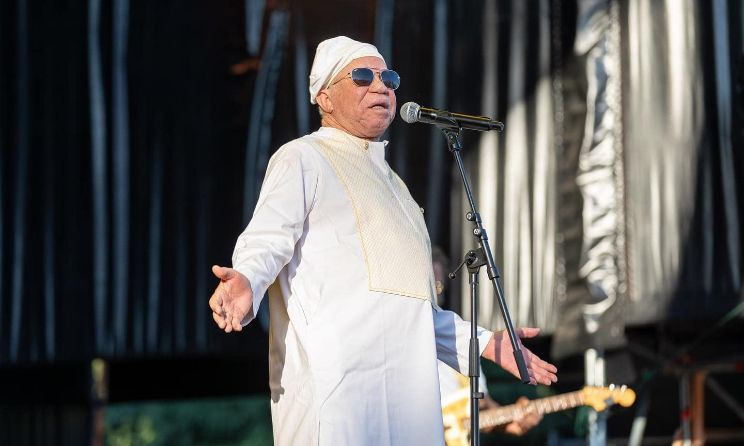



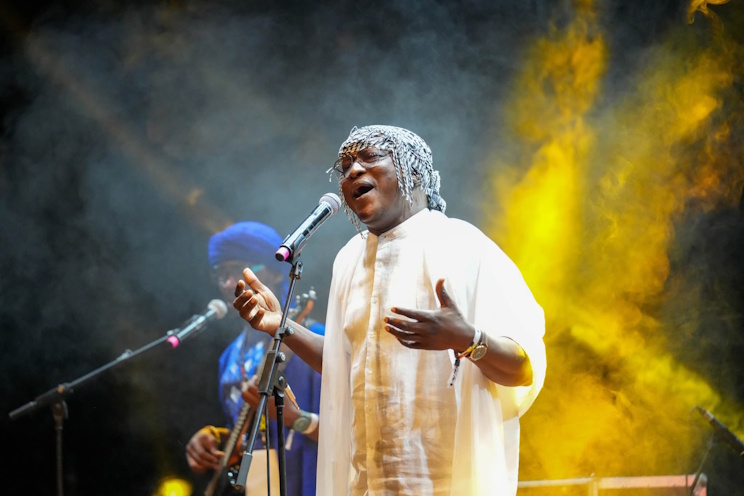





























Le groupe sud-africain Ladysmith Black Mambazo, nommé dans deux catégories, a remporté une récompense lors des Grammys 2018 dont la cérémonie s’est tenue aux premières heures du 29 janvier 2018.
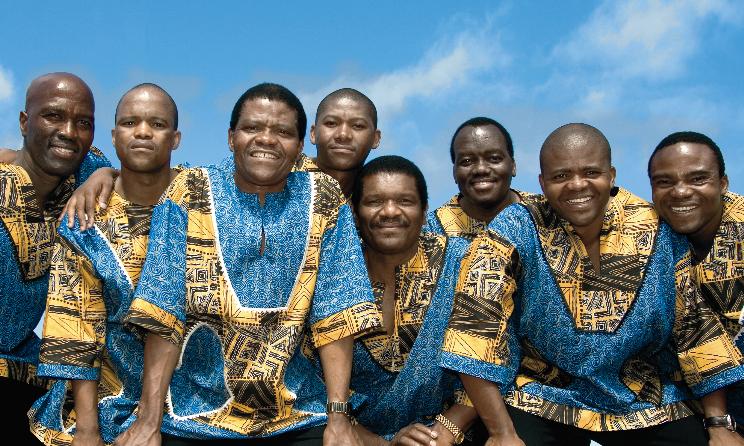
La victoire de Ladysmith Black Mambazo s'est malheureusement faite aux dépens d’un autre groupe africain : Tinariwen du Mali qui était également nominé pour le meilleur album de musique du monde (world music).
Songs of Peace & Love for Kids & Parents Around the World de Ladysmith Black Mambazo n’a pas remporté le prix du meilleur album pour enfants. Ce dernier a été attribué à Feel What You Feel de Lisa Loeb. Mais le groupe sud-africain a remporté le prix de la meilleure musique du monde pour Shaka Zulu Revisited : 30th Anniversary Celebration. La version originale de l'album avait valu à Ladysmith Black Mambazo son premier Grammy dans les années 1980.
Second fait notable lors des Grammys 2018 : la compilation du Burkina Faso datant des années 1970, Bobo Yéyé : Belle Époque en Haute-Volta, n’a obtenu aucune récompense. Pourtant, elle était nommée dans deux catégories : « meilleur coffret en édition limitée » et « meilleur album historique ».
La mise en lice de la compilation a surpris les musiciens d’anciens orchestres de Bobo-Dioulasso car ils n’étaient pas au courant que leurs chansons, vieilles de quarante ans, avaient été utilisées pour les Grammy Awards. Ils ne l’ont appris que cette semaine et ont exprimé leur colère.
« En tant que musicien, je suis déçu d’apprendre que nous avons passé le temps à trimer et que quelqu’un d’autre a tout bonnement fait une compilation en utilisant notre travail » a expliqué Stanislas Soré, l’un des musiciens du groupe Volta Jazz, dont les chansons font partie de la dizaine de morceaux contenus dans l’album Bobo Yeye : Belle Époque en Haute-Volta.
Troisième mauvaise nouvelle pour le continent africain : l’album Sweet As Broken Dates: Lost Somali Tapes from the Horn of Africa a perdu dans la catégorie « Meilleur Album Historique. »
Leonard Bernstein - The Composer de Leonard Bernstein a remporté le prix dans la catégorie « Meilleur album historique » tandis que Voyager Golden Record : 40th Anniversary Edition a remporté la catégorie « Meilleur package/coffret. »
Le quatrième désagrément pour le continent africain est survenu quand les artistes ghanéens et nigérians ont échoué à remporter un Grammy. En effet, l’album Stony Hill de Damian Marley a gagné devant Avrakadebra de Morgan Heritage dans la catégorie « Meilleur album Reggae. »
Avrakadebra met en avant les talents vocaux de Timaya au Nigeria et de Stonebwoy du Ghana sur un « remix global » du classique « Reggae Night » de Jimmy Cliff 1983.
Les fans ghanéens ont peut-être été heureux lorsque le prix du « Meilleur album pop » a été attribué à Ed Sheeran. Son album Divide contient la chanson « Bibia be ye ye », dans laquelle Ed Sheeran chante en Twi, une langue locale parlée au Ghana.
Ed Sheeran était absent de la cérémonie, qui est retournée à New York pour la première fois depuis 15 ans.
Tous ces prix et d'autres ont été remis avant la cérémonie télévisée, qui a vu la présentation de neuf prix sur un total de 84.
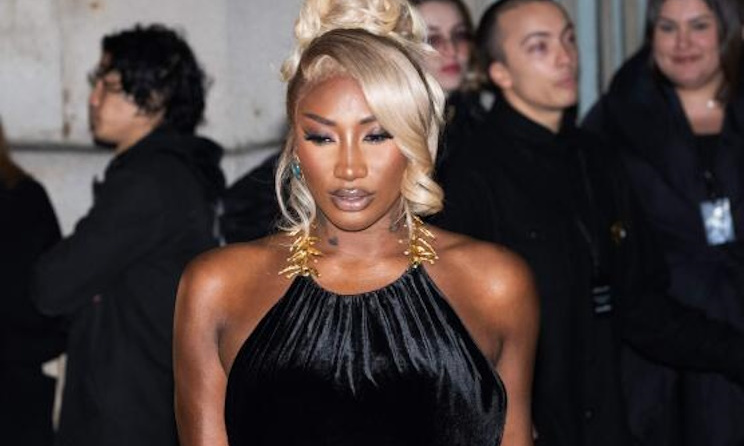
Pendant le spectacle, le rappeur Kendrick Lamar a remporté trois prix. Il a remporté le prix du « Meilleur album » et du « Meilleur rap » qui s’est ajouté à sa récompense pour « Meilleure chanson rap, Meilleure performance rap et Meilleure vidéo » pour son tube « Humble » sorti 2017. La victoire de Lamar pour la « Meilleure vidéo » chipant la récompense à Makeba le clip d’hommage à Miriam Makeba signé Jain.
Avant la 60e édition des Grammys, les observateurs de l'industrie musicale avaient prédit une bataille entre Jay-Z et Kendrick Lamar. Kendrick a tenu à faire mentir les pronostics en rendant hommage à Jay-Z.
Finalement, la véritable bataille a opposé Kendrick Lamar et Bruno Mars.
Vers la fin du spectacle, un hommage à plusieurs artistes disparus a été livré par Emmylou Harris aux côtés de la star de la musique country et double vainqueur de la soirée Chris Stapleton. Parmi les honorés figurait Hugh Masekela.
Comme annoncé la semaine dernière, un hommage au maestro sud-africain sera également organisé lors du cinquième All Africa Music Awards (AFRIMA) en novembre.
Les trois premiers prix – « Chanson de l'année, Enregistrement de l'année » et « Album de l'année » - ont tous été remportés par Bruno Mars.
Son tube « That's What I Like » a été nommé dans la catégorie « Chanson de l'année. » Quant à son single « 24K Magic » il a remporté le prix « Enregistrement de l’année. » Il a également été nommé dans la catégorie « Album de l'année. »
Liste complète des gagnants :
- Album de l’année : 24K Magic — Bruno Mars
- Enregistrement de l’année : « 24K Magic » — Bruno Mars
- Chanson de l’année : « That’s What I Like » — Christopher Brody Brown, James Fauntleroy, Philip Lawrence, Bruno Mars, Ray Charles McCullough II, Jeremy Reeves, Ray Romulus and Jonathan Yip (Bruno Mars)
- Révélation de l’année : Alessia Cara
- Meilleure Performance solo : « Shape of You » — Ed Sheeran
- Meilleur duo pop / Performance de groupe : « Feel It Still » — Portugal. The Man
- Meilleur album de musique pop traditionnelle : Tony Bennett Celebrates 90 — Various Artists; Produit par Dae Bennett
- Meilleure performance pop solo : Divide — Ed Sheeran
- Meilleur enregistrement de musique dance : « Tonite » — LCD Soundsystem
- Meilleur album de musique dance / électronique : 3-D The Catalogue — Kraftwerk
- Meilleur album instrumental contemporain : Prototype — Jeff Lorber Fusion
- Meilleure performance rock : « You Want It Darker » — Leonard Cohen
- Meilleure performance metal : Sultan’s Curse — Mastodon
- Meilleure chanson rock : « Run » — Foo Fighters
- Meilleur album rock : A Deeper Understanding — The War on Drugs
- Meilleur album de musique alternative : Sleep Well Beast — The National
- Meilleure performance R & B : « That’s What I Like » — Bruno Mars
- Meilleure performance R & B traditionnelle : « Redbone » — Childish Gambino
- Meilleure chanson R & B : « That’s What I Like » — compositeurs : Christopher Brody Brown, James Fauntleroy, Philip Lawrence, Bruno Mars, Ray Charles McCullough II, Jeremy Reeves, Ray Romulus and Jonathan Yip (Interprète : Bruno Mars)
- Meilleur album urbain contemporain : Starboy — The Weeknd
- Meilleur album R & B : 24K Magic — Bruno Mars
- Meilleure performance rap : « Humble » — Kendrick Lamar
- Meilleure performance rap : « Loyalty » — Kendrick Lamar featuring Rihanna
- Meilleure chanson rap : « Humble » — Compositeurs : Duckworth, Asheton Hogan and M Williams II (Interprète : Kendrick Lamar)
- Meilleur album rap : Dawn — Kendrick Lamar
- Meilleure performance solo musique country : « Either Way » — Chris Stapleton
- Meilleure performance duo / groupe musique country : « Better Man » — Little Big Town
- Meilleure chanson country : « Broken Halos » — Compositeurs : Mike Henderson and Chris Stapleton (Interprète : Chris Stapleton)
- Meilleure album musique country : From a Room: Volume 1 — Chris Stapleton
- Meilleur album musique new age : Dancing on Water — Peter Kater
- Meilleure improvisation jazz solo : « Miles Beyond » — John McLaughlin (soliste)
- Meilleur album jazz : Dreams and Daggers — Cécile McLorin Salvant
- Meilleur album jazz instrumental : Rebirth — Billy Childs
- Meilleur album de groupe de jazz : Bringin’ It — Christian McBride Big
- Meilleur album jazz latino : Jazz Tango — Trio Pablo Ziegler
- Meilleure performance/chanson gospel : « Never Have to Be Alone » — CeCe Winans
- Meilleure performance/chanson chrétienne contemporaine : « What a Beautiful Name » — Hillsong Worship
- Meilleur album gospel : Let Them Fall in Love — CeCe Winans
- Meilleur album contemporain de musique chrétienne : Chain Breaker — Zach Williams
- Meilleur album gospel roots : Sing It Now: Songs of Faith & Hope — Reba McEntire
- Meilleur album pop latino : El Dorado — Shakira
- Meilleur album latino de musique rock, urbaine ou alternative : Residente — Residente
- Meilleur album de musique mexicaine (Tejano inclus) : Arriero Somos Versiones Acústicas — Aida Cuevas
- Meilleur album latino tropical : Salsa Big Band — Rubén Blades con Roberto Delgado y Orquesta
- Meilleure performance musique roots americana : « Killer Diller Blues » — Alabama Shakes
- Meilleur chanson roots américaine : « If We Were Vampires » — Jason Isbell and the 400 Unit
- Meilleur album americana : The Nashville Sound — Jason Isbell and the 400 Unit
- Meilleur album blues traditionnel américana : Laws of Gravity — The Infamous Stringdusters et All the Rage In Concert Volume One — Rhonda Vincent and the Rage
- Meilleur album de blues traditionnel : Blue & Lonesome — The Rolling Stones
- Meilleur album de musique blues contemporaine : TajMo — Taj Mahal and Keb’ Mo’
- Meilleur album musique folk : Mental Illness — Aimee Mann
- Meilleur album régional roots : Kalenda — Lost Bayou Ramblers
- Meilleur album reggae : Stony Hill — Damian Marley
- Meilleur album musiques du monde (world music) : Shaka Zulu Revisited: 30th Anniversary Celebration — Ladysmith Black Mambazo
- Meilleur album musique pour enfants : Feel What U Feel — Lisa Loeb
- Meilleur album parlé (incluant poésie, livre audio et conte) : The Princess Diarist — Carrie Fisher
- Meilleur album comédie musicale : The Age of Spin/Deep in the Heart of Texas — Dave Chappelle
- Meilleur album théâtre : Dear Evan Hansen — Ben Platt, soliste principal; Alex Lacamoire, Stacey Mindich, Benj Pasek and Justin Paul, producteurs; Benj Pasek and Justin Paul, compositeurs
- Meilleure compilation, bande originale de film : La La Land — Various Artists
- Meilleure chanson, bande originale de film : La La Land — Justin Hurwitz, compositeur
- Meilleure composition, bande originale de film : « How Far I’ll Go » — Lin-Manuel Miranda, auteur/compositeur (de Auli’i Cravalho)
- Meilleure composition instrumentale : Three Revolutions — Arturo O’Farrill, compositeur (Arturo O’Farrill and Chucho Valdés)
- Meilleurs arrangements, musique instrumentale ou a cappella : « Escapades pour saxophone alto et orchestre » bande originale du film « Catch Me If You Can » — John Williams, arrangeur (John Williams)
- Meilleurs arrangements, instrumentaux et voix : « Putin » — Randy Newman, arrangeur (Randy Newman)
- Meilleur coffret de musique enregistrée : Pure Comedy (Deluxe Edition) — Sasha Barr, Ed Steed et Josh Tillman, directeurs artistiques (Father John Misty) et « El Orisha de la Rosa » — Claudio Roncoli et Cactus Taller, directeurs artistiques (Magín Díaz)
- Meilleur coffret édition spéciale ou limitée : The Voyager Golden Record: 40th Anniversary Edition — Lawrence Azerrad, Timothy Daly and David Pescovitz, directeur artistique (Various Artists)
- Meilleur texte d’album : Live at the Whisky A Go Go: The Complete Recordings — Lynell George, writer (Otis Redding)
- Meilleur album historique : Leonard Bernstein, compositeur — Robert Russ, producteur de la compilation; Martin Kistner et Andreas K. Meyer, ingénieurs de son (Leonard Bernstein)
- Meilleur mixage d’album musique non classique : 24K Magic — Serban Ghenea, John Hanes et Charles Moniz, ingénieurs du son; Tom Coyne, ingénieur du son pour mastérisation (Interprète : Bruno Mars)
- Producteur de l’année en musique non classique : Greg Kurstin
- Meilleur remix de musique enregistrée : « You Move (Latroit Remix) » — Dennis White, remixer (Depeche Mode)
- Meilleur son surround d’album : Early Americans — Jim Anderson, ingénieur surround; Darcy Proper, ingénieur surround masterisation; Jim Anderson et Jane Ira Bloom, producteurs surround (Interprète : Jane Ira Bloom)
- Meilleur ingénieur du son, album musique classique : Shostakovich: Symphonie No. 5; Barber: Adagio — Mark Donahue, ingénieur du son (Manfred Honeck et l’Orchestre Symphonique de Pittsburgh)
- Producteur de l’année, musique classique : David Frost
- Meilleure performance d’orchestre : Shostakovich: Symphonie No. 5; Barber: Adagio — Manfred Honeck, maitre d’orchestre (Orchestre Symphonique de Pittsburgh)
- Meilleur opéra enregistré : Berg: Wozzeck — Hans Graf, maitre d’orchestre; Anne Schwanewilms et Roman Trekel; Hans Graf et Brad Sayles, producteurs (Orchestre Symphonique de Houston; Chorale d’élèves et d’anciens élèves, Shepherd School of Music, Rice University et Grand Opéra d’enfants de Houston)
- Meilleure performance de chorale : « Bryars: The Fifth Century » — Donald Nally, maitre d’orchestre (Prism Quartet and The Crossing)
- Meilleure performance musique de chambre/petit ensemble classique : « Death & the Maiden » — Patricia Kopatchinskaja et l’orchestre de chambre Saint Paul
- Meilleur solo classique : « Transcendental » — Daniil Trifonov
- Meilleur album vocal solo classique : Crazy Girl Crazy — Barbara Hannigan (Orchestre Ludwig)
- Meilleur compendium classique : Higdon: All Things Majestic, Viola Concerto & Oboe Concerto — Giancarlo Guerrero, maitre d’orchestre; Tim Handley, producteur
- Meilleure composition classique contemporaine : « Viola Concerto » — Jennifer Higdon, composer (Roberto Díaz, Giancarlo Guerrero et Orchestre symphonique de Nashville)
- Meilleur clip : « Humble » — Kendrick Lamar
- Meilleure musique de film : The Defiant Ones — Various Artists


Most popular

Top 10 des artistes africains les plus populaires sur YouTube
08 Fév 2023
Top 10 des artistes congolais les plus streamés en France en 2026
05 Mai 2026
Chronique : dans « ADN », Gally Garvey raconte la rumba congolaise autrement
24 Oct 2026
ACCES DÉVOILE UNE PROGRAMMATION D’EXCEPTION POUR SON ÉDITION 2026
23 Oct 2026
ACCES dévoile une programmation exceptionnelle pour son édition 2026
14 Oct 2026
Afrique du Sud: Angélique Kidjo, Ibrahim Maalouf et Anaïs Rosso font vibrer le Joy of Jazz
12 Oct 2026
Disclaimer: Music In Africa provides a platform for musicians and contributors to embed music and videos solely for promotional purposes. If any track or video embedded on this platform violates any copyrights please inform us immediately and we will take it down. Please read our Terms of Use for more.

Abonnez-vous à notre newsletter
Retrouvez-nous sur les réseaux sociaux


Please se connecter to post a comment.