

























NEFCISA
NEFCISA

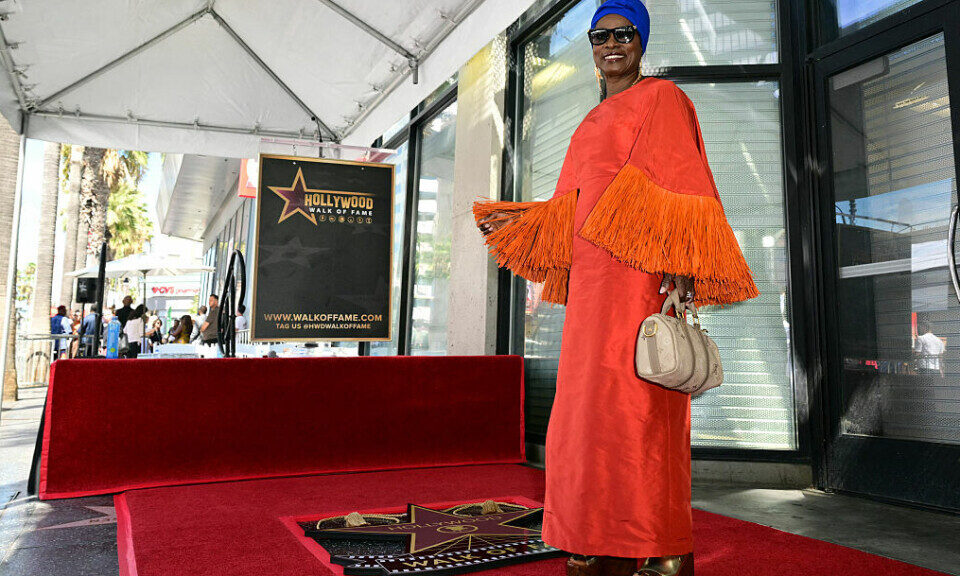
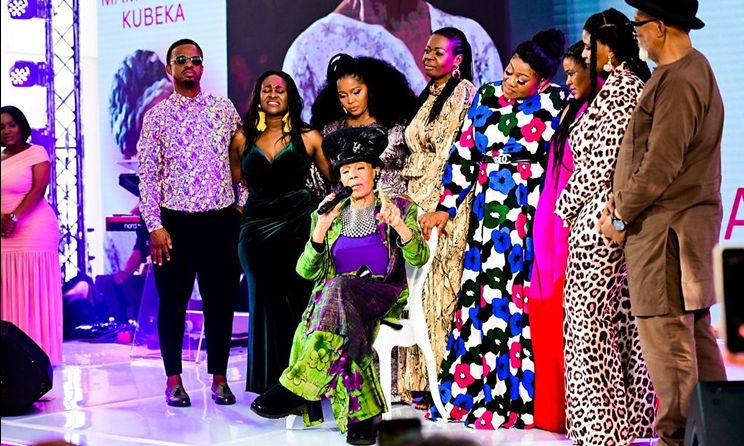
The Music In Africa Foundation (MIAF) is proud to announce its partnership with the Industrial Development Corporation (IDC) as a Strategic Implementing Partner (SIP) for its Social Employment Fund (SEF). Through this collaboration, MIAF is launching a new national programme designed to create jobs, address skills gaps, and strengthen South Africa’s creative industries — in line with the SEF’s overarching goal to generate work for the common good and build community value through employment, social contribution, and inclusive economic participation. Operating under the banner NEFCISA (National Employment Facility for Creative Industries in South Africa), the initiative will recruit and train participants, match them with host organisations, and place a minimum of 1 000 workers across the country. Key Objectives: Support employment and entrepreneurship in the creative industries. Offer skills development and training programmes. Foster partnerships between public and private creative sectors. Promote South African creativity at both provincial and national levels Foster community development through social contribution.

ACCES
ACCES

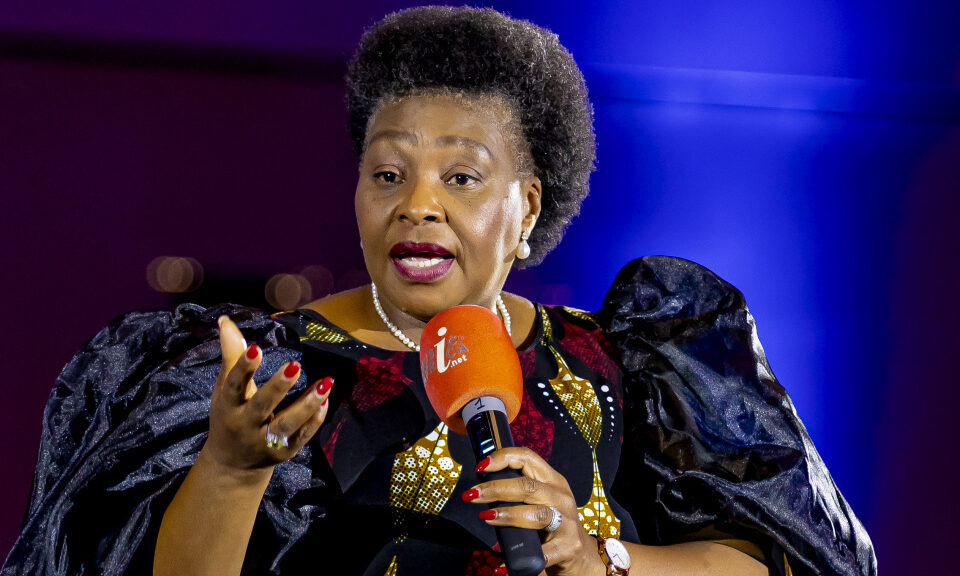
Chaque année, nous fournissons des informations générales afin de guider les participants dans la préparation de leur voyage. En plus de ce site, des mises à jour importantes seront envoyées par e-mail à tous les délégués inscrits. Assurez-vous de vous inscrire dès que possible. Pour plus d'informations, veuillez contacter [email protected] Continuez à consulter cette page pour plus d'information.  

Gender@Work
Gender@Work

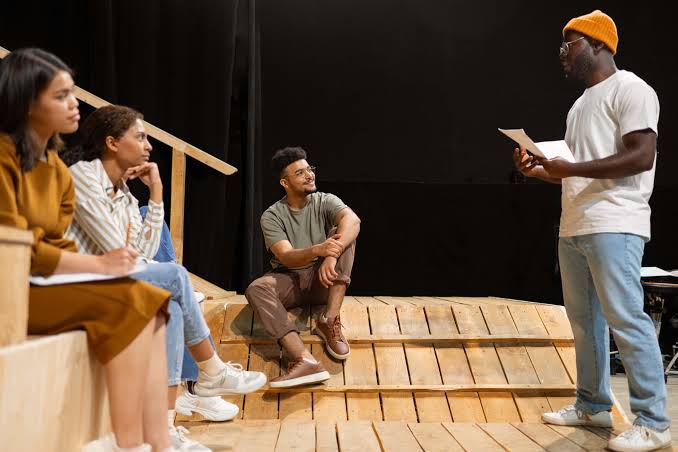
Music In Africa Gender @ Work is a three-year training programme aimed at upskilling and increasing the participation of female professionals in the African music sector. Launched by the Music In Africa Foundation (MIAF) in April 2019, the programme is connected to the MIAF’s ACCES music conference – a pan-African event held in a different African country every year. This connection enables the programme to reach new participants in a different African country every year. The programme marks the beginning of a more concerted effort by the Foundation to support the participation and inclusion of women in all facets of its programmes and the music sector in Africa as a whole. Over the three years, the programme will aim to address gender imbalances in the sector through training, lobbying, facilitating knowledge exchange and dialogues that foster the interest of women. The broader objectives of the programme are to: Provide industry training for women on critical music industry skills, focusing on: Stage management Electronic music production and recording Music business management Technical knowledge Provide an opportunity for both professional and aspiring women to benefit from the Music In Africa network and its broad range of activities in 2019, 2020 and 2021. Provide a solution-based platform in the form of a round table at ACCES with a view to identify challenges, discuss opportunities and lobby for the interests of female practitioners. Offer participants the opportunity to benefit from programmes offered by MIAF’s partners. Increase access to educational materials. Integrate participants in the broader ACCES programme to maximise experience and exposure to the industry. Record and present training materials on the www.musicinafrica.net, including but not limited to tutorials, templates and other best-practice materials. Communicate women-based themes that support the initiatives and messages of the programme. MAIN TRAINING ACTIVITIES Training in first country (Ghana): In the first year, participants will be trained on all aspects of stage management by a team of experienced stage managers from 10 to 17 November 2019. The programme will offer robust classroom training as well as practical, hands-on training in which participants will also be given the opportunity to manage various aspects of the ACCES performance programme. Training in second country: The second training iteration will take place at ACCES 2020 when the programme will diversify its course to include music production lessons and training on other music business topics. A round-table platform will also be introduced to coincide with the ACCES programme. Training in third country: The third training iteration will take place at ACCES 2021 in a different country, offering an advanced course. HOW DO YOU GET INVOLVED?  As a participant, facilitator or trainer: The programme enrolls up to 12 trainees every year. All opportunities are advertised publicly on this website, and will be added to this page. Please keep checking this page for new calls (below under UPDATES & CURRENT OPPORTUNITIES). As a partner Please contact Claire Metais at [email protected]. APPLY The call for applications for 2020 will be announced soon. The Music In Africa Gender @ Work programme is made possible with the support of the Prince Claus Fund, Siemens Stiftung and Goethe-Institut.

Sound Connects Fund
Sound Connects Fund

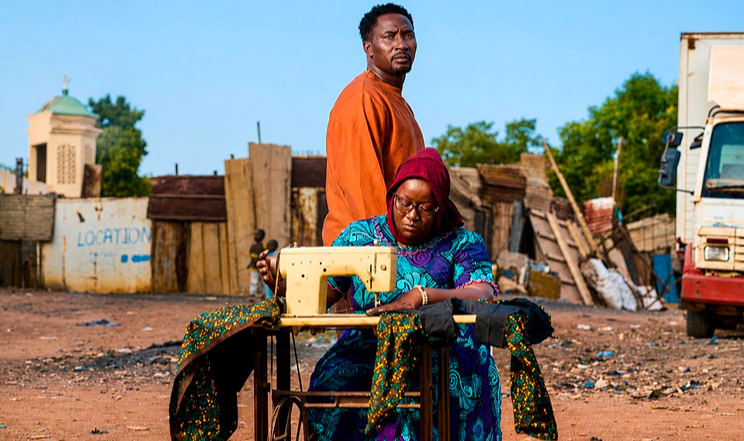
Pour les praticiens et les organisations culturels et créatifs opérant en Afrique australe, l’accès au financement reste un défi majeur. La pandémie de COVID-19 a également eu un impact massif sur les politiques gouvernementales, les dépenses et l’économie en général, et a vu les dépenses consacrées à la culture reléguées plus bas dans la liste des priorités. De plus, les industries culturelles et créatives citent régulièrement quatre domaines principaux où l’investissement est nécessaire pour la croissance : une visibilité accrue, la mobilité incluant l’accès à de nouveaux marchés, le financement et les structures de soutien.

Music In Africa Live

MUSIC IN AFRICA LIVE Lancé en 2020 pour une durée de 3 ans, Music In Africa Live est une initiative visant à soutenir l'écosystème de la musique africaine face aux contraintes imposées par la pandémie de COVID-19 ; le projet a été lancé par la Fondation Music In Africa (MIAF) en partenariat avec le ministère fédéral allemand des Affaires étrangères, Siemens Stiftung et le Goethe Institut. Plus de 30 aides sont disponibles dans le cadre de la troisième édition de Music In Africa Live, dans 3 catégories :  showcases, renforcement des compétences et plaidoyer, en conformité avec les modalités énoncées.

Instrument Building And Repair Project

The overarching objective of Music In Africa Foundation’s Instrument Building and Repair (IBR) project is to encourage the formalisation and professionalisation of instrument-making and repair in Africa, especially in relation to indigenous African instruments. Background In 2014, the Music In Africa Foundation (MIAF) identified as one of its focus areas for development the need to encourage young people from music and music-related sectors to consider instrument-making as a career. This need extended itself from the recognition that the making of traditional African instruments is not a widely practiced skill and seems to be limited to the older generation. Traditional African instrument makers are also few and far between, making communication and logistics between teachers and learners an obstacle. When instrument building workshops take place, budgetary constraints do not allow teachers or learners the time to explore the finer details of an instrument. Based on these observations, the MIAF designed and piloted the first IBR workshop at the Dhow Countries Music Academy (DCMA) in Zanzibar in February 2015. In 2016, the foundation received funding from the South African National Lotteries Commission to implement a much bigger version of the project in Johannesburg. The project drew participants from five African countries. 25 students from South Africa, Ghana, Senegal, Kenya and Ethiopia were trained on how to build and repair musical instruments. The instruments that they made were: Traditional Instruments: Umakhweyana and Marimba Conventional Instrument: Dulcimer guitar The workshop culminated in a traditional instruments concert at the Wits Theatre in Johannesburg. It is the MIAF’s aim to roll out similar workshops in as many African countries as possible over the next few years. Objectives Developing awareness of musical instrument makers in Africa with a view to promote their work to a wider global audience. Facilitating the sharing and transfer of skills in indigenous instruments between countries on the continent. Encouraging the formalisation and professionalisation of instrument-making and repair in Africa, especially in relation to indigenous instruments. Helping instrument makers develop their careers. Fostering the rapid monetisation and sustainable development of instrument-making and repair in Africa. Promoting constant exchange of ideas, expertise, experiences and know-how among instrument makers in Africa. Facilitating the identification of existing gaps in the field with a view to contribute new solutions. Facilitating the transfer of knowledge and skills of indigenous instruments between younger and older generations. 2020 edition The MIAF has also announced that multi-instrumentalist and instrument maker Joe Makhanza will facilitate one of the workshops on the building of the kamale ngoni instrument. Kamale ngoni is a kora-like, stringed instrument that originated in West Africa. The instrument contributed to the rise of Wassoulou music in the 1970s and 1990s. Makhanza was born in Giyani in South Africa's Limpopo province. He completed a bachelor of music degree and a post-graduate diploma in arts marketing from Wits University. He is currently completing his masters in ethnomusicology and is a part-time lecturer in African music studies at Rhodes University. He plays the kora, mbira, valiha, masenqo, xiwewe, ngoni ba and xizambi, among others. He also manufactures the aforementioned instruments. The MIAF will confirm more trainers who will join the workshops as well as the other instruments that will be featured in the 2020 IBR programme.  Apply to participate here. Connect with us on Twitter, Instagram and Facebook, and subscribe to our monthly newsletter. The Music In Africa Instrument Building and Repair project is funded by the National Lotteries Commission. It is implemented in partnership with Siemens Stiftung, Goethe-Institut, Wits Theatre and Kaya FM.

Overviews

La musique classique au Ghana

07 Déc 2015 - 14:10

cc-img flag-img

Par Dr. Godwin Kwafo Adjei

Nous allons tracer les origines de la musique classique au Ghana, ses promoteurs ainsi que les orchestres et institutions réputés dans la promotion de ce genre. Nous verrons aussi la genèse et l’importance accordé à ce genre dans le paysage musical actuel.
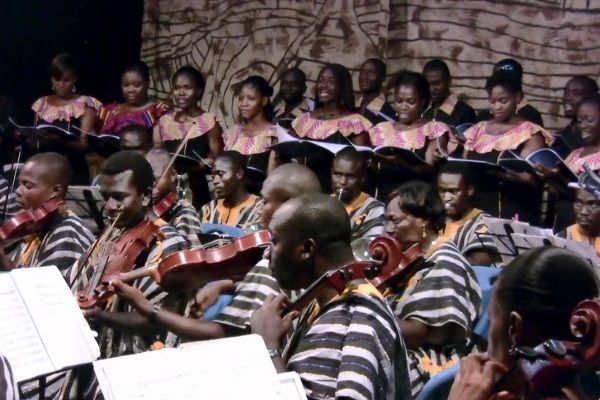
Ghana Orchestra & harmonious Chorale-Kokrokoo. Photo: YouTube

On peut classer en deux groupes principaux la musique classique (appelé aussi musique savante) au Ghana: Il s’agit de la chorale, qui est la forme la plus populaire, et l’orchestre. La popularité de la chorale au Ghana est largement attribuée à l’introduction des hymnes chrétiens occidentaux par des missionnaires à partir 19e siècle et au-delà. L’élimination systématique des formes musicales indigènes par les missionnaires en faveur de leurs hymnes explique en partie la prépondérance de styles de musiques de chorales occidentales au Ghana (Dor 2005 ; Agawu 2003 ; Omojola 2001 ; Nketia 1974).

Quelques personnalités importantes dans la musique classique ghanéenne

On attribue ce qu’on appelle actuellement la ‘musique savante ghanéenne’, au travail d’indigénisation par le pionnier Ephraim Amu dans les années 1920 (Dor 2005 ; Agawu 1994 ; Nketia 2004). Ephraim Amu[i] a révolutionné les caractéristiques distinctes des hymnes des chorales occidentales. L'action pionnière d’Amu est l’adoption de deux ou parfois trois temps pour toutes ses œuvres africaines-son accentuation sur la rythmique vocale, sur la longueur conséquente des mots et syllabes comme éléments déterminants des valeurs relatives des notes auxquels ils sont assignés ; ainsi que la construction de mélodies de chorale comme reflets des contours vocaux des chansons- ont galvanisé la révolution de ce qui est désormais connu comme la musique classique ou les chants de chorale ghanéennes. Le travail d’Amu révolutionne non seulement les compositions classiques et des chorales mais aussi les œuvres instrumentales telles que des pièces pour piano composées avec l’intention de soit refléter ou accompagner du texte (Dor 1993 ; Agawu & Amu 1987).

D’autres noms de personnalités qui ont contribués dans ce domaine sont: Dr. Ephraim Amu, Prof. émerite J. H. Kwabena Nketia, Dr. Danso Abiam; feu Rev. Otto Boateng, B. G. Kwami, I. D. Riverson, R. O Danso, Atta Anan Mensah, E. K. Aggor. N. Z Nayo, S. G Boateng, J. M Dosoo, R. K. Ndo, J. T. Essuman, Archbishop J. K. Amissah, Kwesi Baiden et Adu Safo.

Les efforts du pionnier Ephraim Amu ont aidé à constituer les bases pour l’émergence d’une jeune génération de compositeurs ghanéens qui ont, à leur manière de par leurs œuvres contribuées à la croissance et à la survie de la musique savante ghanéenne. La plupart de ces compositeurs ont été formé au sein d’un système d’éducation musicale à dominance européenne et sont des musicologues ou ethnomusicologues qui ont combiné une carrière dans la composition et la formation académique. On peut penser notamment au musicologue réputé J.H.K. Nketia, à Ata Annan Mensah, N.Z. Nayo, Gyimah Labi, Otto-Boateng, A. Amissah, Adu Safo, Eric Nyarko, Kenneth Kafui and William Anku, parmi d’autres (Agordoh, 2011:34).

On cite J.H. Kwabena Nketia[ii] comme le successeur naturel d’Amu comme le plus grand compositeur ghanéen. Sa carrière musicale se distingue par un désir de composer, ancré dans l’étude et des investigations approfondies de la musique traditionnelle africaine.

La vision d’Amu continue d’influencer les œuvres de compositeurs, en termes de style et de direction, particulièrement dans l’intégration d’éléments musicaux africains et européens.

Institutions promouvant la musique classique

On relève une variété d’institutions renommées pour leur promotion de la musique savante au Ghana. Il y a parmi elles, le Ghana National Symphony Orchestra[iii] (fondé en 1959) ; des institutions éducatives comme les chorales d’écoles ou universitaires ; les chorales d’églises protestantes et de jeunes et d’artistes contemporains de musique savante.

Les autres institutions proviennent des agences comme les orchestres de la Police et de l’Armée, des Douanes, des Pompiers et les orchestres des services pénitenciers (Nii-Dortey& Arhine 2010). La plupart de ces institutions jouent durant les périodes festives de Noël et de la Pâque, lors de concours de chants d’écoles ou d’universités, et surtout lors de cérémonies d’inauguration de nouveaux présidents, les fêtes d’indépendance et fêtes nationales.

Toutes les compositions de chorales au Ghana reflètent essentiellement les principes de base d’Amu non sans quelques remarquables innovations : cela comprend les techniques transformationnelles de Nketia pour ses solos et duos de piano (Nketia 2004) et le ‘pianisme’ africain par Gyimah Larbi (Larbi 1994) et Akin Euba (Omojola 2001). Les tendances évolutives de l’industrie couplées aux obstacles économiques poussent l’industrie musicale ghanéenne à se conformer aux standards globaux afin de réussir. Cette industrie est toutefois pavée d’obstacles qui doivent être adressés afin de la rendre plus attrayante pour les jeunes artistes contemporains en devenir.

Références

  • Agordoh, A. A. (2004). The Music of Amu and Nayo. Royal Gold publishers Ltd, Madina- Accra, Ghana.
  • Agordoh, A. A. (2011). The Development of Church Music in Ghana. Sundel Services, Accra, Ghana.
  • Agawu, K (2001). African music as text. Research in African Literatures, vol. 32 No 2:3-7. Bloomington: Indiana University Press.
  • Agawu, K. (1996). The Amu legacy: Ephraim Amu 1899-1995.Africa: journal of the international African Institute, Vol 66, No, 2: 274-279.
  • Agawu, K. and E. Amu (1987). The making of a composer. Black Perspectives in Music, Vol. 15, No. 1: 51-63).
  • Nii-Dortey, M. and A. Arhine (2010). The performing arts and the post-colonial Ghanaian experience: the Ghana National Symphony Orchestra in perspective. Research Review, Vol. 26, No.1: 37-60.
  • Collins, J. E (2002) West Africa. The Ghanaian music industry: a quarter century of problems.

[i] Né le 13 septembre 1899 dans un petit village dans la région de la Volta, Ephraim Amu a grandi pour faire figure d’autorité dans la musique ghanéenne. Il commença par étudier et enseigner au Ghana puis il a étudié au Royal College of Music à Londres (1937-1942) et est retourné au Ghana pour continuer d’enseigner à Achimota College à Accra. Dr. Amu a aussi enseigné à l’Université des Sciences et de Technologie de Kumasi et ensuite à l’institut d’études africaines de l’Université du Ghana, Legon (Nketia : 222-226). Amu a produit un bon nombre de musique vocale avec des textes en langues ghanéennes et écrit des compositions pour des flutes traditionnelles en bambou (atenteben). On lui reconnait le développement d’un atenteben modifié, largement utilisé dans la musique néo-africaine au Ghana et à l’extérieur. Ses compositions emploient divers genres musicaux tels que la highlife, la pop, la chorale et la musique Asafo.
Les œuvres d’Amu comprennent : 1. ‘Bonwere Kentewene’ : le compositeur tente de refléter les sons et rythmes complexes de lorsque l’on tisse un tissu de kente en utilisant des voix et le piano. 2. ‘Alegbegbe’ (Car Dieu a tant aimé le monde). 3. ‘Miva miva’ (Viens, viens). 4. ‘Momma yenko so mforo’ (continuons de grimper) 5. ‘Tete wo bi’ (les anciens ont quelquechose à offrir) 5. ‘Yen ara Asaase ni’ (Cette terre nous appartient): cette chanson est présentement considérée comme le deuxième hymne national non-officiel du Ghana.
Amu a à son actif six chansons patriotiques, trois profanes et huit philosophiques. La majoritg des oeuvres d’Amu ont des themes sacrés: ce sont des chansons commémorant la petitesse de l’homme devant Dieu et des invocations pour que Dieu guide le monde chancelant. Il a aussi des chansons sacrées sur des évènements familiers dans la vie du Christ et deux chansons sur la vie sociale en general. i Il a quatre oeuvres instrumentals à son actif don’t Pipes and drums, Miato agblemaa, Agyinamoa wuo etc.
[ii] Kwabena Nketia est né le 22 juin 1921 à Mampong, à l’époque un petit village dans la region Ashanti. Il fit son education primaire et se forma ensuite pour être professeur au Presbyterian Training College à Akropong, Akuapim où il enseigna ensuite et où il fut nommé directeur principal en 1952. Nketia voyagea à l’age de 23 ans grace à une bourse d’étude du government ghanéen pour approfondir ses études. Il étudia à la School of Oriental and African Studies (en linguistique) et Birkeck College de l’Université de Londres (la musique, l’anglais et l’histoire). En 1958, il reçu un programme de bourse de la Rockefeller Foundation d’un an pour étudier à la Julliard School of Composition, l’Université de Colombia et de Northwestern, toutes aux Etats-Unis. Il retourna au Ghana et fut promu au grade de professeur agrégé et finalement de professeur en 1963. Il fut nommé directeur de l’institut d’études africaines deux ans plus tard. Nketia étudia avec le Rev. Danso qui était un étudiant d’Ephraim Amu. Ses oeuvres de chorales les plus précoces étaient grandement influences par l’oeuvre pionnière d’Amu.
Nketia a écrit des oeuvres vocales et instrumentales. Ses oeuvres de chorale comprennent ‘Adanse Kronkron’ (témoignage divin) ‘Mokamfo No’(Louons Le) and Wose Aseda (Tu mérites la grace ). Il a aussi grandement écrit pour le piano: ‘Playtime’, ‘At the Crossroads’ (1961), ‘Libation’, ‘Meditation’, ‘Dagarti Work Song’ (1961), ‘Owora’ (1961), ‘Builsa Work Song’, ‘Volta Fantasy’, ‘Contemplation’, ‘Antubam’ et ‘The Republic Suite’. ‘The Republic Suite’ fut écrit pour commémorer la première fête de la République au Ghana qui célébrait l’indépendance du pays et qui fut inaugurée par Nketia au clavier et Charles Simmons à la flute devant un auditoire distingué comprenant le Président Kwame Nkrumah le 1er juillet 1960 dans le grand Hall de l’Université du Ghana. Chacun des sept mouvements de la série est une représentation des aspects de l’indépendance du Ghana du Royaume-Uni en 1957.

Please se connecter to post a comment.

Most popular

Disclaimer: Music In Africa provides a platform for musicians and contributors to embed music and videos solely for promotional purposes. If any track or video embedded on this platform violates any copyrights please inform us immediately and we will take it down. Please read our Terms of Use for more.

newsletter banner

Abonnez-vous à notre newsletter

Retrouvez-nous sur les réseaux sociaux