





















































La naissance de la musique éthiopienne moderne
08 Déc 2016 - 20:19


La musique éthiopienne est sans doute la tradition la plus mystique des cultures musicales en Afrique. Depuis les années 1960, elle s’est remarquablement modernisée. Ce texte donne un aperçu de la musique éthiopienne moderne.

Les origines
Sous le règne d’Aksoum au 4ème siècle avant JC, la musique éthiopienne se caractérise par ses accentuations. Ce royaume entretient alors des liens importants avec l'Empire romain et l'Inde.
Les instruments à vent sont introduits au pays à la fin du 19ème siècle sous Négus Ménélik, avec l'arrivée des délégations italiennes, anglaises et françaises. La musique est alors fortement liée à la politique.
En dehors de la courte occupation italienne des troupes du dictateur Mussolini, de 1935 à 1940, l'Éthiopie, contrairement à de nombreux autres pays africains, n'a jamais été colonisée. Cette situation exceptionnelle explique en partie la particularité des mélodies éthiopiennes.
Durant le long règne de l'empereur Hailé Sélassié I, qui débute en 1930, l'orchestre militaire de l’état, l'Imperial Bodyguard Band, est l'un des meilleurs. Dans les années 1930, Nersès Nalbandian, un musicien arménien survivant du génocide, recru de l'Empereur Sélassié, ouvre une école de musique à Addis. Nalbandian forme bon nombre des meilleurs musiciens du pays. Ces musiciens sont alors l'élite incorporée dans les orchestres, notamment Army Band, Police Band, Hailé Sélassié Theater, etc.
La musique s’inspire alors du rock'n'roll et twist de l'époque sans pour autant perdre ses racines. Pour mieux comprendre cet esprit entre tradition et modernité, il faut écouter "Tezeta" (qui signifie "nostalgie" en amharique) interprétée par Mahmoud Ahmed. Cette puissante chanson sonde l'âme du pays.
[video:https://www.youtube.com/embed/r2GBqKgwk8Y autoplay:0]
Swinging Addis
Cette nouvelle musique est très populaire dans les années 1960 et 1970 auprès des azmaribets, les cabarets de la capitale Addis-Abeba. La ville est même surnommée « Swinging Addis ». Du Stereo Club à Ebony en passant par les clubs Axum Adarash, la musique est partout dans les rues et un nouveau son se fait entendre avec l'avènement de la musique amplifiée. Sans jamais perdre son âme, elle est aussi naturelle et hypnotique que la célèbre cérémonie du café éthiopien.
En 1969, en dépit de la censure impériale, Amha Eshété créé son propre label, Amha Records. Au même moment, les orchestres symphoniques privés notamment Ghion band ou encore Ras Band, joue dans les hôtels d’Addis. Un vent de liberté souffle à la fin du règne d'Hailé Sélassié, mais il est brutalement interrompu par la révolution de juillet 1974. Les orchestres sont dissous sous le régime militaire du Derg de Mengestu Hailé Mariam. La plupart des grands musiciens luttent pour survivre. « Ce n’était pas facile à l’époque» déclare le chanteur Mahmoud Ahmed. En 1972, Getachew Kassa interprète une chanson pop éponyme. Un chef-d'œuvre qui témoigne de l'émancipation culturelle et musicale du pays à cette époque. Le morceau se vend à 3000 exemplaires et devient un succès national.
Mahmoud Ahmed : l’Elvis éthiopien
Parmi la vague de musiciens éthiopiens modernes, la carrière de Mahmoud Ahmed est sans doute l'une des plus remarquables. Le modeste cireur de chaussures de la tribu Gurage réussit à trouver son chemin en tant que musicien à Addis-Abeba, grâce à son talent et sa persévérance. « J'étais assis sur ma boîte à chaussures en écoutant de la musique éthiopienne sur la radio Hailé Sélassié. Il y avait un programme chaque mardi et jeudi. Je pouvais écouter la musique de Menelik Wesnatchew, Kassa Tessema, Bizunesh Bekele, Tilahun Gessesse. C’était un temps de grande créativité musicale », se rappelle-t-il.
Bientôt la vocation d’artiste de ce chanteur à la voix d’or et à la danse inspirée d’Elvis Presley, se confirme. « Je l'ai vu dans un film », dit-il. « Il dansait bien et j'ai imité ses pas de danse ».
En 1962, Mahmoud est engagé comme homme à tout faire par le propriétaire de l'Arizona Club. Il a la chance de chanter pour l’Imperial Bodyguard Band. C’est un grand moment pour Mahmoud : « J'ai rencontré l'empereur à plusieurs reprises. Nous avons même joué au Palace ». En 1974, l'orchestre est dissout suite à la révolution. La dictature durera jusqu'en 1991.
Mahmoud et les groupes Ibex et Roha, font de leur mieux pour survivre. Pendant des années, il n’est plus sous les feux des projecteurs - jusqu'à la sortie de son tube ‘Ere mela mela’ en 1986, qui connaîtra un franc succès.
En 2015, Mahmoud Ahmed part en tournée mondiale avec un groupe français, Badume’s band. Le groupe l’accompagnera en tournée pendant plus de 10 ans, soutenant d’autres chanteurs éthiopiens comme Alemayehu Eshete.
Mulatu Astatke : Le roi de l’Éthio-jazz
Originaire de Jimma, situé à 300km d'Addis-Abeba, Mulatu Astatke a l’opportunité d’étudier la musique à l'étranger. Dans les années 1960, Mulatu a, comme Fela Kuti, une expérience très intéressante du jazz qu’il fusionne aux rythmes éthiopiens. L'un de ses premiers 33 tours, ‘Mulatu of Ethiopia’, est représentatif de cette fusion de styles avec des morceaux comme 'Afro Latin Soul'. Mulatu est également le premier Africain issu de la célèbre Berklee College of Music de Boston aux USA. Cette influence occidentale et son utilisation du vibraphone ont contribué à donner ce nouveau genre : l’Éthio-jazz.
Mulatu définit sa musique comme « un mélange de différentes accentuations éthiopiennes. Elle est fondée sur cinq notes contre 12. Il suffit de combiner les 5 notes sans pour autant perdre de son authenticité. L’Éthio-jazz ne ressemble à aucune autre musique. L'émotion de cette musique provient du passé avec des structures harmoniques de plus de mille ans ».
En 2005, grâce à la bande originale du film Broken Flowers réalisé par Jim Jarmursch, l'étrange musique de Mulatu gagne en popularité. « Cela m'a donné une visibilité internationale » confie-t-il. « Même les enfants de Bob Marley ont commencé à apprécier ma musique. Tous mes concerts ont affiché complet ! ».
Depuis, des groupes d'Éthio-jazz ont émergé un peu partout dans le monde. Il y a cependant un écart entre l'écho international de l'Éthio-jazz et la musique éthiopienne moderne (depuis l’an 2000) qui ne correspond pas aux normes de la musique originale des années 60 et 70.
Néanmoins, l’Éthio-jazz est devenu l'un des ambassadeurs de l'Éthiopie. Aujourd'hui encore, la culture éthiopienne fascine beaucoup de gens. Dans son plus récent album, ‘Sketches of Ethiopia’ (World Village, 2013), Mulatu effectue certaines recherches musicales sur son propre pays. L'une de ses compositions, intitulée Gumuz, fait référence à cette tribu du nord de l'Éthiopie. « Ils sont musicalement fascinants - à un point que la chanteuse RnB Beyoncé Knowles a travaillé sur des chorégraphies inspirées de danses de la région ! » dit Mulatu.
Mulatu tente également de moderniser le krar, un instrument traditionnel à 5 ou 6 cordes, décoré de tissus et de perles. Il est joué par les Azmaris (musiciens traditionnels) dans les musiques populaires éthiopienne et érythréenne. De nos jours, le krar est amplifié comme une guitare électrique. « Cet instrument contribue à la diversité de l'Éthio Jazz » explique Mulatu. « Je mélange le son de cet instrument traditionnel à ceux des instruments européens comme le saxophone. J'essaie de le faire évoluer. Pour le moment, il ne peut jouer que quatre à cinq accents de l'Éthio-jazz ».
[video:https://www.youtube.com/embed/yXinA5cXOmw autoplay:0]
L'essor de la musique éthiopienne
En 1996, Francis Falceto, un français amoureux du pays, lance les fameuses compilations Ethiopiques sous le label Buda Musiques. Ces compilations feront connaitre cette musique au reste du monde. Ce spécialiste de la musique définit la musique éthiopienne des années 60 : « Les musiciens comme Alemayu Eshete, le saxophoniste Getachew Mekurya, Mahmoud Ahmed... interprètent la musique éthiopienne moderne, la pop éthiopienne ».
Aujourd’hui, les groupes comme Antibalas, Souljazz Orchestra ou Budos Band reprennent des éléments de la musique éthiopienne des années 60. Certains comme les groupes français Akalé Wubé et Badume's Band ou The Heliocentrics du Royaume-Uni, interprètent de l’Éthio-jazz. Les artistes éthiopiens comme la chanteuse Gigi (marié au jazzman américain Bill Laswell), Krar Collective et Addis Acoustic Project dirigé par Girum Mezmur créent de nouveaux genres de musique éthiopienne. Compte tenu de leur succès international, Addis fera parler d’elle pendant longtemps.
Références
- Entretien avec Mahmoud Ahmed à Paris, France, en 2014/2015
- Entretien personnel avec Mulatu Astatke à Paris, France, en 2014/2015
Pour en savoir plus
- Falceto, Francis. 2000. ‘Land of Wax and Gold’. In Broughton, S. and M. Ellingham, with McConnachie, J. and Duane, O. (ed.), World Music, Vol. 1: Africa, Europe and the Middle East, p. 480–487. Rough Guides Ltd/Penguin Books.
- Mazzoleni, Florent. 2011. ‘Afro Pop, L'âge d'or des orchestres africains’. Le Castor Astral, February 2011. Available online at http://www.castorastral.com/livre/afro-pop-lage-dor-des-grands-orchestres-africains/
- Falceto, Francis. 2015. ‘Abyssinie Swing, images de la musique éthiopienne moderne’. France Musiques Archive, Carnet de voyage. Available online at http://www.francemusique.fr/emission/carnet-de-voyage/2014-2015/abyssinie-swing-images-de-la-musique-ethiopienne-moderne-06-07-2015-19-00
Remerciements particuliers à Adrien N'Diaye


Most popular

Top 10 des artistes africains les plus populaires sur YouTube
08 Fév 2023

Top 10 des artistes congolais les plus streamés en France en 2026
05 Mai 2026

Chronique : dans « ADN », Gally Garvey raconte la rumba congolaise autrement
24 Oct 2026

ACCES DÉVOILE UNE PROGRAMMATION D’EXCEPTION POUR SON ÉDITION 2026
23 Oct 2026

ACCES dévoile une programmation exceptionnelle pour son édition 2026
14 Oct 2026
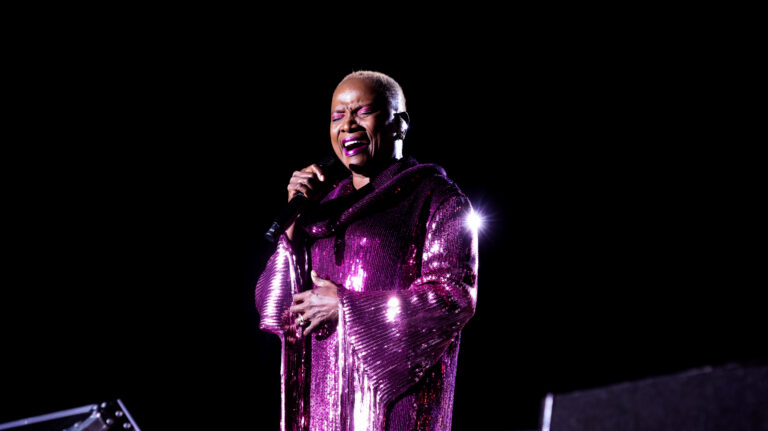
Afrique du Sud: Angélique Kidjo, Ibrahim Maalouf et Anaïs Rosso font vibrer le Joy of Jazz
12 Oct 2026
Disclaimer: Music In Africa provides a platform for musicians and contributors to embed music and videos solely for promotional purposes. If any track or video embedded on this platform violates any copyrights please inform us immediately and we will take it down. Please read our Terms of Use for more.

Abonnez-vous à notre newsletter
Retrouvez-nous sur les réseaux sociaux


Please se connecter to post a comment.