




















NEFCISA
NEFCISA

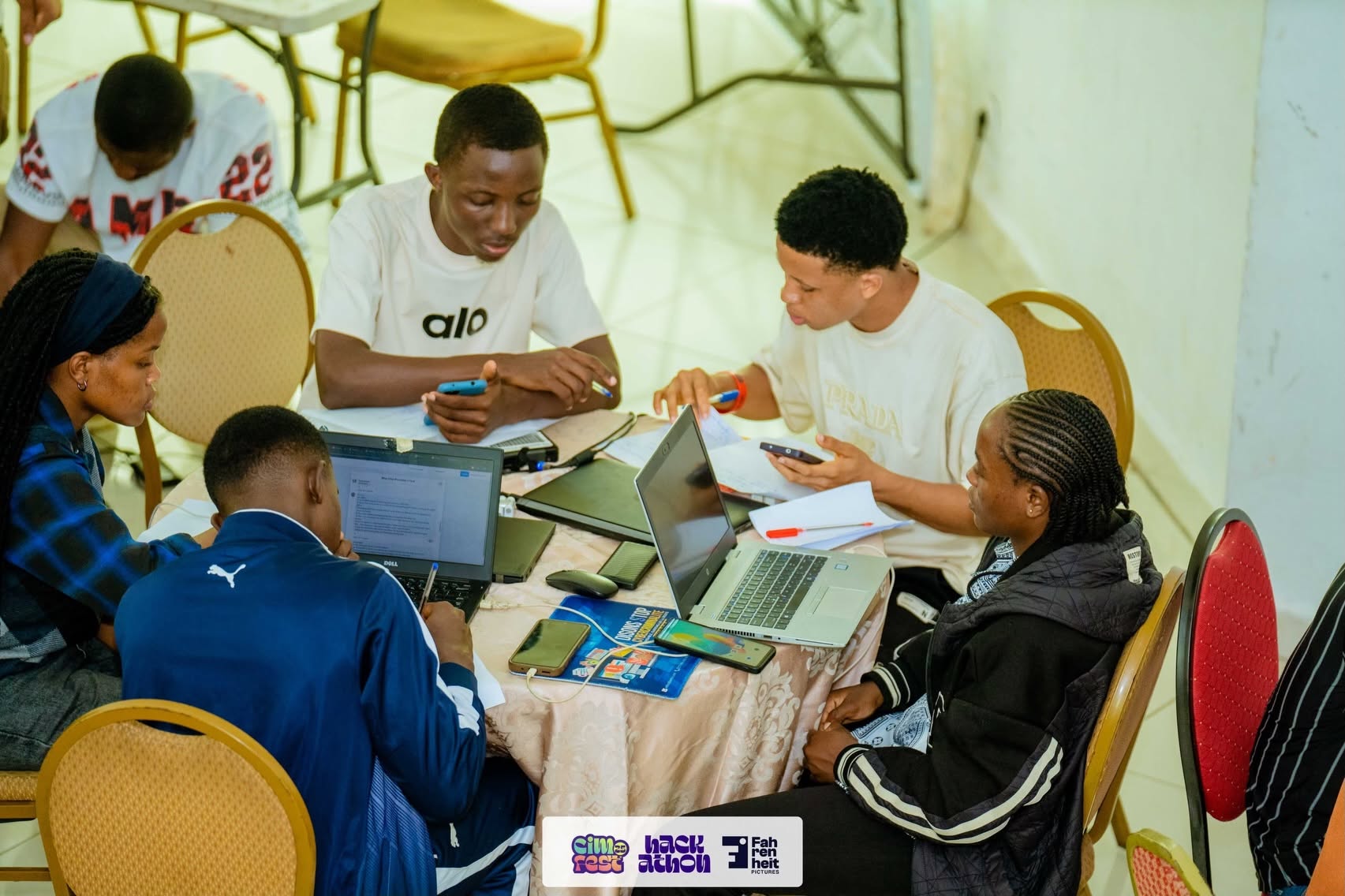
The Music In Africa Foundation (MIAF) is proud to announce its partnership with the Industrial Development Corporation (IDC) as a Strategic Implementing Partner (SIP) for its Social Employment Fund (SEF). Through this collaboration, MIAF is launching a new national programme designed to create jobs, address skills gaps, and strengthen South Africa’s creative industries — in line with the SEF’s overarching goal to generate work for the common good and build community value through employment, social contribution, and inclusive economic participation. Operating under the banner NEFCISA (National Employment Facility for Creative Industries in South Africa), the initiative will recruit and train participants, match them with host organisations, and place a minimum of 1 000 workers across the country. Key Objectives: Support employment and entrepreneurship in the creative industries. Offer skills development and training programmes. Foster partnerships between public and private creative sectors. Promote South African creativity at both provincial and national levels Foster community development through social contribution.

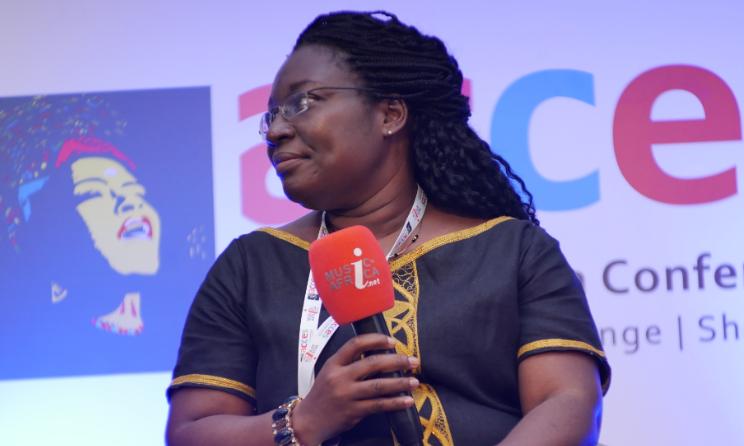
ACCES
ACCES

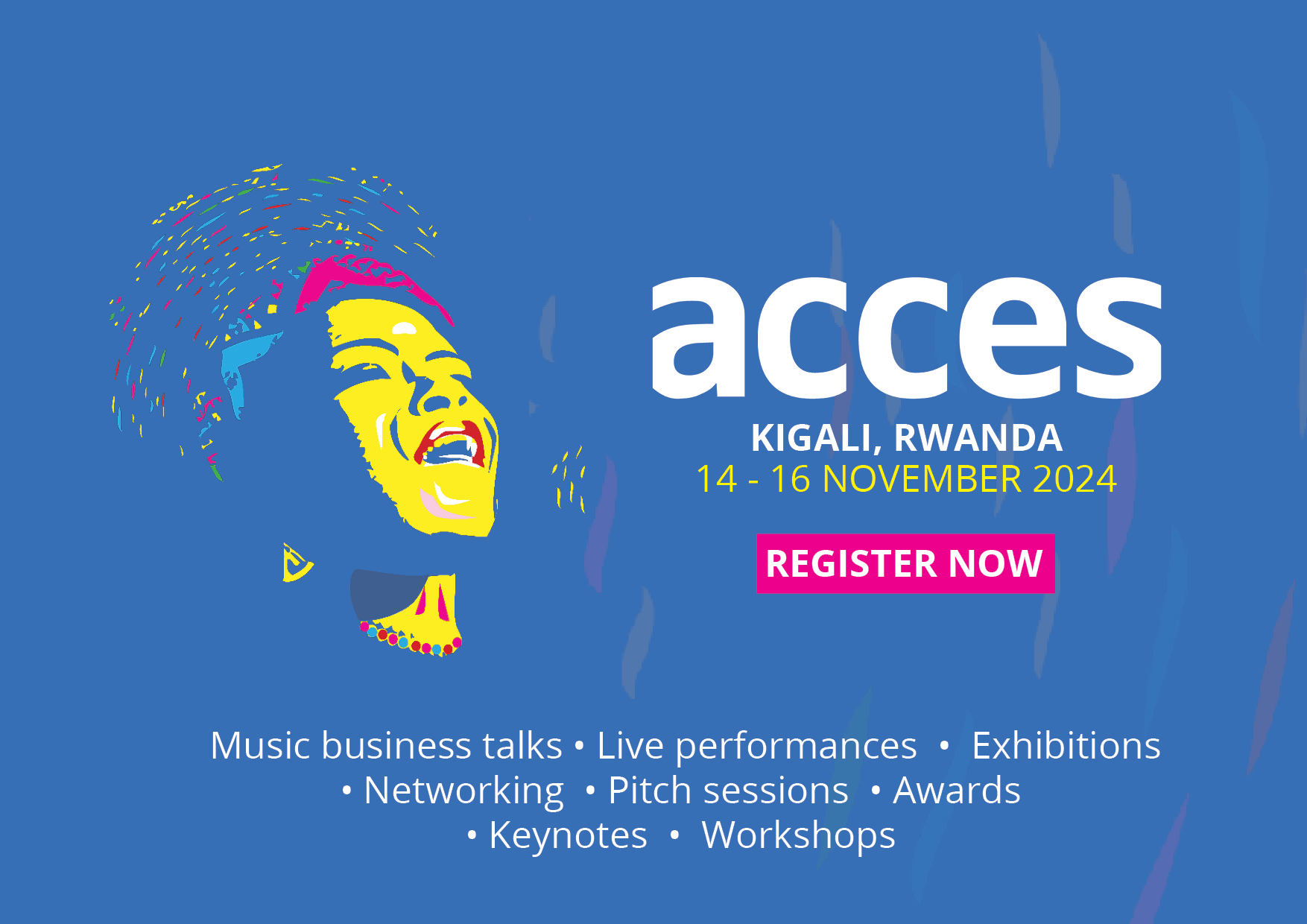
Chaque année, nous fournissons des informations générales afin de guider les participants dans la préparation de leur voyage. En plus de ce site, des mises à jour importantes seront envoyées par e-mail à tous les délégués inscrits. Assurez-vous de vous inscrire dès que possible. Pour plus d'informations, veuillez contacter [email protected] Continuez à consulter cette page pour plus d'information.  

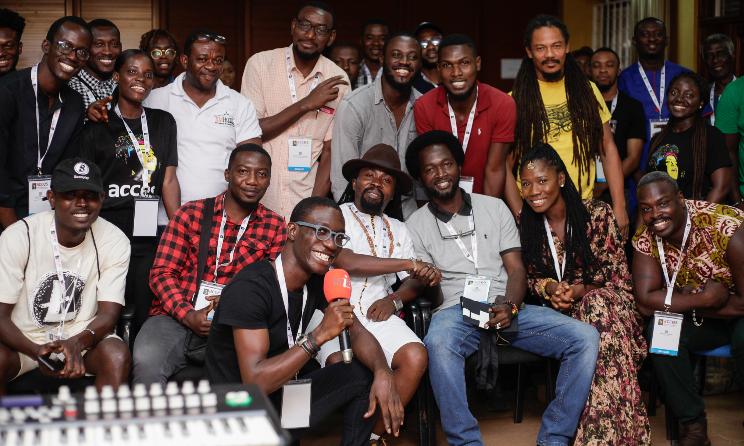
Gender@Work
Gender@Work

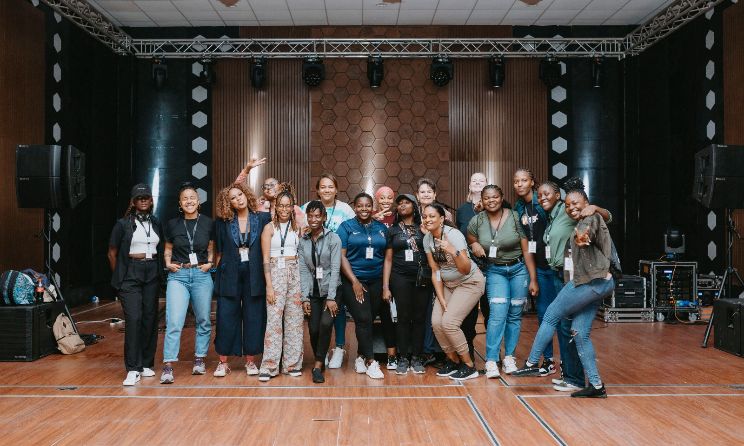
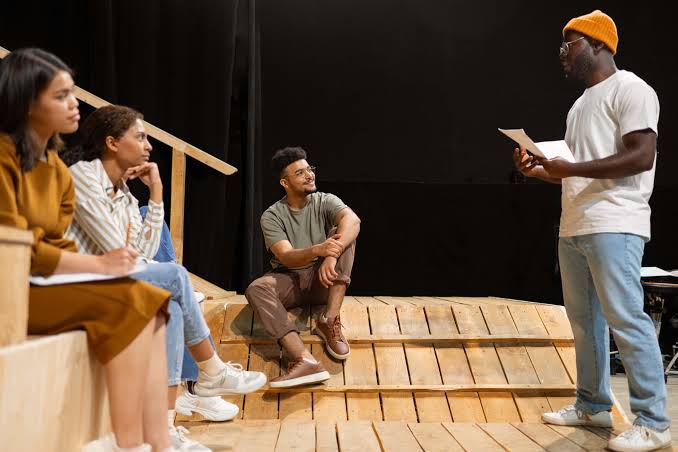
Music In Africa Gender @ Work is a three-year training programme aimed at upskilling and increasing the participation of female professionals in the African music sector. Launched by the Music In Africa Foundation (MIAF) in April 2019, the programme is connected to the MIAF’s ACCES music conference – a pan-African event held in a different African country every year. This connection enables the programme to reach new participants in a different African country every year. The programme marks the beginning of a more concerted effort by the Foundation to support the participation and inclusion of women in all facets of its programmes and the music sector in Africa as a whole. Over the three years, the programme will aim to address gender imbalances in the sector through training, lobbying, facilitating knowledge exchange and dialogues that foster the interest of women. The broader objectives of the programme are to: Provide industry training for women on critical music industry skills, focusing on: Stage management Electronic music production and recording Music business management Technical knowledge Provide an opportunity for both professional and aspiring women to benefit from the Music In Africa network and its broad range of activities in 2019, 2020 and 2021. Provide a solution-based platform in the form of a round table at ACCES with a view to identify challenges, discuss opportunities and lobby for the interests of female practitioners. Offer participants the opportunity to benefit from programmes offered by MIAF’s partners. Increase access to educational materials. Integrate participants in the broader ACCES programme to maximise experience and exposure to the industry. Record and present training materials on the www.musicinafrica.net, including but not limited to tutorials, templates and other best-practice materials. Communicate women-based themes that support the initiatives and messages of the programme. MAIN TRAINING ACTIVITIES Training in first country (Ghana): In the first year, participants will be trained on all aspects of stage management by a team of experienced stage managers from 10 to 17 November 2019. The programme will offer robust classroom training as well as practical, hands-on training in which participants will also be given the opportunity to manage various aspects of the ACCES performance programme. Training in second country: The second training iteration will take place at ACCES 2020 when the programme will diversify its course to include music production lessons and training on other music business topics. A round-table platform will also be introduced to coincide with the ACCES programme. Training in third country: The third training iteration will take place at ACCES 2021 in a different country, offering an advanced course. HOW DO YOU GET INVOLVED?  As a participant, facilitator or trainer: The programme enrolls up to 12 trainees every year. All opportunities are advertised publicly on this website, and will be added to this page. Please keep checking this page for new calls (below under UPDATES & CURRENT OPPORTUNITIES). As a partner Please contact Claire Metais at [email protected]. APPLY The call for applications for 2020 will be announced soon. The Music In Africa Gender @ Work programme is made possible with the support of the Prince Claus Fund, Siemens Stiftung and Goethe-Institut.

Sound Connects Fund
Sound Connects Fund

Pour les praticiens et les organisations culturels et créatifs opérant en Afrique australe, l’accès au financement reste un défi majeur. La pandémie de COVID-19 a également eu un impact massif sur les politiques gouvernementales, les dépenses et l’économie en général, et a vu les dépenses consacrées à la culture reléguées plus bas dans la liste des priorités. De plus, les industries culturelles et créatives citent régulièrement quatre domaines principaux où l’investissement est nécessaire pour la croissance : une visibilité accrue, la mobilité incluant l’accès à de nouveaux marchés, le financement et les structures de soutien.

Music In Africa Live

MUSIC IN AFRICA LIVE Lancé en 2020 pour une durée de 3 ans, Music In Africa Live est une initiative visant à soutenir l'écosystème de la musique africaine face aux contraintes imposées par la pandémie de COVID-19 ; le projet a été lancé par la Fondation Music In Africa (MIAF) en partenariat avec le ministère fédéral allemand des Affaires étrangères, Siemens Stiftung et le Goethe Institut. Plus de 30 aides sont disponibles dans le cadre de la troisième édition de Music In Africa Live, dans 3 catégories :  showcases, renforcement des compétences et plaidoyer, en conformité avec les modalités énoncées.

Instrument Building And Repair Project

The overarching objective of Music In Africa Foundation’s Instrument Building and Repair (IBR) project is to encourage the formalisation and professionalisation of instrument-making and repair in Africa, especially in relation to indigenous African instruments. Background In 2014, the Music In Africa Foundation (MIAF) identified as one of its focus areas for development the need to encourage young people from music and music-related sectors to consider instrument-making as a career. This need extended itself from the recognition that the making of traditional African instruments is not a widely practiced skill and seems to be limited to the older generation. Traditional African instrument makers are also few and far between, making communication and logistics between teachers and learners an obstacle. When instrument building workshops take place, budgetary constraints do not allow teachers or learners the time to explore the finer details of an instrument. Based on these observations, the MIAF designed and piloted the first IBR workshop at the Dhow Countries Music Academy (DCMA) in Zanzibar in February 2015. In 2016, the foundation received funding from the South African National Lotteries Commission to implement a much bigger version of the project in Johannesburg. The project drew participants from five African countries. 25 students from South Africa, Ghana, Senegal, Kenya and Ethiopia were trained on how to build and repair musical instruments. The instruments that they made were: Traditional Instruments: Umakhweyana and Marimba Conventional Instrument: Dulcimer guitar The workshop culminated in a traditional instruments concert at the Wits Theatre in Johannesburg. It is the MIAF’s aim to roll out similar workshops in as many African countries as possible over the next few years. Objectives Developing awareness of musical instrument makers in Africa with a view to promote their work to a wider global audience. Facilitating the sharing and transfer of skills in indigenous instruments between countries on the continent. Encouraging the formalisation and professionalisation of instrument-making and repair in Africa, especially in relation to indigenous instruments. Helping instrument makers develop their careers. Fostering the rapid monetisation and sustainable development of instrument-making and repair in Africa. Promoting constant exchange of ideas, expertise, experiences and know-how among instrument makers in Africa. Facilitating the identification of existing gaps in the field with a view to contribute new solutions. Facilitating the transfer of knowledge and skills of indigenous instruments between younger and older generations. 2020 edition The MIAF has also announced that multi-instrumentalist and instrument maker Joe Makhanza will facilitate one of the workshops on the building of the kamale ngoni instrument. Kamale ngoni is a kora-like, stringed instrument that originated in West Africa. The instrument contributed to the rise of Wassoulou music in the 1970s and 1990s. Makhanza was born in Giyani in South Africa's Limpopo province. He completed a bachelor of music degree and a post-graduate diploma in arts marketing from Wits University. He is currently completing his masters in ethnomusicology and is a part-time lecturer in African music studies at Rhodes University. He plays the kora, mbira, valiha, masenqo, xiwewe, ngoni ba and xizambi, among others. He also manufactures the aforementioned instruments. The MIAF will confirm more trainers who will join the workshops as well as the other instruments that will be featured in the 2020 IBR programme.  Apply to participate here. Connect with us on Twitter, Instagram and Facebook, and subscribe to our monthly newsletter. The Music In Africa Instrument Building and Repair project is funded by the National Lotteries Commission. It is implemented in partnership with Siemens Stiftung, Goethe-Institut, Wits Theatre and Kaya FM.

Features

La renaissance de l’uhadi et de l’umrhubhe dans l’Afrique du Sud urbaine
31 Juil 2025 - 10:43

cc-img flag-img

Par Geoffrey ‘Diver’ Smuts

Après des décennies de rareté et d’oubli, les arcs musicaux d’Afrique australe connaissent un regain d’intérêt. C’est particulièrement le cas dans les zones cosmopolites des provinces du Cap-Oriental et du Cap-Occidental en Afrique du Sud, où l’intérêt pour la fabrication et l’exécution des arcs musicaux xhosa, uhadi et umrhubhe, croît rapidement.
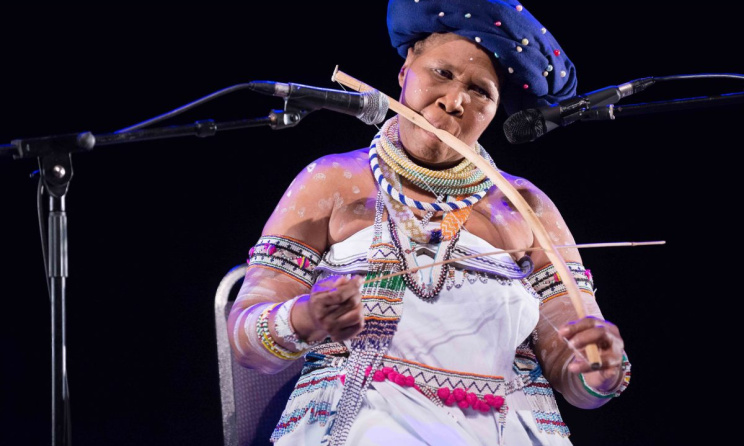
La defunte artiste sud-africaine Madosini. Photo : Bow Music Foundation

Les arcs musicaux d’Afrique australe

Les arcs musicaux sont présents dans toute l’Afrique australe, avec des variantes que l’on trouve en Afrique du Sud, en eSwatini, en Angola et au Mozambique. Hormis quelques différences de taille et de structure, la plupart ressemblent à un arc de chasse, avec une seule corde tendue entre les extrémités d’un morceau de bois courbé. Historiquement, les cordes étaient fabriquées à partir de boyaux d’animaux ou de fibres végétales, mais aujourd’hui ces instruments sont le plus souvent montés avec un fil de laiton, ce qui leur confère une résonance accrue.

Chez les Xhosas des provinces du Cap-Oriental et du Cap-Occidental, les deux arcs les plus couramment joués aujourd’hui sont l’uhadi et l’umrhubhe. L’uhadi est le plus grand des deux et comporte généralement une calebasse évidée fixée à l’arc, servant de caisse de résonance pour amplifier le son. Le musicien produit le son en frappant fermement la corde avec une fine baguette de roseau dans une main, tout en pinçant la corde entre le pouce et l’index de l’autre main pour produire différentes notes. L’ouverture de la calebasse, tournée à l’opposé de la corde, est également déplacée d’avant en arrière contre la poitrine pour créer une mélodie à partir des harmoniques.

L’umrhubhe est un arc plus petit, résonné par la bouche. Il est le plus souvent joué en frottant la corde d’avant en arrière avec un roseau ou une baguette raclée (un peu comme pour un violon), tout en utilisant la bouche comme résonateur pour amplifier le son, et une technique de sifflement intérieur pour créer une mélodie. Il peut aussi parfois être joué de manière percussive, en frappant la corde, comme avec l’uhadi.

Un symbole culturel et féminin

Historiquement, l’umrhubhe et l’uhadi représentaient des marqueurs importants de l’enfance et de la féminité chez les jeunes filles et femmes xhosas, et portent de fortes connotations liées aux contes, berceuses et à la nostalgie — ce qui n’a rien d’étonnant pour des instruments souvent décrits comme évocateurs, mystérieux et hypnotiques.

L’impact du colonialisme

Comme de nombreux instruments indigènes sur le continent, l’uhadi et l’umrhubhe ont été systématiquement dévalorisés par les autorités coloniales européennes. Les populations autochtones ont été incitées à considérer les instruments classiques occidentaux et leurs formes musicales comme supérieurs. Cette mentalité, combinée aux conditions du travail migrant à travers le pays, continue d’influencer le statut des instruments traditionnels. Les arcs musicaux, avec leur apparente simplicité de structure et de jeu, ont été jugés « primitifs » et « non sophistiqués ». Encore aujourd’hui, certaines personnes, même culturellement liées à ces instruments, considèrent l’uhadi et l’umrhubhe au mieux comme de simples jouets, au pire comme des vestiges embarrassants d’un passé primitif. Pendant des décennies, le désintérêt était tel que les chercheurs en musique craignaient leur disparition. Jusqu’à récemment, il était rare de trouver des passionnés, même dans les zones rurales — et encore moins dans les milieux urbains où ils étaient quasiment inexistants.

Survie et renaissance

La dernière décennie a toutefois vu un changement important de mentalité, avec une popularité grandissante de ces instruments, notamment dans des villes comme East London, Gqeberha et Le Cap. On le constate au nombre croissant de prestations centrées sur les arcs diffusées à la télévision nationale, proposées lors de concerts en direct ou partagées sur les grandes plateformes de streaming. Cette renaissance est aussi favorisée par des ateliers de fabrication d’instruments africains, des conférences internationales dédiées à la musique des arcs, une couverture médiatique de grands médias et de réseaux indépendants, ainsi qu’une intégration élargie dans les programmes universitaires de musique. Tout indique que la renaissance de la musique des arcs xhosas est bel et bien en marche.

On la doit à quelques spécialistes et gardiens culturels tels que la regrettée Dr Latozi Mpahleni, alias Madosini, Mantombi Matotiyana, le Nqoko Women’s Ensemble et le Professeur Dizu Plaatjies, qui ont œuvré pour préserver cette tradition. Aujourd’hui, une nouvelle génération de facteurs et de musiciens d’uhadi et d’umrhubhe relève le défi de revitaliser ces instruments.

Une nouvelle génération et des collaborations

Parmi les figures les plus marquantes de cette nouvelle vague, on trouve Mthwakazi, Luyolo Lenga, Indwe, Dumama, Thandeka Mfinyongo et Odwa Bongo. Ces artistes explorent des voies innovantes pour intégrer l’uhadi et l’umrhubhe à divers contextes musicaux, des fusions avec le folk, le jazz ou la musique classique occidentale, jusqu’à des installations artistiques et des voyages sonores.

Grâce à des collaborations récentes avec des musiciens jouant des arcs xhosas, des artistes de la scène populaire comme Msaki, Neo Muyanga et Zolani Mahola participent aussi à la visibilité de l’uhadi et de l’umrhubhe, tout comme les puissantes installations du céramiste Andile Dyalvane et de l’artiste sonore Mntana WeXhwele.

Grâce à ces efforts, même les aînés de la tradition bénéficient d’une reconnaissance accrue ces dernières années. En 2019, Mantombi Matotiyana a sorti son premier album à l’âge de 87 ans, et en 2020, Madosini a été mise à l’honneur comme artiste vedette du National Arts Festival sud-africain (Standard Bank) et a reçu un doctorat honorifique en musique de l’Université de Rhodes.

Nouvelles perspectives

Les innovations récentes dans la fabrication des arcs musicaux — comme l’ajout de chevilles d’accordage ou de micros intégrés pour une meilleure amplification — élargissent les possibilités de composition et de collaboration entre plusieurs genres.

Cette renaissance s’accompagne aussi d’évolutions culturelles intéressantes, en réponse aux attentes d’une jeune génération : assouplissement des anciennes associations de genre, renforcement du lien avec les croyances spirituelles et les pratiques rituelles des amaXhosa. Pour beaucoup, ce renouveau est à la fois personnel et politique, et nombreux sont ceux qui considèrent leur travail comme un acte de guérison spirituelle, pour eux-mêmes comme pour une jeunesse désabusée dans l’Afrique du Sud post-apartheid.

Fait encourageant, d’autres arcs musicaux d’Afrique australe — dont les équivalents zoulous de l’uhadi et de l’umrhubhe, l’umakhweyana et l’ughubhu — bénéficient d’un regain d’intérêt similaire, augurant d’une renaissance nationale de la musique des arcs.

En popularisant ces arcs musicaux, ces artistes et leurs collaborateurs ne se contentent pas de célébrer des sons et des valeurs musicales autochtones : ils contribuent à raviver les savoirs traditionnels dans leur ensemble, offrant ainsi des perspectives uniques et indispensables sur le paysage sociopolitique sud-africain.

[ Cet article a été originalement écrit et publié en anglais dans le cadre du Projet de fabrication et de réparation d’instruments.]

Sources et lectures complémentaires :

https://bowmusicfoundation.org/musical-bows-in-southern-africa/(link is external)

https://journals.co.za/doi/epdf/10.10520/AJA02562804_764(link is external)

https://www.ru.ac.za/ilam/latestnews/rhodesuniversityofficiallyrobesdrmadosiniamidherfamilyandcommunity.html(link is external)

https://nationalartsfestival.co.za/news/2020-featured-artist/(link is external)

https://humanities.uct.ac.za/college-music/african-music(link is external)

https://baz-art.co.za/what-we-do/projects-and-murals/jhb-modosini-x-msaki(link is external)

https://letsgetlocal.co.za/meet-odwa-bongo-healing-the-hurt-and-reviving-the-uhadi/

Please se connecter to post a comment.

Most popular

Disclaimer: Music In Africa provides a platform for musicians and contributors to embed music and videos solely for promotional purposes. If any track or video embedded on this platform violates any copyrights please inform us immediately and we will take it down. Please read our Terms of Use for more.

newsletter banner

Abonnez-vous à notre newsletter

Retrouvez-nous sur les réseaux sociaux