




















NEFCISA
NEFCISA

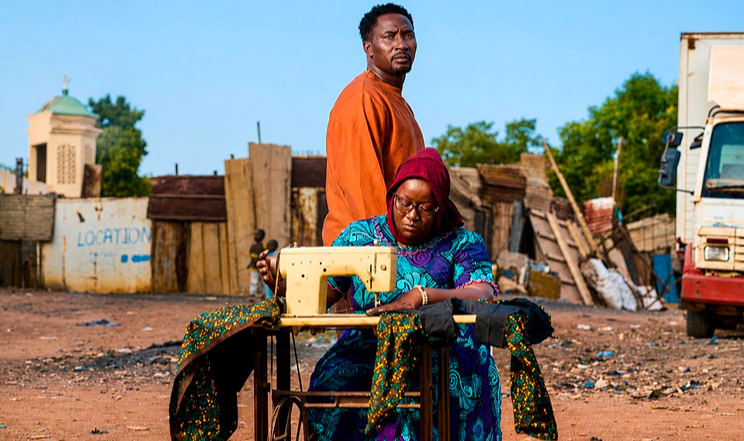
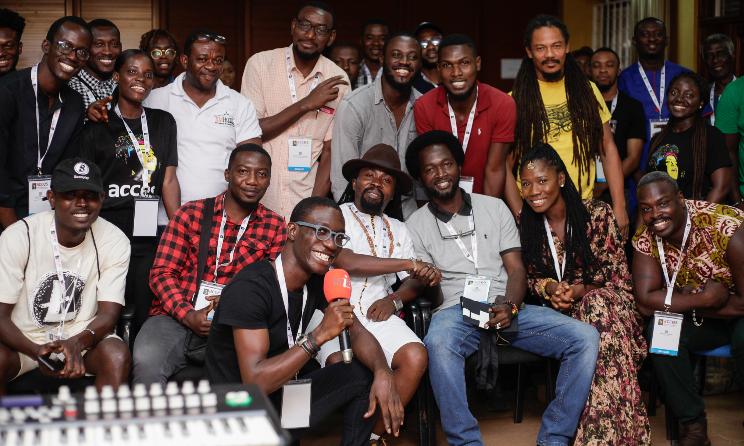
The Music In Africa Foundation (MIAF) is proud to announce its partnership with the Industrial Development Corporation (IDC) as a Strategic Implementing Partner (SIP) for its Social Employment Fund (SEF). Through this collaboration, MIAF is launching a new national programme designed to create jobs, address skills gaps, and strengthen South Africa’s creative industries — in line with the SEF’s overarching goal to generate work for the common good and build community value through employment, social contribution, and inclusive economic participation. Operating under the banner NEFCISA (National Employment Facility for Creative Industries in South Africa), the initiative will recruit and train participants, match them with host organisations, and place a minimum of 1 000 workers across the country. Key Objectives: Support employment and entrepreneurship in the creative industries. Offer skills development and training programmes. Foster partnerships between public and private creative sectors. Promote South African creativity at both provincial and national levels Foster community development through social contribution.

ACCES
ACCES

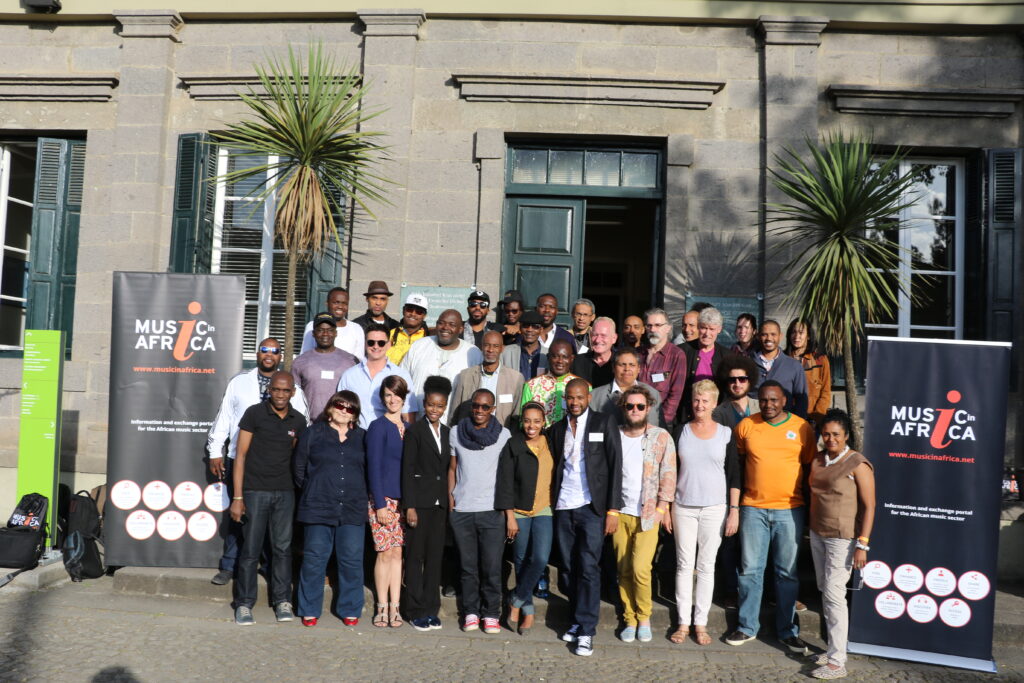
Chaque année, nous fournissons des informations générales afin de guider les participants dans la préparation de leur voyage. En plus de ce site, des mises à jour importantes seront envoyées par e-mail à tous les délégués inscrits. Assurez-vous de vous inscrire dès que possible. Pour plus d'informations, veuillez contacter [email protected] Continuez à consulter cette page pour plus d'information.  

Gender@Work
Gender@Work

Music In Africa Gender @ Work is a three-year training programme aimed at upskilling and increasing the participation of female professionals in the African music sector. Launched by the Music In Africa Foundation (MIAF) in April 2019, the programme is connected to the MIAF’s ACCES music conference – a pan-African event held in a different African country every year. This connection enables the programme to reach new participants in a different African country every year. The programme marks the beginning of a more concerted effort by the Foundation to support the participation and inclusion of women in all facets of its programmes and the music sector in Africa as a whole. Over the three years, the programme will aim to address gender imbalances in the sector through training, lobbying, facilitating knowledge exchange and dialogues that foster the interest of women. The broader objectives of the programme are to: Provide industry training for women on critical music industry skills, focusing on: Stage management Electronic music production and recording Music business management Technical knowledge Provide an opportunity for both professional and aspiring women to benefit from the Music In Africa network and its broad range of activities in 2019, 2020 and 2021. Provide a solution-based platform in the form of a round table at ACCES with a view to identify challenges, discuss opportunities and lobby for the interests of female practitioners. Offer participants the opportunity to benefit from programmes offered by MIAF’s partners. Increase access to educational materials. Integrate participants in the broader ACCES programme to maximise experience and exposure to the industry. Record and present training materials on the www.musicinafrica.net, including but not limited to tutorials, templates and other best-practice materials. Communicate women-based themes that support the initiatives and messages of the programme. MAIN TRAINING ACTIVITIES Training in first country (Ghana): In the first year, participants will be trained on all aspects of stage management by a team of experienced stage managers from 10 to 17 November 2019. The programme will offer robust classroom training as well as practical, hands-on training in which participants will also be given the opportunity to manage various aspects of the ACCES performance programme. Training in second country: The second training iteration will take place at ACCES 2020 when the programme will diversify its course to include music production lessons and training on other music business topics. A round-table platform will also be introduced to coincide with the ACCES programme. Training in third country: The third training iteration will take place at ACCES 2021 in a different country, offering an advanced course. HOW DO YOU GET INVOLVED?  As a participant, facilitator or trainer: The programme enrolls up to 12 trainees every year. All opportunities are advertised publicly on this website, and will be added to this page. Please keep checking this page for new calls (below under UPDATES & CURRENT OPPORTUNITIES). As a partner Please contact Claire Metais at [email protected]. APPLY The call for applications for 2020 will be announced soon. The Music In Africa Gender @ Work programme is made possible with the support of the Prince Claus Fund, Siemens Stiftung and Goethe-Institut.

Sound Connects Fund
Sound Connects Fund

Pour les praticiens et les organisations culturels et créatifs opérant en Afrique australe, l’accès au financement reste un défi majeur. La pandémie de COVID-19 a également eu un impact massif sur les politiques gouvernementales, les dépenses et l’économie en général, et a vu les dépenses consacrées à la culture reléguées plus bas dans la liste des priorités. De plus, les industries culturelles et créatives citent régulièrement quatre domaines principaux où l’investissement est nécessaire pour la croissance : une visibilité accrue, la mobilité incluant l’accès à de nouveaux marchés, le financement et les structures de soutien.

Music In Africa Live

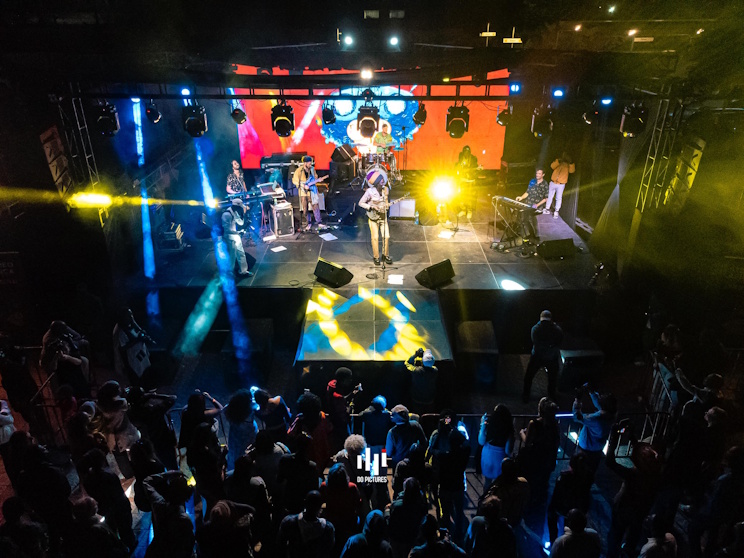
MUSIC IN AFRICA LIVE Lancé en 2020 pour une durée de 3 ans, Music In Africa Live est une initiative visant à soutenir l'écosystème de la musique africaine face aux contraintes imposées par la pandémie de COVID-19 ; le projet a été lancé par la Fondation Music In Africa (MIAF) en partenariat avec le ministère fédéral allemand des Affaires étrangères, Siemens Stiftung et le Goethe Institut. Plus de 30 aides sont disponibles dans le cadre de la troisième édition de Music In Africa Live, dans 3 catégories :  showcases, renforcement des compétences et plaidoyer, en conformité avec les modalités énoncées.

Instrument Building And Repair Project

The overarching objective of Music In Africa Foundation’s Instrument Building and Repair (IBR) project is to encourage the formalisation and professionalisation of instrument-making and repair in Africa, especially in relation to indigenous African instruments. Background In 2014, the Music In Africa Foundation (MIAF) identified as one of its focus areas for development the need to encourage young people from music and music-related sectors to consider instrument-making as a career. This need extended itself from the recognition that the making of traditional African instruments is not a widely practiced skill and seems to be limited to the older generation. Traditional African instrument makers are also few and far between, making communication and logistics between teachers and learners an obstacle. When instrument building workshops take place, budgetary constraints do not allow teachers or learners the time to explore the finer details of an instrument. Based on these observations, the MIAF designed and piloted the first IBR workshop at the Dhow Countries Music Academy (DCMA) in Zanzibar in February 2015. In 2016, the foundation received funding from the South African National Lotteries Commission to implement a much bigger version of the project in Johannesburg. The project drew participants from five African countries. 25 students from South Africa, Ghana, Senegal, Kenya and Ethiopia were trained on how to build and repair musical instruments. The instruments that they made were: Traditional Instruments: Umakhweyana and Marimba Conventional Instrument: Dulcimer guitar The workshop culminated in a traditional instruments concert at the Wits Theatre in Johannesburg. It is the MIAF’s aim to roll out similar workshops in as many African countries as possible over the next few years. Objectives Developing awareness of musical instrument makers in Africa with a view to promote their work to a wider global audience. Facilitating the sharing and transfer of skills in indigenous instruments between countries on the continent. Encouraging the formalisation and professionalisation of instrument-making and repair in Africa, especially in relation to indigenous instruments. Helping instrument makers develop their careers. Fostering the rapid monetisation and sustainable development of instrument-making and repair in Africa. Promoting constant exchange of ideas, expertise, experiences and know-how among instrument makers in Africa. Facilitating the identification of existing gaps in the field with a view to contribute new solutions. Facilitating the transfer of knowledge and skills of indigenous instruments between younger and older generations. 2020 edition The MIAF has also announced that multi-instrumentalist and instrument maker Joe Makhanza will facilitate one of the workshops on the building of the kamale ngoni instrument. Kamale ngoni is a kora-like, stringed instrument that originated in West Africa. The instrument contributed to the rise of Wassoulou music in the 1970s and 1990s. Makhanza was born in Giyani in South Africa's Limpopo province. He completed a bachelor of music degree and a post-graduate diploma in arts marketing from Wits University. He is currently completing his masters in ethnomusicology and is a part-time lecturer in African music studies at Rhodes University. He plays the kora, mbira, valiha, masenqo, xiwewe, ngoni ba and xizambi, among others. He also manufactures the aforementioned instruments. The MIAF will confirm more trainers who will join the workshops as well as the other instruments that will be featured in the 2020 IBR programme.  Apply to participate here. Connect with us on Twitter, Instagram and Facebook, and subscribe to our monthly newsletter. The Music In Africa Instrument Building and Repair project is funded by the National Lotteries Commission. It is implemented in partnership with Siemens Stiftung, Goethe-Institut, Wits Theatre and Kaya FM.

Overviews

La scène musicale live au Malawi

27 Oct 2015 - 12:46

cc-img flag-img

Par Joseph Mtingwi

Ce texte donne un aperçu de la scène musicale live au Malawi. Lorsque ce dernier a obtenu son indépendance en 1964, il n’y avait pas encore de studios d’enregistrement. Le public avait uniquement accès à des spectacles d’orchestres. Le premier président du pays, Dr Hastings Kamuzu Banda, invitait des musiciens venant de tous les coins du Malawi pour se produire devant lui et ses invités et collègues. Vu qu’il n’existait aucun studio d’enregistrement dans le pays, les musiciens talentueux étaient contraints à se produire en live pour pouvoir vivre de leur art.
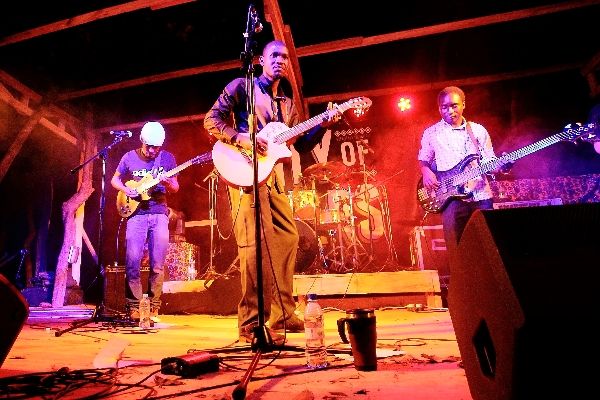
Peter Mawange, 2013 Lake Of Stars festival. Ph: lakeofstars.org

Pour prouver combien la scène live a joué un rôle majeur dans le développement de l’histoire de la musique locale, le célèbre producteur Marvin Hanke, qui a travaillé avec la Société Radio-Malawi (MBC)[i] de 1975 à 1999, a rappelé combien l’enregistrement d’un album de musique était laborieux, en raison du manque de matériel d’enregistrement. Les anciens musiciens tels que Wyndham Chechamba, le feu Dr Daniel Kachamba, Wambali Mkandawire, Allan Namako, Sir Paul Banda, Lucius Banda, Skeffa Chimoto et Mlaka Maliro se sont fait remarqués grâce aux spectacles et concerts parce que cela était le seul moyen de se faire connaitre avant 1990[ii].

C’est la société sud-africaine Gallo Records qui s’est installé au Malawi en premier pour enregistrer les artistes locaux. Plus tard, d’autres studios d’enregistrement tels que MBC Studios, Studio K, Studio 10, IY Studio et Baptiste Médias s’y sont établis. Aujourd’hui, malgré la présence de nombreux de studios d’enregistrement au Malawi, la scène live reste toujours populaire dans le pays. De plus avec l’amélioration de la technologie, le piratage a également augmentée. Les artistes malawites se sont rendu compte que s’ils doivent vivre de leur musique, les prestations live restent cruciales car ils ne peuvent pas compter sur la vente de leurs albums, contrairement à ce qui se faisait dans le passé.

Le Malawi est également devenu une destination très populaire dans le circuit des tournées internationales. Parmi les artistes ayant effectués des tournées au Malawi on peut citer notamment, Pop Dogg, un artiste malawite basé aux États-Unis, Dalisoul de la Zambie, Davido et P-Square du Nigeria, ainsi que Mafikizolo, Professor, DJ Cleo et Zahara de l’Afrique du sud.

Les salles de concerts et de spectacles

Les spectacles de musique et concerts ont lieu dans des lieux aussi divers que dans les boîtes de nuit, en plein air, dans des restaurants, des hôtels ou entrepôts et dans la rue. Les salles de concerts les plus populaires à Blantyre sont : Moth Club[iii], Doogles Lodge[iv], Motel Paradise[v], Dorvic Hôtel[vi], Afro Motel à Blantyre[vii], Limbe Country Club[viii], Robins Park[ix], le Club Mustang Sally[x], Ozone Refreshment Centre[xi] dans Machinjiri, Shire Highlands Hôtel[xii] et le Malawi College of Medicine[xiii].

Dans la capitale, Lilongwe, les lieux de prestation live comprennent notamment le Club 47[xiv], le Waka Waka Hôtel[xv] et le Club de golf de Lilongwe[xvi]. Dans la ville de Mzuzu, au nord du pays, les prestations live ont souvent lieu au Grand Palace Hôtel[xvii], au Key Lounge Restaurant and Bar[xviii] ou encore au Parc Boma de l’Université de Mzuzu[xix].

Dans la petite ville de Balaka, le Zembani Lodge[xx] appartient au musicien Lucius Banda.

Les Festivals

Outre les lieux habituels où l’on peut écouter la musique live, le Malawi organise également plusieurs festivals annuels. Le plus grand parmi eux est le festival Lake of Stars[xxi], organisé chaque année entre septembre et octobre, depuis 2004 sur les rives du lac Malawi. Ce festival offre une affiche variée et impressionnante de musiciens et attire de nombreux sponsors pour financer l’événement. L’édition 2015 est fixée pour les dates du 25-27 septembre. Il est accompagné d’un autre festival qui se tient à Lilongwe et qui s’appelle City of Stars.

Un autre grand festival est le Blantyre Arts Festival, qui attire non seulement des musiciens mais aussi des artistes internationaux et locaux. Le festival se déroule sur trois ou quatre jours, (ses dates exactes varient généralement). L’édition 2015 aura lieu entre le 2 et le 4 Octobre.

Un événement plus petit et moins établi est le Festival Likoma (Li-Fest) sur l’île de Likoma. Il a lieu pendant le week-end de Pâques. Il vise à promouvoir le tourisme dans la région de l’île (et dans tout le pays en général) et offre une opportunité aux locaux de gagner de l’argent. La deuxième édition du festival a eu lieu le week-end du 3 au 5 Avril à 2015[xxii]. Le Carlsberg Street Bash est une fête de rue populaire. Elle avait disparu pendant près de 10 ans et a été relancée le 31 Décembre 2014 à Blantyre, puis à Lilongwe pour les festivités de l’Indépendance le 25 Juillet et enfin à Mzuzu, le 4 Avril.

Promotion de la scène musicale live

Malgré la florissante scène musicale au Malawi, il n’y a malheureusement pas beaucoup de promoteurs dans le domaine de la musique live. La plus grande compagnie de promotion de la musique live dans le pays est Entertainers Promotions, appartenant à ‘Mr Entertainer’ Banda. La plupart des spectacles de musique populaires live sont organisés par eux. Nde’feyo Entertainment[xxiii], une société de promotion plus petite et spécialisée en musique urbaine. Basé à Blantyre, Myuziki Pusha Divertissement[xxiv], appartenant à l’artiste Biggie Lu (aka Lumulie Mwamondwe), est également connu pour l’organisation de spectacles pour les artistes émergeants, en particulier dans les collèges et les universités.

Les défis

Il y a un certain nombre de défis auxquels doit faire face la scène musicale live au Malawi. Les salles de spectacles du pays (dont celles mentionnées ci-dessus) ne sont généralement pas assez grandes pour accueillir un large public, surtout lorsque joue un groupe ou artiste populaire. Les grands artistes perdent des revenus potentiels en jouant dans ces lieux, puisque une partie du public renonce à y entrer lorsqu’ils voient que le lieu est déjà rempli. Un autre défi pour la plupart des artistes du Malawi est le manque de matériel. Il y a seulement quelques groupes dans le pays qui possèdent les équipements appropriées pour les prestations live; il s’agit de Black Missionnaries Band, Skeffa Chimoto’s Real Sounds, Alleluyah Band et quelques autres encore. Lorsque d’autres artistes se produisent, le son est souvent de mauvaise qualité.

Le piratage entrave également le développement de la musique au Malawi, car une fois qu’une copie illégale d’un album est lancée sur le marché, la plupart des gens préfèrent acheter cette version que d’acheter l’album original ou aller voir un spectacle live qui leur coutera beaucoup plus cher. Sortir pour s’amuser ou aller voir des spectacles est encore inhabituel pour la majorité des malawites. En général les gens restent à la maison et regardent la télé au lieu d’assister à des spectacles live. Ceci est un problème culturel qui limite encore plus les opportunités des musiciens de vivre de leurs performances.

Le manque de soutien de la part de l’Association des musiciens du Malawi[xxv] et du Gouvernement est également un problème. Ils font très peu pour promouvoir la musique en général. Par exemple, la lutte contre le piratage est généralement laissée aux musiciens eux-mêmes et on entend rarement ces derniers intervenir sur le sujet.

Malgré ces difficultés, la scène musicale live au Malawi continue de progresser avec un certain nombre d’artistes qui jouent régulièrement à l’extérieur du pays. Par exemple, le groupe Black Missionnaries a effectué des tournées internationales notamment au Royaume-Uni. Skeffa Chimoto et le Real Sounds Band ont également effectué des tournées en dehors de Malawi. Sir Lucius Banda et de nombreux jeunes artistes organisent des spectacles et prouve que le pays regorgent de nombreux talents.


[i] www.mbc.mw
[ii] Malawi Clocks 50 Special Anniversary Celebration, published by the Ministry of Information and Civic Education, pp. 28-31.
[iii] Tel: +265 637076
[iv] Tel: +265 1621128
[vii] Tel: +265 1830 570
[xii] http://www.alexanderhotels.net, Tel: +2651840055/063/359
[xiv] Tel: +265 999314347
[xv] Tel: +265 888 93 7295

Please se connecter to post a comment.

Most popular

Disclaimer: Music In Africa provides a platform for musicians and contributors to embed music and videos solely for promotional purposes. If any track or video embedded on this platform violates any copyrights please inform us immediately and we will take it down. Please read our Terms of Use for more.

newsletter banner

Abonnez-vous à notre newsletter

Retrouvez-nous sur les réseaux sociaux