













NEFCISA
NEFCISA

The Music In Africa Foundation (MIAF) is proud to announce its partnership with the Industrial Development Corporation (IDC) as a Strategic Implementing Partner (SIP) for its Social Employment Fund (SEF). Through this collaboration, MIAF is launching a new national programme designed to create jobs, address skills gaps, and strengthen South Africa’s creative industries — in line with the SEF’s overarching goal to generate work for the common good and build community value through employment, social contribution, and inclusive economic participation. Operating under the banner NEFCISA (National Employment Facility for Creative Industries in South Africa), the initiative will recruit and train participants, match them with host organisations, and place a minimum of 1 000 workers across the country. Key Objectives: Support employment and entrepreneurship in the creative industries. Offer skills development and training programmes. Foster partnerships between public and private creative sectors. Promote South African creativity at both provincial and national levels Foster community development through social contribution.

ACCES
ACCES

Chaque année, nous fournissons des informations générales afin de guider les participants dans la préparation de leur voyage. En plus de ce site, des mises à jour importantes seront envoyées par e-mail à tous les délégués inscrits. Assurez-vous de vous inscrire dès que possible. Pour plus d'informations, veuillez contacter [email protected] Continuez à consulter cette page pour plus d'information.  

Gender@Work
Gender@Work

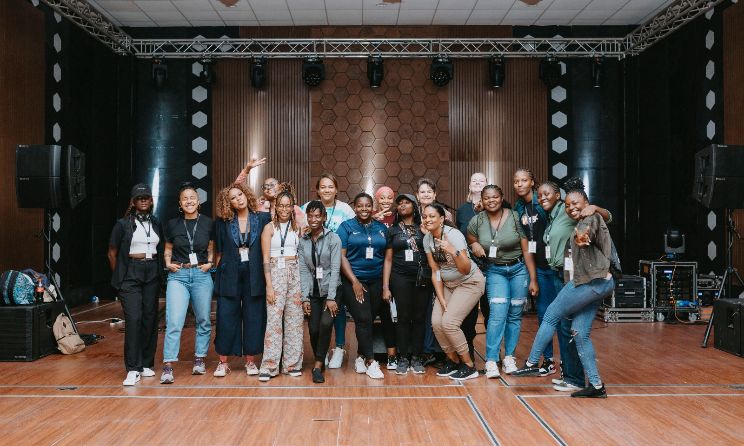
Music In Africa Gender @ Work is a three-year training programme aimed at upskilling and increasing the participation of female professionals in the African music sector. Launched by the Music In Africa Foundation (MIAF) in April 2019, the programme is connected to the MIAF’s ACCES music conference – a pan-African event held in a different African country every year. This connection enables the programme to reach new participants in a different African country every year. The programme marks the beginning of a more concerted effort by the Foundation to support the participation and inclusion of women in all facets of its programmes and the music sector in Africa as a whole. Over the three years, the programme will aim to address gender imbalances in the sector through training, lobbying, facilitating knowledge exchange and dialogues that foster the interest of women. The broader objectives of the programme are to: Provide industry training for women on critical music industry skills, focusing on: Stage management Electronic music production and recording Music business management Technical knowledge Provide an opportunity for both professional and aspiring women to benefit from the Music In Africa network and its broad range of activities in 2019, 2020 and 2021. Provide a solution-based platform in the form of a round table at ACCES with a view to identify challenges, discuss opportunities and lobby for the interests of female practitioners. Offer participants the opportunity to benefit from programmes offered by MIAF’s partners. Increase access to educational materials. Integrate participants in the broader ACCES programme to maximise experience and exposure to the industry. Record and present training materials on the www.musicinafrica.net, including but not limited to tutorials, templates and other best-practice materials. Communicate women-based themes that support the initiatives and messages of the programme. MAIN TRAINING ACTIVITIES Training in first country (Ghana): In the first year, participants will be trained on all aspects of stage management by a team of experienced stage managers from 10 to 17 November 2019. The programme will offer robust classroom training as well as practical, hands-on training in which participants will also be given the opportunity to manage various aspects of the ACCES performance programme. Training in second country: The second training iteration will take place at ACCES 2020 when the programme will diversify its course to include music production lessons and training on other music business topics. A round-table platform will also be introduced to coincide with the ACCES programme. Training in third country: The third training iteration will take place at ACCES 2021 in a different country, offering an advanced course. HOW DO YOU GET INVOLVED?  As a participant, facilitator or trainer: The programme enrolls up to 12 trainees every year. All opportunities are advertised publicly on this website, and will be added to this page. Please keep checking this page for new calls (below under UPDATES & CURRENT OPPORTUNITIES). As a partner Please contact Claire Metais at [email protected]. APPLY The call for applications for 2020 will be announced soon. The Music In Africa Gender @ Work programme is made possible with the support of the Prince Claus Fund, Siemens Stiftung and Goethe-Institut.

Sound Connects Fund
Sound Connects Fund

Pour les praticiens et les organisations culturels et créatifs opérant en Afrique australe, l’accès au financement reste un défi majeur. La pandémie de COVID-19 a également eu un impact massif sur les politiques gouvernementales, les dépenses et l’économie en général, et a vu les dépenses consacrées à la culture reléguées plus bas dans la liste des priorités. De plus, les industries culturelles et créatives citent régulièrement quatre domaines principaux où l’investissement est nécessaire pour la croissance : une visibilité accrue, la mobilité incluant l’accès à de nouveaux marchés, le financement et les structures de soutien.

Music In Africa Live

MUSIC IN AFRICA LIVE Lancé en 2020 pour une durée de 3 ans, Music In Africa Live est une initiative visant à soutenir l'écosystème de la musique africaine face aux contraintes imposées par la pandémie de COVID-19 ; le projet a été lancé par la Fondation Music In Africa (MIAF) en partenariat avec le ministère fédéral allemand des Affaires étrangères, Siemens Stiftung et le Goethe Institut. Plus de 30 aides sont disponibles dans le cadre de la troisième édition de Music In Africa Live, dans 3 catégories :  showcases, renforcement des compétences et plaidoyer, en conformité avec les modalités énoncées.

Instrument Building And Repair Project

The overarching objective of Music In Africa Foundation’s Instrument Building and Repair (IBR) project is to encourage the formalisation and professionalisation of instrument-making and repair in Africa, especially in relation to indigenous African instruments. Background In 2014, the Music In Africa Foundation (MIAF) identified as one of its focus areas for development the need to encourage young people from music and music-related sectors to consider instrument-making as a career. This need extended itself from the recognition that the making of traditional African instruments is not a widely practiced skill and seems to be limited to the older generation. Traditional African instrument makers are also few and far between, making communication and logistics between teachers and learners an obstacle. When instrument building workshops take place, budgetary constraints do not allow teachers or learners the time to explore the finer details of an instrument. Based on these observations, the MIAF designed and piloted the first IBR workshop at the Dhow Countries Music Academy (DCMA) in Zanzibar in February 2015. In 2016, the foundation received funding from the South African National Lotteries Commission to implement a much bigger version of the project in Johannesburg. The project drew participants from five African countries. 25 students from South Africa, Ghana, Senegal, Kenya and Ethiopia were trained on how to build and repair musical instruments. The instruments that they made were: Traditional Instruments: Umakhweyana and Marimba Conventional Instrument: Dulcimer guitar The workshop culminated in a traditional instruments concert at the Wits Theatre in Johannesburg. It is the MIAF’s aim to roll out similar workshops in as many African countries as possible over the next few years. Objectives Developing awareness of musical instrument makers in Africa with a view to promote their work to a wider global audience. Facilitating the sharing and transfer of skills in indigenous instruments between countries on the continent. Encouraging the formalisation and professionalisation of instrument-making and repair in Africa, especially in relation to indigenous instruments. Helping instrument makers develop their careers. Fostering the rapid monetisation and sustainable development of instrument-making and repair in Africa. Promoting constant exchange of ideas, expertise, experiences and know-how among instrument makers in Africa. Facilitating the identification of existing gaps in the field with a view to contribute new solutions. Facilitating the transfer of knowledge and skills of indigenous instruments between younger and older generations. 2020 edition The MIAF has also announced that multi-instrumentalist and instrument maker Joe Makhanza will facilitate one of the workshops on the building of the kamale ngoni instrument. Kamale ngoni is a kora-like, stringed instrument that originated in West Africa. The instrument contributed to the rise of Wassoulou music in the 1970s and 1990s. Makhanza was born in Giyani in South Africa's Limpopo province. He completed a bachelor of music degree and a post-graduate diploma in arts marketing from Wits University. He is currently completing his masters in ethnomusicology and is a part-time lecturer in African music studies at Rhodes University. He plays the kora, mbira, valiha, masenqo, xiwewe, ngoni ba and xizambi, among others. He also manufactures the aforementioned instruments. The MIAF will confirm more trainers who will join the workshops as well as the other instruments that will be featured in the 2020 IBR programme.  Apply to participate here. Connect with us on Twitter, Instagram and Facebook, and subscribe to our monthly newsletter. The Music In Africa Instrument Building and Repair project is funded by the National Lotteries Commission. It is implemented in partnership with Siemens Stiftung, Goethe-Institut, Wits Theatre and Kaya FM.

Reviews

MIAConnects – Tournée de Stev’N T

18 Avr 2018 - 17:09

cc-img flag-img

  • Par Taroum Baudoin

Dans le cadre du programme de soutien à la mobilité des artistes, Music In AfricaConnects, mis en place par la Fondation Music In Africa et soutenu par le Ministère Fédéral Allemand des Affaires Étrangères et la Fondation Siemens, l’artiste Stev’N T a effectué 3 spectacles les 14 et 15 décembre 2017 à Bol et Baga Sola, deux localités situées respectivement à 154 km et à 374 km de la capitale Tchadienne, N’Djamena.
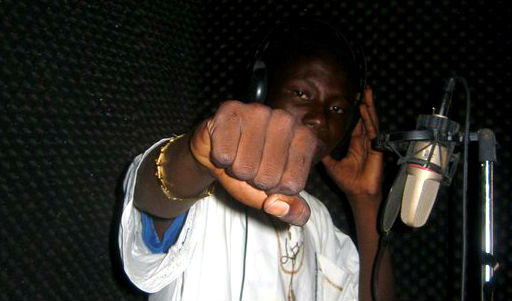
Stev’N T (Photo) : Facebook Officiel

L'objectif de la tournée était d'aller à la rencontre d'un nouveau public, qui n'a que rarement l'occasion d'assister à des spectacles et autres activités culturelles ou artistiques. Stev’N T a saisi cette opportunité pour partager sa musique aux populations vulnérables et aux nombreux réfugiés des camps de Bol et Baga Sola, parmis lesquels de nombreux enfants.

« Donner un spectacle à Bol dans l’ouest du Tchad est compliqué pour au moins deux raisons : d’une part à cause du mauvais état des routes, d’autre part à cause des attaques terroristes survenues dans cette partie du pays, où règne la terreur » explique Stev’N T.

C’est l’Espace Amis des Enfants (EAE) qui a accueilli son spectacle du 14 décembre 2017. L’EAE de Bol est hébergé par l’école Ouadi doum, placée sous la tutelle de l’ONG Initiative Humanitaire pour le Développement Local (IHDL) et de la Direction Régionale de l’Action Sociale (DRAS).

Venir chanter à l’EAE permet de rencontrer un public composé d’adultes et surtout d’enfants doublement éprouvés par l’insécurité ambiante et par différentes affections physiques (handicaps moteurs) ou moins visibles. Les filles y sont aussi nombreuses, pour diverses raisons qui peuvent aller des difficultés familiales à l’abandon total de leurs parents.

Stev’N T et son équipe ont expliqué aux autorités administratives que l’art en général et la musique en particulier, peuvent contribuer à l’apaisement des tensions. Le spectacle a en outre été présenté comme un moment récréatif, un moyen de sortir les enfants du stress permanent de leurs camps de réfugiés.

« Notre projet artistique a été compris par les autorités municipales de Bol » explique Stev’N T.

Une visite préliminaire sur le site a permis d’avancer la date du spectacle, afin qu’il ne se confonde pas avec le calendrier scolaire. La programmation a été facilitée par l'avis favorable des autorités municipales de Bol.

Le 13 décembre, veille du premier concert, un atelier a rassemblé les enfants de l’EAE de Bol. La rencontre a été dirigée par DJ Casimir, un rappeur exerçant aussi en tant que Disc-Jockey, Frank Kelly chanteur et ingénieur du son, et Stev’N-T rappeur et slammeur. L'atelier a permis de répérer quelques talents locaux et de les inscrire dans la programmation du concert.

Au moins 300 enfants, avec une grande majorité de filles, ont participé au spectacle qui a eu lieu dans l’après-midi du 14 décembre.

Au cours de sa prestation, qui a surtout été une présentation des titres de ses deux premiers albums, Stev’N T a chanté « Tonton le blanc », sorti en octobre 2013. L'oeuvre interpelle les mélomanes de tous âges. Les enfants ont chanté et répété le refrain, dans un spectacle qui s'est voulu très interactif.

Le concert a duré plus d’une heure et demie. Stev’N T a aussi proposé quelques extraits a cappella de son prochain album A toutes épreuves, dont la sortie est prévue pour l’été 2018.

Le 15 décembre 2017, ce fut le tour de 110 enfants de l’EAE de Baga Sola, d’entonner le fameux refrain « on reçoit aujourd’hui quelqu’un d’important ! C’est qui ? C’est Tonton le blanc » !

Plusieurs autres chansons ont été interprétées dont « Unité », qui reçoit un bel accueil dans le camp de réfugiés où il est exécuté. L’artiste a traduit la chansons dans les langues locales, pour parler de cohabitation pacifique entre les tchadiens, quelles que soient leurs origines et leurs religions. Un grand message de tolérance a été véhiculé.

Le spectacle a permis d’éloigner un tant soit peu, le spectre de la menace terroriste qui s’est installé le 10 octobre 2015, après un attentat qui a fait une quarantaine de morts.

Depuis l'événement tragique, plusieurs militaires sont dans la localité, avec en mains des fusils d’assaut, qu'ils déploient en permanence pour intimider les assaillants de la secte Boko Haram.

« Cela procure une sensation étrange de chanter dans un périmètre couvert par des soldats armés jusqu'aux dents, mais il faut s’y faire. Dès que l’on est plongé dans l’ambiance musicale, on oublie ces contraintes sécuritaires » explique Stev’N-T.

Avant les concerts, plusieurs réunions préparatoires se sont tenues. Elles ont permis de déterminer les lieux et de préparer le dispositif sécuritaire adéquat.

À Baga Sola, le soutien des autorités s’est manifesté par le prêt d’équipements techniques, la mise à disposition d'un espace sécurisé et la diffusion de l’information auprès des populations ciblées.

La promotion du second concert a également été faite par les radios communautaires, qui ont annoncé l'événement à la population de Baga Sola, où aucun concert de musique ne s’était tenu depuis plusieurs années.

Tous ces spectacles ont permis à ces localités confrontées à des situations sécuritaires difficiles, de se laisser bercer par quelques notes de musique. La tournée a permis de montrer que la musique peut contribuer à la résolution des conflits, en rassemblant les différentes couches de la population autour du thème de la paix.

Les camps de réfugiés sont globalement protégés, mais les routes qui y mènent sont peu sûres. Stev’N-T et son équipe se sont déplacés sans escorte, avec l’inquiétude permanente d'être victime d'une embuscade. Afin de minorer ce risque, l’équipe a du recourir aux conseils de personnes connaissant bien les destinations. Une règle d'or qu'il a toujours fallu appliquer : éviter d’avoir des horaires de déplacement trop prévisibles.

La jeunesse de Stev’N-T et le dynamisme de son équipe ont été des facteurs clés pour le succès pour la tournée. Les autorités locales ont été séduit par la démarche de l'artiste trentenaire, en la faveur du retour à la paix.

En marge du spectacle, un atelier d’échanges et de sensibilisation s’est tenu à Baga Sola à la demande des responsables du camp.

À propos de Stev’N-T

Stev’N T connu sous le pseudonyme « Tonton Le Blanc », est un jeune artiste tchadien dont le premier album Au nom du père, est paru en 2011. Son second opus, Cœur cornu, a été publié en début octobre 2013.

Stev’N-T a reçu le deuxième prix du concours Afro Pépites Show en 2014. La même année, il a été désigné artiste tchadien de l’année par la chaine de télévision privée « Electron TV ».

Lors du 8e festival NdjamVi Stev’N T, a été désigné meilleur artiste hip-hop par le jury composé d’Annie-Flore Batchiellilys et Queen Etémé.

Please se connecter to post a comment.

Most popular

Disclaimer: Music In Africa provides a platform for musicians and contributors to embed music and videos solely for promotional purposes. If any track or video embedded on this platform violates any copyrights please inform us immediately and we will take it down. Please read our Terms of Use for more.

newsletter banner

Abonnez-vous à notre newsletter

Retrouvez-nous sur les réseaux sociaux