


























NEFCISA
NEFCISA

The Music In Africa Foundation (MIAF) is proud to announce its partnership with the Industrial Development Corporation (IDC) as a Strategic Implementing Partner (SIP) for its Social Employment Fund (SEF). Through this collaboration, MIAF is launching a new national programme designed to create jobs, address skills gaps, and strengthen South Africa’s creative industries — in line with the SEF’s overarching goal to generate work for the common good and build community value through employment, social contribution, and inclusive economic participation. Operating under the banner NEFCISA (National Employment Facility for Creative Industries in South Africa), the initiative will recruit and train participants, match them with host organisations, and place a minimum of 1 000 workers across the country. Key Objectives: Support employment and entrepreneurship in the creative industries. Offer skills development and training programmes. Foster partnerships between public and private creative sectors. Promote South African creativity at both provincial and national levels Foster community development through social contribution.

ACCES
ACCES

Chaque année, nous fournissons des informations générales afin de guider les participants dans la préparation de leur voyage. En plus de ce site, des mises à jour importantes seront envoyées par e-mail à tous les délégués inscrits. Assurez-vous de vous inscrire dès que possible. Pour plus d'informations, veuillez contacter [email protected] Continuez à consulter cette page pour plus d'information.  

Gender@Work
Gender@Work

Music In Africa Gender @ Work is a three-year training programme aimed at upskilling and increasing the participation of female professionals in the African music sector. Launched by the Music In Africa Foundation (MIAF) in April 2019, the programme is connected to the MIAF’s ACCES music conference – a pan-African event held in a different African country every year. This connection enables the programme to reach new participants in a different African country every year. The programme marks the beginning of a more concerted effort by the Foundation to support the participation and inclusion of women in all facets of its programmes and the music sector in Africa as a whole. Over the three years, the programme will aim to address gender imbalances in the sector through training, lobbying, facilitating knowledge exchange and dialogues that foster the interest of women. The broader objectives of the programme are to: Provide industry training for women on critical music industry skills, focusing on: Stage management Electronic music production and recording Music business management Technical knowledge Provide an opportunity for both professional and aspiring women to benefit from the Music In Africa network and its broad range of activities in 2019, 2020 and 2021. Provide a solution-based platform in the form of a round table at ACCES with a view to identify challenges, discuss opportunities and lobby for the interests of female practitioners. Offer participants the opportunity to benefit from programmes offered by MIAF’s partners. Increase access to educational materials. Integrate participants in the broader ACCES programme to maximise experience and exposure to the industry. Record and present training materials on the www.musicinafrica.net, including but not limited to tutorials, templates and other best-practice materials. Communicate women-based themes that support the initiatives and messages of the programme. MAIN TRAINING ACTIVITIES Training in first country (Ghana): In the first year, participants will be trained on all aspects of stage management by a team of experienced stage managers from 10 to 17 November 2019. The programme will offer robust classroom training as well as practical, hands-on training in which participants will also be given the opportunity to manage various aspects of the ACCES performance programme. Training in second country: The second training iteration will take place at ACCES 2020 when the programme will diversify its course to include music production lessons and training on other music business topics. A round-table platform will also be introduced to coincide with the ACCES programme. Training in third country: The third training iteration will take place at ACCES 2021 in a different country, offering an advanced course. HOW DO YOU GET INVOLVED?  As a participant, facilitator or trainer: The programme enrolls up to 12 trainees every year. All opportunities are advertised publicly on this website, and will be added to this page. Please keep checking this page for new calls (below under UPDATES & CURRENT OPPORTUNITIES). As a partner Please contact Claire Metais at [email protected]. APPLY The call for applications for 2020 will be announced soon. The Music In Africa Gender @ Work programme is made possible with the support of the Prince Claus Fund, Siemens Stiftung and Goethe-Institut.

Sound Connects Fund
Sound Connects Fund

Pour les praticiens et les organisations culturels et créatifs opérant en Afrique australe, l’accès au financement reste un défi majeur. La pandémie de COVID-19 a également eu un impact massif sur les politiques gouvernementales, les dépenses et l’économie en général, et a vu les dépenses consacrées à la culture reléguées plus bas dans la liste des priorités. De plus, les industries culturelles et créatives citent régulièrement quatre domaines principaux où l’investissement est nécessaire pour la croissance : une visibilité accrue, la mobilité incluant l’accès à de nouveaux marchés, le financement et les structures de soutien.

Music In Africa Live

MUSIC IN AFRICA LIVE Lancé en 2020 pour une durée de 3 ans, Music In Africa Live est une initiative visant à soutenir l'écosystème de la musique africaine face aux contraintes imposées par la pandémie de COVID-19 ; le projet a été lancé par la Fondation Music In Africa (MIAF) en partenariat avec le ministère fédéral allemand des Affaires étrangères, Siemens Stiftung et le Goethe Institut. Plus de 30 aides sont disponibles dans le cadre de la troisième édition de Music In Africa Live, dans 3 catégories :  showcases, renforcement des compétences et plaidoyer, en conformité avec les modalités énoncées.

Instrument Building And Repair Project

The overarching objective of Music In Africa Foundation’s Instrument Building and Repair (IBR) project is to encourage the formalisation and professionalisation of instrument-making and repair in Africa, especially in relation to indigenous African instruments. Background In 2014, the Music In Africa Foundation (MIAF) identified as one of its focus areas for development the need to encourage young people from music and music-related sectors to consider instrument-making as a career. This need extended itself from the recognition that the making of traditional African instruments is not a widely practiced skill and seems to be limited to the older generation. Traditional African instrument makers are also few and far between, making communication and logistics between teachers and learners an obstacle. When instrument building workshops take place, budgetary constraints do not allow teachers or learners the time to explore the finer details of an instrument. Based on these observations, the MIAF designed and piloted the first IBR workshop at the Dhow Countries Music Academy (DCMA) in Zanzibar in February 2015. In 2016, the foundation received funding from the South African National Lotteries Commission to implement a much bigger version of the project in Johannesburg. The project drew participants from five African countries. 25 students from South Africa, Ghana, Senegal, Kenya and Ethiopia were trained on how to build and repair musical instruments. The instruments that they made were: Traditional Instruments: Umakhweyana and Marimba Conventional Instrument: Dulcimer guitar The workshop culminated in a traditional instruments concert at the Wits Theatre in Johannesburg. It is the MIAF’s aim to roll out similar workshops in as many African countries as possible over the next few years. Objectives Developing awareness of musical instrument makers in Africa with a view to promote their work to a wider global audience. Facilitating the sharing and transfer of skills in indigenous instruments between countries on the continent. Encouraging the formalisation and professionalisation of instrument-making and repair in Africa, especially in relation to indigenous instruments. Helping instrument makers develop their careers. Fostering the rapid monetisation and sustainable development of instrument-making and repair in Africa. Promoting constant exchange of ideas, expertise, experiences and know-how among instrument makers in Africa. Facilitating the identification of existing gaps in the field with a view to contribute new solutions. Facilitating the transfer of knowledge and skills of indigenous instruments between younger and older generations. 2020 edition The MIAF has also announced that multi-instrumentalist and instrument maker Joe Makhanza will facilitate one of the workshops on the building of the kamale ngoni instrument. Kamale ngoni is a kora-like, stringed instrument that originated in West Africa. The instrument contributed to the rise of Wassoulou music in the 1970s and 1990s. Makhanza was born in Giyani in South Africa's Limpopo province. He completed a bachelor of music degree and a post-graduate diploma in arts marketing from Wits University. He is currently completing his masters in ethnomusicology and is a part-time lecturer in African music studies at Rhodes University. He plays the kora, mbira, valiha, masenqo, xiwewe, ngoni ba and xizambi, among others. He also manufactures the aforementioned instruments. The MIAF will confirm more trainers who will join the workshops as well as the other instruments that will be featured in the 2020 IBR programme.  Apply to participate here. Connect with us on Twitter, Instagram and Facebook, and subscribe to our monthly newsletter. The Music In Africa Instrument Building and Repair project is funded by the National Lotteries Commission. It is implemented in partnership with Siemens Stiftung, Goethe-Institut, Wits Theatre and Kaya FM.

Overviews

Une introduction aux archives musicales africaines
23 Nov 2015 - 13:04

cc-img flag-img

Le colonialisme a influencé la manière dont l’Afrique a été étudiée et documentée. La création d’archives musicales est allée de pair avec la multiplication des études ethnographiques des sociétés "tribales". Ces études ont été menées par des anthropologues et des ethnomusicologues qui ont commencé à établir, dans des termes académiques, un discours à propos du mode de vie et de la musique en Afrique [i](voir Mudimbe 1991; Kofi Agawu).
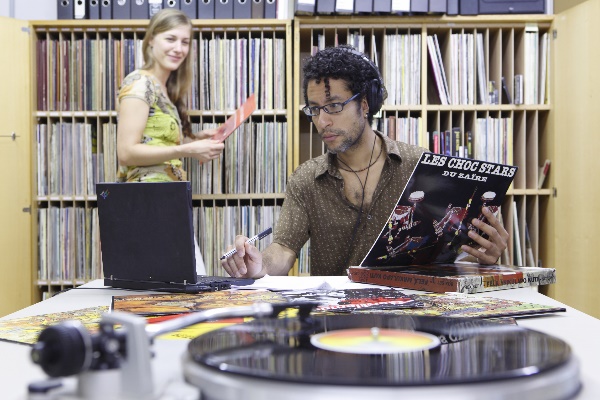
African Music Archives (AMA), Allemagne. Photo: Thomas Hartmann / www.uni-mainz.de

Parmi les pionniers de l’étude et de la préservation des rythmes africains, l’on distingue Hugh Tracey, originaire du Devonshire (Royaume-Uni). Son intérêt pour la musique est apparu en 1921, lors de son premier séjour au Zimbabwe où il avait installé une ferme de tabac avec son frère. Au contact du peuple karanga, Tracey fut très vite convaincu de l’importance de la musique dans la vie de cette communauté, et ce, malgré l’attitude de mépris manifesté par la communauté coloniale de la région. Il relate son expérience comme suit :

“L’histoire de cette collection de musique, de chansons, de légendes et de récits authentiques africains est avant tout personnelle. Elle a commencé au début des années 20 quand pour la toute première fois, j’ai chanté et écrit des paroles de chants africains que j’avais entendus dans les champs de tabac en Rhodésie du Sud. Plusieurs années après (1929), j’ai enregistré quelques disques avec le concours d’une maison de disques (Colombia Londres) quand j’ai pris avec moi 14 jeunes hommes karangas pour nous rendre à 800km de là, dans un studio à Johannesburg. Ce fut le tout premier enregistrement de musique indigène rhodésienne. Peu de temps après, quelques titres furent utilisés Par John Hammond de la CBS à Carnegie Hall à New York dans la première partie d’un spectacle au cours duquel il a présenté pour la première fois dans cette ville, la musique et les musiciens de Negro bands.”[ii]

D’après les souvenirs de Tracey, il est évident que rassembler et archiver de la musique en Afrique n’était pas seulement un exercice académique, mais aussi une source de profits pour les maisons de disques.

Entre la première et la deuxième guerre mondiale, le Royaume Uni était le centre de tous les enregistrements et la fabrication de disques pour gramophones. Dès les années 1890, ces enregistrements sont devenus un phénomène planétaire. On observa alors un intérêt pour les enregistrements sonores dans tout l’Empire Britannique. An 1912, des enregistrements de chefs swazis en visite à Londres au début des années 1900 furent distribués et vendus dans le monde entier. De plus, des techniciens furent envoyés en expéditions pour capturer de la musique indigène qui plus tard, sera vendue sous le nom de ‘Musique Native’ à travers le monde. [iii]

A mesure que ces enregistrements atteignaient un public de plus en plus élargi, des chercheurs tels que Erich Hornbostel (qui n’est jamais allé en Afrique), ont commencé à utiliser ces enregistrements pour élaborer une théorie sur la musique africaine et orientale. Il a créé un système de classification des instruments de musique en se basant sur les sons qu’ils produisaient.

A la suite des recherches de Hornbostel, des collections scientifiques d’archives musicales ont commencé à apparaître. On note en particulier le Lautarchiv à Berlin (dont certaines archives sonores sont celles de prisonniers de guerre dans les camps de concentration allemands pendant la première guerre mondiale), et La Kirby Collection (au sein du College of Music l’université du Cap et du Museum Africa).

L’archivage de la musique en Afrique a pris une tournure de plus en plus scientifique sous l’impulsion des intérêts commerciaux de sociétés telles que British Gramophone Company et par conséquent, également des sociétés localisées en Afrique telles que Gallo Music, dont les premiers enregistrement, réalisés par Hugh Tracey, furent ceux de mineurs à travers toute l’Afrique australe (dont le Mozambique, le Malawi et la Zambie), lesquels étaient rassemblés aux mines d’or de Witwatersrand dans les années 20 et 30 [iv]. Hugh Tracey devint alors le principale archiviste de musique africaine et nombre de ses travaux sont exposés la Bibliothèque Internationale de la Musique Africaine (International Library of Africa Music) au sein de l’université de Rhodes à Grahamstown.

Ces sociétés ont fait de grands profits grâce aux archives musicales. Parfois, elles exploitaient les musiciens. Le meilleur exemple est la chanson de Solomon Linda ‘Mbube’ enregistrée par Gallo en 1939, et qui devint si populaire à la fin des années 40, qu’on en vendit plus de 100 000 exemplaires, dont Linda ne reçut que la médiocre somme de 10 shillings. “Mbube’ fut ensuite réenregistré par un groupe américain nommé The Weavers, qui changea le titre en ‘Wimoweh’ et en fit un succès du top 20 en Amérique. La chanson a aussi été utilisée par Walt Disney dans le dessin animé le Roi Lion sous le titre ‘Le lion est mort ce soir’. Gallo fit fortune grâce à ce titre et Linda mourut dans la pauvreté.

La BBC (British Broadcasting Corporation), créée dans les années 20 avait plusieurs stations d’émission par satellite à travers le continent, notamment au Kenya dès 1928. Après l’indépendance elle deviendra la KBC (Kenya Broadcasting Corporation), laquelle récoltait également des enregistrements de musique locale. La SABC (South African Broadcasting Corporation) formée en 1936, enregistrait des chansons et conservait des archives.

Cependant, l’on accordait peu d’attention aux enregistrements du peuple noir et nombre furent perdus lors du transfert de la SABS dans ses nouveaux quartiers à Auckland Park (Johannesburg) dans les années 80. Cela s’accordait parfaitement avec le caractère secret de l’apartheid et du dédain avec lequel les autorités traitaient la culture noire[v]. Des corporations de diffusion nationales semblables existent dans divers pays d’Afrique tels que le Nigéria, la Namibie, la Tanzanie, l’Egypte, le Malawi et la Zambie, chacun de ces pays ayant ses propres archives.

Pourquoi archiver la musique?

Historiquement, la principale raison avancée pour promouvoir l’archivage de la musique en Afrique était de préserver une trace des cultures en voie de disparition. L’on estimait que la musique africaine serait vite ‘contaminée’ par des influences occidentales qui accompagnaient un style de vie moderne. Ceci était bien entendu un point de vue paternaliste ayant pour but d’effacer les tendances multiculturelles[vi].

Cela ne peut-être notre motivation aujourd’hui, car nous pouvons à présent admettre que nous sommes à la fois africains, mais aussi citoyens du monde. Par exemple, deux musiciens chantant dans les rues de Lagos pourraient très bien décider d’enregistrer une chanson et de la poster sur Facebook. Que d’opportunités cela apporte de pouvoir suivre ces mouvements transnationaux de la musique et de se découvrir les uns les autres ! De nos jours, toute tentative d’archivage devrait sérieusement tenir compte des technologies numériques et des possibilités qu’elles offrent quant à la création et préservation de fichiers musicaux ainsi qu’à la redécouverte de plus anciennes archives.

Cette tendance existe déjà, et peut être observée au sein de la communauté somalienne de Londres dans le quartier de King’s Cross. En effet, la Bibliothèque Britannique (British Library) toute proche, abrite de nombreuses archives de musique somalienne, ce qui offre une opportunité d’échange d’idées et d’informations sur les enregistrements historiques de la Bibliothèque, ainsi que la création de nouvelles chansons somaliennes. Tout ceci a permis aux somaliens de répondre aux théories avancées par les ethnomusicologues à leur sujet[vii].

De même, sur le continent africain, il y a de plus en plus de revendications en faveur du rapatriement vers le continent d’archives conservées à l’étranger. C’est le cas de l’Ouganda, où le peuple réclame des enregistrements réalisés par Klaus Wachsmann dans les années 40 et 50 et conservés à Londres[viii].

Les motivations derrière la création d’archives vont de la 'préservation des cultures en voie de disparition’ à la soif de justice sociale. Dans le cas des collections éthiopiennes Harari, l’on a envisagé des approches collectives. Des observateurs ont noté à quel point le fait d’intégrer des intervenants locaux au processus d’archivage de musique et de chansons rituelles éthiopiennes peut permettre une meilleure gestion des archives et une plus grande accessibilité pour le public. [ix]

Perspectives d’avenir

Si l’on considère qu’il est important de conserver des archives musicales, le défi en Afrique et d’augmenter l’accès à la technologie. Les gouvernements et les institutions doivent investir dans des infrastructures et les connaissances nécessaires au maintien de ces collections si délicates.

En octobre 2003, la Conférence Générale de l’UNESCO a adopté la Convention de Sauvegarde du Patrimoine Culturel Immatériel. Ce document est né de la volonté de l’UNESCO de promouvoir les expressions et pratiques culturelles, et de conserver des sites et monuments inestimable. En signant cette convention, les états s’engagent à assurer la sauvegarde de ce patrimoine sur leur territoire et l’identification de cet héritage vivant à travers la participation des communautés, des groupes et d’ONG compétentes. [x]

Les états africains doivent adopter des normes internationales de protection et de promotion de la musique en tant qu’héritage culturel. Un rapport récent : “Une Analyse du Système National des Archives en Afrique du Sud” est un excellent exemple d’une motivation civique, de quoi inspirer d’autres états du continent.

Enfin, les sociétés privées d’enregistrement ont grandement bénéficié de cette musique locale comme le montre le cas de Solomon Linda. Ces sociétés doivent également participer financièrement à l’archivage afin de rendre à tant de communautés leur dignité perdue.


[i] Voir Mudimbe, VY (1991). The Invention of Africa.Indiana: Bloomington Press; Agawu, Victor Kofi (2003). Representing African Music. New York: Routledge.
[ii] International Library of African Music, Archives.
[iii] Cowley, John (1994). “Recordings in London of African and West Indian Music in the 1920s and 1930s,” Musical Traditions. 12, 13-26.
[iv] Voir Allen, Lara (2007). “Preserving a Nation’s Heritage: The Gallo Music Archive and South African Popular Music,” FontesArtisMusicae. 54/3, 263-279.
[v] Erlmann, Veit (1991). African stars: Studies in black South African performance. Chicago: University of Chicago Press
[vi] Tracey, Hugh (1954). “The State of Folk Music in Bantu Africa,” International Folk Music Journal, 6, 32-36. For an analysis of this see Mhlambi, Thokozani Ndumiso (2008). The Early Years of Black Radio Broadcasting in South Africa: A Critical Reflection on the Making of Ukhozi FM. Mphil. thesis, University of Cape Town;
[vii] Brinkhurst, Emma (2012). “Archives and Access: Reaching Out to the Somali Community of London’s King’s Cross,” Ethnomusicology Forum, 21/2, 243-258.
[viii] Nannyonga-Tamasuza, Sylvia et al (2012). “The Audible Future: Reimagining the Role of Sound Archives and Sound Repatriation in Uganda,” Ethnomusicology, 56/2, 206-233.
[ix] Tarsitani, Belle Asante&Tarsitani, Simone (2010). “Integrating Local Knowledge in Ethiopian Archives: Music and Manuscripts in the Collection of Abdulahi Ali Sherif,” African Study Monographs, 41, 5-18.
[x] Mhlambi, Thokozani (2009). Report on The Safeguarding of the Intangible Cultural Heritage in Southern Africa Meeting in Windhoek, 17-18 November 2009, for the Archival Platform.

Please se connecter to post a comment.

Most popular

Disclaimer: Music In Africa provides a platform for musicians and contributors to embed music and videos solely for promotional purposes. If any track or video embedded on this platform violates any copyrights please inform us immediately and we will take it down. Please read our Terms of Use for more.

newsletter banner

Abonnez-vous à notre newsletter

Retrouvez-nous sur les réseaux sociaux