














NEFCISA
NEFCISA

The Music In Africa Foundation (MIAF) is proud to announce its partnership with the Industrial Development Corporation (IDC) as a Strategic Implementing Partner (SIP) for its Social Employment Fund (SEF). Through this collaboration, MIAF is launching a new national programme designed to create jobs, address skills gaps, and strengthen South Africa’s creative industries — in line with the SEF’s overarching goal to generate work for the common good and build community value through employment, social contribution, and inclusive economic participation. Operating under the banner NEFCISA (National Employment Facility for Creative Industries in South Africa), the initiative will recruit and train participants, match them with host organisations, and place a minimum of 1 000 workers across the country. Key Objectives: Support employment and entrepreneurship in the creative industries. Offer skills development and training programmes. Foster partnerships between public and private creative sectors. Promote South African creativity at both provincial and national levels Foster community development through social contribution.

ACCES
ACCES

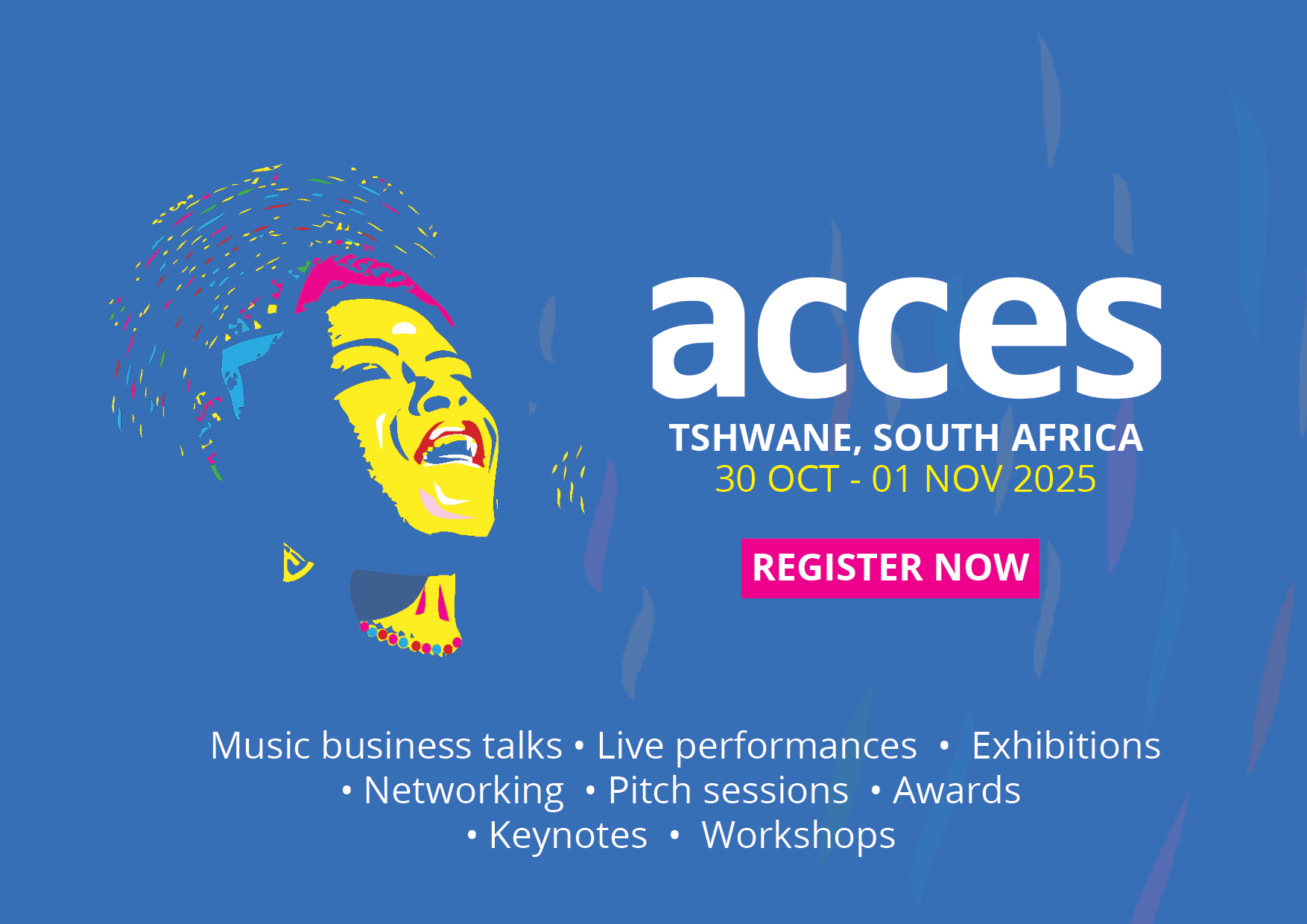
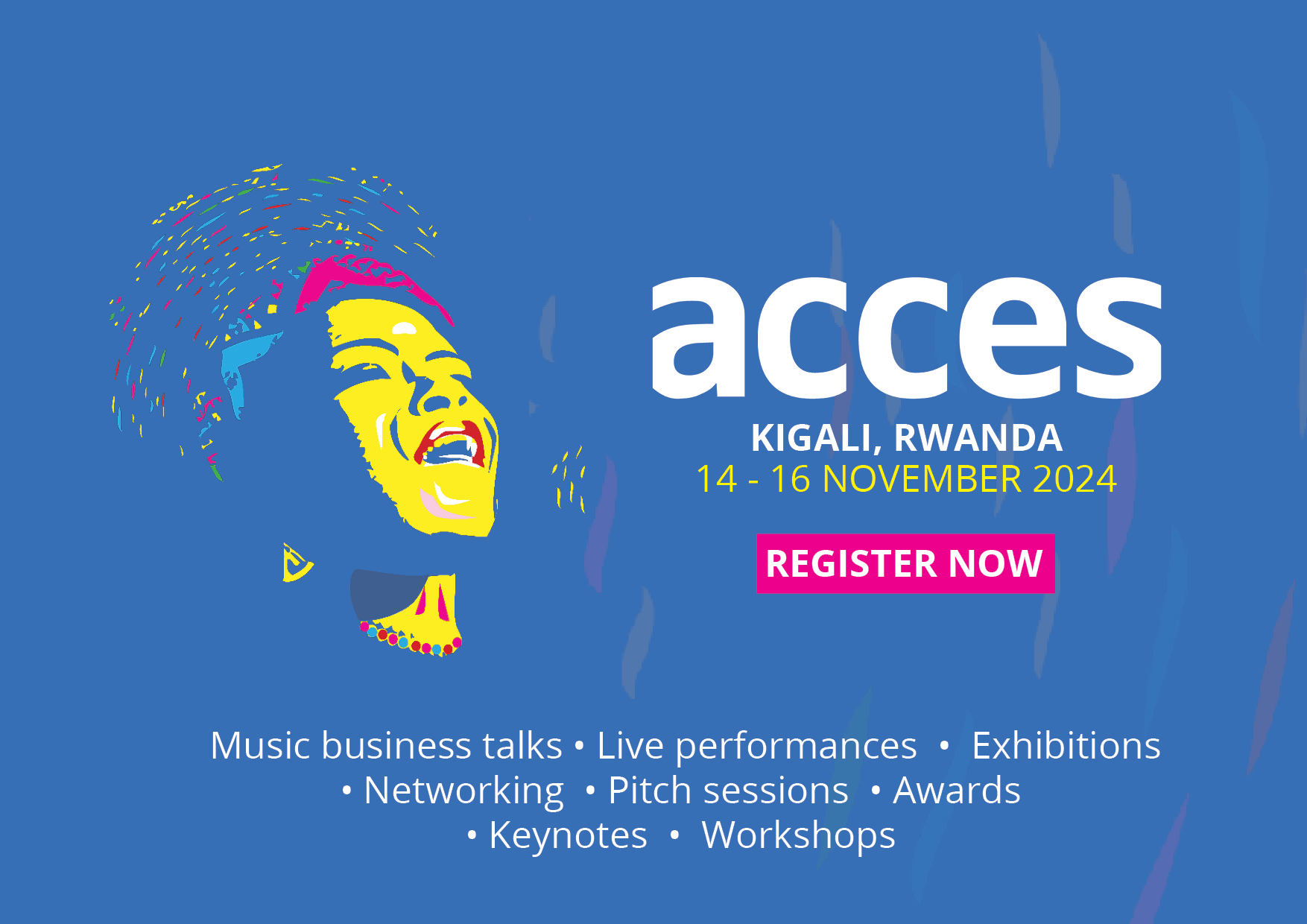
Chaque année, nous fournissons des informations générales afin de guider les participants dans la préparation de leur voyage. En plus de ce site, des mises à jour importantes seront envoyées par e-mail à tous les délégués inscrits. Assurez-vous de vous inscrire dès que possible. Pour plus d'informations, veuillez contacter [email protected] Continuez à consulter cette page pour plus d'information.  

Gender@Work
Gender@Work

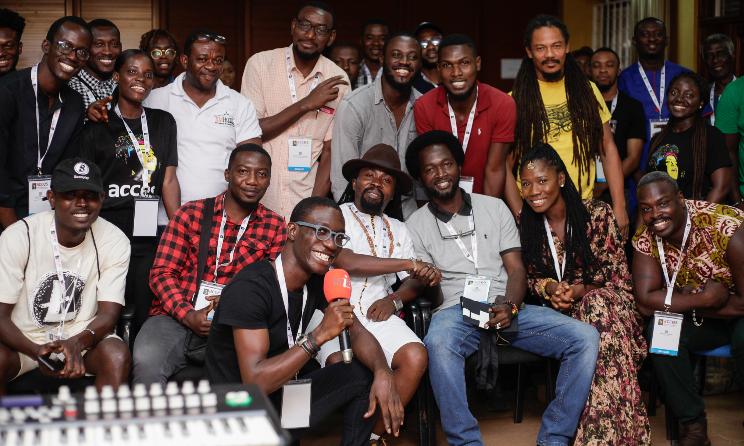
Music In Africa Gender @ Work is a three-year training programme aimed at upskilling and increasing the participation of female professionals in the African music sector. Launched by the Music In Africa Foundation (MIAF) in April 2019, the programme is connected to the MIAF’s ACCES music conference – a pan-African event held in a different African country every year. This connection enables the programme to reach new participants in a different African country every year. The programme marks the beginning of a more concerted effort by the Foundation to support the participation and inclusion of women in all facets of its programmes and the music sector in Africa as a whole. Over the three years, the programme will aim to address gender imbalances in the sector through training, lobbying, facilitating knowledge exchange and dialogues that foster the interest of women. The broader objectives of the programme are to: Provide industry training for women on critical music industry skills, focusing on: Stage management Electronic music production and recording Music business management Technical knowledge Provide an opportunity for both professional and aspiring women to benefit from the Music In Africa network and its broad range of activities in 2019, 2020 and 2021. Provide a solution-based platform in the form of a round table at ACCES with a view to identify challenges, discuss opportunities and lobby for the interests of female practitioners. Offer participants the opportunity to benefit from programmes offered by MIAF’s partners. Increase access to educational materials. Integrate participants in the broader ACCES programme to maximise experience and exposure to the industry. Record and present training materials on the www.musicinafrica.net, including but not limited to tutorials, templates and other best-practice materials. Communicate women-based themes that support the initiatives and messages of the programme. MAIN TRAINING ACTIVITIES Training in first country (Ghana): In the first year, participants will be trained on all aspects of stage management by a team of experienced stage managers from 10 to 17 November 2019. The programme will offer robust classroom training as well as practical, hands-on training in which participants will also be given the opportunity to manage various aspects of the ACCES performance programme. Training in second country: The second training iteration will take place at ACCES 2020 when the programme will diversify its course to include music production lessons and training on other music business topics. A round-table platform will also be introduced to coincide with the ACCES programme. Training in third country: The third training iteration will take place at ACCES 2021 in a different country, offering an advanced course. HOW DO YOU GET INVOLVED?  As a participant, facilitator or trainer: The programme enrolls up to 12 trainees every year. All opportunities are advertised publicly on this website, and will be added to this page. Please keep checking this page for new calls (below under UPDATES & CURRENT OPPORTUNITIES). As a partner Please contact Claire Metais at [email protected]. APPLY The call for applications for 2020 will be announced soon. The Music In Africa Gender @ Work programme is made possible with the support of the Prince Claus Fund, Siemens Stiftung and Goethe-Institut.

Sound Connects Fund
Sound Connects Fund

Pour les praticiens et les organisations culturels et créatifs opérant en Afrique australe, l’accès au financement reste un défi majeur. La pandémie de COVID-19 a également eu un impact massif sur les politiques gouvernementales, les dépenses et l’économie en général, et a vu les dépenses consacrées à la culture reléguées plus bas dans la liste des priorités. De plus, les industries culturelles et créatives citent régulièrement quatre domaines principaux où l’investissement est nécessaire pour la croissance : une visibilité accrue, la mobilité incluant l’accès à de nouveaux marchés, le financement et les structures de soutien.

Music In Africa Live

MUSIC IN AFRICA LIVE Lancé en 2020 pour une durée de 3 ans, Music In Africa Live est une initiative visant à soutenir l'écosystème de la musique africaine face aux contraintes imposées par la pandémie de COVID-19 ; le projet a été lancé par la Fondation Music In Africa (MIAF) en partenariat avec le ministère fédéral allemand des Affaires étrangères, Siemens Stiftung et le Goethe Institut. Plus de 30 aides sont disponibles dans le cadre de la troisième édition de Music In Africa Live, dans 3 catégories :  showcases, renforcement des compétences et plaidoyer, en conformité avec les modalités énoncées.

Instrument Building And Repair Project

The overarching objective of Music In Africa Foundation’s Instrument Building and Repair (IBR) project is to encourage the formalisation and professionalisation of instrument-making and repair in Africa, especially in relation to indigenous African instruments. Background In 2014, the Music In Africa Foundation (MIAF) identified as one of its focus areas for development the need to encourage young people from music and music-related sectors to consider instrument-making as a career. This need extended itself from the recognition that the making of traditional African instruments is not a widely practiced skill and seems to be limited to the older generation. Traditional African instrument makers are also few and far between, making communication and logistics between teachers and learners an obstacle. When instrument building workshops take place, budgetary constraints do not allow teachers or learners the time to explore the finer details of an instrument. Based on these observations, the MIAF designed and piloted the first IBR workshop at the Dhow Countries Music Academy (DCMA) in Zanzibar in February 2015. In 2016, the foundation received funding from the South African National Lotteries Commission to implement a much bigger version of the project in Johannesburg. The project drew participants from five African countries. 25 students from South Africa, Ghana, Senegal, Kenya and Ethiopia were trained on how to build and repair musical instruments. The instruments that they made were: Traditional Instruments: Umakhweyana and Marimba Conventional Instrument: Dulcimer guitar The workshop culminated in a traditional instruments concert at the Wits Theatre in Johannesburg. It is the MIAF’s aim to roll out similar workshops in as many African countries as possible over the next few years. Objectives Developing awareness of musical instrument makers in Africa with a view to promote their work to a wider global audience. Facilitating the sharing and transfer of skills in indigenous instruments between countries on the continent. Encouraging the formalisation and professionalisation of instrument-making and repair in Africa, especially in relation to indigenous instruments. Helping instrument makers develop their careers. Fostering the rapid monetisation and sustainable development of instrument-making and repair in Africa. Promoting constant exchange of ideas, expertise, experiences and know-how among instrument makers in Africa. Facilitating the identification of existing gaps in the field with a view to contribute new solutions. Facilitating the transfer of knowledge and skills of indigenous instruments between younger and older generations. 2020 edition The MIAF has also announced that multi-instrumentalist and instrument maker Joe Makhanza will facilitate one of the workshops on the building of the kamale ngoni instrument. Kamale ngoni is a kora-like, stringed instrument that originated in West Africa. The instrument contributed to the rise of Wassoulou music in the 1970s and 1990s. Makhanza was born in Giyani in South Africa's Limpopo province. He completed a bachelor of music degree and a post-graduate diploma in arts marketing from Wits University. He is currently completing his masters in ethnomusicology and is a part-time lecturer in African music studies at Rhodes University. He plays the kora, mbira, valiha, masenqo, xiwewe, ngoni ba and xizambi, among others. He also manufactures the aforementioned instruments. The MIAF will confirm more trainers who will join the workshops as well as the other instruments that will be featured in the 2020 IBR programme.  Apply to participate here. Connect with us on Twitter, Instagram and Facebook, and subscribe to our monthly newsletter. The Music In Africa Instrument Building and Repair project is funded by the National Lotteries Commission. It is implemented in partnership with Siemens Stiftung, Goethe-Institut, Wits Theatre and Kaya FM.

banner image

Banky W – High Notes

Accueil/Non classé/Banky W – High Notes

And with those lines Banky W announces his return on ‘High Notes,’ his first single in 2015, taken from a forthcoming album.

Away from West Africa, the sex-pun king is R. Kelly, he of the ‘key in ignition’ fame. Over here, it is Banky territory. His more memorable songs have been unabashed sexual jams. ‘Jasi’, ‘Low Key’ and ‘Good Good Loving’ are some of the recent examples.

The memorable exceptions are instructive as well. ‘Jaiye Ori Mi’ (2014) and ‘Mercy’ (2013) have religious inflections. Besides their clear gospo-inspirational bent, those songs feature churches in their videos. For Mr W, making love and churchgoing are divine experiences. At the very least he takes both activities seriously.

This easy mingling of the divine and the debauched draws Banky W deeper into Kelly’s orbit. Composer of ‘I Believe I can Fly’, performed in churches the world over and singer of such carnal ditties as ‘I like the Crotch on You’, R. Kelly carried a crucifix in one pocket and a condom in another. And apparently, the young Bankole Wellington was watching, biding his time. Fortunately, like his US counterpart, he showed up prepared, blessed with a gift for melody.

He retains that gift and it makes easy listening even when the sacred and the sinful collide, as they do in this line from ‘High Notes’: She said all men are dogs. I said I’m just a different pedigree. Then she just went and got down on her knees and started blessing me.

The sexual nature of his lyrics may surprise a few. But Banky’s keen followers know this has always been a part of the man’s work. Almost a decade ago, on ‘Ebute Metta’, his remix of Rihanna’s ‘Umbrella’ and the very first single he released in Nigeria, he had this phallocentric line: ‘And yes I’m Nigerian—damn right I am packing…’ It’s a linear trip from there to ‘High Note’ ’s ‘it’s like the blood running through my veins…’ No prize for guessing what vessel exactly those words refer to.

There is, however, only so much of these formulations a singer, even one as talented as Banky, can produce before it is clear he needs a better thesaurus. ‘High Notes’ ’s ‘I am able, willing and ready’ is merely a revision of ‘I’m capable, and durable and lovable’ from 2008’s ‘Capable (remix)’.

That song gave him his Mr Capable nickname. And Banky has proven capable of wringing novelty from his usual themes. The words ‘High Notes’ showed up on the sedate seductive ‘Low Key’ (2013) as, ‘they hit the high notes, I hit the right notes’.

Also: ‘High Notes’ has ‘…these other girls—so they’re just jealous and they’re petty.’ But Banky said it better on ‘Low Key’: ‘Jealous chicks are playing games—they just angry birds.’ These repetitions may take you out of the song but the man’s vocal competence reels you back in. In time he may need to fix it but at the moment the trick is unbroken.

Listening to Banky W sing these lusty numbers back to back makes the man appear to be Nigeria’s apostle of unfettered lust, a disciple receiving directions from Eros. While that may be true, his lust is partly powered by narcissism. With the many manhood mentions, Banky’s music hardly provides a picture of a man beholding a woman but a man beholding his member, eternally fascinated by his own instrument. In any case, Nigerian music is littered with pop-pervs. And on ‘High Notes’, Banky W shows he is their premier, the most melodious, the most sophisticated.

As the song itself nears its end, Banky speeds through a rap. And when it arrives, the climax is an aural bang carrying these words: ‘I can make you a star: are you ready to blow?’

Sure, that, too, is a pun (and is reminiscent of ‘Bring your body, baby, I could bring you fame’ from ‘Wicked Games’ (2011) by US singer The Weeknd.) Yet beyond those words, there’s something more. Cobhams Asuquo, who produced the song and is mainly responsible for bringing gospel and classical patterns into contemporary pop music in Nigeria, does something exquisite with the chorus and beat. Employing chimes and strings, the sound mimics the lyrics: it is headed for a climax. Much of the ingenuity here recalls that other fruit of the Banky W-Cobhams collaboration, the excellent ‘Strong Thing’ from 2009. About a half-decade later, fans will be grateful to learn chemistry between producer and singer abides. These two work well.

The song works just as well. And in those concluding seconds, where Banky zips through his lines and the beat crescendoes in your ears, the song reveals its own workings: ‘High Notes’ is baby-making music for his listeners; Banky, though, is in a hurry to leave. This is work for him after all; pleasure comes after, outside of the recording booth. Singing sex-jams may be easy-peasy at this stage of Banky’s career. But it is still only foreplay.

Watch the lyric video for ‘High Notes’ below.

[video:http://www.youtube.com/watch?v=iLy3XmJ-3Js autoplay:0]

Artist: Banky W
Song: High Notes
Label & Year: EME, 2015

newsletter banner

Abonnez-vous à notre newsletter

Retrouvez-nous sur les réseaux sociaux