












NEFCISA
NEFCISA

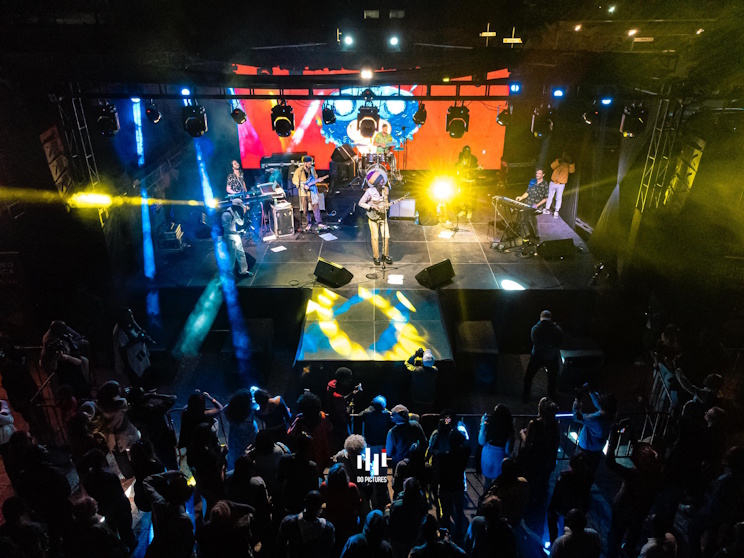
The Music In Africa Foundation (MIAF) is proud to announce its partnership with the Industrial Development Corporation (IDC) as a Strategic Implementing Partner (SIP) for its Social Employment Fund (SEF). Through this collaboration, MIAF is launching a new national programme designed to create jobs, address skills gaps, and strengthen South Africa’s creative industries — in line with the SEF’s overarching goal to generate work for the common good and build community value through employment, social contribution, and inclusive economic participation. Operating under the banner NEFCISA (National Employment Facility for Creative Industries in South Africa), the initiative will recruit and train participants, match them with host organisations, and place a minimum of 1 000 workers across the country. Key Objectives: Support employment and entrepreneurship in the creative industries. Offer skills development and training programmes. Foster partnerships between public and private creative sectors. Promote South African creativity at both provincial and national levels Foster community development through social contribution.

ACCES
ACCES

Chaque année, nous fournissons des informations générales afin de guider les participants dans la préparation de leur voyage. En plus de ce site, des mises à jour importantes seront envoyées par e-mail à tous les délégués inscrits. Assurez-vous de vous inscrire dès que possible. Pour plus d'informations, veuillez contacter [email protected] Continuez à consulter cette page pour plus d'information.  

Gender@Work
Gender@Work

Music In Africa Gender @ Work is a three-year training programme aimed at upskilling and increasing the participation of female professionals in the African music sector. Launched by the Music In Africa Foundation (MIAF) in April 2019, the programme is connected to the MIAF’s ACCES music conference – a pan-African event held in a different African country every year. This connection enables the programme to reach new participants in a different African country every year. The programme marks the beginning of a more concerted effort by the Foundation to support the participation and inclusion of women in all facets of its programmes and the music sector in Africa as a whole. Over the three years, the programme will aim to address gender imbalances in the sector through training, lobbying, facilitating knowledge exchange and dialogues that foster the interest of women. The broader objectives of the programme are to: Provide industry training for women on critical music industry skills, focusing on: Stage management Electronic music production and recording Music business management Technical knowledge Provide an opportunity for both professional and aspiring women to benefit from the Music In Africa network and its broad range of activities in 2019, 2020 and 2021. Provide a solution-based platform in the form of a round table at ACCES with a view to identify challenges, discuss opportunities and lobby for the interests of female practitioners. Offer participants the opportunity to benefit from programmes offered by MIAF’s partners. Increase access to educational materials. Integrate participants in the broader ACCES programme to maximise experience and exposure to the industry. Record and present training materials on the www.musicinafrica.net, including but not limited to tutorials, templates and other best-practice materials. Communicate women-based themes that support the initiatives and messages of the programme. MAIN TRAINING ACTIVITIES Training in first country (Ghana): In the first year, participants will be trained on all aspects of stage management by a team of experienced stage managers from 10 to 17 November 2019. The programme will offer robust classroom training as well as practical, hands-on training in which participants will also be given the opportunity to manage various aspects of the ACCES performance programme. Training in second country: The second training iteration will take place at ACCES 2020 when the programme will diversify its course to include music production lessons and training on other music business topics. A round-table platform will also be introduced to coincide with the ACCES programme. Training in third country: The third training iteration will take place at ACCES 2021 in a different country, offering an advanced course. HOW DO YOU GET INVOLVED?  As a participant, facilitator or trainer: The programme enrolls up to 12 trainees every year. All opportunities are advertised publicly on this website, and will be added to this page. Please keep checking this page for new calls (below under UPDATES & CURRENT OPPORTUNITIES). As a partner Please contact Claire Metais at [email protected]. APPLY The call for applications for 2020 will be announced soon. The Music In Africa Gender @ Work programme is made possible with the support of the Prince Claus Fund, Siemens Stiftung and Goethe-Institut.

Sound Connects Fund
Sound Connects Fund

Pour les praticiens et les organisations culturels et créatifs opérant en Afrique australe, l’accès au financement reste un défi majeur. La pandémie de COVID-19 a également eu un impact massif sur les politiques gouvernementales, les dépenses et l’économie en général, et a vu les dépenses consacrées à la culture reléguées plus bas dans la liste des priorités. De plus, les industries culturelles et créatives citent régulièrement quatre domaines principaux où l’investissement est nécessaire pour la croissance : une visibilité accrue, la mobilité incluant l’accès à de nouveaux marchés, le financement et les structures de soutien.

Music In Africa Live

MUSIC IN AFRICA LIVE Lancé en 2020 pour une durée de 3 ans, Music In Africa Live est une initiative visant à soutenir l'écosystème de la musique africaine face aux contraintes imposées par la pandémie de COVID-19 ; le projet a été lancé par la Fondation Music In Africa (MIAF) en partenariat avec le ministère fédéral allemand des Affaires étrangères, Siemens Stiftung et le Goethe Institut. Plus de 30 aides sont disponibles dans le cadre de la troisième édition de Music In Africa Live, dans 3 catégories :  showcases, renforcement des compétences et plaidoyer, en conformité avec les modalités énoncées.

Instrument Building And Repair Project

The overarching objective of Music In Africa Foundation’s Instrument Building and Repair (IBR) project is to encourage the formalisation and professionalisation of instrument-making and repair in Africa, especially in relation to indigenous African instruments. Background In 2014, the Music In Africa Foundation (MIAF) identified as one of its focus areas for development the need to encourage young people from music and music-related sectors to consider instrument-making as a career. This need extended itself from the recognition that the making of traditional African instruments is not a widely practiced skill and seems to be limited to the older generation. Traditional African instrument makers are also few and far between, making communication and logistics between teachers and learners an obstacle. When instrument building workshops take place, budgetary constraints do not allow teachers or learners the time to explore the finer details of an instrument. Based on these observations, the MIAF designed and piloted the first IBR workshop at the Dhow Countries Music Academy (DCMA) in Zanzibar in February 2015. In 2016, the foundation received funding from the South African National Lotteries Commission to implement a much bigger version of the project in Johannesburg. The project drew participants from five African countries. 25 students from South Africa, Ghana, Senegal, Kenya and Ethiopia were trained on how to build and repair musical instruments. The instruments that they made were: Traditional Instruments: Umakhweyana and Marimba Conventional Instrument: Dulcimer guitar The workshop culminated in a traditional instruments concert at the Wits Theatre in Johannesburg. It is the MIAF’s aim to roll out similar workshops in as many African countries as possible over the next few years. Objectives Developing awareness of musical instrument makers in Africa with a view to promote their work to a wider global audience. Facilitating the sharing and transfer of skills in indigenous instruments between countries on the continent. Encouraging the formalisation and professionalisation of instrument-making and repair in Africa, especially in relation to indigenous instruments. Helping instrument makers develop their careers. Fostering the rapid monetisation and sustainable development of instrument-making and repair in Africa. Promoting constant exchange of ideas, expertise, experiences and know-how among instrument makers in Africa. Facilitating the identification of existing gaps in the field with a view to contribute new solutions. Facilitating the transfer of knowledge and skills of indigenous instruments between younger and older generations. 2020 edition The MIAF has also announced that multi-instrumentalist and instrument maker Joe Makhanza will facilitate one of the workshops on the building of the kamale ngoni instrument. Kamale ngoni is a kora-like, stringed instrument that originated in West Africa. The instrument contributed to the rise of Wassoulou music in the 1970s and 1990s. Makhanza was born in Giyani in South Africa's Limpopo province. He completed a bachelor of music degree and a post-graduate diploma in arts marketing from Wits University. He is currently completing his masters in ethnomusicology and is a part-time lecturer in African music studies at Rhodes University. He plays the kora, mbira, valiha, masenqo, xiwewe, ngoni ba and xizambi, among others. He also manufactures the aforementioned instruments. The MIAF will confirm more trainers who will join the workshops as well as the other instruments that will be featured in the 2020 IBR programme.  Apply to participate here. Connect with us on Twitter, Instagram and Facebook, and subscribe to our monthly newsletter. The Music In Africa Instrument Building and Repair project is funded by the National Lotteries Commission. It is implemented in partnership with Siemens Stiftung, Goethe-Institut, Wits Theatre and Kaya FM.

banner image

The Fingo Festival revolution in South Africa’s Eastern Cape

Accueil/Non classé/The Fingo Festival revolution in South Africa’s Eastern Cape

I’d landed here, in Fingo township, after being fetched from Grahamstown’s city centre by Xolile Madinda (or X), one of the main organizers of the Fingo Festival – an annual, independently-run series of events founded in 2011.

After a brief back-and-forth over text messages, X and myself agreed to meet in front of the Pick ‘n Pay off of Africa Street. It’s mind-morning during Winter; the air is crisp and fresh, and nippy in that special Easter Cape kind of way which leaves you with the perpetual feeling that you’re a clothing layer too short to be warm. X emerges from behind me and is every bit the nineties hip-hop renaissance man with his hooded jacket and Timbaland boots, plus a gray-coloured beanie wrestled onto his head to drive the whole idea home. He’s also well-versed in the history of Grahamstown – a story of displacement, deceit, and, ultimately, ownership–of land, of an entire nation’s memory. We spend the next 20 minutes shop-hopping, hunting for mats on which the b-boys will flex during the breakdancing battle later. We then leave the hungover, fest-frenzied streets of Grahamstown to cross the invisible line into Fingo, the township five minutes’ drive away.

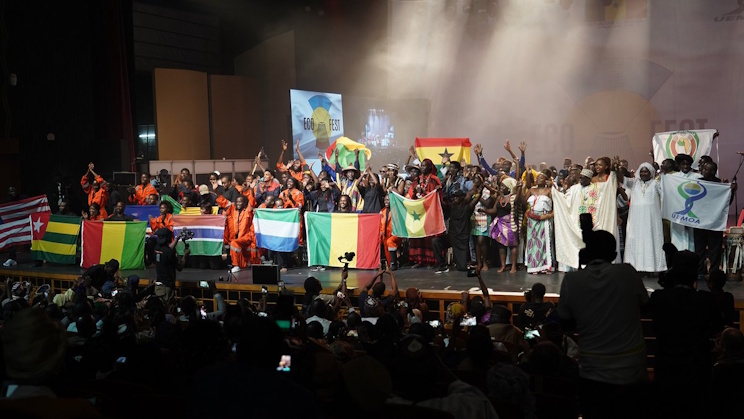
Fingo Festival was established as an intervention during the Grahamstown National Arts Festival. The aim was to make art accessible to the Fingo township and its surrounds through a seven-day programme which has grown to include activities such as children’s workshops, open-ended dialogues, and musical performances. “There’s a lot of cry that the [Grahamstown Arts Festival] is for the elite, that the art is expensive, and all these questions. So, as artists we figured out [that] there’s a deeper question that is not being addressed right here,” says X.

This deeper question, he figures, is that we as black people aren’t taught to prioritise art from an early age. To redress this, X and his partners decided to demonstrate that art has value beyond being an extra-mural activity. “It’s a job for other people,” he says.

It was imperative for them as artists to set a standard so that people of Fingo and neighbouring townships understand that “during the festival, it’s not just them getting a job to clean the street. It’s for them to go and enjoy the arts – go and watch a drama performance, go and watch a music performance.”

We stop at the traffic lights where Dr Jacob Zuma Drive and Albert Street intersect, indicating to the right. A mural painted in red against a white backdrop lies to my left hand side; across from it is the open area paved in orange brick where the b-boy battles and live performances are held every the afternoon for the festival’s duration.

When we arrive at the community centre, a Rhodes University drama student is animatedly reading to a group of children gathered in one of the rooms. The workshops are hosted in the library at one end of the building. In session is someone from UCT’s Computer Science Department, who has developed an App to help bedroom producers determine the quality of their recording. It’s production 101 as heads listen intently and share their expertise on topics ranging from recording techniques, to treating a room for vocal recording.

The morning chill has started to wane, but there’s still a biting undercurrent which even the b-boys who’ve just arrived outside are keen to fight off. They stretch, they jump, and they clown around and take pictures for Instagram. I, on the other hand, develop this strong urge for medicinal herbs, which leads to me being introduced to the Rasta referenced above.

Fingo Festival is not without its own set of problems. According to X, they’re running on practically no funding this year. The little they received went towards hiring the sound, feeding the children, buying paint for the wall, and buying mats for the b-boys (we eventually got two when we found them). It would seem that while people in positions of power have been vocal in their support of Fingo Fest, lending muscle to ensure that it continues to exist doesn’t come as easy as the praises they’re so quick to dish out.

“We don’t want to be treated as special, but we want people to [take note] that after 20 years of democracy, these young men and women started something in their own community to reflect that there is change in the society we are living in,” says X. “It doesn’t have to be money. It can be making things happen,” he tells me. “The difficulties are there, but they could be solved if we also put ourselves out there, like now.”

It ultimately ends up sounding like a wishy-washy dream: a bunch of hippie-leaning bohemian intellectuals with deep socio-political grounding, a love for the freedom that comes with embracing art and letting it flourish, and a preference for more alternative forms of learning. It seems foolish, doesn’t it? A grassroots festival. Hosted in the outskirts of a frontier town. Over a seven-day period!

But without grassroots initiatives such as Fingo and its ilk, people in the community have no other means of accessing at least some of what’s on offer at the more polished, high-end, two-week festival just 20 minutes’ walk away. And sure enough on the Monday following fest, the street poles had newspaper headlines praising the “record attendance numbers” at the Grahamstown Arts Festival. The numbers, and not the art, were the main concern. We can argue until daybreak about the representation of black, mostly working-class people in spaces like the Arts Festival; about the festival’s steady movement away from townships such as Joza; about the Village Green’s policies (which have been deemed exclusionary to the immediate community countless times, yet nothing seems to be done about it).

Instead of talk, it’d help if initiatives like Fingo were championed more by the mainstream. I may have missed a few great showcases at the festival itself: Tumi Mogorosi, Kyle Shepherd, Msaki, and countless other musicians who dedicated themselves to a gruelling schedule of shows; the numerous actors who fought hangovers to give repeated performances which oftentimes cast them in emotionally-demanding roles; the film directors who availed themselves for QnAs after screenings; the seemingly-enriching discussions at Think Fest (X himself gave a talk). But as the sun hovered on the horizon on Saturday, the last day of the festival, and people sang along to a reggae band’s rally that “Better must come…”, I knew that no other gathering could, at that very moment in time, top the feeling of euphoria which overcame me.


Originally published on 30 September 2014 in Africa Is A Country.

newsletter banner

Abonnez-vous à notre newsletter

Retrouvez-nous sur les réseaux sociaux