




















NEFCISA
NEFCISA

The Music In Africa Foundation (MIAF) is proud to announce its partnership with the Industrial Development Corporation (IDC) as a Strategic Implementing Partner (SIP) for its Social Employment Fund (SEF). Through this collaboration, MIAF is launching a new national programme designed to create jobs, address skills gaps, and strengthen South Africa’s creative industries — in line with the SEF’s overarching goal to generate work for the common good and build community value through employment, social contribution, and inclusive economic participation. Operating under the banner NEFCISA (National Employment Facility for Creative Industries in South Africa), the initiative will recruit and train participants, match them with host organisations, and place a minimum of 1 000 workers across the country. Key Objectives: Support employment and entrepreneurship in the creative industries. Offer skills development and training programmes. Foster partnerships between public and private creative sectors. Promote South African creativity at both provincial and national levels Foster community development through social contribution.

ACCES
ACCES

Chaque année, nous fournissons des informations générales afin de guider les participants dans la préparation de leur voyage. En plus de ce site, des mises à jour importantes seront envoyées par e-mail à tous les délégués inscrits. Assurez-vous de vous inscrire dès que possible. Pour plus d'informations, veuillez contacter [email protected] Continuez à consulter cette page pour plus d'information.  

Gender@Work
Gender@Work

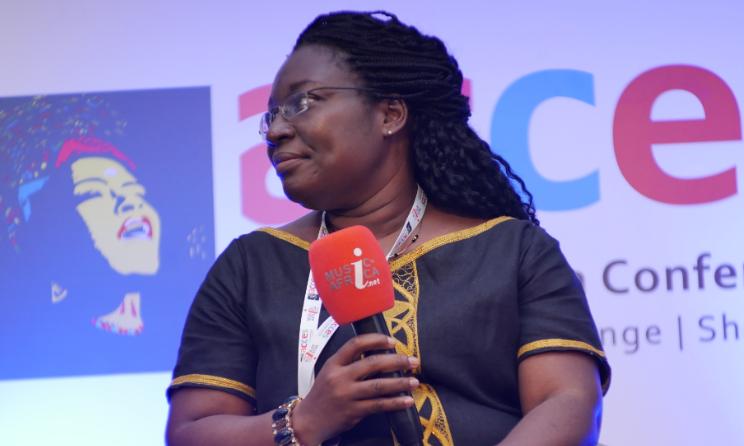
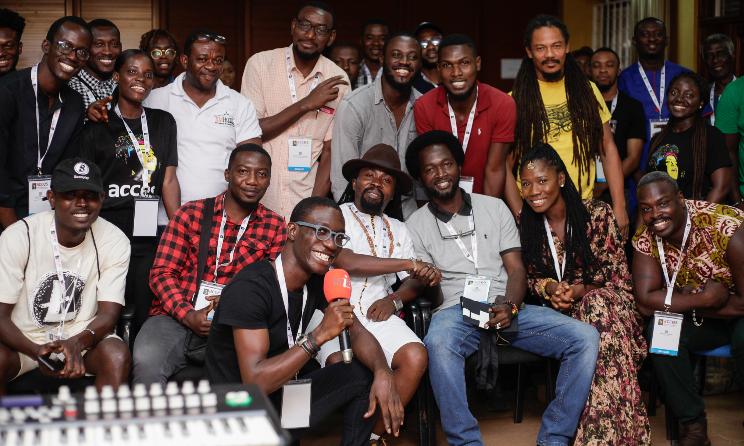
Music In Africa Gender @ Work is a three-year training programme aimed at upskilling and increasing the participation of female professionals in the African music sector. Launched by the Music In Africa Foundation (MIAF) in April 2019, the programme is connected to the MIAF’s ACCES music conference – a pan-African event held in a different African country every year. This connection enables the programme to reach new participants in a different African country every year. The programme marks the beginning of a more concerted effort by the Foundation to support the participation and inclusion of women in all facets of its programmes and the music sector in Africa as a whole. Over the three years, the programme will aim to address gender imbalances in the sector through training, lobbying, facilitating knowledge exchange and dialogues that foster the interest of women. The broader objectives of the programme are to: Provide industry training for women on critical music industry skills, focusing on: Stage management Electronic music production and recording Music business management Technical knowledge Provide an opportunity for both professional and aspiring women to benefit from the Music In Africa network and its broad range of activities in 2019, 2020 and 2021. Provide a solution-based platform in the form of a round table at ACCES with a view to identify challenges, discuss opportunities and lobby for the interests of female practitioners. Offer participants the opportunity to benefit from programmes offered by MIAF’s partners. Increase access to educational materials. Integrate participants in the broader ACCES programme to maximise experience and exposure to the industry. Record and present training materials on the www.musicinafrica.net, including but not limited to tutorials, templates and other best-practice materials. Communicate women-based themes that support the initiatives and messages of the programme. MAIN TRAINING ACTIVITIES Training in first country (Ghana): In the first year, participants will be trained on all aspects of stage management by a team of experienced stage managers from 10 to 17 November 2019. The programme will offer robust classroom training as well as practical, hands-on training in which participants will also be given the opportunity to manage various aspects of the ACCES performance programme. Training in second country: The second training iteration will take place at ACCES 2020 when the programme will diversify its course to include music production lessons and training on other music business topics. A round-table platform will also be introduced to coincide with the ACCES programme. Training in third country: The third training iteration will take place at ACCES 2021 in a different country, offering an advanced course. HOW DO YOU GET INVOLVED?  As a participant, facilitator or trainer: The programme enrolls up to 12 trainees every year. All opportunities are advertised publicly on this website, and will be added to this page. Please keep checking this page for new calls (below under UPDATES & CURRENT OPPORTUNITIES). As a partner Please contact Claire Metais at [email protected]. APPLY The call for applications for 2020 will be announced soon. The Music In Africa Gender @ Work programme is made possible with the support of the Prince Claus Fund, Siemens Stiftung and Goethe-Institut.

Sound Connects Fund
Sound Connects Fund

Pour les praticiens et les organisations culturels et créatifs opérant en Afrique australe, l’accès au financement reste un défi majeur. La pandémie de COVID-19 a également eu un impact massif sur les politiques gouvernementales, les dépenses et l’économie en général, et a vu les dépenses consacrées à la culture reléguées plus bas dans la liste des priorités. De plus, les industries culturelles et créatives citent régulièrement quatre domaines principaux où l’investissement est nécessaire pour la croissance : une visibilité accrue, la mobilité incluant l’accès à de nouveaux marchés, le financement et les structures de soutien.

Music In Africa Live

MUSIC IN AFRICA LIVE Lancé en 2020 pour une durée de 3 ans, Music In Africa Live est une initiative visant à soutenir l'écosystème de la musique africaine face aux contraintes imposées par la pandémie de COVID-19 ; le projet a été lancé par la Fondation Music In Africa (MIAF) en partenariat avec le ministère fédéral allemand des Affaires étrangères, Siemens Stiftung et le Goethe Institut. Plus de 30 aides sont disponibles dans le cadre de la troisième édition de Music In Africa Live, dans 3 catégories :  showcases, renforcement des compétences et plaidoyer, en conformité avec les modalités énoncées.

Instrument Building And Repair Project

The overarching objective of Music In Africa Foundation’s Instrument Building and Repair (IBR) project is to encourage the formalisation and professionalisation of instrument-making and repair in Africa, especially in relation to indigenous African instruments. Background In 2014, the Music In Africa Foundation (MIAF) identified as one of its focus areas for development the need to encourage young people from music and music-related sectors to consider instrument-making as a career. This need extended itself from the recognition that the making of traditional African instruments is not a widely practiced skill and seems to be limited to the older generation. Traditional African instrument makers are also few and far between, making communication and logistics between teachers and learners an obstacle. When instrument building workshops take place, budgetary constraints do not allow teachers or learners the time to explore the finer details of an instrument. Based on these observations, the MIAF designed and piloted the first IBR workshop at the Dhow Countries Music Academy (DCMA) in Zanzibar in February 2015. In 2016, the foundation received funding from the South African National Lotteries Commission to implement a much bigger version of the project in Johannesburg. The project drew participants from five African countries. 25 students from South Africa, Ghana, Senegal, Kenya and Ethiopia were trained on how to build and repair musical instruments. The instruments that they made were: Traditional Instruments: Umakhweyana and Marimba Conventional Instrument: Dulcimer guitar The workshop culminated in a traditional instruments concert at the Wits Theatre in Johannesburg. It is the MIAF’s aim to roll out similar workshops in as many African countries as possible over the next few years. Objectives Developing awareness of musical instrument makers in Africa with a view to promote their work to a wider global audience. Facilitating the sharing and transfer of skills in indigenous instruments between countries on the continent. Encouraging the formalisation and professionalisation of instrument-making and repair in Africa, especially in relation to indigenous instruments. Helping instrument makers develop their careers. Fostering the rapid monetisation and sustainable development of instrument-making and repair in Africa. Promoting constant exchange of ideas, expertise, experiences and know-how among instrument makers in Africa. Facilitating the identification of existing gaps in the field with a view to contribute new solutions. Facilitating the transfer of knowledge and skills of indigenous instruments between younger and older generations. 2020 edition The MIAF has also announced that multi-instrumentalist and instrument maker Joe Makhanza will facilitate one of the workshops on the building of the kamale ngoni instrument. Kamale ngoni is a kora-like, stringed instrument that originated in West Africa. The instrument contributed to the rise of Wassoulou music in the 1970s and 1990s. Makhanza was born in Giyani in South Africa's Limpopo province. He completed a bachelor of music degree and a post-graduate diploma in arts marketing from Wits University. He is currently completing his masters in ethnomusicology and is a part-time lecturer in African music studies at Rhodes University. He plays the kora, mbira, valiha, masenqo, xiwewe, ngoni ba and xizambi, among others. He also manufactures the aforementioned instruments. The MIAF will confirm more trainers who will join the workshops as well as the other instruments that will be featured in the 2020 IBR programme.  Apply to participate here. Connect with us on Twitter, Instagram and Facebook, and subscribe to our monthly newsletter. The Music In Africa Instrument Building and Repair project is funded by the National Lotteries Commission. It is implemented in partnership with Siemens Stiftung, Goethe-Institut, Wits Theatre and Kaya FM.

banner image

La musique gospel à Madagascar

Accueil/Non classé/La musique gospel à Madagascar

Les origines

L’avènement de la musique religieuse à Madagascar remonte à l’arrivée du christianisme dans la Grande Île dans  les années 1800.  La reine  Ranavalona II promulgua des règlements qui stipulaient, entres autres, la libre pratique de la religion après la longue période de persécution des chrétiens sous le précédent règne. « Après cette douloureuse époque, le peuple malgache a adopté sans difficulté la religion chrétienne et la musique liturgique.  De plus, cette dernière était  déjà proche de la règle morale régissant la conduite sociale de l’époque », confie Tsiory Razafinorovelo, chercheuse en médiation culturelle. Le peuple malgache était, en effet, respectueux des valeurs humaines et de la nature. 

Le gospel  malgache retrouve ainsi ses racines dans le vécu des malgaches. Mêlé à l’art et à l’histoire, celui-ci est depuis toujours  la musique d’un peuple  qui croit en la délivrance à travers le chant. « Le gospel était un moyen de se délivrer des tristesses et frustrations du passé en se tournant vers Dieu. Il y aussi cette espèce de retour aux valeurs malgaches », ajoute-t-elle.  Si à la base, le gospel malgache était un moyen de prêcher l’évangile, au fil des temps, il est devenu un style ancré dans le paysage musical malgache. En l’an 2000, le gospel a été promu à Madagascar grâce à la chorale AMAM affiliée à l’église protestante FJKM Andrainarivo Fahasoavana. Depuis, les groupes de gospel n’ont cessé de se multiplier  que ce soit au sein des confessions religieuses ou en dehors de celles-ci.

[video:https://www.youtube.com/watch?v=WYukZraW2rw autoplay:0]

Le gospel au sein des institutions religieuses

Le gospel joue un rôle important voire primordial au sein des confessions religieuses malgaches qu’elles soient protestantes, catholiques ou évangéliques. Le gospel malgache est avant tout un moyen de prêcher l’évangile. « Notre chorale a pour vocation de prêcher la bonne parole et d’annoncer la gloire de Dieu  à travers cette pratique musicale», confie Miarivelontsoa Rahaganisainana, membre de la chorale FJKM Andrainarivo Fahasoavana. La musique étant ancrée dans la culture malgache, le  gospel  facilite l’immersion de la bonne parole.

En outre, le gospel est un moyen efficace d’attirer et d’éduquer  les jeunes. Ce style musical est d’ailleurs très en vogue auprès de la jeunesse. « Notre  chorale est pour ses membres une véritable école de la vie où l’on apprend à forger sa personnalité et à développer ses qualités humaines », explique Patrick Andrianarivo  de l’église évangélique Shyn. Par ailleurs, le gospel est un moyen d’expression. « Au sein du gospel, on chante ce qu’on vit.  Ce n’est pas du fictif. On raconte dans la musique notre relation avec Dieu.  C’est vivant et sincère», affirme Randrianalison Yves, dirigeant de la chorale APF affiliée à l’église catholique Notre Dame de Lourdes.

Les groupes phares

Né en 2004, le groupe Tana Gospel Choir (TGC)  figure parmi les groupes phares de gospel local. TGC a à ses actifs trois albums, une tournée européenne, un passage au Brésil, une tournée nationale, sans compter ses innombrables prestations dans la Grande Île. « Mis à part le côté spirituel de cette musique, notre objectif est de faire de la musique de bonne qualité, intéressant à la fois les malgaches et le public international. Nous misons beaucoup sur la qualité de nos œuvres », confie Fidy Rabearisoa, le leader. En 2010, TGC a reçu le prix du meilleur tube évangélique décerné par RDJ Award Music de Tananarive.

[video:https://www.youtube.com/watch?v=xyUh0ujoEUg autoplay:0]

Autre groupe phare,  le God’s Messengers Mass Choir (GMMC) a marqué l’histoire du gospel malgache  avec le succès de son premier album Ho anao io en 2008. Avec une tendance musicale urbaine, la chorale a su attirer le cœur des jeunes malgaches.

[video:https://www.youtube.com/watch?v=tZUhWhTOzgI autoplay:0]

Le groupe Singers of Jesus a également une place importante dans le monde du gospel malgache avec ses quatorze ans de scène. Le groupe a à son actif un répertoire qui s’inspire beaucoup  de l’artiste américain Kirk Franklin.

[video:https://www.youtube.com/watch?v=GSfr6ghpAnE autoplay:0]

Les grandes pointures se sont fixé de grandes ambitions en soulevant le défi de devenir de plus en plus professionnels pour la gloire de Dieu et pour la promotion de la culture malagasy à travers le monde. C’est le cas de l’AAMA Gospel d’Ambodiafontsy. Cette année le groupe  prévoit de faire une série de représentations à l’étranger notamment  à l’île de Réunion, en Afrique du Sud, en France et en Suisse.

La tendance actuelle

A Madagascar, le gospel est devenu au fil du temps la musique branchée du moment. «Côté gospel, on a un peu de tout à Madagascar, en allant du negro-spiritual  à la fusion en passant par le standard. Chaque groupe essaye de se démarquer à sa manière », confie Nambintsoa Razafindralambo, étudiant-chercheur en musicologie. TGC puise, entre autres, ses créations dans le patrimoine musical de la Grande Île. Le groupe utilise les styles traditionnels bahoejy, kidodo, malesa, beko, jijy, salegy,… comme base de leurs créations. Il les combine ensuite avec des arrangements et techniques modernes (funk, soul,…)  et il obtient ainsi un genre atypique : le gospel malagasy.

Certaines chorales optent pour les styles musicaux suivant l’air du temps. GMMC, entres autres, a une influence plutôt urbaine et utilise le Hip Hop et le RnB comme base de leur répertoire. D’autres optent pour  une adaptation musicale comme la chorale de l’église évangélique Shyn qui s’inspire beaucoup des artistes connus comme Israel Houghton et Don Moen. En outre, les groupes tiennent également compte du genre musical qui intéresse leur public. Meva Gospel de Tamatave (côte est), opte pour une musique aux couleurs tropicales. Effectivement, Meva gospel chante en dialecte dans la plupart de ses titres. Bien que les tendances musicales tendent à se multiplier, certaines chorales préfèrent s’en tenir aux styles originels. La chorale de la FJKM Ambohitantely, entre autres,  pratique toujours le negro-spiritual.


[video:http://www.dailymotion.com/video/xoc8j1_meva-gospel-zaho-ambilay_people autoplay:0]


Au-delà du gospel…

Plus qu’une pratique musicale, le gospel présente certains enjeux sociaux à Madagascar. La Malagasy Gospel est une chorale formée en 2008 par environ 200 filles et différentes voix masculines de jeunes non-voyants de Tuléar (Sud). « Nous souhaitons que  les enfants défavorisés puissent d’une part apprendre à travailler en équipe et faire partie d’une communauté, et d’autre part développer leurs compétences à travers l’art et la musique », explique un représentant de l’ONG Bel Avenir auquel la chorale est affiliée. La Malagasy Gospel compte déjà à son palmarès une dizaine de tournées européennes.

Mis à part ses enjeux sociaux, le gospel représente également une  grande école formatrice de talents à Madagascar. D-lain, issu du TGC, a remporté le concours panafricain de Castel Live opéra en 2012. « Le gospel représente pour moi la formation par excellence que ce soit au niveau artistique ou spirituel », explique D-Lain. Deenyz, une étoile montante de la musique malgache, a intégré la chorale Meva Gospel en tant que membre fondatrice depuis 2006. Elle a remporté le prix Island Africa Talent en 2014. Nombreux sont les artistes malgaches qui ont su évoluer au sein gospel.


Sources :
Facebook :  Emission Au cœur du gospel / RLI 106 Fm
Annuaire CRAAM Tana Gospel Choir, www.craam.mg/cms/artiste/musique/16
Tana Gospel Choir, www.tanagospelchoir.com
AAMA Gospel : Une tournée internationale en préparation, www.midi-madagasikara.mg
Malagasy Gospel sensibilise, www.orange.mg
Malagasy Gospel Choir : 2000 spectateurs lors des douze concerts de la tournée en Europe, www.midi-madagasikara.mg
Malagasy Gospel : des concerts contre l’exploitation infantile,  www.orange.mg
Fête de la nativité, la GMMC à l’affiche,  www.newsmada.com
« Songs and gift »: The Singers of Jesus, époustouflant au Ccesca ! www.midi-madagasikara.mg
Musique – D-Lain reçoit son prix, www.laverite.mg
Madagascar: victoire de la chanteuse Deenyz au concours Island Africa Talent, www.rfi.fr
Liens vidéo:


newsletter banner

Abonnez-vous à notre newsletter

Retrouvez-nous sur les réseaux sociaux