


NEFCISA
NEFCISA

The Music In Africa Foundation (MIAF) is proud to announce its partnership with the Industrial Development Corporation (IDC) as a Strategic Implementing Partner (SIP) for its Social Employment Fund (SEF). Through this collaboration, MIAF is launching a new national programme designed to create jobs, address skills gaps, and strengthen South Africa’s creative industries — in line with the SEF’s overarching goal to generate work for the common good and build community value through employment, social contribution, and inclusive economic participation. Operating under the banner NEFCISA (National Employment Facility for Creative Industries in South Africa), the initiative will recruit and train participants, match them with host organisations, and place a minimum of 1 000 workers across the country. Key Objectives: Support employment and entrepreneurship in the creative industries. Offer skills development and training programmes. Foster partnerships between public and private creative sectors. Promote South African creativity at both provincial and national levels Foster community development through social contribution.

ACCES
ACCES

Chaque année, nous fournissons des informations générales afin de guider les participants dans la préparation de leur voyage. En plus de ce site, des mises à jour importantes seront envoyées par e-mail à tous les délégués inscrits. Assurez-vous de vous inscrire dès que possible. Pour plus d'informations, veuillez contacter [email protected] Continuez à consulter cette page pour plus d'information.  

Gender@Work
Gender@Work

Music In Africa Gender @ Work is a three-year training programme aimed at upskilling and increasing the participation of female professionals in the African music sector. Launched by the Music In Africa Foundation (MIAF) in April 2019, the programme is connected to the MIAF’s ACCES music conference – a pan-African event held in a different African country every year. This connection enables the programme to reach new participants in a different African country every year. The programme marks the beginning of a more concerted effort by the Foundation to support the participation and inclusion of women in all facets of its programmes and the music sector in Africa as a whole. Over the three years, the programme will aim to address gender imbalances in the sector through training, lobbying, facilitating knowledge exchange and dialogues that foster the interest of women. The broader objectives of the programme are to: Provide industry training for women on critical music industry skills, focusing on: Stage management Electronic music production and recording Music business management Technical knowledge Provide an opportunity for both professional and aspiring women to benefit from the Music In Africa network and its broad range of activities in 2019, 2020 and 2021. Provide a solution-based platform in the form of a round table at ACCES with a view to identify challenges, discuss opportunities and lobby for the interests of female practitioners. Offer participants the opportunity to benefit from programmes offered by MIAF’s partners. Increase access to educational materials. Integrate participants in the broader ACCES programme to maximise experience and exposure to the industry. Record and present training materials on the www.musicinafrica.net, including but not limited to tutorials, templates and other best-practice materials. Communicate women-based themes that support the initiatives and messages of the programme. MAIN TRAINING ACTIVITIES Training in first country (Ghana): In the first year, participants will be trained on all aspects of stage management by a team of experienced stage managers from 10 to 17 November 2019. The programme will offer robust classroom training as well as practical, hands-on training in which participants will also be given the opportunity to manage various aspects of the ACCES performance programme. Training in second country: The second training iteration will take place at ACCES 2020 when the programme will diversify its course to include music production lessons and training on other music business topics. A round-table platform will also be introduced to coincide with the ACCES programme. Training in third country: The third training iteration will take place at ACCES 2021 in a different country, offering an advanced course. HOW DO YOU GET INVOLVED?  As a participant, facilitator or trainer: The programme enrolls up to 12 trainees every year. All opportunities are advertised publicly on this website, and will be added to this page. Please keep checking this page for new calls (below under UPDATES & CURRENT OPPORTUNITIES). As a partner Please contact Claire Metais at [email protected]. APPLY The call for applications for 2020 will be announced soon. The Music In Africa Gender @ Work programme is made possible with the support of the Prince Claus Fund, Siemens Stiftung and Goethe-Institut.

Sound Connects Fund
Sound Connects Fund

Pour les praticiens et les organisations culturels et créatifs opérant en Afrique australe, l’accès au financement reste un défi majeur. La pandémie de COVID-19 a également eu un impact massif sur les politiques gouvernementales, les dépenses et l’économie en général, et a vu les dépenses consacrées à la culture reléguées plus bas dans la liste des priorités. De plus, les industries culturelles et créatives citent régulièrement quatre domaines principaux où l’investissement est nécessaire pour la croissance : une visibilité accrue, la mobilité incluant l’accès à de nouveaux marchés, le financement et les structures de soutien.

Music In Africa Live

MUSIC IN AFRICA LIVE Lancé en 2020 pour une durée de 3 ans, Music In Africa Live est une initiative visant à soutenir l'écosystème de la musique africaine face aux contraintes imposées par la pandémie de COVID-19 ; le projet a été lancé par la Fondation Music In Africa (MIAF) en partenariat avec le ministère fédéral allemand des Affaires étrangères, Siemens Stiftung et le Goethe Institut. Plus de 30 aides sont disponibles dans le cadre de la troisième édition de Music In Africa Live, dans 3 catégories :  showcases, renforcement des compétences et plaidoyer, en conformité avec les modalités énoncées.

Instrument Building And Repair Project

The overarching objective of Music In Africa Foundation’s Instrument Building and Repair (IBR) project is to encourage the formalisation and professionalisation of instrument-making and repair in Africa, especially in relation to indigenous African instruments. Background In 2014, the Music In Africa Foundation (MIAF) identified as one of its focus areas for development the need to encourage young people from music and music-related sectors to consider instrument-making as a career. This need extended itself from the recognition that the making of traditional African instruments is not a widely practiced skill and seems to be limited to the older generation. Traditional African instrument makers are also few and far between, making communication and logistics between teachers and learners an obstacle. When instrument building workshops take place, budgetary constraints do not allow teachers or learners the time to explore the finer details of an instrument. Based on these observations, the MIAF designed and piloted the first IBR workshop at the Dhow Countries Music Academy (DCMA) in Zanzibar in February 2015. In 2016, the foundation received funding from the South African National Lotteries Commission to implement a much bigger version of the project in Johannesburg. The project drew participants from five African countries. 25 students from South Africa, Ghana, Senegal, Kenya and Ethiopia were trained on how to build and repair musical instruments. The instruments that they made were: Traditional Instruments: Umakhweyana and Marimba Conventional Instrument: Dulcimer guitar The workshop culminated in a traditional instruments concert at the Wits Theatre in Johannesburg. It is the MIAF’s aim to roll out similar workshops in as many African countries as possible over the next few years. Objectives Developing awareness of musical instrument makers in Africa with a view to promote their work to a wider global audience. Facilitating the sharing and transfer of skills in indigenous instruments between countries on the continent. Encouraging the formalisation and professionalisation of instrument-making and repair in Africa, especially in relation to indigenous instruments. Helping instrument makers develop their careers. Fostering the rapid monetisation and sustainable development of instrument-making and repair in Africa. Promoting constant exchange of ideas, expertise, experiences and know-how among instrument makers in Africa. Facilitating the identification of existing gaps in the field with a view to contribute new solutions. Facilitating the transfer of knowledge and skills of indigenous instruments between younger and older generations. 2020 edition The MIAF has also announced that multi-instrumentalist and instrument maker Joe Makhanza will facilitate one of the workshops on the building of the kamale ngoni instrument. Kamale ngoni is a kora-like, stringed instrument that originated in West Africa. The instrument contributed to the rise of Wassoulou music in the 1970s and 1990s. Makhanza was born in Giyani in South Africa's Limpopo province. He completed a bachelor of music degree and a post-graduate diploma in arts marketing from Wits University. He is currently completing his masters in ethnomusicology and is a part-time lecturer in African music studies at Rhodes University. He plays the kora, mbira, valiha, masenqo, xiwewe, ngoni ba and xizambi, among others. He also manufactures the aforementioned instruments. The MIAF will confirm more trainers who will join the workshops as well as the other instruments that will be featured in the 2020 IBR programme.  Apply to participate here. Connect with us on Twitter, Instagram and Facebook, and subscribe to our monthly newsletter. The Music In Africa Instrument Building and Repair project is funded by the National Lotteries Commission. It is implemented in partnership with Siemens Stiftung, Goethe-Institut, Wits Theatre and Kaya FM.

banner image

Kidjo dedicates third Grammy to African musicians

Accueil/Non classé/Kidjo dedicates third Grammy to African musicians

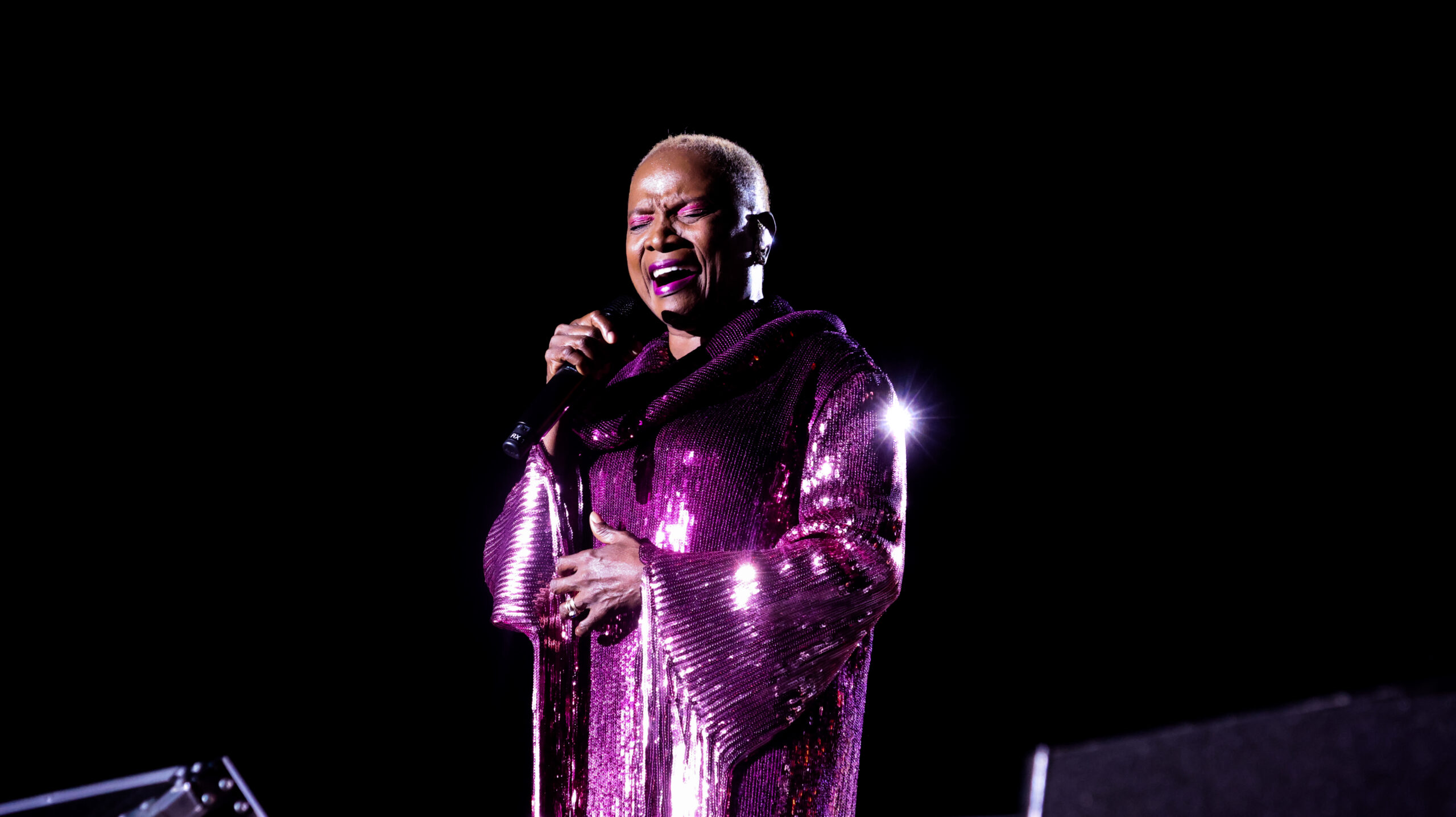
Kidjo first won a Grammy for Best Contemporary World Music Album in 2008 for her eighth studio album, Djin Djin, which included a star-studded list of guest artists including Branford Marsalis, Ziggy Marley, Alicia Keys, Carlos Santana and Peter Gabriel. She won her second Grammy in 2015 for her 2014 album EVE in the Best World Music category. That win was dedicated to the women of Africa, with Kidjo explaining in her acceptance speech: “For me, music is a weapon of peace and today more than ever, as artists we have a role to play in the stability of this world.”

Now the 55-year-old Cotonou-born diva has just won the 2016 Grammy, again for Best World Music Album, for her latest album Sings, a collaboration with the Orchestre Philharmonique du Luxembourg.

In accepting her latest award Kidjo danced onto stage to the sounds of James Brown, before announcing: « I want to dedicate this Grammy to all the traditional musicians in Africa, in my country, and all the young generation, the new African music, vibrant, joyful music that comes from my continent that you have to get yourself to discover. Africa is on the rise. Africa is positive. Africa is joyful. Let’s get together and be one through music and say no to hate and violence through music. Thank you! »

[video:https://www.youtube.com/watch?v=bFYeE1yBt_g autoplay:0]


Kidjo victory came at the expense of two of the other African nominees at the Grammies, South African legends Ladysmith Black Mambazo and Malawi’s Zomba Prison Project, who were nominated in the same category.

In other categories where African artists were nominated, Ghanaian reggae man Rocky Dawuni lost out in the Best Reggae category to Jamaican band Morgan Heritage. South African flautist Wouter Kellerman was unsuccessful in his bid for a second consecutive Grammy when he missed out in the Best Contemporary Instrumental Album category to American act Snarky Puppy’s collaboration with the Dutch Metropole Orkest. Flying under the radar South African gospel singer Neville D was in the running for Gospel Performance/Song for co-writing ‘How Awesome Is Our God’, recorded by American band Israel and Newbreed, but he missed out to American star Kirk Franklin.

Zimbabwean producer Brian Soko, part of the production trio The Order, was nominated in the Best Rap Album category for producing three songs on Nicki Minaj’s Pink Print album. Soko and The Order picked up two Grammys in 2015 (Best R&B Song and Best R&B Performance) for their work on Beyoncé’s double platinum record ‘Drunk In Love’ after being nominated in five categories. But Soko lost out this year to American rapper Kendrick Lamar, who was the night’s biggest winner, taking home five Grammys, while compatriots Taylor Swift and Alabama Shakes won three trophies each.

Nigerian-American singer Jidenna, nominated in the Best Rap/Sung Collaboration category for his hit ‘Classic Man’, also lost out to Lamar.

One small consolation for African music fans will be that Lamar recently revealed that his winning album To Pimp A Butterfly was largely inspired by his 2014 trip to South Africa, during which he toured the country, visiting historic sites such as Nelson Mandela’s former jail cell on Robben Island. In the build-up to the awards Lamar recently revealed in an interview with the Grammy website: “I felt like I belonged in Africa. I saw all the things that I wasn’t taught. Probably one of the hardest things to do is put [together] a concept on how beautiful a place can be, and tell a person this while they’re still in the ghettos of Compton. I wanted to put that experience in the music.

“The idea was to make a record that reflected all complexions of black women. There’s a separation between the light and the dark skin because it’s just in our nature to do so, but we’re all black, » added Lamar. « This concept came from South Africa and I saw all these different colours speaking a beautiful language.”
newsletter banner

Abonnez-vous à notre newsletter

Retrouvez-nous sur les réseaux sociaux