









NEFCISA
NEFCISA

The Music In Africa Foundation (MIAF) is proud to announce its partnership with the Industrial Development Corporation (IDC) as a Strategic Implementing Partner (SIP) for its Social Employment Fund (SEF). Through this collaboration, MIAF is launching a new national programme designed to create jobs, address skills gaps, and strengthen South Africa’s creative industries — in line with the SEF’s overarching goal to generate work for the common good and build community value through employment, social contribution, and inclusive economic participation. Operating under the banner NEFCISA (National Employment Facility for Creative Industries in South Africa), the initiative will recruit and train participants, match them with host organisations, and place a minimum of 1 000 workers across the country. Key Objectives: Support employment and entrepreneurship in the creative industries. Offer skills development and training programmes. Foster partnerships between public and private creative sectors. Promote South African creativity at both provincial and national levels Foster community development through social contribution.

ACCES
ACCES

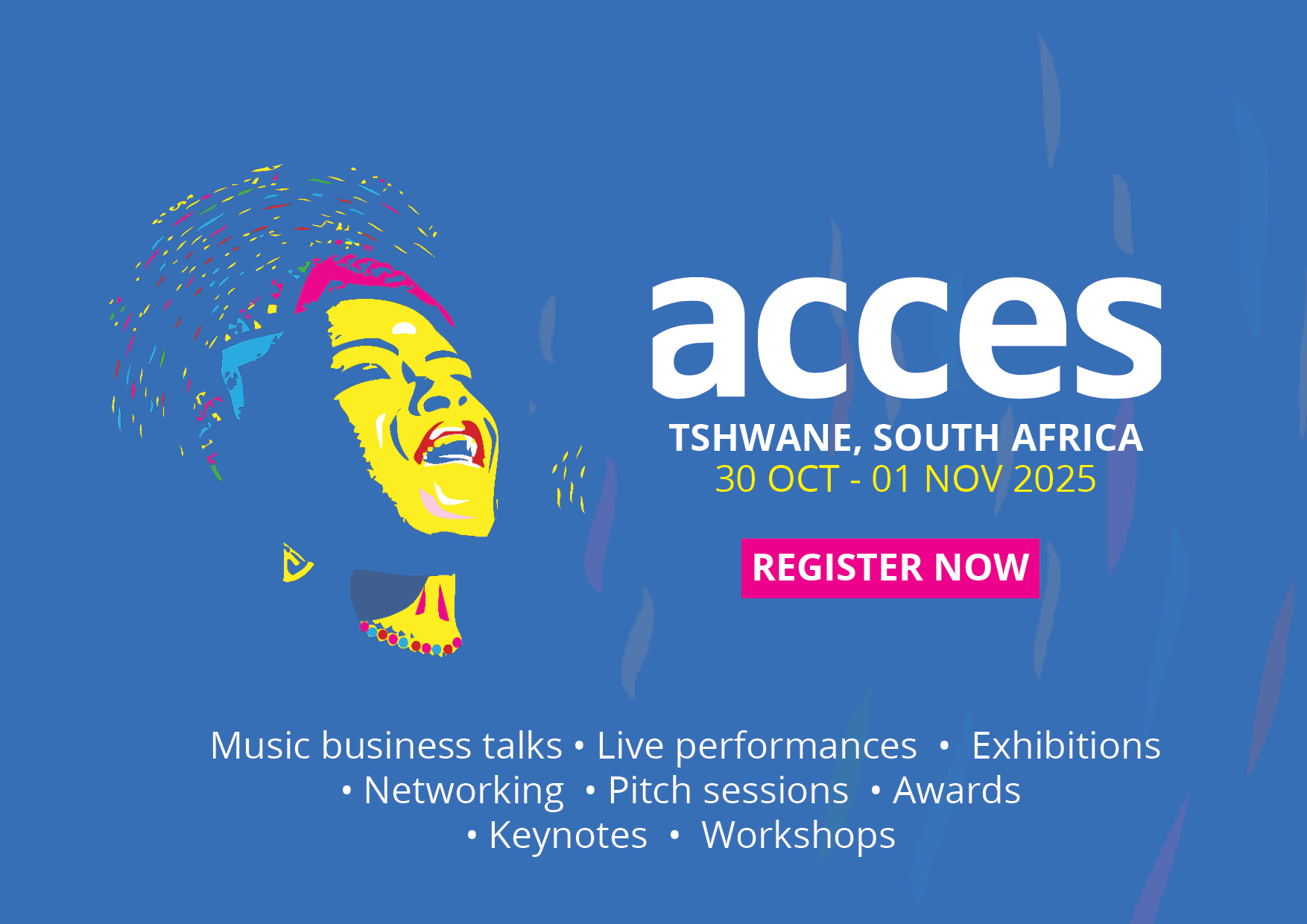
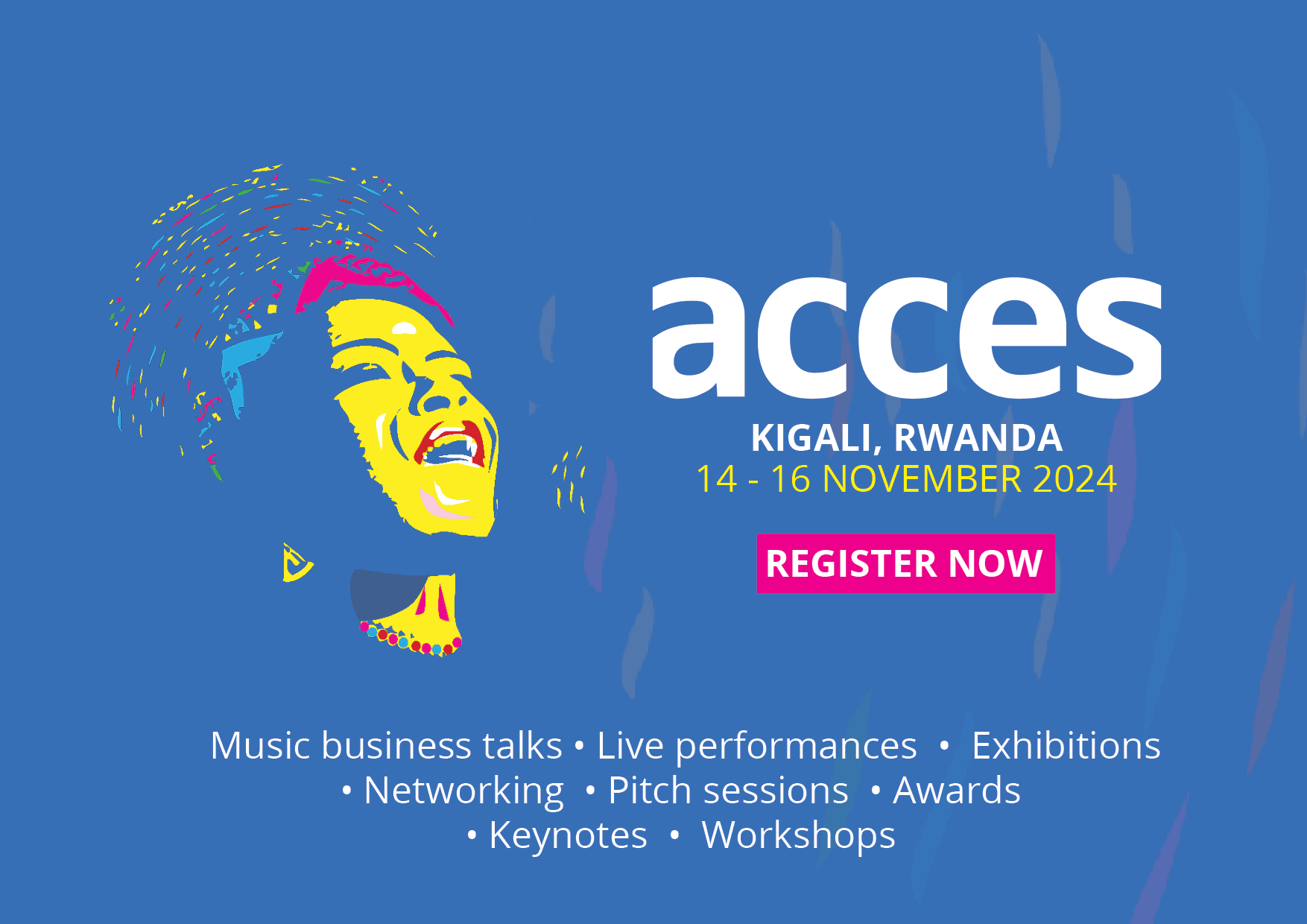
Chaque année, nous fournissons des informations générales afin de guider les participants dans la préparation de leur voyage. En plus de ce site, des mises à jour importantes seront envoyées par e-mail à tous les délégués inscrits. Assurez-vous de vous inscrire dès que possible. Pour plus d'informations, veuillez contacter [email protected] Continuez à consulter cette page pour plus d'information.  

Gender@Work
Gender@Work

Music In Africa Gender @ Work is a three-year training programme aimed at upskilling and increasing the participation of female professionals in the African music sector. Launched by the Music In Africa Foundation (MIAF) in April 2019, the programme is connected to the MIAF’s ACCES music conference – a pan-African event held in a different African country every year. This connection enables the programme to reach new participants in a different African country every year. The programme marks the beginning of a more concerted effort by the Foundation to support the participation and inclusion of women in all facets of its programmes and the music sector in Africa as a whole. Over the three years, the programme will aim to address gender imbalances in the sector through training, lobbying, facilitating knowledge exchange and dialogues that foster the interest of women. The broader objectives of the programme are to: Provide industry training for women on critical music industry skills, focusing on: Stage management Electronic music production and recording Music business management Technical knowledge Provide an opportunity for both professional and aspiring women to benefit from the Music In Africa network and its broad range of activities in 2019, 2020 and 2021. Provide a solution-based platform in the form of a round table at ACCES with a view to identify challenges, discuss opportunities and lobby for the interests of female practitioners. Offer participants the opportunity to benefit from programmes offered by MIAF’s partners. Increase access to educational materials. Integrate participants in the broader ACCES programme to maximise experience and exposure to the industry. Record and present training materials on the www.musicinafrica.net, including but not limited to tutorials, templates and other best-practice materials. Communicate women-based themes that support the initiatives and messages of the programme. MAIN TRAINING ACTIVITIES Training in first country (Ghana): In the first year, participants will be trained on all aspects of stage management by a team of experienced stage managers from 10 to 17 November 2019. The programme will offer robust classroom training as well as practical, hands-on training in which participants will also be given the opportunity to manage various aspects of the ACCES performance programme. Training in second country: The second training iteration will take place at ACCES 2020 when the programme will diversify its course to include music production lessons and training on other music business topics. A round-table platform will also be introduced to coincide with the ACCES programme. Training in third country: The third training iteration will take place at ACCES 2021 in a different country, offering an advanced course. HOW DO YOU GET INVOLVED?  As a participant, facilitator or trainer: The programme enrolls up to 12 trainees every year. All opportunities are advertised publicly on this website, and will be added to this page. Please keep checking this page for new calls (below under UPDATES & CURRENT OPPORTUNITIES). As a partner Please contact Claire Metais at [email protected]. APPLY The call for applications for 2020 will be announced soon. The Music In Africa Gender @ Work programme is made possible with the support of the Prince Claus Fund, Siemens Stiftung and Goethe-Institut.

Sound Connects Fund
Sound Connects Fund

Pour les praticiens et les organisations culturels et créatifs opérant en Afrique australe, l’accès au financement reste un défi majeur. La pandémie de COVID-19 a également eu un impact massif sur les politiques gouvernementales, les dépenses et l’économie en général, et a vu les dépenses consacrées à la culture reléguées plus bas dans la liste des priorités. De plus, les industries culturelles et créatives citent régulièrement quatre domaines principaux où l’investissement est nécessaire pour la croissance : une visibilité accrue, la mobilité incluant l’accès à de nouveaux marchés, le financement et les structures de soutien.

Music In Africa Live

MUSIC IN AFRICA LIVE Lancé en 2020 pour une durée de 3 ans, Music In Africa Live est une initiative visant à soutenir l'écosystème de la musique africaine face aux contraintes imposées par la pandémie de COVID-19 ; le projet a été lancé par la Fondation Music In Africa (MIAF) en partenariat avec le ministère fédéral allemand des Affaires étrangères, Siemens Stiftung et le Goethe Institut. Plus de 30 aides sont disponibles dans le cadre de la troisième édition de Music In Africa Live, dans 3 catégories :  showcases, renforcement des compétences et plaidoyer, en conformité avec les modalités énoncées.

Instrument Building And Repair Project

The overarching objective of Music In Africa Foundation’s Instrument Building and Repair (IBR) project is to encourage the formalisation and professionalisation of instrument-making and repair in Africa, especially in relation to indigenous African instruments. Background In 2014, the Music In Africa Foundation (MIAF) identified as one of its focus areas for development the need to encourage young people from music and music-related sectors to consider instrument-making as a career. This need extended itself from the recognition that the making of traditional African instruments is not a widely practiced skill and seems to be limited to the older generation. Traditional African instrument makers are also few and far between, making communication and logistics between teachers and learners an obstacle. When instrument building workshops take place, budgetary constraints do not allow teachers or learners the time to explore the finer details of an instrument. Based on these observations, the MIAF designed and piloted the first IBR workshop at the Dhow Countries Music Academy (DCMA) in Zanzibar in February 2015. In 2016, the foundation received funding from the South African National Lotteries Commission to implement a much bigger version of the project in Johannesburg. The project drew participants from five African countries. 25 students from South Africa, Ghana, Senegal, Kenya and Ethiopia were trained on how to build and repair musical instruments. The instruments that they made were: Traditional Instruments: Umakhweyana and Marimba Conventional Instrument: Dulcimer guitar The workshop culminated in a traditional instruments concert at the Wits Theatre in Johannesburg. It is the MIAF’s aim to roll out similar workshops in as many African countries as possible over the next few years. Objectives Developing awareness of musical instrument makers in Africa with a view to promote their work to a wider global audience. Facilitating the sharing and transfer of skills in indigenous instruments between countries on the continent. Encouraging the formalisation and professionalisation of instrument-making and repair in Africa, especially in relation to indigenous instruments. Helping instrument makers develop their careers. Fostering the rapid monetisation and sustainable development of instrument-making and repair in Africa. Promoting constant exchange of ideas, expertise, experiences and know-how among instrument makers in Africa. Facilitating the identification of existing gaps in the field with a view to contribute new solutions. Facilitating the transfer of knowledge and skills of indigenous instruments between younger and older generations. 2020 edition The MIAF has also announced that multi-instrumentalist and instrument maker Joe Makhanza will facilitate one of the workshops on the building of the kamale ngoni instrument. Kamale ngoni is a kora-like, stringed instrument that originated in West Africa. The instrument contributed to the rise of Wassoulou music in the 1970s and 1990s. Makhanza was born in Giyani in South Africa's Limpopo province. He completed a bachelor of music degree and a post-graduate diploma in arts marketing from Wits University. He is currently completing his masters in ethnomusicology and is a part-time lecturer in African music studies at Rhodes University. He plays the kora, mbira, valiha, masenqo, xiwewe, ngoni ba and xizambi, among others. He also manufactures the aforementioned instruments. The MIAF will confirm more trainers who will join the workshops as well as the other instruments that will be featured in the 2020 IBR programme.  Apply to participate here. Connect with us on Twitter, Instagram and Facebook, and subscribe to our monthly newsletter. The Music In Africa Instrument Building and Repair project is funded by the National Lotteries Commission. It is implemented in partnership with Siemens Stiftung, Goethe-Institut, Wits Theatre and Kaya FM.

banner image

5 artistes de la RDC plus populaires à l’étranger que dans leur pays

Accueil/Non classé/5 artistes de la RDC plus populaires à l’étranger que dans leur pays

Les critères sur lesquels je me suis basé pour établir ce classement : les genres musicaux : ils font de la musique traditionnelle et les mélangent avec d’autres styles comme la rumba, le rock, le funk, le Rnb, l’afropop, l’afrobeat. Deuxièmement, leurs groupes sont souvent nés dans les quartiers populaires de Kinshasa, certains parmi eux sortent des milieux ruraux pour s’établir dans la capitale. Un autre point intéressant : ces artistes sont souvent produits par un même label. Ils ont participé dans des grands festivals, et ont joué des concerts en Europe et aux USA. Exploits que les grands artistes peine à réaliser.

Un autre musicien, qui ne fait pas partie de cette liste, est à suivre. Jocelyn Balu, un jeune chanteur pas comme les autres, ses influences musicales sont identiques à Jupiter Bokondji (rock, afropop, funk), je l’ai vu sur scène, il m’a dit qu’il peut passer 5 heures à jouer et cela sans interruption. Il n’a pas encore un tourneur qui peut l’aider à se produire en Europe, notamment dans des festivals. Sa voie est toute tracée pour une carrière musicale internationale.

 1. Jupiter & Okwess International

L’histoire de ce groupe est liée à son leader. Jupiter Bokondji est né à Kinshasa, fils d’un diplomate, C’est sa grand-mère qu’il a initié à la musique, Jupiter l’accompagnait lors de cérémonies funéraires, où il jouait de la percussion. Jupiter et sa famille vont quitter le Congo, quand son père est envoyé en mission diplomatique à Berlin-Est. Rentré dans son pays dans les années 80, il monte Okwess International en 1990. En 2004, deux réalisateurs Renaud Barret et Florent de la Tullaye lui proposent de tourner film documentaire sur sa carrière intitulé Jupiter’s Dance qui sortira en 2006. En 2007, Jupiter fait la connaissance de Damon Albarn, membre de Blur, une figure bien connue sur la scène musicale en Grande Bretagne. « Après la sortie de mon film, ils sont venus me voir à Kinshasa et tout est parti de là » commente Jupiter, à propos de sa rencontre avec Damon Albarn et son groupe.

En 2012, le musicien congolais participe avec Damon au projet DRC Music initié par l’Ong Oxfam à Kinshasa. La même année, Jupiter et son groupe partent en tournée au Royaume Uni dans le cadre de « UK Africa Express tour », une tournée en Grande-Bretagne impliquant 80 artistes. Il joue au Festival Womad et 3 fois au Roskilde Festival au Danemark (2012, 2014, 2015) et plusieurs autres shows en France, Allemagne, et en Australie. En 2013, Jupiter et Okwess International lancent leur premier album Hôtel Univers chez La Belle Kinoise. La musique de Jupiter est une véritable révolution. Il sait bien faire le mix des différentes sonorités : afropop, rock, funk, afrobeat et les styles congolais.

[video:https://www.youtube.com/watch?v=yBhfTsd028I autoplay:0]


2. Konono N°1

Konono N°1 fut crée à la fin des années 1960 par Mingiedi Mawangu. L’orchestre se sert des différents instruments traditionnels, en l’occurrence, le likembé, des lances-voix, des percussions fabriquées avec des couvercles de casseroles et des pièces de voitures. En 2004, avec l’appui de Vincent Kenis de Crammed Discs, Konono sort son premier album Congotronics. Bien côté par l’ensemble de la presse (New York, The Independent, BBC, etc..), l’œuvre est classée dans la liste des meilleurs albums après sa sortie. En 2007, Konono lance son second album « Live at Couleur Café »  pour lequel il fut nominé aux Grammy Awards en 2008.

Un troisième opus Assume Crash Position paraîtra en 2010. Konono N°1 obtient ensuite une seconde récompense aux Grammy Awards  en 2011 dans la catégorie «  Best Pop Collaboration » avec Oumou Sangare, Seal, Pink, Jeff Beck et India.Arie pour la chanson « Imagine » tiré de l’album The Imagine project d’Herbie Hancock. Fatigué, le fondateur Mingiedi Mawangu, cède en 2009 la gestion de l’orchestre à son fils Augustin Makuntima Mawangu et s’éteint en 2015 à l’âge de 85 ans. En 2016, le nouveau Konono revient sur scène avec un nouvel opus Konono N°1 meets Batida enregistré à Lisbonne (Portugal) et produit par Pedro Coquenão alias Batida. Le dernier tube de Konono est une « bombe », une fusion du rock et du kudoro angolais. N’hésitez surtout pas à l’écouter.

[video:https://www.youtube.com/watch?v=ENVjXrWNPeY autoplay:0]


3. Kasai Allstars

Kasai Allstars est un collectif de 25 artistes provenant de cinq groupes. L’orchestre fait un « mix » des plusieurs instruments dont les guitares électriques et les pianos à pouce, la musique de Kasai Allstars se rapproche du rock. Kasai Allstars a collaboré dans plusieurs projets, dont Congotronics 2 avec Konono N°1 et Basokin (l’une des composantes du collectif), une chanson « Tshijela » contenue dans la compilation 20 Ways To Float Through Walls sorti chez Crammed Discs en 2007.

En 2008 le groupe signe avec le même label, son premier album In the 7th moon, the chief turned into a swimming fish and ate the head of his enemy by magic qui signifie « la 7e lune, le chef se transforma en poisson et mangea la tête de son ennemi par la magie ». Le tube rapporte un gros succès particulièrement en Grande-Bretagne et aux USA, il est classé 33ième  Meilleur Album de 2008 par le Magazine anglais Mojo. Meilleur album africain NPR (National Public Radio américain). Les Kasai Allstars se sont produit sur les grandes scènes en Europe. En 2007, ils ont joué au Womex, au Musée du Quai Branly à Paris (France). En 2015, le groupe était au Festival Couleur Café à Bruxelles (Belgique), au Roskilde Festival (Danemark), à la Fondation Cartier à Paris (France). Leur second album Beware The Fetish est sorti en 2014.

[video:https://www.youtube.com/watch?v=jaWENBBVzpk autoplay:0]


4. Staff Benda Bilili

La musique du Staff Benda Bilili intègre les rythmes de la rumba congolaise, la musique cubaine, du Rnb, du reggae et du funk. Ils soutiennent dans leurs chansons que l’handicap est un problème psychologique, on peut vivre avec et réaliser ses rêves. Le groupe Staff Benda Bilili s’est fait parler de lui en composant une chanson sur les élections générales au Congo-Kinshasa en 2006. Le titre « Allons voter » est alors diffusé sur une station de radio de la mission de l’Onu à Kinshasa et récolte un succès partout dans le pays.

L’orchestre va connaître un vrai virage de toute sa carrière quand il fait la rencontre de Florent de La Tullaye et Renaud Barret, deux réalisateurs qui leur consacrent un long métrage. Ce film intitulé Benda Bilili, montre le groupe entrain de jouer dans les rue de Kinshasa. Les deux cinéastes présentent le groupe auprès de Vincent Kenis du label bruxellois Crammed Discs, intéressé par leur projet, Vincent enregistre à Kinshasa le premier album de Staff Benda Bilili baptisé Très Très Fort qui sort en 2009. L’album reçoit des critiques positives de la part des grands médias européens (The Guardian, BBC, Le Monde), le groupe reçoit le Womex Award en 2009 et multiplie des spectacles en Europe, en Australie et le Japon et aux USA. En 2010, le film Benda Bilili est présenté au Quinzaine des réalisateurs au Festival de Cannes. Le second album du groupe Bouger le monde paraît en 2012.

[video:https://www.youtube.com/watch?v=zjb_Acc9rbo autoplay:0]


5. Mbongwana Star

Mbongwana Star est le nouveau né des groupes congolais. Deux anciens membres du Staff Benda Bilili y font la loi, Coco Ngambali et Theo Nsituvuidi associés au Franco-britannique Liam Farrel alias Doctor L. Fondé en 2013,  à Kinshasa, Mbongwana Star se veut révolutionnaire, ils veulent le « changement », lequel ? Peut-être dans l’approche. L’orchestre se rapproche de la culture urbaine, ils essaient d’éloigner la rumba congolaise, qui je crois va les rattraper un jour (ce style te colle à la peau quand tu es musicien du Congo-Kinshasa), leur musique est colorée d’influences rock et hip hop. Doctor L, habitué de la scène électro, a rencontré le groupe à Kinshasa, il a senti que quelque chose de bon peut venir de cet orchestre nouvelle génération.

Comme Staff Benda Bilili, l’enregistrement de leur premier album se déroule dans des conditions « made in Kinshasa » : studio bricolé, sessions de rue, un générateur pour contourner la panne d’électricité, et le tour est joué. En 2015, l’album From Kinshasa sort sous le label World Circuit. L’opus reçoit des critiques positives de la part des médias. The Wire, le célèbre magazine britannique de musique et New Musical Express, site web d’informations musicales déclarent que l’album est pleine d’énergie et le qualifie de « futuriste ». Mbongwana Star à peine deux ans de carrière, a donné plusieurs spectacles .Près de 30 dates sont déjà réservés pour 2016, à partir de Mars jusqu’en Août, le groupe sera aux Pays-Bas, en France, en Belgique, en Suisse, aux USA, en Autriche et en Suede.

[video:https://www.youtube.com/watch?v=cAZxMZBZ628 autoplay:0]



newsletter banner

Abonnez-vous à notre newsletter

Retrouvez-nous sur les réseaux sociaux