



NEFCISA
NEFCISA

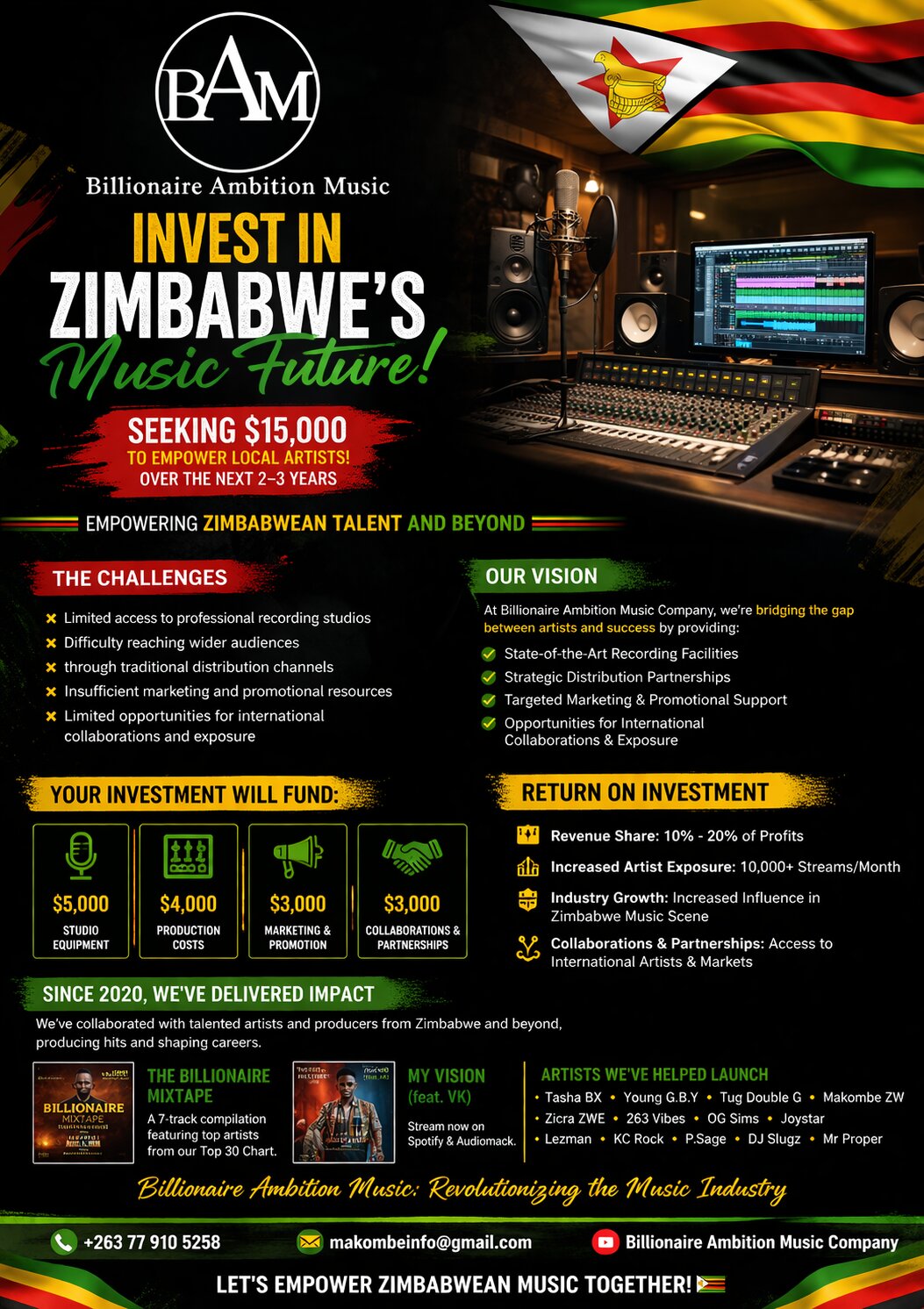
The Music In Africa Foundation (MIAF) is proud to announce its partnership with the Industrial Development Corporation (IDC) as a Strategic Implementing Partner (SIP) for its Social Employment Fund (SEF). Through this collaboration, MIAF is launching a new national programme designed to create jobs, address skills gaps, and strengthen South Africa’s creative industries — in line with the SEF’s overarching goal to generate work for the common good and build community value through employment, social contribution, and inclusive economic participation. Operating under the banner NEFCISA (National Employment Facility for Creative Industries in South Africa), the initiative will recruit and train participants, match them with host organisations, and place a minimum of 1 000 workers across the country. Key Objectives: Support employment and entrepreneurship in the creative industries. Offer skills development and training programmes. Foster partnerships between public and private creative sectors. Promote South African creativity at both provincial and national levels Foster community development through social contribution.

ACCES
ACCES

Chaque année, nous fournissons des informations générales afin de guider les participants dans la préparation de leur voyage. En plus de ce site, des mises à jour importantes seront envoyées par e-mail à tous les délégués inscrits. Assurez-vous de vous inscrire dès que possible. Pour plus d'informations, veuillez contacter [email protected] Continuez à consulter cette page pour plus d'information.  

Gender@Work
Gender@Work

Music In Africa Gender @ Work is a three-year training programme aimed at upskilling and increasing the participation of female professionals in the African music sector. Launched by the Music In Africa Foundation (MIAF) in April 2019, the programme is connected to the MIAF’s ACCES music conference – a pan-African event held in a different African country every year. This connection enables the programme to reach new participants in a different African country every year. The programme marks the beginning of a more concerted effort by the Foundation to support the participation and inclusion of women in all facets of its programmes and the music sector in Africa as a whole. Over the three years, the programme will aim to address gender imbalances in the sector through training, lobbying, facilitating knowledge exchange and dialogues that foster the interest of women. The broader objectives of the programme are to: Provide industry training for women on critical music industry skills, focusing on: Stage management Electronic music production and recording Music business management Technical knowledge Provide an opportunity for both professional and aspiring women to benefit from the Music In Africa network and its broad range of activities in 2019, 2020 and 2021. Provide a solution-based platform in the form of a round table at ACCES with a view to identify challenges, discuss opportunities and lobby for the interests of female practitioners. Offer participants the opportunity to benefit from programmes offered by MIAF’s partners. Increase access to educational materials. Integrate participants in the broader ACCES programme to maximise experience and exposure to the industry. Record and present training materials on the www.musicinafrica.net, including but not limited to tutorials, templates and other best-practice materials. Communicate women-based themes that support the initiatives and messages of the programme. MAIN TRAINING ACTIVITIES Training in first country (Ghana): In the first year, participants will be trained on all aspects of stage management by a team of experienced stage managers from 10 to 17 November 2019. The programme will offer robust classroom training as well as practical, hands-on training in which participants will also be given the opportunity to manage various aspects of the ACCES performance programme. Training in second country: The second training iteration will take place at ACCES 2020 when the programme will diversify its course to include music production lessons and training on other music business topics. A round-table platform will also be introduced to coincide with the ACCES programme. Training in third country: The third training iteration will take place at ACCES 2021 in a different country, offering an advanced course. HOW DO YOU GET INVOLVED?  As a participant, facilitator or trainer: The programme enrolls up to 12 trainees every year. All opportunities are advertised publicly on this website, and will be added to this page. Please keep checking this page for new calls (below under UPDATES & CURRENT OPPORTUNITIES). As a partner Please contact Claire Metais at [email protected]. APPLY The call for applications for 2020 will be announced soon. The Music In Africa Gender @ Work programme is made possible with the support of the Prince Claus Fund, Siemens Stiftung and Goethe-Institut.

Sound Connects Fund
Sound Connects Fund

Pour les praticiens et les organisations culturels et créatifs opérant en Afrique australe, l’accès au financement reste un défi majeur. La pandémie de COVID-19 a également eu un impact massif sur les politiques gouvernementales, les dépenses et l’économie en général, et a vu les dépenses consacrées à la culture reléguées plus bas dans la liste des priorités. De plus, les industries culturelles et créatives citent régulièrement quatre domaines principaux où l’investissement est nécessaire pour la croissance : une visibilité accrue, la mobilité incluant l’accès à de nouveaux marchés, le financement et les structures de soutien.

Music In Africa Live

MUSIC IN AFRICA LIVE Lancé en 2020 pour une durée de 3 ans, Music In Africa Live est une initiative visant à soutenir l'écosystème de la musique africaine face aux contraintes imposées par la pandémie de COVID-19 ; le projet a été lancé par la Fondation Music In Africa (MIAF) en partenariat avec le ministère fédéral allemand des Affaires étrangères, Siemens Stiftung et le Goethe Institut. Plus de 30 aides sont disponibles dans le cadre de la troisième édition de Music In Africa Live, dans 3 catégories :  showcases, renforcement des compétences et plaidoyer, en conformité avec les modalités énoncées.

Instrument Building And Repair Project

The overarching objective of Music In Africa Foundation’s Instrument Building and Repair (IBR) project is to encourage the formalisation and professionalisation of instrument-making and repair in Africa, especially in relation to indigenous African instruments. Background In 2014, the Music In Africa Foundation (MIAF) identified as one of its focus areas for development the need to encourage young people from music and music-related sectors to consider instrument-making as a career. This need extended itself from the recognition that the making of traditional African instruments is not a widely practiced skill and seems to be limited to the older generation. Traditional African instrument makers are also few and far between, making communication and logistics between teachers and learners an obstacle. When instrument building workshops take place, budgetary constraints do not allow teachers or learners the time to explore the finer details of an instrument. Based on these observations, the MIAF designed and piloted the first IBR workshop at the Dhow Countries Music Academy (DCMA) in Zanzibar in February 2015. In 2016, the foundation received funding from the South African National Lotteries Commission to implement a much bigger version of the project in Johannesburg. The project drew participants from five African countries. 25 students from South Africa, Ghana, Senegal, Kenya and Ethiopia were trained on how to build and repair musical instruments. The instruments that they made were: Traditional Instruments: Umakhweyana and Marimba Conventional Instrument: Dulcimer guitar The workshop culminated in a traditional instruments concert at the Wits Theatre in Johannesburg. It is the MIAF’s aim to roll out similar workshops in as many African countries as possible over the next few years. Objectives Developing awareness of musical instrument makers in Africa with a view to promote their work to a wider global audience. Facilitating the sharing and transfer of skills in indigenous instruments between countries on the continent. Encouraging the formalisation and professionalisation of instrument-making and repair in Africa, especially in relation to indigenous instruments. Helping instrument makers develop their careers. Fostering the rapid monetisation and sustainable development of instrument-making and repair in Africa. Promoting constant exchange of ideas, expertise, experiences and know-how among instrument makers in Africa. Facilitating the identification of existing gaps in the field with a view to contribute new solutions. Facilitating the transfer of knowledge and skills of indigenous instruments between younger and older generations. 2020 edition The MIAF has also announced that multi-instrumentalist and instrument maker Joe Makhanza will facilitate one of the workshops on the building of the kamale ngoni instrument. Kamale ngoni is a kora-like, stringed instrument that originated in West Africa. The instrument contributed to the rise of Wassoulou music in the 1970s and 1990s. Makhanza was born in Giyani in South Africa's Limpopo province. He completed a bachelor of music degree and a post-graduate diploma in arts marketing from Wits University. He is currently completing his masters in ethnomusicology and is a part-time lecturer in African music studies at Rhodes University. He plays the kora, mbira, valiha, masenqo, xiwewe, ngoni ba and xizambi, among others. He also manufactures the aforementioned instruments. The MIAF will confirm more trainers who will join the workshops as well as the other instruments that will be featured in the 2020 IBR programme.  Apply to participate here. Connect with us on Twitter, Instagram and Facebook, and subscribe to our monthly newsletter. The Music In Africa Instrument Building and Repair project is funded by the National Lotteries Commission. It is implemented in partnership with Siemens Stiftung, Goethe-Institut, Wits Theatre and Kaya FM.

banner image

Traditional music in Mauritius

Accueil/Non classé/Traditional music in Mauritius

The Sega

There is no festive evening in Mauritius without Sega, which isdeeply rooted in the country’s tradition.  From the typical sega of the descendants of slaves to modern commercial sega, this music hasbeen passed down through generations with enjoyment, evolving and inspiring other influences, in particular the seggae, afusion of Sega and reggae.

Sega, the only traditional music of Mauritius, follows a three count and is derived from African influences. Sega stands out as the musical reference of the island.

Traditional Sega is the symbolic performing art of the Creole community. A soloist improvises words, while a drum, a rattle box and a triangle give the tempo and produce the typical rhythm. The dancers move their hips and raise their hands, by making small steps to manoeuvre around each other.

Sega is taught in a formal and informal way through practice and imitation.Sega can be performed by all the members of the community and contributes to unify various groups around a shared Mauritian heritage.

Sega dance

Deeply rooted in the Mauritian culture, Sega dance is passed on like a legacy. Parents and grandparents teach children to dance as soon as they can walk. There is no dancing school to learn the sega; Mauritians have an innate sense of the rhythm.Sega is the music of all the Mauritian people although the Creole community has been practicing it for a long time.

Whether Indian, Muslim, Chinese or Tamil, all the communities of the Mauritian nation dance the sega. 

The origins of the Sega dance are somehow unknown. Some believe that the Sega music originates from the culture of the slaves arriving from Africa; yet, it turns out that sega does not exist on the African continent. There is considerable agreement that sega is a fusion of various African and western dances, which allows the communities to gather, in spite of differences in culture, language, and sometimes religion. Sega, as we know it today, is far from the sega at the time.

The original instruments were replaced by more modern ones such as the bass, the electric guitar and the drums. Although Sega music is distinctive to every island, the dance has remained the same. 

Bhojpuri Geetgawai

Bhojpuri is the language of the people of the South of India and has evolved into a new form in Mauritius. The Bhojpuri Boys incorporated the Bhojpuri language and oriental melodies to the Mauritian creole language and three count rhythm of the sega.  The band received national and international acclaim. 

This form of Sega is popular in the gammats ceremonies (eve of an Indian wedding). Bhojpuri songs are popular on the island and include folk songs called Geetgawai, songs associated with rites of passage, songs for the Holi celebration and godna (traditional body tattooing).

[video:https://www.youtube.com/watch?v=bC0HXJO0PsU autoplay:0]


But, it is through the Geetgawai that this music will establish itself. The other genres are still cultivated in villages. Bands continue to promote the passion for music and keep the music alive. 

Sega and its influences, represent today the bridge between Asia and Africa. A musicality which resounds far from the beaches of the island, constantly evolving. Its history is still young, just like its country.

Music Instruments

The ravanne, the triangle and the maravanne are the three basic instruments of the sega. Other instruments were added, but the trio is the heartbeat of sega music. It is a music which evolved over time while maintaining ‘its melody’, as explained byMarclaine Antoine, a sega singer.

Althoughwide floral skirts were brought into fashion by modern sega and the influence of the hotel sector, sega is all about three instruments which lead the dance and lends the tempo.

The precursors

The precursors allowed this once marginalized music, to be heardand immortalized on 45 rpm. From Ti Frère to Menwar, sega has had an interesting journey at the heart of thecolourful island.

Here are a few of the ambassadors of Sega:

Jean Alphonse Ravaton, known as Ti Frère, was born on 22 April 1900 in Quartier Militaire, in the district of Moka. His father, of Malagasy origin, was also a singer and performed at private parties called “bal bobesse « . Ti Frère grew upsurrounded by “quadrillecréole » (traditional dance from French overseas territories) and “Sega typique” (afro-Mauritian style). He is an illiterate, but capable of improvising a song. In 1925, he sang‘Tamassa’, his first sega song.

[video:https://www.youtube.com/watch?v=HfXXMALJyeo autoplay:0]


The song was recorded on a 45 rpm in 1948 by the Damoo Sound and Music. It is the first 45rpm ever recorded in Mauritius.  He was crowned ‘King of Sega’ in 1964. Despite his popularity, Ti Frère lived in dire poverty and died in 1992.

Fanfan is a poet, storyteller and composer. He can be referred as the griot of Mauritius. His songs are about real life experiences. Fanfan is one of the last singers to keep the traditional sega ravanne alive. His songs are accompanied by the ravanne, the maravanne and the triangle.

Menwar, real name Stephano Honoré, is a Mauritian author, composer and singer. The creator of Sagaï, (fusion of Sega acoustics with traditional instruments and other musical genres such as jazz, blues, reggae), tours the world to tell about his life, his country and hisideals. He picked up his guitar and ravanne and now sings a new form of sega, in duet with his son.

Reference:
Le Meilleur de l’Île Maurice: www.lemeilleurdelilemaurice.com
La maison du Séga Ravanne: www.sega-ravanne.org
Le Mauricien newspaper: www.lemauricien.com
Unesco Website: www.unesco.org
newsletter banner

Abonnez-vous à notre newsletter

Retrouvez-nous sur les réseaux sociaux