






















NEFCISA
NEFCISA

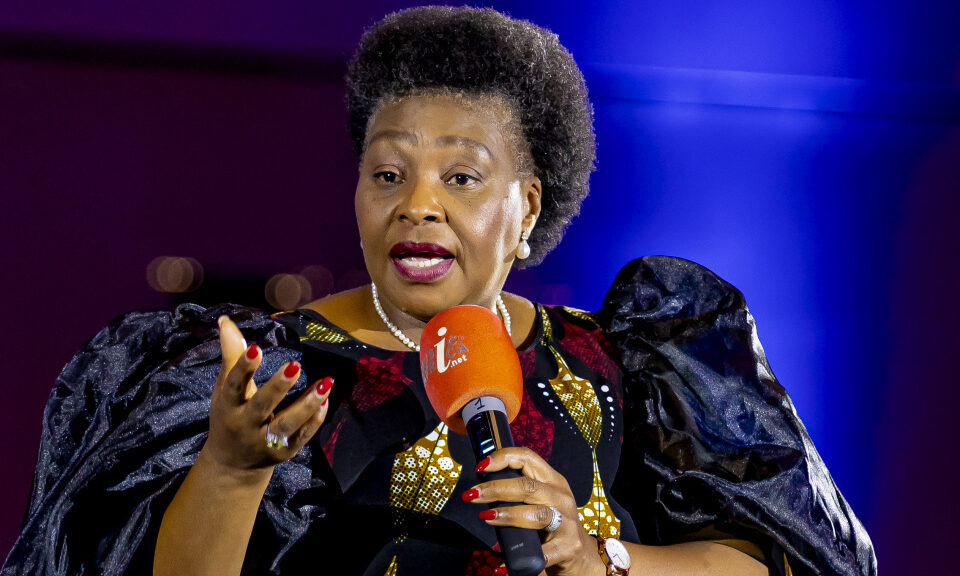
The Music In Africa Foundation (MIAF) is proud to announce its partnership with the Industrial Development Corporation (IDC) as a Strategic Implementing Partner (SIP) for its Social Employment Fund (SEF). Through this collaboration, MIAF is launching a new national programme designed to create jobs, address skills gaps, and strengthen South Africa’s creative industries — in line with the SEF’s overarching goal to generate work for the common good and build community value through employment, social contribution, and inclusive economic participation. Operating under the banner NEFCISA (National Employment Facility for Creative Industries in South Africa), the initiative will recruit and train participants, match them with host organisations, and place a minimum of 1 000 workers across the country. Key Objectives: Support employment and entrepreneurship in the creative industries. Offer skills development and training programmes. Foster partnerships between public and private creative sectors. Promote South African creativity at both provincial and national levels Foster community development through social contribution.

ACCES
ACCES

Chaque année, nous fournissons des informations générales afin de guider les participants dans la préparation de leur voyage. En plus de ce site, des mises à jour importantes seront envoyées par e-mail à tous les délégués inscrits. Assurez-vous de vous inscrire dès que possible. Pour plus d'informations, veuillez contacter [email protected] Continuez à consulter cette page pour plus d'information.  

Gender@Work
Gender@Work

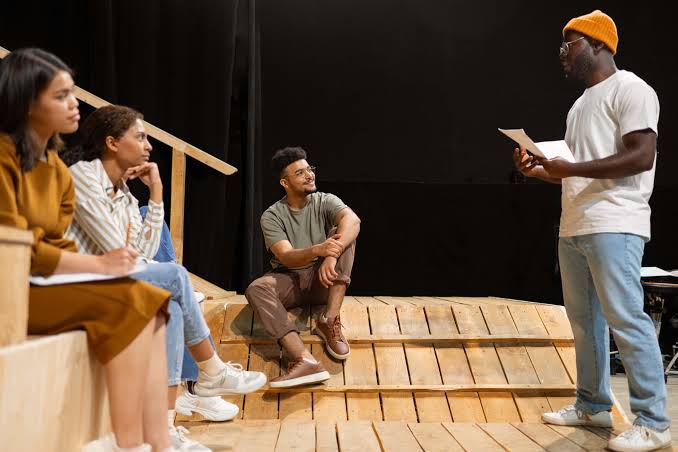
Music In Africa Gender @ Work is a three-year training programme aimed at upskilling and increasing the participation of female professionals in the African music sector. Launched by the Music In Africa Foundation (MIAF) in April 2019, the programme is connected to the MIAF’s ACCES music conference – a pan-African event held in a different African country every year. This connection enables the programme to reach new participants in a different African country every year. The programme marks the beginning of a more concerted effort by the Foundation to support the participation and inclusion of women in all facets of its programmes and the music sector in Africa as a whole. Over the three years, the programme will aim to address gender imbalances in the sector through training, lobbying, facilitating knowledge exchange and dialogues that foster the interest of women. The broader objectives of the programme are to: Provide industry training for women on critical music industry skills, focusing on: Stage management Electronic music production and recording Music business management Technical knowledge Provide an opportunity for both professional and aspiring women to benefit from the Music In Africa network and its broad range of activities in 2019, 2020 and 2021. Provide a solution-based platform in the form of a round table at ACCES with a view to identify challenges, discuss opportunities and lobby for the interests of female practitioners. Offer participants the opportunity to benefit from programmes offered by MIAF’s partners. Increase access to educational materials. Integrate participants in the broader ACCES programme to maximise experience and exposure to the industry. Record and present training materials on the www.musicinafrica.net, including but not limited to tutorials, templates and other best-practice materials. Communicate women-based themes that support the initiatives and messages of the programme. MAIN TRAINING ACTIVITIES Training in first country (Ghana): In the first year, participants will be trained on all aspects of stage management by a team of experienced stage managers from 10 to 17 November 2019. The programme will offer robust classroom training as well as practical, hands-on training in which participants will also be given the opportunity to manage various aspects of the ACCES performance programme. Training in second country: The second training iteration will take place at ACCES 2020 when the programme will diversify its course to include music production lessons and training on other music business topics. A round-table platform will also be introduced to coincide with the ACCES programme. Training in third country: The third training iteration will take place at ACCES 2021 in a different country, offering an advanced course. HOW DO YOU GET INVOLVED?  As a participant, facilitator or trainer: The programme enrolls up to 12 trainees every year. All opportunities are advertised publicly on this website, and will be added to this page. Please keep checking this page for new calls (below under UPDATES & CURRENT OPPORTUNITIES). As a partner Please contact Claire Metais at [email protected]. APPLY The call for applications for 2020 will be announced soon. The Music In Africa Gender @ Work programme is made possible with the support of the Prince Claus Fund, Siemens Stiftung and Goethe-Institut.

Sound Connects Fund
Sound Connects Fund

Pour les praticiens et les organisations culturels et créatifs opérant en Afrique australe, l’accès au financement reste un défi majeur. La pandémie de COVID-19 a également eu un impact massif sur les politiques gouvernementales, les dépenses et l’économie en général, et a vu les dépenses consacrées à la culture reléguées plus bas dans la liste des priorités. De plus, les industries culturelles et créatives citent régulièrement quatre domaines principaux où l’investissement est nécessaire pour la croissance : une visibilité accrue, la mobilité incluant l’accès à de nouveaux marchés, le financement et les structures de soutien.

Music In Africa Live

MUSIC IN AFRICA LIVE Lancé en 2020 pour une durée de 3 ans, Music In Africa Live est une initiative visant à soutenir l'écosystème de la musique africaine face aux contraintes imposées par la pandémie de COVID-19 ; le projet a été lancé par la Fondation Music In Africa (MIAF) en partenariat avec le ministère fédéral allemand des Affaires étrangères, Siemens Stiftung et le Goethe Institut. Plus de 30 aides sont disponibles dans le cadre de la troisième édition de Music In Africa Live, dans 3 catégories :  showcases, renforcement des compétences et plaidoyer, en conformité avec les modalités énoncées.

Instrument Building And Repair Project

The overarching objective of Music In Africa Foundation’s Instrument Building and Repair (IBR) project is to encourage the formalisation and professionalisation of instrument-making and repair in Africa, especially in relation to indigenous African instruments. Background In 2014, the Music In Africa Foundation (MIAF) identified as one of its focus areas for development the need to encourage young people from music and music-related sectors to consider instrument-making as a career. This need extended itself from the recognition that the making of traditional African instruments is not a widely practiced skill and seems to be limited to the older generation. Traditional African instrument makers are also few and far between, making communication and logistics between teachers and learners an obstacle. When instrument building workshops take place, budgetary constraints do not allow teachers or learners the time to explore the finer details of an instrument. Based on these observations, the MIAF designed and piloted the first IBR workshop at the Dhow Countries Music Academy (DCMA) in Zanzibar in February 2015. In 2016, the foundation received funding from the South African National Lotteries Commission to implement a much bigger version of the project in Johannesburg. The project drew participants from five African countries. 25 students from South Africa, Ghana, Senegal, Kenya and Ethiopia were trained on how to build and repair musical instruments. The instruments that they made were: Traditional Instruments: Umakhweyana and Marimba Conventional Instrument: Dulcimer guitar The workshop culminated in a traditional instruments concert at the Wits Theatre in Johannesburg. It is the MIAF’s aim to roll out similar workshops in as many African countries as possible over the next few years. Objectives Developing awareness of musical instrument makers in Africa with a view to promote their work to a wider global audience. Facilitating the sharing and transfer of skills in indigenous instruments between countries on the continent. Encouraging the formalisation and professionalisation of instrument-making and repair in Africa, especially in relation to indigenous instruments. Helping instrument makers develop their careers. Fostering the rapid monetisation and sustainable development of instrument-making and repair in Africa. Promoting constant exchange of ideas, expertise, experiences and know-how among instrument makers in Africa. Facilitating the identification of existing gaps in the field with a view to contribute new solutions. Facilitating the transfer of knowledge and skills of indigenous instruments between younger and older generations. 2020 edition The MIAF has also announced that multi-instrumentalist and instrument maker Joe Makhanza will facilitate one of the workshops on the building of the kamale ngoni instrument. Kamale ngoni is a kora-like, stringed instrument that originated in West Africa. The instrument contributed to the rise of Wassoulou music in the 1970s and 1990s. Makhanza was born in Giyani in South Africa's Limpopo province. He completed a bachelor of music degree and a post-graduate diploma in arts marketing from Wits University. He is currently completing his masters in ethnomusicology and is a part-time lecturer in African music studies at Rhodes University. He plays the kora, mbira, valiha, masenqo, xiwewe, ngoni ba and xizambi, among others. He also manufactures the aforementioned instruments. The MIAF will confirm more trainers who will join the workshops as well as the other instruments that will be featured in the 2020 IBR programme.  Apply to participate here. Connect with us on Twitter, Instagram and Facebook, and subscribe to our monthly newsletter. The Music In Africa Instrument Building and Repair project is funded by the National Lotteries Commission. It is implemented in partnership with Siemens Stiftung, Goethe-Institut, Wits Theatre and Kaya FM.

banner image

Les femmes dans la musique à Maurice

Accueil/Non classé/Les femmes dans la musique à Maurice

Linzy Bacbotte-Raya, Jane Constance, Laura Beg, Caroline Jodun, les Sœurs Clarisse, Sandra Mayotte, Nancy Dérougère, Jasmine Toulouse, Catherine Velienne, Marie Josée Couronne, Marie-Josée Clency, Meera Mohun, Véronique Zuël-Bungaroo et plusieurs autres noms qui mériteraient d’être cités pour parler des voix féminines qui constituent en ce moment les têtes d’affiche de la musique à Maurice.

Séga, seggae, classique, variété, chanson orientale, musiques nouvelles et actuelle, jazz, blues, elles évoluent dans les principaux registres populaires du pays. 

Certes, elles ne sont pas aussi nombreuses que les hommes à occuper le devant de la scène musicale. Mais, les femmes qui y sont parvenues jouissent d’une belle notoriété. Elles s’appuient aussi sur le soutien d’un public conquis à leur cause et qui partage l’idée que la note de fraicheur nécessaire à la musique mauricienne doit être féminine. Ce, principalement au niveau de la musique traditionnelle du pays ; le séga.

Cette évidence a été davantage confirmée en 2016 lors de la troisième édition du concert annuel à 100% féminin, Kozé Fam (Exprime-toi femme !), qui s’est une fois de plus joué à guichets fermés à l’auditorium JNJ, une des salles de concerts parmi les plus prisées du pays. Pour l’occasion, l’organisation avait présenté au public sept nouvelles chanteuses qui constituent déjà la relève au niveau de la chanson locale.

Trois ans auparavant, l’idée avait tout de suite séduit lorsque la première édition avait été annoncée. En reprenant un répertoire principalement composé de ségas et de chansons locales, celles qualifiées de “divas de la musique mauricienne” avaient été à la hauteur des attentes et avaient offert au public un spectacle de qualité qui a permis au concept de s’inscrire dans le temps.

[video:https://www.youtube.com/watch?v=PC6fJLWx4eE autoplay:0]

Mais, historiquement, la route a été longue et sinueuse pour celles qui avaient choisi de s’engager sur la voie du séga. Le respect et l’admiration témoignés envers les artistes féminins évoluant dans ce domaine ont été durement gagnés à force de persévérance et de détermination.

Né dans les camps d’esclaves aux abords des plantations de cannes à sucre, le séga a longtemps souffert des préjugés, voire, de mépris, de la part de la bourgeoisie et de ceux qui voulaient se présenter comme les bien-pensants. Légende vivante du séga, le tribun Serge Lebrasse parle toujours des débuts difficiles qu’il a connus en raison du jugement négatif porté sur la musique mauricienne. Tandis que ce successeur de Ti Frer et quelques autres chanteurs de l’époque acceptaient quand même de braver les interdits par des tubes qui ont fait danser génération après génération, peu de femmes osaient s’aventurer sur ce terrain. Les préjugés étaient encore plus acerbes envers ces dernières.

Marlène Ravaton, qui accompagnait Ti Frer et qui gratifia le public de la région de Quartier Militaire d’un mémorable « Ti Pierre », «Ti Paul », ne put progresser davantage dans ce qui aurait pu être une brillante carrière au milieu des années 1900. Ironiquement, durant cette même période, alors que le séga était associé aux nwar cholos (Termes créoles à connotation dépréciative désignant la basse classe), c’est une chanteuse de la bourgeoisie qui le porta à la radio à travers la voix de Maria Varlez. Maria Séga, comme elle se surnomma, devint célèbre pour « La pointe aux piment » avec lequel elle se rendit aussi à Paris. Là-bas, elle devint l’ambassadrice de la musique mauricienne en reprenant, entre autres, la comptine du patrimoine mauricien : «  La Rivier Tanier » .

[video:https://www.youtube.com/watch?v=C5779qjdA7E autoplay:0]

Dans le district de Rivière-Noire, sur la côte ouest, Josiane Cassambo prend naissance dans une famille où le séga et la tradition de la ravanne sont profondément ancrés. Vers la fin des années 70, la voix éraillée et puissante de celle que l’on surnomme aujourd’hui Grand-mère Josianne fera monter vers les cieux et dans l’histoire son célèbre refrain : “Mo tangale li finn ale.” Il en sera de même pour des titres comme « Sofé ravann » , « Sega foutan », « Séri coco », « Zégui masinn ». Certaines de ces chansons seront reprises quelques années plus tard, dans un contexte devenu plus serein, par ses nièces dont Daniella Résidu ou encore Nancy Dérougère, les nouvelles références du séga.

[video:https://www.youtube.com/watch?v=SfvLvij5418 autoplay:0]

Ces dernières auront compté sur les efforts de leur tante et de ségatières comme Catherine Velienne, Marie-Josée Couronne, Marie-Josée Clency et d’autres encore qui ont su prouver qu’il y avait définitivement une autre forme de noblesse, une grande générosité et de la fierté dans le séga. Au milieu des années 90 c’est ainsi que commença à apparaître une nouvelle génération de chanteuses mauriciennes, qui loin des clichés, contribueront à porter le séga dans une ère nouvelle.

Une des incontournables de la scène mauricienne, Linzy Bacbotte-Raya, 39 ans, célèbre en 2017 ses 30 ans de carrière. Révélée quand elle était enfant lors du concours de chants télévisé, Star 2000, cette chanteuse a grandi devant le public mauricien qui l’a suivie dans les différentes étapes à travers laquelle elle a construit sa réputation et sa carrière.

En 2016, c’est aussi elle qui incarnait Deloris Van Cartier dans la reprise mauricienne de la comédie musicale Sister Act. Un spectacle ambitieux qu’elle a porté sur ses épaules et qui a été repris en février 2017 suite à la très forte demande exprimée par le public. Jusqu’alors cette chanteuse versatile avait fait ses preuves dans différents registres : variété, gospel, reggae, séga. En 2007 et 2008, elle fut la première chanteuse mauricienne à se produire à guichets fermés dans la principale salle de concert de Maurice à Pailles.

Linzy Bacbotte est aussi l’initiatrice du projet Kozé Fam. L’un de ses premiers grands projets fut la reprise des ségas de Serge Lebrasse aux côtés de ce dernier. L’album avait reçu un bel accueil, signe que les choses avaient commencé à changer.

De plus en plus, il est aussi noté que d’anciennes choristes quittent l’arrière de la scène pour mieux s’affirmer par des projets d’albums lancés à leurs noms. Il y a quelques années, l’animatrice et choriste du groupe Cassiya avait fait ce premier pas, et depuis elle mène une brillante carrière solo marquée par plusieurs albums et des concerts sur différents continents. Sandra Mayotte a aussi été la première mauricienne lauréate des Kora Awards.

Laura Beg, qui avait débuté comme choriste de Ravana aux côtés d’Alain Ramanisum, Caroline Jodun ou encore Cindia Amerally ont aussi suivi la même voie. Ex-choristes d’Erasure et qui ont côtoyé des grands noms de la pop et de la variété, les Sœurs Clarisse ont aussi lancé leur album il y a quelques temps dans un mélange blues, jazz, folk, séga.

La scène lyrique est aussi occupée par quelques divas mauriciennes dont Véronique Zuël-Bungaroo. Au niveau oriental, Shweta Baboolall, Meera Mohun et d’autres chanteuses sont connues pour leurs capacités à s’approprier les grands titres de Bollywood aussi bien que leurs compositions.

[video:https://www.youtube.com/watch?v=bqtqpY2Y5oo autoplay:0]

L’un des grands phénomènes du moment à Maurice est Jane Constance. Chanteuse malvoyante gagnante de The Voice Kids, cette dernière construit sa carrière comme personne auparavant. Un premier album lancé en France, l’adolescente fait la fierté de Maurice à travers son courage et son talent.

A ses côtés, une nouvelle génération de chanteuse poursuit l’évolution du paysage musical de Maurice en s’inscrivant dans le registre des musiques actuelles et nouvelles. Séga rythmé de blues, de jazz ou de sonorités orientales, Emlyn, Mélanie Pérès, Savasrati Mallac, Anouchka Massoudy disent à travers la fraicheur de leurs voix que l’histoire de la musique mauricienne s’écrit de plus en plus au féminin.

newsletter banner

Abonnez-vous à notre newsletter

Retrouvez-nous sur les réseaux sociaux