













NEFCISA
NEFCISA

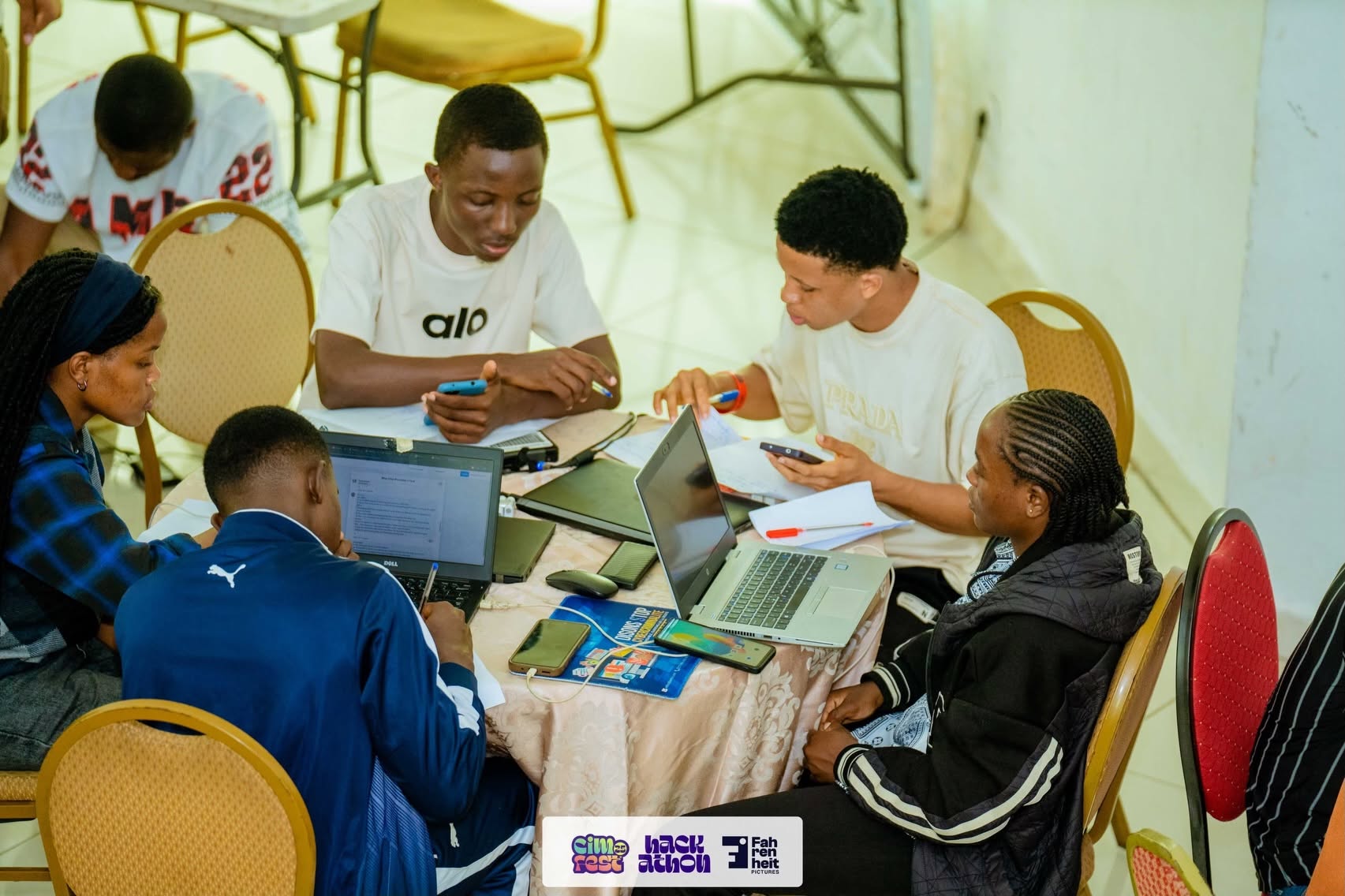
The Music In Africa Foundation (MIAF) is proud to announce its partnership with the Industrial Development Corporation (IDC) as a Strategic Implementing Partner (SIP) for its Social Employment Fund (SEF). Through this collaboration, MIAF is launching a new national programme designed to create jobs, address skills gaps, and strengthen South Africa’s creative industries — in line with the SEF’s overarching goal to generate work for the common good and build community value through employment, social contribution, and inclusive economic participation. Operating under the banner NEFCISA (National Employment Facility for Creative Industries in South Africa), the initiative will recruit and train participants, match them with host organisations, and place a minimum of 1 000 workers across the country. Key Objectives: Support employment and entrepreneurship in the creative industries. Offer skills development and training programmes. Foster partnerships between public and private creative sectors. Promote South African creativity at both provincial and national levels Foster community development through social contribution.

ACCES
ACCES

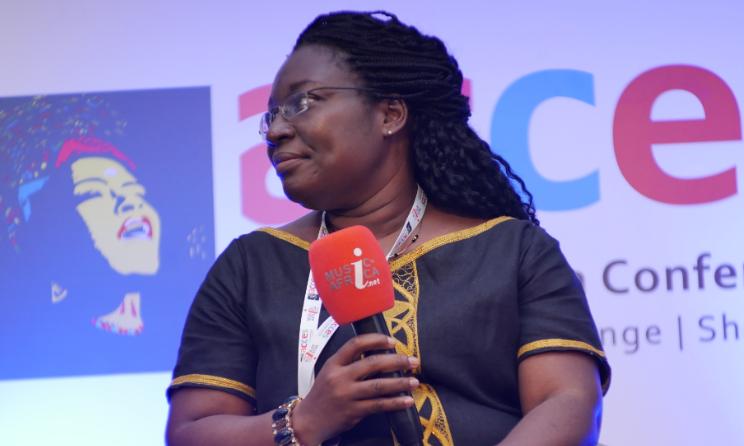
Chaque année, nous fournissons des informations générales afin de guider les participants dans la préparation de leur voyage. En plus de ce site, des mises à jour importantes seront envoyées par e-mail à tous les délégués inscrits. Assurez-vous de vous inscrire dès que possible. Pour plus d'informations, veuillez contacter [email protected] Continuez à consulter cette page pour plus d'information.  

Gender@Work
Gender@Work

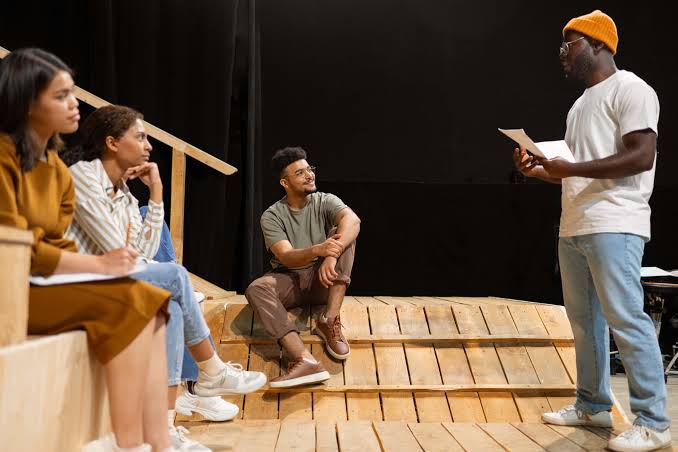
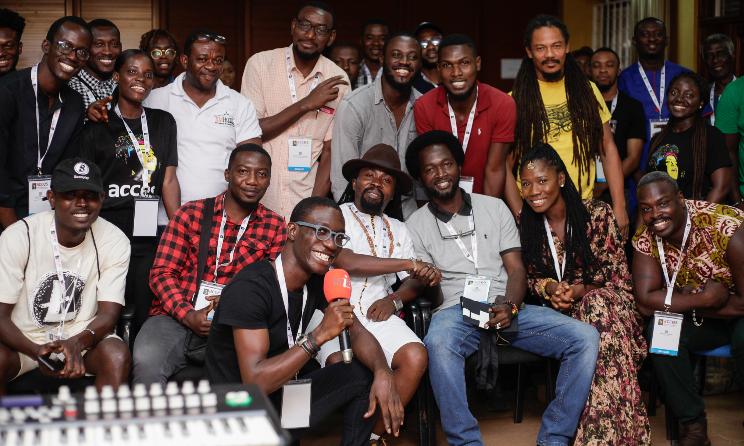
Music In Africa Gender @ Work is a three-year training programme aimed at upskilling and increasing the participation of female professionals in the African music sector. Launched by the Music In Africa Foundation (MIAF) in April 2019, the programme is connected to the MIAF’s ACCES music conference – a pan-African event held in a different African country every year. This connection enables the programme to reach new participants in a different African country every year. The programme marks the beginning of a more concerted effort by the Foundation to support the participation and inclusion of women in all facets of its programmes and the music sector in Africa as a whole. Over the three years, the programme will aim to address gender imbalances in the sector through training, lobbying, facilitating knowledge exchange and dialogues that foster the interest of women. The broader objectives of the programme are to: Provide industry training for women on critical music industry skills, focusing on: Stage management Electronic music production and recording Music business management Technical knowledge Provide an opportunity for both professional and aspiring women to benefit from the Music In Africa network and its broad range of activities in 2019, 2020 and 2021. Provide a solution-based platform in the form of a round table at ACCES with a view to identify challenges, discuss opportunities and lobby for the interests of female practitioners. Offer participants the opportunity to benefit from programmes offered by MIAF’s partners. Increase access to educational materials. Integrate participants in the broader ACCES programme to maximise experience and exposure to the industry. Record and present training materials on the www.musicinafrica.net, including but not limited to tutorials, templates and other best-practice materials. Communicate women-based themes that support the initiatives and messages of the programme. MAIN TRAINING ACTIVITIES Training in first country (Ghana): In the first year, participants will be trained on all aspects of stage management by a team of experienced stage managers from 10 to 17 November 2019. The programme will offer robust classroom training as well as practical, hands-on training in which participants will also be given the opportunity to manage various aspects of the ACCES performance programme. Training in second country: The second training iteration will take place at ACCES 2020 when the programme will diversify its course to include music production lessons and training on other music business topics. A round-table platform will also be introduced to coincide with the ACCES programme. Training in third country: The third training iteration will take place at ACCES 2021 in a different country, offering an advanced course. HOW DO YOU GET INVOLVED?  As a participant, facilitator or trainer: The programme enrolls up to 12 trainees every year. All opportunities are advertised publicly on this website, and will be added to this page. Please keep checking this page for new calls (below under UPDATES & CURRENT OPPORTUNITIES). As a partner Please contact Claire Metais at [email protected]. APPLY The call for applications for 2020 will be announced soon. The Music In Africa Gender @ Work programme is made possible with the support of the Prince Claus Fund, Siemens Stiftung and Goethe-Institut.

Sound Connects Fund
Sound Connects Fund

Pour les praticiens et les organisations culturels et créatifs opérant en Afrique australe, l’accès au financement reste un défi majeur. La pandémie de COVID-19 a également eu un impact massif sur les politiques gouvernementales, les dépenses et l’économie en général, et a vu les dépenses consacrées à la culture reléguées plus bas dans la liste des priorités. De plus, les industries culturelles et créatives citent régulièrement quatre domaines principaux où l’investissement est nécessaire pour la croissance : une visibilité accrue, la mobilité incluant l’accès à de nouveaux marchés, le financement et les structures de soutien.

Music In Africa Live

MUSIC IN AFRICA LIVE Lancé en 2020 pour une durée de 3 ans, Music In Africa Live est une initiative visant à soutenir l'écosystème de la musique africaine face aux contraintes imposées par la pandémie de COVID-19 ; le projet a été lancé par la Fondation Music In Africa (MIAF) en partenariat avec le ministère fédéral allemand des Affaires étrangères, Siemens Stiftung et le Goethe Institut. Plus de 30 aides sont disponibles dans le cadre de la troisième édition de Music In Africa Live, dans 3 catégories :  showcases, renforcement des compétences et plaidoyer, en conformité avec les modalités énoncées.

Instrument Building And Repair Project

The overarching objective of Music In Africa Foundation’s Instrument Building and Repair (IBR) project is to encourage the formalisation and professionalisation of instrument-making and repair in Africa, especially in relation to indigenous African instruments. Background In 2014, the Music In Africa Foundation (MIAF) identified as one of its focus areas for development the need to encourage young people from music and music-related sectors to consider instrument-making as a career. This need extended itself from the recognition that the making of traditional African instruments is not a widely practiced skill and seems to be limited to the older generation. Traditional African instrument makers are also few and far between, making communication and logistics between teachers and learners an obstacle. When instrument building workshops take place, budgetary constraints do not allow teachers or learners the time to explore the finer details of an instrument. Based on these observations, the MIAF designed and piloted the first IBR workshop at the Dhow Countries Music Academy (DCMA) in Zanzibar in February 2015. In 2016, the foundation received funding from the South African National Lotteries Commission to implement a much bigger version of the project in Johannesburg. The project drew participants from five African countries. 25 students from South Africa, Ghana, Senegal, Kenya and Ethiopia were trained on how to build and repair musical instruments. The instruments that they made were: Traditional Instruments: Umakhweyana and Marimba Conventional Instrument: Dulcimer guitar The workshop culminated in a traditional instruments concert at the Wits Theatre in Johannesburg. It is the MIAF’s aim to roll out similar workshops in as many African countries as possible over the next few years. Objectives Developing awareness of musical instrument makers in Africa with a view to promote their work to a wider global audience. Facilitating the sharing and transfer of skills in indigenous instruments between countries on the continent. Encouraging the formalisation and professionalisation of instrument-making and repair in Africa, especially in relation to indigenous instruments. Helping instrument makers develop their careers. Fostering the rapid monetisation and sustainable development of instrument-making and repair in Africa. Promoting constant exchange of ideas, expertise, experiences and know-how among instrument makers in Africa. Facilitating the identification of existing gaps in the field with a view to contribute new solutions. Facilitating the transfer of knowledge and skills of indigenous instruments between younger and older generations. 2020 edition The MIAF has also announced that multi-instrumentalist and instrument maker Joe Makhanza will facilitate one of the workshops on the building of the kamale ngoni instrument. Kamale ngoni is a kora-like, stringed instrument that originated in West Africa. The instrument contributed to the rise of Wassoulou music in the 1970s and 1990s. Makhanza was born in Giyani in South Africa's Limpopo province. He completed a bachelor of music degree and a post-graduate diploma in arts marketing from Wits University. He is currently completing his masters in ethnomusicology and is a part-time lecturer in African music studies at Rhodes University. He plays the kora, mbira, valiha, masenqo, xiwewe, ngoni ba and xizambi, among others. He also manufactures the aforementioned instruments. The MIAF will confirm more trainers who will join the workshops as well as the other instruments that will be featured in the 2020 IBR programme.  Apply to participate here. Connect with us on Twitter, Instagram and Facebook, and subscribe to our monthly newsletter. The Music In Africa Instrument Building and Repair project is funded by the National Lotteries Commission. It is implemented in partnership with Siemens Stiftung, Goethe-Institut, Wits Theatre and Kaya FM.

banner image

Senegalese rappers 'cry from the heart' for justice

Accueil/Non classé/Senegalese rappers ‘cry from the heart’ for justice

But across the Atlantic musicians in many African countries are in the vanguard of popular struggles, not only providing a symbolic soundtrack but also marching on the frontlines and leading social movements.

Take Nigeria, where Seun Kuti carries on the legacy of his father Fela Kuti by confronting the country’s venal political elite. In Burkina-Faso rappers helped overthrow former president Blaise Compaore.

In Africa’s newest country, South Sudan, a collective of musicians and artists such as Ana Taban has emerged. These artists are the new critics of the country’s kleptocratic rulers. And in Tanzania, the legendary father of Swahili hip hop and opposition member in parliament, Sugu, sits in jail. He was accused of insulting the country’s increasingly autocratic president John Magufuli.

One of the most notable examples of artists in the Belafonte mould is the music duo Keur Gui that consists of rappers Thiat and Kilifeu from Dakar, Senegal. Already among the most popular in Senegal’s lively hip hop scene, their profile grew exponentially during the massive protests against former president Abdoulaye Wade when he attempt to steal a third presidential term in 2011.

Activism on a truck

Keur Gui joined other musicians and journalists to form the Y’en a Marre (Fed Up) movement to mobilise youth against Wade in 2011. During their campaign, Keur Gui recorded songs that became a cri de coeur (cry from the heart) of the broader movement.

The group toured the country in a flatbed truck with a built-in sound system Along with other musician-activists: playing in small towns and rural villages and bringing their message to distant communities. This was essential in a country where the average age is just over 18 and 70% of the people live in rural areas.

Thiat was arrested and detained following a rally in Dakar’s Obélisque Square for allegedly calling the President a liar and saying the then 85-year-old was too old to govern. Y’en a Marre’s actions were crucial in ensuring Wade’s defeat and his replacement by current Senegalese President Macky Sall.

Rather than rest on their laurels Keur Gui, especially the charismatic Thiat, has continued its activism. In Senegal where politicians have historically sought to legitimatise their governments by co-opting popular musicians, Keur Gui was offered a share of the spoils of the new regime. They refused, and insisted that their vision was never to simply change elected leaders – Y’en a Marre pushes for a vision of democratic transformation beyond the ballot box.

Inspired by legendary pan-Africanists such as Amilcar Cabral, Thiat, who wears a simple woollen hat reminiscent of the one made famous by Cabral, has organised and supported other artist-led social movements in Africa including Balai Citoyen in Burkina Faso.

Keur Gui released a follow up album featuring the single Diogoufi (Nothing has changed) in 2014

[video:https://youtu.be/Gq2cVl9t37k width:744 height:446 autoplay:0]

Shot with the aesthetic sensibility of a film by the Senegalese director Ousmane Sembene, the video begins with Thiat sitting outside a store while ordinary Senegalese try and fail to purchase basic goods. Thiat offers frustrated commentary about the failure of the new political leadership to bring about change, over a mournful piano loop (translations of the original Wolof and French lyrics were provided to me by Thiat):

Same electoral promises
Same selling of our lands
The country’s in total chaos
It’s only two years and we’re already fed up.

Senegal boasted a robust and diverse economy that posted impressive growth through the 1980s. But decades of austerity programmes have left the government indebted to foreign donors and largely incapable of providing basic social services.

While cognisant of the role the international community has played in Senegal’s impoverishment, Thiat’s lens always remains sharply focused on the failings of the country’s political elite:

A government pushed into power by accident
They fail in their duty
Lazy regime
No vision
Permanent mess
No solutions
Get out of here!

Kilifeu’s gritty melodic cadence balances Thiat’s straight delivery and echoes his calls for a new vision and political leaders in his lacerating verses:

The leaders hang on to the power
In spite of the opposition of the population
Politicians are all the same, no difference
Only broken promises and lies
We are fed up of your nonsense
We really need change.

Cynical manoeuvres

The international community remains committed to a vision of democratic reform for Africa that centres on electoral competition over empowering ordinary people. Political elites circulate between political parties while engaging in cynical institutional manoeuvres that further entrench their power.

Even where regimes blatantly violate any notion of the democratic process in places such as Rwanda, Kenya and the Democratic Republic of Congo currently, diplomats insist that elections equate democracy – going as far as telling protesters to ‘stand down’ as a leading Congolese activist recently told me.

“There are no other options but elections,” they suggest. The truth is that we’ve failed to recognise the new political visions being articulated by young musicians and activists across the continent. Instead of lecturing them on how things should be, perhaps it is time for us to just listen.

This article is part of a series featuring Songs of Protest from across the world, genres and generations.

Zachariah Mampilly is a professor of political science and Africana studies at Vassar College. This story was first published on The Conversation.

newsletter banner

Abonnez-vous à notre newsletter

Retrouvez-nous sur les réseaux sociaux