




















SA: How the Copyright Amendment Bill might affect musicians
Here is a case study, in easy terms, on how the Copyright Amendment Bill of 2017 (CAB), passed by the National Assembly on 29 February 2024, may affect musicians should the president sign it into law.
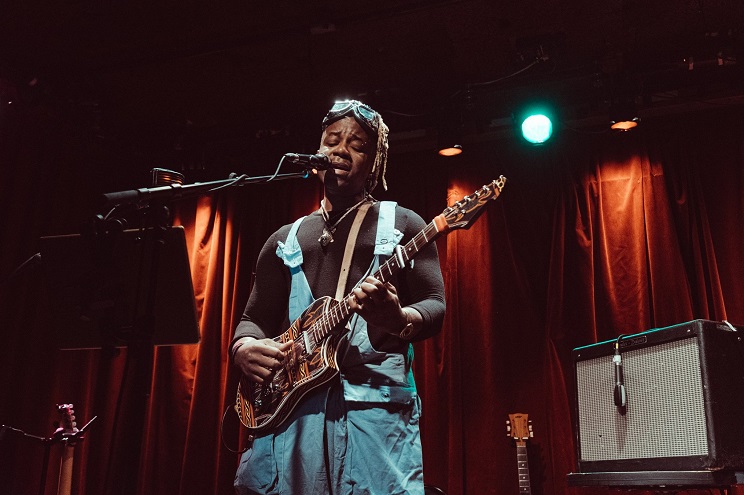
Meet Musician. Musician writes a new song and then records it – you know, to get a viral hit and make a ton of money licensing it. Congratulations, Musician! They now have the ownership rights to three categories of copyright: a musical work (their melody), a literary work (their lyrics) and a sound recording (their master recording). Not only that, but they have bright and shiny performer’s rights for their performance on their recording. Musician could also make a music video, now called an audiovisual work, but they decide it’s too expensive right now. Musician must now be careful if the government commissions anything from them. If the government gets ownership of their work, they can never get it back!
In the 1970s, when the internet was a twinkle in some university graduate’s eye, no one really thought radio waves might sometime carry an insane amount of information directly to one’s ears, as one chooses. Copyright holders had to deal only with things such as transmission over wires and mass public broadcasts, like radio. Now, the CAB considers (gasp!) ‘wireless’ communication applications for copyright. Yes, the invention that is now over 20 years old that we use every day. Luckily, everyone in the music industry has been playing along while the law catches up.
For Musician, this now means that they can legally control their music over the internet. They finally have the ‘right of communication’ in all four music rights. Streaming services, under threat of punishment, must register for the right to use any music, performances or recordings, must report their usage properly and must pay royalties to the right people. It is now an infringement to tamper with the metadata information about the copyright work or any technological protection conjured up to protect the work itself, too.
Musician’s voice may be ripped off by artificial intelligence one day. This means that AI might have their recorded performances sing things Musician would normally have not. Luckily, the CAB now includes moral rights for performers, just like songwriters already enjoy, where Musician can object to such ‘mutilation’ of their performances. AI would have to credit them and get the right licence now, too.
Musician, when making their recording, would have simply paid their music studio and producer to make it, and then be the owner of it. Now, under the CAB, Musician will have to remember to have an agreement in writing with them as well, explicitly stating that they are the owner. If they don’t, the studio and producer, or record company, can claim some ownership of the recording. Much of this also has to do with the purpose of the recording’s commission, especially if there’s beef over ownership and we all need to call up our buddies in the now permanent Copyright Tribunal. Luckily, Musician is recording their own song, with their own performance, and we can pretty much assume that it’s a very personal recording for them, too. But if Musician abandons the recording because it’s a flop, said producer could also approach the Tribunal and have them give the recording to them. Best to hammer it out with a contract to begin with, I’d say.
Surprisingly, there are no changes to Section 14 of the current Copyright Act. This is significant, as this section allows other artists to make cover versions of existing songs by paying royalties and following other rules. These mechanical royalties have statutory rates elsewhere in the world, but have remained unregulated in South Africa for digital reproductions since CD stores went the way of the dodo. But Section 14 is covered by regulations last revised in 1985, so they shall hopefully get a revamp. Something like: should you want to cover a song, you’ll need to notify the South African mechanical rights society, CAPASSO, where the streaming service is paying a percentage of their total revenue earned for mechanical royalties. CAPASSO then pays Musician and their music publisher.
Musician may want to share their work with someone who can help them get ahead in the pop music game. Before the CAB, a royalty would be agreed between Musician and the other party, like a record company or music publisher. But now, such a royalty has to be ‘equitable’ or ‘fair’, whatever that might mean. Maybe 50% for you and 50% for me? If we can’t figure it out, then the Copyright Tribunal must be consulted for us to play nice. Such a process may take a long time and require musicians to have deep pockets for any legal action (which they don’t, perhaps because it wasn’t fair in the past?). The CAB also outlines a minimum of issues that should also be included in the agreement, like when Musician would get paid and a dispute resolution mechanism.
Musician may have wanted to work with a music publisher and assign their music over to them. This could have been forever, but now CAB limits this assignment to 25 years for the music and lyrics, at which time the rights revert back to Musician. Musician can now pick and choose what happens to their music next. The CAB also makes it clear that any contract that forces creatives to give up rights has no force whatsoever, so Musician does not have to worry about losing the rights to their work should they sign them away (except to the government?).
Musician, who might have been registering their songs with a royalty society like CAPASSO and five others in the music industry, will now find that all societies must be accredited by a new government commission. Accreditation is tied to the ability of the society to abide by rules and regulations for Musician’s and other rightsholders’ control of them, to license copyright works, to report to Musician and to pay out their royalties. Any interest that may be earned from keeping those royalties must now also be paid to Musician, whereas in the past, interest income was distributed among all rightsholders as a kind of non-royalty revenue, benefiting all members alike.
The CAB introduces guidance for the treatment of orphan works, where the owner or author cannot be located, and then provides for licensing such works through the commission. This would open a huge source of uses for South African works that could not be used before, but, of course, the money sits until the right people are, if ever, found. So, if Musician gets tired of the limelight and wishes to take a vacation to a remote island for several years, they will still have their royalties collected when no one knows them or where they are. This is fine, unless Musician feels their moral rights might be stepped on; so, best to stick around if you feel strongly about your work.
Finally, the thing that has many people up in arms about the CAB is the concept of ‘fair use’. Fair use appears to be the scapegoat of all the changes mentioned above in frustration of corporate interest. Fair use boils down to needing to use a copyright work for non-commercial convenience. Examples include translating the work simply to read it, reporting the news, reviewing the work, providing current information (like searching on the internet), providing accessibility for the disabled, using it for educational purposes, satire and comedy, and archiving the work. Musician may find, for example, that their royalties do take a knock, as certain things that would have been licensed now fall under fair use. However, their name must be on their work when it is used fairly.
The problem, of course, is that this is determined – when you know about it – on a case-by-case basis. To challenge every ‘fair’ use is beyond Musician’s capabilities. But then again, catching underhanded commercial piracy of their music still is now. Not only this, but the wording of the CAB is broad enough to conflict with international treaties South Africa has already agreed to, which makes CAB unconstitutional. Then again, the current Copyright Act is also unconstitutional as it stands, anyway.
The balance of law is weighed between many different interests. Historically, copyright law was introduced to benefit the creation of art, not only for creators themselves, but also for the public, who should ultimately enjoy all their wonderful creations. Creators should be incentivised to keep making art, while at some point in time it should be enjoyed by the public at large so that new ideas can be expressed. The South African Guild of Actors, for example, weighs the benefits of the CAB in favour of actors. Academics are in favour of the changes, too. However, a recent petition on Change.org against the passing of the bill by the National Assembly of South Africa, garnered 4 247 supporters. Many royalty societies are also against it, along with many other associations in the industry, such as the Copyright Coalition.
If I were pressured to take sides – and, of course, I am open to changing my mind – I feel it would be revitalising to have the CAB put into law. Let any chaos ensue, as we can lobby for change again. Why? Because creatives simply need change to grow, and at the time of writing that is not happening for Musician in South Africa. Any benefits will hopefully outweigh the cons.
Jonathan G. Shaw is the lecturer of the Music Business Studies course at the Wits School of Arts in Johannesburg, South Africa, as well as a recognised music producer, audio engineer, policy expert and educational presenter. Shaw is the author of the book ‘The South African Music Business’, now in its third edition, and a PhD (Music) candidate at Wits University.
This article first appeared on litnet. The story in this case study is a work of fiction and is based on the author’s own assumptions and understanding of an untested and intricate new piece of legislation. No legal advice is offered, nor should the information be relied upon by anyone. This piece is for debating, illustrative and educational purposes only.
Sources and further reading
- Copyright, WIPO.
- Parliamentary review of Copyright Amendment Bill, Newzroom Africa, 28 February 2024, YouTube.
- Copyright Amendment Bill petition.
- Copyright Amendment Bill (B13-2017), Parliamentary Monitoring Group.
- Performers’ Protection Amendment Bill (B24-2016), Parliamentary Monitoring Group.
- Copyright Regulations 1985, South Africa, WIPO.
- Copyright Coalition.
- Owen Dean, “Copyright Bill – ‘Fair use’ is an alien system with no roots in our law and does not belong in it”, Daily Maverick.



