











NEFCISA
NEFCISA

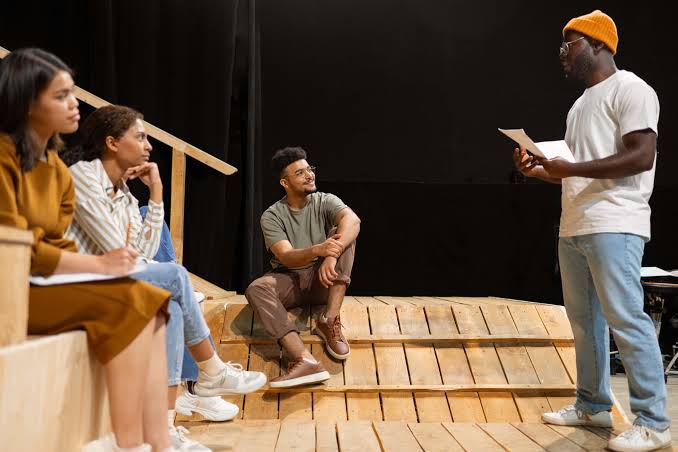
The Music In Africa Foundation (MIAF) is proud to announce its partnership with the Industrial Development Corporation (IDC) as a Strategic Implementing Partner (SIP) for its Social Employment Fund (SEF). Through this collaboration, MIAF is launching a new national programme designed to create jobs, address skills gaps, and strengthen South Africa’s creative industries — in line with the SEF’s overarching goal to generate work for the common good and build community value through employment, social contribution, and inclusive economic participation. Operating under the banner NEFCISA (National Employment Facility for Creative Industries in South Africa), the initiative will recruit and train participants, match them with host organisations, and place a minimum of 1 000 workers across the country. Key Objectives: Support employment and entrepreneurship in the creative industries. Offer skills development and training programmes. Foster partnerships between public and private creative sectors. Promote South African creativity at both provincial and national levels Foster community development through social contribution.

ACCES
ACCES

Chaque année, nous fournissons des informations générales afin de guider les participants dans la préparation de leur voyage. En plus de ce site, des mises à jour importantes seront envoyées par e-mail à tous les délégués inscrits. Assurez-vous de vous inscrire dès que possible. Pour plus d'informations, veuillez contacter [email protected] Continuez à consulter cette page pour plus d'information.  

Gender@Work
Gender@Work

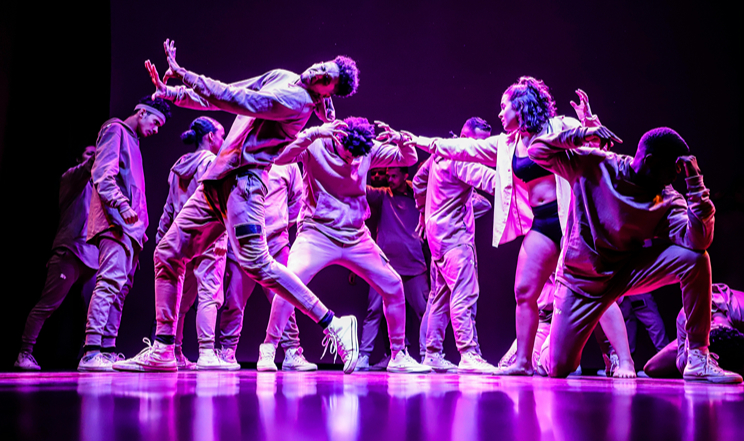
Music In Africa Gender @ Work is a three-year training programme aimed at upskilling and increasing the participation of female professionals in the African music sector. Launched by the Music In Africa Foundation (MIAF) in April 2019, the programme is connected to the MIAF’s ACCES music conference – a pan-African event held in a different African country every year. This connection enables the programme to reach new participants in a different African country every year. The programme marks the beginning of a more concerted effort by the Foundation to support the participation and inclusion of women in all facets of its programmes and the music sector in Africa as a whole. Over the three years, the programme will aim to address gender imbalances in the sector through training, lobbying, facilitating knowledge exchange and dialogues that foster the interest of women. The broader objectives of the programme are to: Provide industry training for women on critical music industry skills, focusing on: Stage management Electronic music production and recording Music business management Technical knowledge Provide an opportunity for both professional and aspiring women to benefit from the Music In Africa network and its broad range of activities in 2019, 2020 and 2021. Provide a solution-based platform in the form of a round table at ACCES with a view to identify challenges, discuss opportunities and lobby for the interests of female practitioners. Offer participants the opportunity to benefit from programmes offered by MIAF’s partners. Increase access to educational materials. Integrate participants in the broader ACCES programme to maximise experience and exposure to the industry. Record and present training materials on the www.musicinafrica.net, including but not limited to tutorials, templates and other best-practice materials. Communicate women-based themes that support the initiatives and messages of the programme. MAIN TRAINING ACTIVITIES Training in first country (Ghana): In the first year, participants will be trained on all aspects of stage management by a team of experienced stage managers from 10 to 17 November 2019. The programme will offer robust classroom training as well as practical, hands-on training in which participants will also be given the opportunity to manage various aspects of the ACCES performance programme. Training in second country: The second training iteration will take place at ACCES 2020 when the programme will diversify its course to include music production lessons and training on other music business topics. A round-table platform will also be introduced to coincide with the ACCES programme. Training in third country: The third training iteration will take place at ACCES 2021 in a different country, offering an advanced course. HOW DO YOU GET INVOLVED?  As a participant, facilitator or trainer: The programme enrolls up to 12 trainees every year. All opportunities are advertised publicly on this website, and will be added to this page. Please keep checking this page for new calls (below under UPDATES & CURRENT OPPORTUNITIES). As a partner Please contact Claire Metais at [email protected]. APPLY The call for applications for 2020 will be announced soon. The Music In Africa Gender @ Work programme is made possible with the support of the Prince Claus Fund, Siemens Stiftung and Goethe-Institut.

Sound Connects Fund
Sound Connects Fund

Pour les praticiens et les organisations culturels et créatifs opérant en Afrique australe, l’accès au financement reste un défi majeur. La pandémie de COVID-19 a également eu un impact massif sur les politiques gouvernementales, les dépenses et l’économie en général, et a vu les dépenses consacrées à la culture reléguées plus bas dans la liste des priorités. De plus, les industries culturelles et créatives citent régulièrement quatre domaines principaux où l’investissement est nécessaire pour la croissance : une visibilité accrue, la mobilité incluant l’accès à de nouveaux marchés, le financement et les structures de soutien.

Music In Africa Live

MUSIC IN AFRICA LIVE Lancé en 2020 pour une durée de 3 ans, Music In Africa Live est une initiative visant à soutenir l'écosystème de la musique africaine face aux contraintes imposées par la pandémie de COVID-19 ; le projet a été lancé par la Fondation Music In Africa (MIAF) en partenariat avec le ministère fédéral allemand des Affaires étrangères, Siemens Stiftung et le Goethe Institut. Plus de 30 aides sont disponibles dans le cadre de la troisième édition de Music In Africa Live, dans 3 catégories :  showcases, renforcement des compétences et plaidoyer, en conformité avec les modalités énoncées.

Instrument Building And Repair Project

The overarching objective of Music In Africa Foundation’s Instrument Building and Repair (IBR) project is to encourage the formalisation and professionalisation of instrument-making and repair in Africa, especially in relation to indigenous African instruments. Background In 2014, the Music In Africa Foundation (MIAF) identified as one of its focus areas for development the need to encourage young people from music and music-related sectors to consider instrument-making as a career. This need extended itself from the recognition that the making of traditional African instruments is not a widely practiced skill and seems to be limited to the older generation. Traditional African instrument makers are also few and far between, making communication and logistics between teachers and learners an obstacle. When instrument building workshops take place, budgetary constraints do not allow teachers or learners the time to explore the finer details of an instrument. Based on these observations, the MIAF designed and piloted the first IBR workshop at the Dhow Countries Music Academy (DCMA) in Zanzibar in February 2015. In 2016, the foundation received funding from the South African National Lotteries Commission to implement a much bigger version of the project in Johannesburg. The project drew participants from five African countries. 25 students from South Africa, Ghana, Senegal, Kenya and Ethiopia were trained on how to build and repair musical instruments. The instruments that they made were: Traditional Instruments: Umakhweyana and Marimba Conventional Instrument: Dulcimer guitar The workshop culminated in a traditional instruments concert at the Wits Theatre in Johannesburg. It is the MIAF’s aim to roll out similar workshops in as many African countries as possible over the next few years. Objectives Developing awareness of musical instrument makers in Africa with a view to promote their work to a wider global audience. Facilitating the sharing and transfer of skills in indigenous instruments between countries on the continent. Encouraging the formalisation and professionalisation of instrument-making and repair in Africa, especially in relation to indigenous instruments. Helping instrument makers develop their careers. Fostering the rapid monetisation and sustainable development of instrument-making and repair in Africa. Promoting constant exchange of ideas, expertise, experiences and know-how among instrument makers in Africa. Facilitating the identification of existing gaps in the field with a view to contribute new solutions. Facilitating the transfer of knowledge and skills of indigenous instruments between younger and older generations. 2020 edition The MIAF has also announced that multi-instrumentalist and instrument maker Joe Makhanza will facilitate one of the workshops on the building of the kamale ngoni instrument. Kamale ngoni is a kora-like, stringed instrument that originated in West Africa. The instrument contributed to the rise of Wassoulou music in the 1970s and 1990s. Makhanza was born in Giyani in South Africa's Limpopo province. He completed a bachelor of music degree and a post-graduate diploma in arts marketing from Wits University. He is currently completing his masters in ethnomusicology and is a part-time lecturer in African music studies at Rhodes University. He plays the kora, mbira, valiha, masenqo, xiwewe, ngoni ba and xizambi, among others. He also manufactures the aforementioned instruments. The MIAF will confirm more trainers who will join the workshops as well as the other instruments that will be featured in the 2020 IBR programme.  Apply to participate here. Connect with us on Twitter, Instagram and Facebook, and subscribe to our monthly newsletter. The Music In Africa Instrument Building and Repair project is funded by the National Lotteries Commission. It is implemented in partnership with Siemens Stiftung, Goethe-Institut, Wits Theatre and Kaya FM.

banner image

Music fills the air as Zimbabweans elect new leader

Accueil/Non classé/Music fills the air as Zimbabweans elect new leader

Since Mugabe’s demise, Zimbabweans have enjoyed free speech and the right to congregate publicly. Speaking against the ruling ZANU-PF was taboo and would be met with serious consequences such as harassment, arrest and brutality by ZANU-PF militia and state security agents.

The culture of employing music ahead of elections in Zimbabwe has become increasingly trendy. This year, most political parties hired musicians to mobilise support ahead of the elections. The post-Mugabe era has also witnessed artists releasing new music and freely expressing their views about their preferred candidates.

During the Mugabe era, ZANU-PF’s involvement in the commissioning of propaganda music ushered a new form of censorship in the country by elbowing what it deemed “politically inappropriate music » from the airwaves. The ZANU-PF government played a pivotal role in commissioning several propaganda songs, albums and videos.

A long history of music propaganda

Music plays a special part in the political history of Zimbabwe. During the colonial era, musicians recorded songs meant to inspire black people to fight British rule. These songs faced rebuke by the white government, which knew all too well that such songs could cause an uprising. After Mugabe took over in 1980, he used the same propaganda mechanisms to silence musicians whose music opposed his leadership style. The artists who survived persecution released songs that praised Mugabe. Last ‘Tambaoga’ Chiangwa’s land reform songs ‘Rambai Makashinga’ and ‘Sendekera’ dominated the airwaves in the run-up to the 2002 general elections. Those who would not pander to Mugabe went into exile. Perhaps the most well-known musician in exile is chimurenga musician Thomas Mapfumo who returned to Zimbabwe in April after fleeing to the US in 2005. 

While Tambaoga enjoyed his popularity, musicians such as former Movement for Democratic Change-Tsvangirai (MDC-T) MP Paul Madzore and Afro-jazz legend Oliver Mtukudzi were denied airplay. Through Madzore, the MDC-T released campaign songs and mashups that were played in bars and on mobile sound trucks. Madzore’s albums, especially Mhenya Mauro (Change Is Inevitable), sold secretly for fear of intimidation, while Mtukudzi’s 2001 album Bvuma (Tolerance) was banned because of ‘Wasakara’, which pleads with an old man to accept that age has caught up with him. Many assume that the song was directed at Mugabe.

[video:https://www.youtube.com/watch?v=pQfNLAio8iU width:744 height:446 autoplay:0]

Post-Mugabe and Tsvangirai era

Fast-forward to November 2017 and Mugabe’s trusted lieutenant, Mnangagwa, had publicly condemned political violence and intimidation and urged Zimbabweans to unite. The move had given Zimbabweans freedom of expression with many political activists and musicians openly campaigning alongside their preferred candidates.

Up until today’s polls, Zimbabwe has seen artists releasing songs affiliated to opposition parties, many of them criticising the ruling ZANU-PF.

“I think for me it points to a scenario where the driver is not there but the system is deeply rooted, » Zimbabwean journalist and music critic Plot Mhako says. « Our culture, when it comes to politics, has shifted a bit when it comes to violence. But you find out that hero-worshipping, bootlicking and singing for your supper is still evident.

« Sandra Ndebele performed at a rally and endorsed Mnangagwa. She even said the government had done some amazing stuff for the arts since independence. When you look at such statements, it points to bootlicking and possibly someone who is still caught up in the gala era where they were getting a lot of hefty compensation after performing. It’s freedom for the artists but I feel it’s a bit unfortunate because there are not singing for the people but for a certain person whose agenda is to win votes by hook or crook.”

New political music finds space in Zimbabwe

A hefty number of political songs have been released and used a rallies since campaigning began earlier this year. In April, Madzore endorsed Chamisa through the album Mhenyamauro Volume 11 Tiberekei Tifambe featuring ‘Ngainyururwe Mumvura Ngwena’ (Remove the Crocodile From the Water). Ngwena (Crocodile) is a nickname given to Mnangagwa because of his political shrewdness and intimidating tactics when dealing with political opponents. “Apart from motivating the masses, I also focus on marketing the party’s leading brand in Chamisa,” Madzore told New Zimbabwe in April.

[video:https://www.youtube.com/watch?v=_p2uhPGnhXM width:744 height:446 autoplay:0]

Not to be left out, ZANU-PF MP and former deputy minister of justice Fortune Chasi was expected to release the 12-track No Violence in April. Zimbabwean media said the album would promote peace among young people ahead of the elections. However, there is no sign of the album online.

In June, upcoming local artist Ndori Malonza released ‘Mnangagwa’, taken from his 13-track debut First Time. The song « calls on the electorate to rally behind President Mnangagwa and vote for him, » Malonza told a local publication. « I don’t believe in any other government than ZANU-PF.”

A month later, Zimbabwean dancehall artist Winky D dropped ‘Parliament’ – a song that challenges lawmakers and the current leadership to visit the country’s townships to get a sense of the reality on the ground. Known for his indirect socio-political commentary, Winky D employs the “gafa chete chete” line in the song, which echoes the MDC Alliance’s election tagline, ‘Chamisa Chete Chete’. This has left most people believing that the singer has endorsed the 40-year-old Chamisa.

“People can interpret the song in whatever way they want and we don’t have control over that,” Winky D’s manager, Jonathan Banda, said, adding that his artist remains apolitical while singing about the real issues affecting the poor.

[video:https://www.youtube.com/watch?v=BT9UX2V5Eco width:744 height:446 autoplay:0]

Musical ‘prophets’

Prince Noble and Blacperl ZW released a song that acts as an artistic debate about the ruling party and opposition, with the former representing Mnangagwa and the latter speaking on behalf of Chamisa. Released in mid-July, ‘After Ma Election’ (After Elections) is a song that criticises the socio-political ills in the country. The song is a reflection of the problems in Zimbabwean communities and goes on to project the election outcome, with Prince Noble saying that Mnangagwa’s army connections would never concede defeat.

« The message was that as Zimbabweans we have been too partisan to make any progress, » the rapper told Music In Africa. « While we might differ on how we view issues politically, we should always remember that we all submit to the same flag. We are Zimbabweans and we have to unite now more than before. »

[video:https://www.youtube.com/watch?v=pzXlABTBCOE width:744 height:446 autoplay:0]

newsletter banner

Abonnez-vous à notre newsletter

Retrouvez-nous sur les réseaux sociaux