


NEFCISA
NEFCISA

The Music In Africa Foundation (MIAF) is proud to announce its partnership with the Industrial Development Corporation (IDC) as a Strategic Implementing Partner (SIP) for its Social Employment Fund (SEF). Through this collaboration, MIAF is launching a new national programme designed to create jobs, address skills gaps, and strengthen South Africa’s creative industries — in line with the SEF’s overarching goal to generate work for the common good and build community value through employment, social contribution, and inclusive economic participation. Operating under the banner NEFCISA (National Employment Facility for Creative Industries in South Africa), the initiative will recruit and train participants, match them with host organisations, and place a minimum of 1 000 workers across the country. Key Objectives: Support employment and entrepreneurship in the creative industries. Offer skills development and training programmes. Foster partnerships between public and private creative sectors. Promote South African creativity at both provincial and national levels Foster community development through social contribution.

ACCES
ACCES

Chaque année, nous fournissons des informations générales afin de guider les participants dans la préparation de leur voyage. En plus de ce site, des mises à jour importantes seront envoyées par e-mail à tous les délégués inscrits. Assurez-vous de vous inscrire dès que possible. Pour plus d'informations, veuillez contacter [email protected] Continuez à consulter cette page pour plus d'information.  

Gender@Work
Gender@Work

Music In Africa Gender @ Work is a three-year training programme aimed at upskilling and increasing the participation of female professionals in the African music sector. Launched by the Music In Africa Foundation (MIAF) in April 2019, the programme is connected to the MIAF’s ACCES music conference – a pan-African event held in a different African country every year. This connection enables the programme to reach new participants in a different African country every year. The programme marks the beginning of a more concerted effort by the Foundation to support the participation and inclusion of women in all facets of its programmes and the music sector in Africa as a whole. Over the three years, the programme will aim to address gender imbalances in the sector through training, lobbying, facilitating knowledge exchange and dialogues that foster the interest of women. The broader objectives of the programme are to: Provide industry training for women on critical music industry skills, focusing on: Stage management Electronic music production and recording Music business management Technical knowledge Provide an opportunity for both professional and aspiring women to benefit from the Music In Africa network and its broad range of activities in 2019, 2020 and 2021. Provide a solution-based platform in the form of a round table at ACCES with a view to identify challenges, discuss opportunities and lobby for the interests of female practitioners. Offer participants the opportunity to benefit from programmes offered by MIAF’s partners. Increase access to educational materials. Integrate participants in the broader ACCES programme to maximise experience and exposure to the industry. Record and present training materials on the www.musicinafrica.net, including but not limited to tutorials, templates and other best-practice materials. Communicate women-based themes that support the initiatives and messages of the programme. MAIN TRAINING ACTIVITIES Training in first country (Ghana): In the first year, participants will be trained on all aspects of stage management by a team of experienced stage managers from 10 to 17 November 2019. The programme will offer robust classroom training as well as practical, hands-on training in which participants will also be given the opportunity to manage various aspects of the ACCES performance programme. Training in second country: The second training iteration will take place at ACCES 2020 when the programme will diversify its course to include music production lessons and training on other music business topics. A round-table platform will also be introduced to coincide with the ACCES programme. Training in third country: The third training iteration will take place at ACCES 2021 in a different country, offering an advanced course. HOW DO YOU GET INVOLVED?  As a participant, facilitator or trainer: The programme enrolls up to 12 trainees every year. All opportunities are advertised publicly on this website, and will be added to this page. Please keep checking this page for new calls (below under UPDATES & CURRENT OPPORTUNITIES). As a partner Please contact Claire Metais at [email protected]. APPLY The call for applications for 2020 will be announced soon. The Music In Africa Gender @ Work programme is made possible with the support of the Prince Claus Fund, Siemens Stiftung and Goethe-Institut.

Sound Connects Fund
Sound Connects Fund

Pour les praticiens et les organisations culturels et créatifs opérant en Afrique australe, l’accès au financement reste un défi majeur. La pandémie de COVID-19 a également eu un impact massif sur les politiques gouvernementales, les dépenses et l’économie en général, et a vu les dépenses consacrées à la culture reléguées plus bas dans la liste des priorités. De plus, les industries culturelles et créatives citent régulièrement quatre domaines principaux où l’investissement est nécessaire pour la croissance : une visibilité accrue, la mobilité incluant l’accès à de nouveaux marchés, le financement et les structures de soutien.

Music In Africa Live

MUSIC IN AFRICA LIVE Lancé en 2020 pour une durée de 3 ans, Music In Africa Live est une initiative visant à soutenir l'écosystème de la musique africaine face aux contraintes imposées par la pandémie de COVID-19 ; le projet a été lancé par la Fondation Music In Africa (MIAF) en partenariat avec le ministère fédéral allemand des Affaires étrangères, Siemens Stiftung et le Goethe Institut. Plus de 30 aides sont disponibles dans le cadre de la troisième édition de Music In Africa Live, dans 3 catégories :  showcases, renforcement des compétences et plaidoyer, en conformité avec les modalités énoncées.

Instrument Building And Repair Project

The overarching objective of Music In Africa Foundation’s Instrument Building and Repair (IBR) project is to encourage the formalisation and professionalisation of instrument-making and repair in Africa, especially in relation to indigenous African instruments. Background In 2014, the Music In Africa Foundation (MIAF) identified as one of its focus areas for development the need to encourage young people from music and music-related sectors to consider instrument-making as a career. This need extended itself from the recognition that the making of traditional African instruments is not a widely practiced skill and seems to be limited to the older generation. Traditional African instrument makers are also few and far between, making communication and logistics between teachers and learners an obstacle. When instrument building workshops take place, budgetary constraints do not allow teachers or learners the time to explore the finer details of an instrument. Based on these observations, the MIAF designed and piloted the first IBR workshop at the Dhow Countries Music Academy (DCMA) in Zanzibar in February 2015. In 2016, the foundation received funding from the South African National Lotteries Commission to implement a much bigger version of the project in Johannesburg. The project drew participants from five African countries. 25 students from South Africa, Ghana, Senegal, Kenya and Ethiopia were trained on how to build and repair musical instruments. The instruments that they made were: Traditional Instruments: Umakhweyana and Marimba Conventional Instrument: Dulcimer guitar The workshop culminated in a traditional instruments concert at the Wits Theatre in Johannesburg. It is the MIAF’s aim to roll out similar workshops in as many African countries as possible over the next few years. Objectives Developing awareness of musical instrument makers in Africa with a view to promote their work to a wider global audience. Facilitating the sharing and transfer of skills in indigenous instruments between countries on the continent. Encouraging the formalisation and professionalisation of instrument-making and repair in Africa, especially in relation to indigenous instruments. Helping instrument makers develop their careers. Fostering the rapid monetisation and sustainable development of instrument-making and repair in Africa. Promoting constant exchange of ideas, expertise, experiences and know-how among instrument makers in Africa. Facilitating the identification of existing gaps in the field with a view to contribute new solutions. Facilitating the transfer of knowledge and skills of indigenous instruments between younger and older generations. 2020 edition The MIAF has also announced that multi-instrumentalist and instrument maker Joe Makhanza will facilitate one of the workshops on the building of the kamale ngoni instrument. Kamale ngoni is a kora-like, stringed instrument that originated in West Africa. The instrument contributed to the rise of Wassoulou music in the 1970s and 1990s. Makhanza was born in Giyani in South Africa's Limpopo province. He completed a bachelor of music degree and a post-graduate diploma in arts marketing from Wits University. He is currently completing his masters in ethnomusicology and is a part-time lecturer in African music studies at Rhodes University. He plays the kora, mbira, valiha, masenqo, xiwewe, ngoni ba and xizambi, among others. He also manufactures the aforementioned instruments. The MIAF will confirm more trainers who will join the workshops as well as the other instruments that will be featured in the 2020 IBR programme.  Apply to participate here. Connect with us on Twitter, Instagram and Facebook, and subscribe to our monthly newsletter. The Music In Africa Instrument Building and Repair project is funded by the National Lotteries Commission. It is implemented in partnership with Siemens Stiftung, Goethe-Institut, Wits Theatre and Kaya FM.

banner image

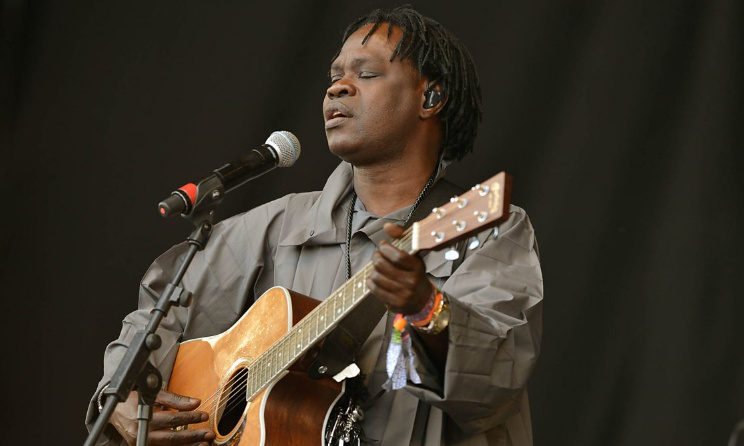
Rocky Dawuni talks fourth Grammy nod, Afro-roots and global reach

Accueil/Non classé/Rocky Dawuni talks fourth Grammy nod, Afro-roots and global reach

Earlier this year, the musician celebrated his fourth career nod at music’s biggest night. On 2 February at the Crypto.com Arena in Los Angeles, California, he will vie for his first Grammy in the Best Global Music Performance category for ‘Rise’, the lead single from his upcoming 2025 album. 

Joining him as part of Africa’s contingent at the 67th Grammys are Nigeria’s Tems, Burna Boy, Asake, Davido, Lojay, Yemi Alade, and Rema, as well as Beninese legend Angélique Kidjo. 

Ahead of the 67th Grammys, Music In Africa caught up with Rocky Dawuni to discuss the significance of his nomination, the evolving global music scene, the importance of diverse African sounds, and his vision for 2025, which includes a new album, tours, advocacy, and cultural unification efforts.

MUSIC IN AFRICA: Congratulations on your fourth Grammy nomination! How does it feel to be recognised once again for your work? 

ROCKY DAWUNI: I am very grateful for the recognition and also for a song that aspires to articulate issues that are currently prevailing around the world. “Rise” is a song that I feel came through me. The nomination has further shed more light on its message of unity and togetherness. 

Thematically, ‘Rise’ is a unifying anthem and a call to action. This isn’t uncommon in your work over the years, but what do you think sets this song apart from your previous offerings on this subject matter? 

We live at a time when so many issues are going on in the world, both within the African Diaspora and the world at large. George Floyd, the lockdowns of COVID-19, the elections in the United States, and the economic uncertainty worldwide have all pushed many nations to the brink of crisis. Many ordinary people are feeling restless and helpless in the midst of all of these issues. Although songs that promote fun & enjoyment are still important, it is even much more important for music that can instil a sense of hope and resilience as an operating mindset of people. ‘Rise’ is that song.

 What was it like working with producers Nabeyin Panford and Roahn “Firstborn” Hylton, and what do you think sets ‘Rise’ apart from the other songs shortlisted in the Best Global Music Performance category?

Working with Nabeyin and Roahn was like working with brothers. We share a similar vision when it comes to music. Naybein with his Ghanaian/ American ancestry and Roahn with his Jamaican / American ancestry and both having worked with very popular artists including Travis Scott, Kanye West and Nicky Minaj brought a different perspective while staying true to my Afro Roots sound. In terms of Rise as compared to the other songs in the category, I feel that Rise has more of a contemporary sound and is driven by an irresistible groove that powers an important message for our times. 

What do you believe has contributed to your continued success and repeated Grammy recognition? 

I believe it is my faith in God and my sense of mission for my music which allows me to constantly strive to be better and opens me up to learning new inspirations. I think that keeps me bold in my innovation of my Afro Roots sound. I am confident that this is what keeps catching the ears of my peers, music aficionados and my fans. 

As an Afro-Roots pioneer and a key innovator of traditional Ghanaian sounds, how do you maintain your unique style while staying relevant in a dynamic global music landscape? 

I am a fan of upcoming music and musicians. I am constantly approaching them to teach me and inspire me. I think that gives me an ear to what is next as much as I am constantly also learning from our legends. This approach and attitude replenishes my creative wellsprings and inform me with new dimensions for my signature Afro Roots sound. For me, too, music is a spiritual mission. As long as I aim to articulate social truths and elevate the voices of the voiceless, I believe I will always have the pulse of what is current. 

As with your past releases, your forthcoming album is highly anticipated. While we expect you to continue your practice of pan-Africanism and social consciousness, what else can fans expect in terms of sound and themes? 

This record is going to be a beautiful and profound experience of the diversity of African sounds in a very powerful and harmonious way. This album also carries a sound that unites the past, and the present into the future and involves a diverse group of producers and collaborators. The album goes from deep Highlife to Afrobeat to Afrobeats to Pop to the now. The message of the African Renaissance and the elevation of our shared humanity will still be a core driving element with fresh-sounding production approaches. It’s coming!

Do you feel the music industry is becoming more inclusive of diverse African genres, especially when compared to the dominance of Afrobeats in recent years?

I feel that there is an urgent need for the opening up of the playing field when it comes to popular African music to circumvent the dangers of African music being boxed into one genre. The rise of Afrobeats is a positive declaration of the power of African music to go global as a movement, but it does not stop there. We need more of our diversity to be highlighted and classic sounds to be reinvigorated for the world to experience a broader sound of African origin. These are all part of an evolutionary process to project our cultural richness, but we can’t be complacent due to our current laurels and breakthroughs at the expense of what is possible.

What role do the Grammys play in the global appreciation of African music, particularly for genres like Afro-Roots? 

I believe the importance and symbolism of the Grammys is shedding light and enshrining a genre into the psyche of popular culture. Having my Afro Roots sound receiving nominations, I believe, has put it in a space where down the road it could spur a wider movement that could possibly lead to its own category. Music has a business side that works through certain established institutions, and as musicians who have to create, tour and promote our music, these established platforms could help us further our ultimate objective of reaching the people.

How does one prepare for a major event like the Grammys, both emotionally and creatively?

I always approach these events with a deep sense of gratitude. As a child of Africa who had always nurtured a dream of global recognition for my creativity, it is always an opportunity to highlight my culture, my people and my identity. I always work with Ghanaian designers to showcase our incredible talent. I also use that opportunity to orchestrate events that bring together creatives from the continent and the Diaspora to further advance cross-cultural collaboration.

Beyond the Grammys, can you share a bit about your vision for 2025, starting with your upcoming new LP?

The new album will be supported by a tour in Europe, the US and Africa encompassing both acoustic and full-band tours. I am also going to be working a lot on my advocacy, especially with my own Rocky Dawuni Foundation. My mission includes striving to culturally and creatively unify the continent, and the Diaspora especially with engaging and inspiring upcoming generations. I will be expanding into various other avenues such as African fashion, art and architecture. I will continue my role as the UN Goodwill Ambassador for the Environment for Africa promoting environmental solutions, awareness and reverence for Nature and God.

[video:https://www.youtube.com/watch?v=yODw0Ep2Cag&t=2s autoplay:0]
newsletter banner

Abonnez-vous à notre newsletter

Retrouvez-nous sur les réseaux sociaux