









NEFCISA
NEFCISA

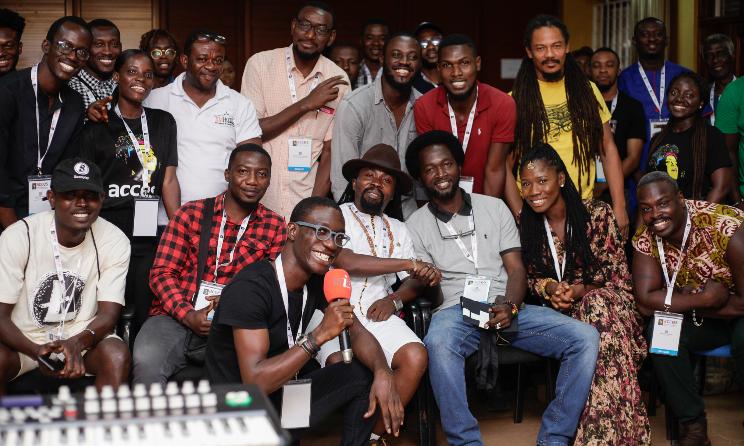
The Music In Africa Foundation (MIAF) is proud to announce its partnership with the Industrial Development Corporation (IDC) as a Strategic Implementing Partner (SIP) for its Social Employment Fund (SEF). Through this collaboration, MIAF is launching a new national programme designed to create jobs, address skills gaps, and strengthen South Africa’s creative industries — in line with the SEF’s overarching goal to generate work for the common good and build community value through employment, social contribution, and inclusive economic participation. Operating under the banner NEFCISA (National Employment Facility for Creative Industries in South Africa), the initiative will recruit and train participants, match them with host organisations, and place a minimum of 1 000 workers across the country. Key Objectives: Support employment and entrepreneurship in the creative industries. Offer skills development and training programmes. Foster partnerships between public and private creative sectors. Promote South African creativity at both provincial and national levels Foster community development through social contribution.

ACCES
ACCES

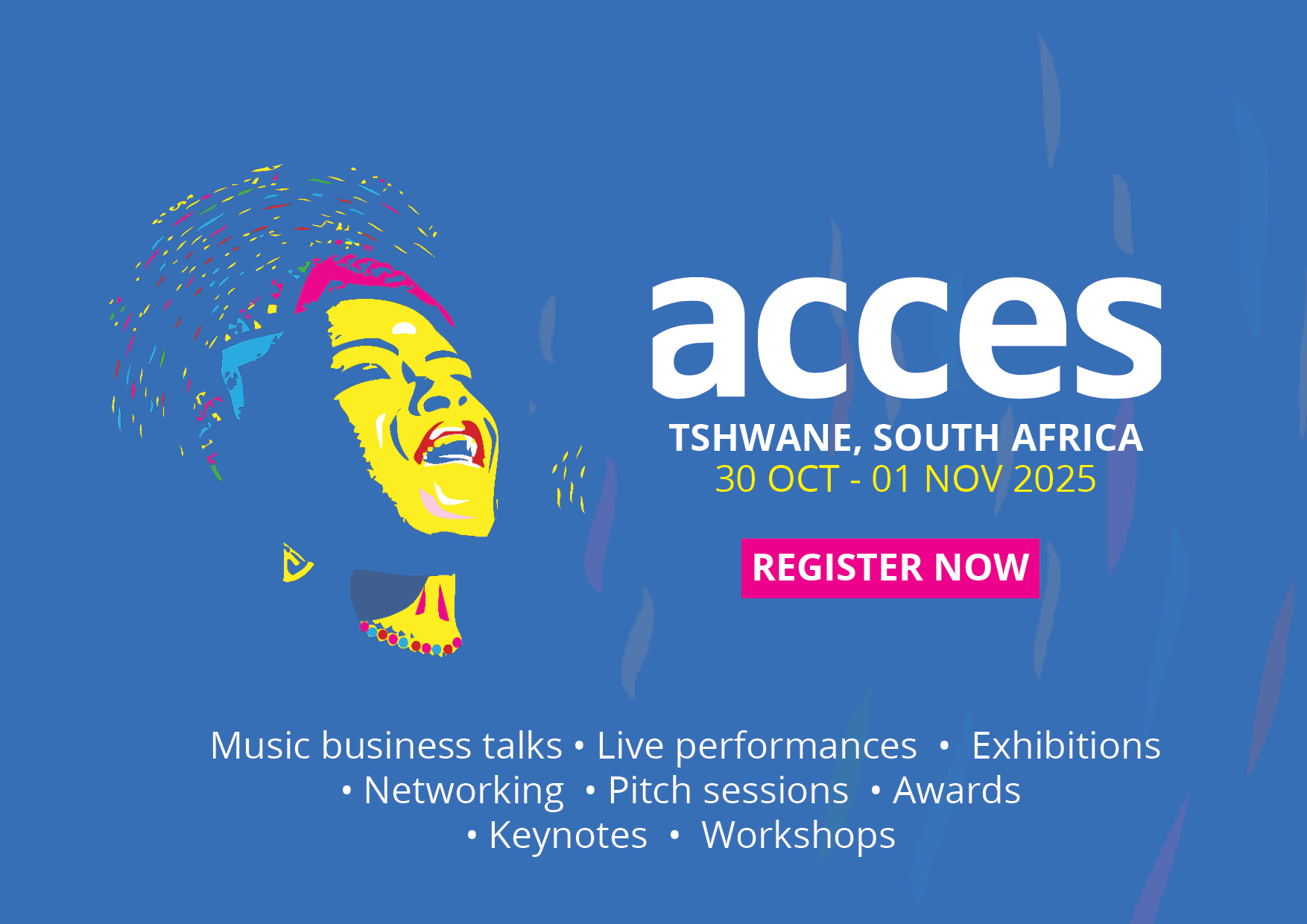
Chaque année, nous fournissons des informations générales afin de guider les participants dans la préparation de leur voyage. En plus de ce site, des mises à jour importantes seront envoyées par e-mail à tous les délégués inscrits. Assurez-vous de vous inscrire dès que possible. Pour plus d'informations, veuillez contacter [email protected] Continuez à consulter cette page pour plus d'information.  

Gender@Work
Gender@Work

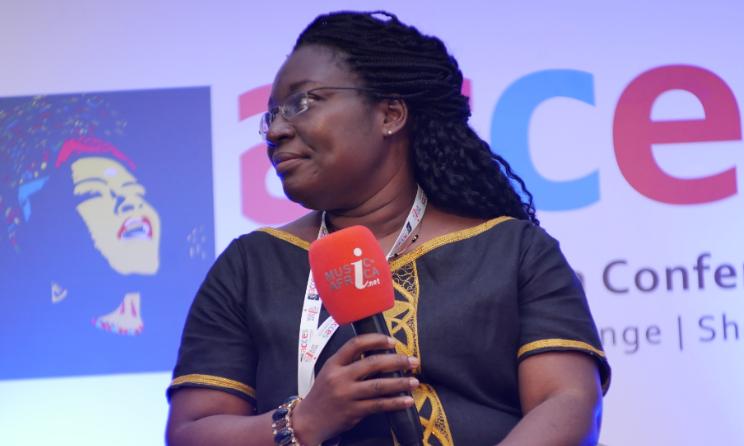
Music In Africa Gender @ Work is a three-year training programme aimed at upskilling and increasing the participation of female professionals in the African music sector. Launched by the Music In Africa Foundation (MIAF) in April 2019, the programme is connected to the MIAF’s ACCES music conference – a pan-African event held in a different African country every year. This connection enables the programme to reach new participants in a different African country every year. The programme marks the beginning of a more concerted effort by the Foundation to support the participation and inclusion of women in all facets of its programmes and the music sector in Africa as a whole. Over the three years, the programme will aim to address gender imbalances in the sector through training, lobbying, facilitating knowledge exchange and dialogues that foster the interest of women. The broader objectives of the programme are to: Provide industry training for women on critical music industry skills, focusing on: Stage management Electronic music production and recording Music business management Technical knowledge Provide an opportunity for both professional and aspiring women to benefit from the Music In Africa network and its broad range of activities in 2019, 2020 and 2021. Provide a solution-based platform in the form of a round table at ACCES with a view to identify challenges, discuss opportunities and lobby for the interests of female practitioners. Offer participants the opportunity to benefit from programmes offered by MIAF’s partners. Increase access to educational materials. Integrate participants in the broader ACCES programme to maximise experience and exposure to the industry. Record and present training materials on the www.musicinafrica.net, including but not limited to tutorials, templates and other best-practice materials. Communicate women-based themes that support the initiatives and messages of the programme. MAIN TRAINING ACTIVITIES Training in first country (Ghana): In the first year, participants will be trained on all aspects of stage management by a team of experienced stage managers from 10 to 17 November 2019. The programme will offer robust classroom training as well as practical, hands-on training in which participants will also be given the opportunity to manage various aspects of the ACCES performance programme. Training in second country: The second training iteration will take place at ACCES 2020 when the programme will diversify its course to include music production lessons and training on other music business topics. A round-table platform will also be introduced to coincide with the ACCES programme. Training in third country: The third training iteration will take place at ACCES 2021 in a different country, offering an advanced course. HOW DO YOU GET INVOLVED?  As a participant, facilitator or trainer: The programme enrolls up to 12 trainees every year. All opportunities are advertised publicly on this website, and will be added to this page. Please keep checking this page for new calls (below under UPDATES & CURRENT OPPORTUNITIES). As a partner Please contact Claire Metais at [email protected]. APPLY The call for applications for 2020 will be announced soon. The Music In Africa Gender @ Work programme is made possible with the support of the Prince Claus Fund, Siemens Stiftung and Goethe-Institut.

Sound Connects Fund
Sound Connects Fund

Pour les praticiens et les organisations culturels et créatifs opérant en Afrique australe, l’accès au financement reste un défi majeur. La pandémie de COVID-19 a également eu un impact massif sur les politiques gouvernementales, les dépenses et l’économie en général, et a vu les dépenses consacrées à la culture reléguées plus bas dans la liste des priorités. De plus, les industries culturelles et créatives citent régulièrement quatre domaines principaux où l’investissement est nécessaire pour la croissance : une visibilité accrue, la mobilité incluant l’accès à de nouveaux marchés, le financement et les structures de soutien.

Music In Africa Live

MUSIC IN AFRICA LIVE Lancé en 2020 pour une durée de 3 ans, Music In Africa Live est une initiative visant à soutenir l'écosystème de la musique africaine face aux contraintes imposées par la pandémie de COVID-19 ; le projet a été lancé par la Fondation Music In Africa (MIAF) en partenariat avec le ministère fédéral allemand des Affaires étrangères, Siemens Stiftung et le Goethe Institut. Plus de 30 aides sont disponibles dans le cadre de la troisième édition de Music In Africa Live, dans 3 catégories :  showcases, renforcement des compétences et plaidoyer, en conformité avec les modalités énoncées.

Instrument Building And Repair Project

The overarching objective of Music In Africa Foundation’s Instrument Building and Repair (IBR) project is to encourage the formalisation and professionalisation of instrument-making and repair in Africa, especially in relation to indigenous African instruments. Background In 2014, the Music In Africa Foundation (MIAF) identified as one of its focus areas for development the need to encourage young people from music and music-related sectors to consider instrument-making as a career. This need extended itself from the recognition that the making of traditional African instruments is not a widely practiced skill and seems to be limited to the older generation. Traditional African instrument makers are also few and far between, making communication and logistics between teachers and learners an obstacle. When instrument building workshops take place, budgetary constraints do not allow teachers or learners the time to explore the finer details of an instrument. Based on these observations, the MIAF designed and piloted the first IBR workshop at the Dhow Countries Music Academy (DCMA) in Zanzibar in February 2015. In 2016, the foundation received funding from the South African National Lotteries Commission to implement a much bigger version of the project in Johannesburg. The project drew participants from five African countries. 25 students from South Africa, Ghana, Senegal, Kenya and Ethiopia were trained on how to build and repair musical instruments. The instruments that they made were: Traditional Instruments: Umakhweyana and Marimba Conventional Instrument: Dulcimer guitar The workshop culminated in a traditional instruments concert at the Wits Theatre in Johannesburg. It is the MIAF’s aim to roll out similar workshops in as many African countries as possible over the next few years. Objectives Developing awareness of musical instrument makers in Africa with a view to promote their work to a wider global audience. Facilitating the sharing and transfer of skills in indigenous instruments between countries on the continent. Encouraging the formalisation and professionalisation of instrument-making and repair in Africa, especially in relation to indigenous instruments. Helping instrument makers develop their careers. Fostering the rapid monetisation and sustainable development of instrument-making and repair in Africa. Promoting constant exchange of ideas, expertise, experiences and know-how among instrument makers in Africa. Facilitating the identification of existing gaps in the field with a view to contribute new solutions. Facilitating the transfer of knowledge and skills of indigenous instruments between younger and older generations. 2020 edition The MIAF has also announced that multi-instrumentalist and instrument maker Joe Makhanza will facilitate one of the workshops on the building of the kamale ngoni instrument. Kamale ngoni is a kora-like, stringed instrument that originated in West Africa. The instrument contributed to the rise of Wassoulou music in the 1970s and 1990s. Makhanza was born in Giyani in South Africa's Limpopo province. He completed a bachelor of music degree and a post-graduate diploma in arts marketing from Wits University. He is currently completing his masters in ethnomusicology and is a part-time lecturer in African music studies at Rhodes University. He plays the kora, mbira, valiha, masenqo, xiwewe, ngoni ba and xizambi, among others. He also manufactures the aforementioned instruments. The MIAF will confirm more trainers who will join the workshops as well as the other instruments that will be featured in the 2020 IBR programme.  Apply to participate here. Connect with us on Twitter, Instagram and Facebook, and subscribe to our monthly newsletter. The Music In Africa Instrument Building and Repair project is funded by the National Lotteries Commission. It is implemented in partnership with Siemens Stiftung, Goethe-Institut, Wits Theatre and Kaya FM.

banner image

Fleur Du Cap Theatre Awards 2025 in SA: All the winners

Accueil/Non classé/Fleur Du Cap Theatre Awards 2025 in SA: All the winners

Winners across 23 categories were honoured for their outstanding contributions to the performing arts, both on and off the stage.

My Fair Lady, produced by Pieter Toerien Productions and Cape Town Opera, dominated the evening with five awards, including Best Production. Leah Mari won Best Performance by a Lead Actress in a Musical, while Graham Hopkins took Best Performance by a Supporting Actor in a Musical. The production also won for Best Set Design, awarded to Greg King, and Best Costume Design, which went to Neil Stuart Harris, Andrew Botha, and Martha Visagie.

Dean Balie won Best Performance by a Lead Actor in a Musical for his role in Ver In Die Wêreld Kittie, while Candice van Litsenborgh earned Best Performance by a Supporting Actress in a Musical for The Addams Family: The Musical. Metamorphoses won in two categories, with its cast receiving Best Performance by an Ensemble and Franky Steyn winning for Best Lighting Design.

Sylvaine Strike was awarded Best Director for Spring Awakening. Emily Child won Best Performance by a Lead Actress in a Play for her role in A Streetcar Named Desire, while Albert Pretorius took Best Performance by a Lead Actor in a Play for Othello.

Below is the full list of winners:

Best Sound Design, Original Music, Soundscape, or Live Performance

  • Neo Muyanga for original music – Manje! Manje!
  • Chantal Willie-Petersen for live performance – Unruly
  • Jannous Aukema for sound design and original music – Droomwerk
  • Kyle Shepherd for original music – Othello
  • Philip Miller for original music – NKOLI: The Vogue-Opera

Best Performance in an Opera, Male

  • Thando Zwane as Acmet – Dalinda
  • Conroy Scott as Gianni Schicchi – Gianni Schicchi
  • Conroy Scott as Enrico – Lucia di Lammermoor
  • Lukhanyo Moyake as Edgardo – Lucia di Lammermoor
  • Sandile Zitha as Ubaldo – Dalinda

Best Performance in an Opera, Female

  • Nontobeko Bhengu as Dalinda – Dalinda
  • Brittany Smith as Lucia – Lucia di Lammermoor
  • Minette du Toit-Pearce as The Princess – Suor Angelica
  • Nobulumko Mngxekeza as Sister Angelica – Suor Angelica
  • Zizipho Funzo as Governess – The Turn of the Screw

Best Performance by a Supporting Actor in a Musical or Music Theatre Show

  • Graham Hopkins as Colonel Pickering – My Fair Lady
  • André Terblanché as Josef Marais – Ver in die Wêreld Kittie
  • Brendan van Rhyn as Lurch – The Addams Family: The Musical
  • Dean Balie as Ernest Logan – Orpheus McAdoo
  • Yahto Kraft as Uncle Fester – The Addams Family: The Musical

Best Performance by a Supporting Actress in a Musical or Music Theatre Show

  • Candice van Litsenborgh as Grandma – The Addams Family: The Musical
  • Adrienne Pearce as Mrs Higgins – My Fair Lady
  • Alexis Petersen as Lucy Moten – Orpheus McAdoo
  • Bethany Dickson as Alice Beineke – The Addams Family: The Musical
  • Jenny Stead as Rosa de Miranda – Ver in die Wêreld Kittie

Best Performance by a Lead Actor in a Musical or Music Theatre Show

  • Dean Balie as Koos Heuningbek – Ver in die Wêreld Kittie
  • Conroy Scott as Orpheus McAdoo – Orpheus McAdoo
  • Craig Urbani as Henry Higgins – My Fair Lady
  • Marcel Meyer as Sweeney Todd – Sweeney Todd the Demon Barber of Fleet Street
  • Niza Jay as Emcee – NKOLI: The Vogue-Opera

Best Performance by a Lead Actress in a Musical or Music Theatre Show

  • Leah Mari as Eliza Doolittle – My Fair Lady
  • Ann Masina as Mrs Nkoli – NKOLI: The Vogue-Opera
  • Brittany Smith as Mattie Allen – Orpheus McAdoo
  • Rushney Ferguson as Kittie Jaftha – Ver in die Wêreld Kittie
  • Samantha Peo as Morticia Addams – The Addams Family: The Musical

Most Promising Student

  • Nichola Viviers – Stellenbosch University
  • Dylan Janse Van Rensburg – LAMTA
  • Elizabeth-Ann Fosu – AFDA
  • Jayden Dickson – LAMTA
  • Mfuneli Ntumbuka – CTDPS
  • Oliver Carnegie – CTDPS
  • Seth Daniel Cloete – CTDPS
  • Tshepiso Modise – AFDA

Best New South African Script

  • Tiisetso Mashifane wa Noni – Neighbourhood
  • Jennie Reznek and Mwenya Kabwe – Manje! Manje!
  • Mlindeli Zondi – Off Balance
  • Pieter Odendaal – Droomwerk
  • Rosalind Butler – Expelled

Best New Director

  • Aidan Scott – The Dumb Waiter
  • Lara Toselli – A Doll’s Life
  • Marianne Thamm – Round of Applause – South Africa Still Standing
  • Sinenhlanhla Mgeyi – Text Me When You Arrive
  • Tankiso Mamabolo – Don’t Believe A Word I Say

Best Theatre Production for Children and Young Adults

  • Pampoenpit se Groen Gevoel
  • Braam en die Engel
  • Glimmer
  • Kipper and the Olympic Flame / Vlooi en die Olimpiese Vlam
  • The Little Mermaid

Best Performance by an Ensemble

  • Awethu Hleli, Carla Smith, Carlo Daniels, Jock Kleynhans, Lyle October, Nolufefe Ntshuntshe, Tamzin Williams – Neighbourhood
  • Benjamin Stannard, Che-Jean Jupp, Gabriella Knight, Gemma Bisseker, Gerard van Rooyen, Hannah Norcott, Jasmine Minter, Jayden Dickson, Jude Bunyan, Killian Blerk, Nandipa Nyivana, Noa Duckitt, Skye Themeda Goss, Tatum Coleman, Tjaart van der Walt, Tumelo Mogashoa – Spring Awakening
  • Azola Mkhabile, Buhle T. Stefane, Emmanuel Ntsamba, Karabo Hope Banda, Lusanda Soboyise, Melusi Molefe, Mihlali Bele, Sanele Phillip, Yvonne Msebenzi – Manje! Manje!
  • Awethu Hleli, Brent Palmer, Cassiel Eaton-Winnik, Carlo Daniels, Lyle October, Matthew Vey, Nolufefe Ntshuntshe, Tamzin Williams – Metamorphoses
  • Kyla Davis, Lisa Overy, Roberto Pombo – The Agents

Best Performance in a Revue, Cabaret, and One-Person Show

  • Fiona Ramsay – Blonde Poison
  • Andrew Buckland – The Ugly Noo Noo
  • Bo Petersen – Pieces of Me
  • Erika Breytenbach-Marais – The Good Dad
  • Shannon Esra – My Left Breast

Best Puppetry Design

  • Marthinus Basson and Elana Snyman – The Addams Family: The Musical
  • Michael Curry – Disney – The Magic Box

Best Lighting Design

  • Franky Steyn – Metamorphoses
  • Denis Hutchinson – My Fair Lady
  • Mark Fleishman and Themba Stewart – Manje! Manje!
  • Niall Griffin – Spring Awakening
  • Patrick Curtis – Othello

Best Set Design

  • Greg King – My Fair Lady
  • Craig Leo – Manje! Manje!
  • Gerhard Marx – Othello
  • Jaco Bouwer – Die Vegetariër
  • Marthinus Basson and Nicolaas de Jongh – The Addams Family: The Musical
  • Patrick Curtis – Metamorphoses

Best Costume Design

  • Neil Stuart Harris, Andrew Botha, and Maritha Visagie – My Fair Lady
  • Birrie Le Roux and Sikelela Nomvete aka Mr Allofit – NKOLI: The Vogue-Opera
  • Bridget Baker – Die Vegetariër
  • Marthinus Basson – The Addams Family: The Musical
  • Michaeline Wessels – Neighbourhood

Best Performance by a Supporting Actor in a Play

  • Mark Elderkin as Emperor – Amadeus
  • Aidan Scott as Mozart – Amadeus
  • Carlo Daniels as Cassio – Othello
  • Gerben Kamper as Oupa – Droomwerk
  • Wessel Pretorius as Roderigo – Othello

Best Performance by a Supporting Actress in a Play

  • Rehane Abrahams as Mercutio and Lady Montague – Romeo and Juliet
  • Faniswa Yisa as Emilia – Othello
  • Hannah Borthwick as Nurse – Romeo and Juliet
  • Sarah Wolhuter as Stella Kowalski – A Streetcar Named Desire
  • Tinarie van Wyk Loots as Suster and Ma – Die Vegetariër

Best Director

  • Sylvaine Strike – Spring Awakening
  • Garth Tavares – The Addams Family: The Musical
  • Jaco Bouwer – Die Vegetariër
  • Steven Stead – Metamorphoses
  • Steven Stead – My Fair Lady

Best Production

  • My Fair Lady – Pieter Toerien Productions with Cape Town Opera
  • Manje! Manje! – Magnet Theatre
  • Metamorphoses – Baxter Theatre
  • Spring Awakening – Anton Luitingh and Duane Alexander (LAMTA)
  • Unruly – Empatheatre

Lifetime Achievement Award

  • Professor Temple Hauptfleisch

Encore Award

  • David Isaacs and Oscar Petersen

Innovation in Theatre Award

  • SoapBoxing
newsletter banner

Abonnez-vous à notre newsletter

Retrouvez-nous sur les réseaux sociaux
