
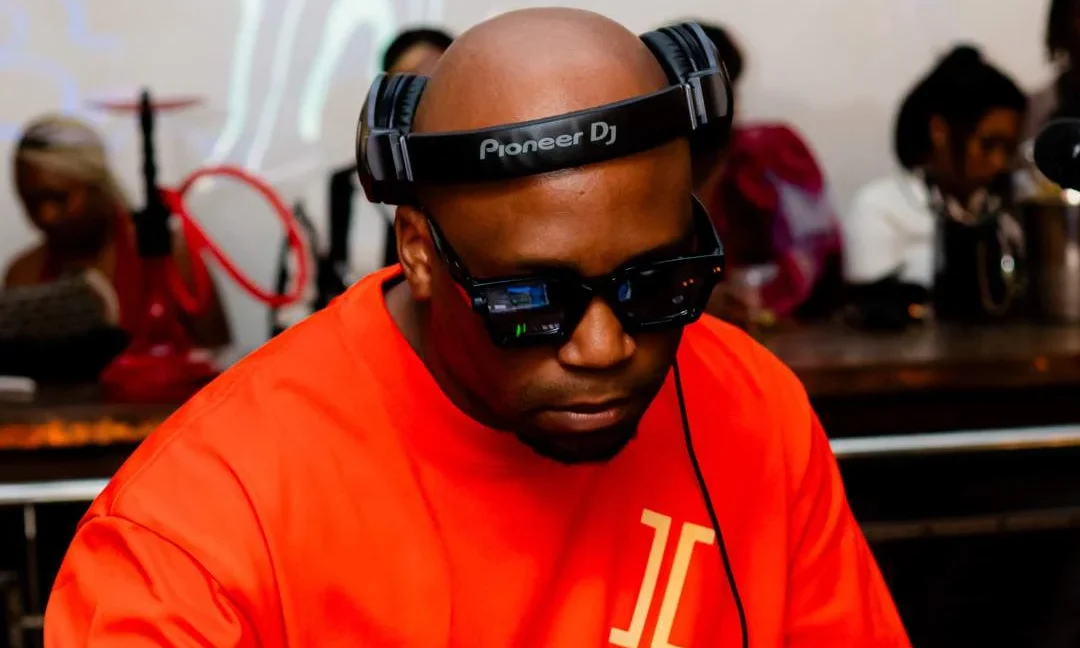

















































South African gqom producer DJ Lag has received an undisclosed amount from Will.i.am following a dispute over his 2016 hit ‘Ice Drop’.

In November last year, when the song ‘Culture’ was released, social media users castigated US singer Megan Ryte for sampling DJ Lag’s track without his permission. However, it was later established that the US award-winning producer and Black Eyed Peas frontman plagiarised the song.
DJ Lag told Music In Africa that he was happy with how things had panned out and that a favourable agreement was reached between the parties involved. The producer said the dispute had also affected his career in a positive way.
“Often people think of gqom as an underground sound,” he said. “But now there are quite a few tracks out there of majorly commercial artists using a gqom beat: Beyoncé, Kelela, Will.I.am and A$Ap Ferg, and here at home, Shekhinah. I want to keep going like this and taking the sound everywhere with no restrictions.”
The musician also offered words of advice for other musicians who may find themselves in a similar situation. “Don't be silent. Reach out to the media, let them know what is going on, post on socials. But check your facts first and obviously get the best possible team around you that can assist, such as management and lawyers.”
Following the dispute, Will.i.am issued a public apology in an Instagram video where he explained that Ryte was not to blame.
“I’m here to clear up the situation between the song ‘Culture’ and ‘Ice Drop’ by DJ Lag. First, I want to take the time to apologise to Megan Ryte from the bottom of my heart. Megan, I am truly sorry for putting you in this situation. Megan didn’t do anything wrong. The person who is at fault is myself. When the song was turned in I turned in the credit information to Megan and I obviously got the credit information wrong. I apologise to DJ Lag. You are an awesome producer, you have an amazing future ahead of you and I’m so sorry for getting the information wrong.”
Music In Africa spoke to Sevi Spanoudi, the CEO of DJ Lag’s representative agency Black Major, to gain more insight into dealing with copyright disputes.
Music In Africa: What did the process of handling the matter entail?
SEVI SPANOUDI: We fact checked quickly, in other words Lag verified it is his track, checked which label it was released on and who the composers on the track are. Then we reached out via the label and informed our legal team in the UK who look after our affairs outside of South Africa. We spoke to the various management teams and it was clear that everyone wanted the situation to be resolved amicably. We are happy with both the outcome and the process. We have a great team that acted fast and worked through the holidays to get to a good agreement in under two months.
There was a lot of noise on social media regarding the matter. What role would you say social media played in this situation?
I think the way social media reacted to this situation will likely affect artists’ decisions in using music without permission. Social media turned up the pressure to the maximum, and we are grateful to everyone who got behind Lag and posted or commented. We didn't agree with the bullying directed at Megan Ryte, and Lag didn’t repost any such comments.
Why do you think big names often copy music from smaller artists?
In my career alone, there have been countless such stories. While we condemn those who take or steal, artists also need to take some responsibility to educate themselves around issues of copyright, and to ensure proper administration of their paperwork in order for the ‘taking’ to be harder. A big part of the role we play as an agency is to make sure the paperwork is done meticulously and in advance. It is an artist’s legacy and a song will live way past our lifetime.
Do you think regulations around protection of music in South Africa are sufficient?
The law and structures that protect copyright differ according to jurisdictions. In the example of Lag's situation with Distruction Boyz and the song ‘Omunye’, the case remains unresolved after three years. Mediation was completed 16 months ago with SAMRO [the Southern African Music Rights Organisation], and still no resolution has been finalised. RiSA [the Recording Industry of South Africa] awarded the track Song of the Year at the 2019 SAMAs [South African Music Awards], despite being formally notified that there was a current infringement claim against Distruction Boyz. We strongly feel that structures such as RiSA should responsibly address these concerns, and not override or ignore such a crucial claim. We could have chosen to go to court, but this is prohibitively expensive, and we didn’t have the resources available. Three years later, we may now have taken that route, but you have to ask how many artists in our local music industry are in the privileged position to make these choices.
What are the legal costs involved in an artist making a claim against copyright infringement?
There are different stages of a copyright infringement claim. Ideally, you want to resolve it early on without having to go to court. Having a good legal team to mediate and resolve is important and this often means steep legal fees. The best advice I can give is to keep your paperwork tidy, which could make a copyright infringement claim faster to resolve.
What can the average musician, independent or without the availability or resources, do to best protect their music from being ‘stolen’?
It starts with the paperwork. Make sure your agreements with collaborators are signed prior to the release and register the tracks with collection societies. I would advise strongly against sharing music before it is finished, or sharing as a download over email, WhatsApp and so on. Rather upload on a private link and share like that.
[video:https://vimeo.com/479625446 width:744 height:446 autoplay:0]


Most popular

Top Naija songs of 2026
31 Mar 2026

Top amapiano songs of 2026
16 Feb 2026

Top Afrobeats songs of 2026
19 Mar 2026
Call for applications: ACCES 2026 Emerging Artist Spotlight Competition
01 Oct 2026
AFRIMA 2026: All the winners
12 Jan 2026
CAPASSO backs global principles for fair generative AI music licensing
06 Oct 2026
Disclaimer: Music In Africa provides a platform for musicians and contributors to embed music and videos solely for promotional purposes. If any track or video embedded on this platform violates any copyrights please inform us immediately and we will take it down. Please read our Terms of Use for more.

Subscribe to our monthly Newsletter
Follow us on social media


Please log in to post a comment.