









































Music festivals have a knack for drawing people into each other’s orbits, intersecting the imaginary borders outlined by differences in culture, language and age. For audiences, festivals not only provide stellar entertainment but also an opportunity to gain cross-cultural awareness. For artists, they provide an arena to show off new material, engage with fresh audiences and network with industry insiders and fellow artists – while at the same time earning performance revenue and building a name for themselves.
This article provides a guide to music festivals in South Africa.
Current context
Historically, music festivals have been an important fixture of the South African entertainment industry.[1] In fact, the South African Cultural Observatory (SACO) created a tool – the South African Festival Economic Impact Calculator (SAFEIC) – specifically to calculate the economic impact that festivals have on host economies. Various criteria like local job creation, visitor spending and outside funding/sponsorship illustrate the numerous ways local economies can benefit from hosting these events.[2]
However, the COVID-19 pandemic has wreaked havoc on the live music festival scene. A collaborative study between King’s College London (UK) and Rhodes University (South Africa) has found that only 43 of the 74 cultural festivals that took place in 2019 were held in 2020.[3] Many adapted strategies such as restricting the number of attendants or moving events online. However, some festivals such as the world-renowned Cape Town International Jazz Festival, which remains suspended, are yet to recover from this near-critical blow.
Still, with an increased vaccine rollout and clearer event guidelines beginning to emerge, musicians and festival organisers around the country are hoping that 2022 sees a return to form for this critical sector of the industry.
How to get booked for festivals: An organiser’s perspective
Securing a slot on the line-up of a festival is a good indicator of an artist’s commitment, as it requires musical skill, some level of popular appeal, discipline and proficiency for administrative tasks (although many professional musicians will enlist the services of a manager to deal with the festival submissions process).
Ilse Roberts, one of the founders of the popular Smoking Dragon Festival, says that while talent alone is a huge drawcard when booking an act, it’s also important that artists provide a professional portfolio or electronic press kit (EPK) through an appropriate medium, such as email.
According to Roberts, festivals in South Africa tend to run on a “shoe-string budget” and therefore have to book acts with enough commercial appeal to ensure that the festival breaks even and survives to see another year.
“Organisers are hard-pressed for cash and literally have to judge each act according to how much a return on the investment will be made,” she says. “If there was a portion of [government] funds put aside for artists that are unknown, the industry would begin to grow and flourish as line-up choices would be made according to merit, not money.”[4]
This is why, according to Roberts, artists looking to get booked for music festivals should ensure they conduct their submissions process professionally from the get-go. This provides some form of guarantee to the organisers that this conduct will translate to other areas, like advertising your participation to your fan base, and eventually putting on a professional show that adds to an attendee’s experience of the entire event.[5]
Artists should note that the performance fees will vary depending on their profile and the budget of the particular festival concerned. Therefore, there may be occasions where artists will need to decide whether accepting a lower-than-usual fee could be offset by the benefits of playing the festival – such as increased exposure and the opportunity to sell merchandise at the event.[6]
[video:https://www.youtube.com/embed/He1nIGmh7TI width:744 height:446 autoplay:0]
Video: The Smoking Dragon Festival is a popular event staged in the Drakensberg.
How to prepare for festivals: An artist’s perspective
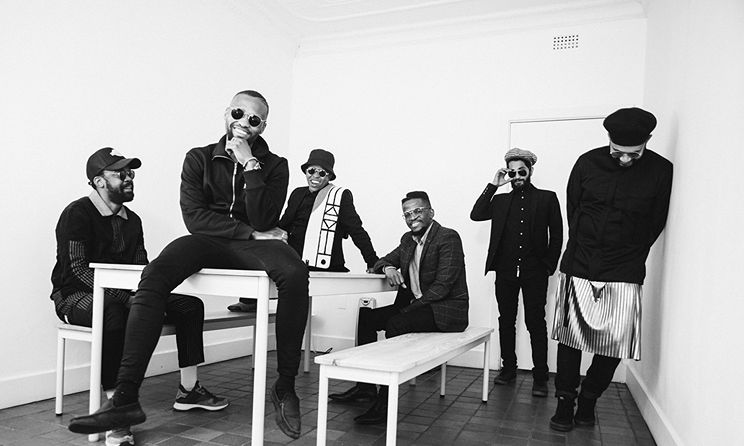
Sun Xa Experiment takes their name and inspiration from the music of two jazz greats, Ndhiko Xaba and Sun Ra, and the strong bond the two stalwarts formed when the former was in exile overseas. Officially formed in 2016 when the group performed a tribute to Xaba at University of KwaZulu-Natal’s Centre for Jazz and Popular Music, the group has gone on to play at major festivals around the country.
Buyisiwe Njoko, the group’s lead vocalist, says they have consistency and preparation to thank for being in the foreground of festival organisers’ minds when it comes to booking acts for their line-ups: “We’ve learnt to constantly knock on doors. If doors don’t open … we make our own doors.”[7]
Njoko underlines the importance of ensuring you form good relationships with festival organisers and technical crews. Word travels fast in the industry and an artist who has the reputation of being a pleasure to work with could find themselves becoming a constant feature on the country’s festival circuit.[8]
This is partly achieved by “being accommodating as a band.” Sun Xa Experiment travels with their own sound engineer, who knows their sound intimately and can effectively communicate their needs to the festival’s sound team. If this is not possible, ensure that you send a detailed tech rider before you arrive at the venue. Njoko also emphasises the importance of researching the festival beforehand, by finding out information like previous acts that have played there, what weather to expect on the day, and what hospitality facilities are offered by the venue. This preparation can translate to a unique and memorable performance that creates a positive experience for both the artist and organiser.[9]
[video:https://www.youtube.com/embed/4aQTs8nt2VA width:744 height:446 autoplay:0]
Video: Sun Xa Experiment performing ‘Bayede’ at Endless Daze 2019.
An overview of music festivals in South Africa
Below is a rundown of some of the major music festivals hosted in each of South Africa’s nine provinces:[10]
Eastern Cape
- Where and when: Gqeberha, December TBC.
- Size: Approximately 25 000.
- The Ebubeleni Music Festival, now 10 years old, is Nelson Mandela Bay’s flagship event. It’s an inner-city event held over a four-day period, with a different theme every day. Last year’s festival attendance was limited to 2 000 due to COVID-19 restrictions.
- Previous years have seen performances from the likes of Moonchild Sanelly, Zahara, Mi Casa, Emtee, Makhadzi, and jazz legend Sizwe Zako.
Free State
Macufe African Cultural Festival
- Where and when: Bloemfontein/Mangaung, October TBC.
- Size: Approximately 140 000.
- The Macufe African Cultural Festival sees the usually sleepy town of Bloemfontein (now Mangaung) host this multifaceted 10-day event. The main event – which includes musical styles spanning from hip hop to jazz, gospel, classical, kwaito, rock and R&B – is slowly becoming a significant stamp on the international music calendar.
- Previous years have seen both rising and well-established local music artists sharing the stage with international stars like Brandy, Tiwa Savage and Lady Zamar.
Gauteng
- Where and when: Johannesburg, December TBC.
- Size: Limited at 500 attendees.
- Basha Uhuru Creative Festival is an annual celebration of the country’s creative talent. The past nine years (before the pandemic) have seen it held in June at Constitution Hill. However, in 2020, the festival morphed into the Basha Uhuru Creative Uprising. This consisted of a three-day event (streamed online) showcasing music, theatre, film, art, design, poetry and dance.
- The musical aspect of the festival includes both educational workshops, like the BridgeFire Workshop, and performances from artists such as Mx Blouse, Sun-El Musician and Sio.
KwaZulu-Natal
- Where and when: The Drakensberg, 15, 16, 17 April 2022.
- Size: Approximately 1 500.
- What started out as a small New Year’s Eve celebration at the Amphitheatre Backpackers in the Drakensberg found itself evolving into one of the country’s most beloved music festivals. Born 13 years ago, Smoking Dragon – with its magnificent natural setting – has seen a sturdy rise over the years. It usually features a diverse line-up of live and electronic musical acts.
- Previous acts have included the likes of PHFAT, Haezer and Black Math.
Limpopo
- Where and when: Phalaborwa, February TBC.
- Size: Approximately 5 000.
- Launched in 2000, the Annual Marula Festival celebrates the province of Limpopo’s culinary culture. Its main drawcard is two open-air concerts: the Youth Festival and Jazz Festival.
- Previous events have seen performances by local headliners like Lira, Penny Penny, and Kurt Darren.
Mpumalanga
- Where and when: Lothair, 3-5 March 2022.
- Size: Approximately 2 500
- This three-day outdoor festival is known for being the country’s “most laidback” festival. Mieliepop is held annually in a “oneof a kind venue complete with lakes, swimming pools, caves, green lawns and luxurious ablution facilities.” The 2022 event included is some 60 musical acts performing across four stages.
- The Shabs, Albert Frost, Tidal Waves and Crimson House are a few of the many acts that have graced this well-known event on the South African musical calendar.
Northern Cape
- Where and when: Quaggafontein, 25 April-1 May 2022.
- Size: Approximately 13 000.
- Born in the Tankwa Karoo in 2007, this event is the African continent’s answer to the legendary Burning Man Festival in the US. Much like its sister festival, AfrikaBurn is held in the desert and invites participants to construct elaborate art installations, usually in line with a particular theme for the year.
- Although there aren’t any official stages or line-ups, some attendees tend to include musical performances as a part of their installations. The lack of formal technical infrastructure generally makes this festival more feasible for electronic artists.
North West
Aardklop National Arts Festival
Where and when: Potchefstroom, late September TBC.
- Size: Approximately 10 000.
- This 24-year-old event is one of a few in the country that focuses on celebrating Afrikaans visual arts, theatre and music. Aardklop usually takes place over a number of days and attracts about 700 artists from different disciplines.
- Past musical guests have been renowned Afrikaans acts like Koos Kombuis, Juanita du Plessis and Karen Zoid. The festival also hosts a variety of opera, cabaret and classical music performances.
Western Cape
- Where and when: Silwerstroom Resort, November TBC.
- Size: Approximately 2 500.
- Endless Daze started in 2016 as a celebration of neo-psychedelia and the burgeoning psych-rock scene that has swept the country in recent years. The sea-side camping festival boasts a scenic backdrop to complement its vast array of alternative local and international acts.
- Some previous local acts include BLK JKS, BCUC and Sun Xa Experiment. International bands have included Yak, Thee Oh Sees and Moon Duo.
Live music festivals fulfil a critical role in the South African entertainment landscape, contributing to host economies and providing opportunities for the country’s artists to shine in front of large audiences. Artists at any stage of their careers can benefit enormously from the exposure provided by festival appearances, while at the same time accruing extra revenue streams in the form of performance fees and opportunities for selling merchandise to new fans in new areas of the country.
Resources and citations
- [1] South African Cultural Observatory. (2021). “Measuring and Valuing SA’s Cultural and Creative Industries”. Accessed on January 27, 2022: https://www.southafricanculturalobservatory.org.za/article/the-sa-cultural-observatory-measuring-and-valuing-sa-s-cultural-and-creative-industries
- [2] Snowball, J. (2021). “Join Future Festivals South Africa to map new possibilities for Festivals in the Age of Covid-19”. South African Cultural Observatory. Accessed on January 27, 2022: https://www.southafricanculturalobservatory.org.za/article/join-future-festivals-south-africa-to-map-new-possibilities-for-festivals-in-the-age-of-covid-19
- [3] Bambalele, P. (2021). “Pandemic casts a pall over flagship music festivals”. Sowetan Live. Accessed on January 27, 2022: https://www.sowetanlive.co.za/entertainment/2021-01-19-pandemic-casts-a-pall-over-flagship-music-festivals/
- [4] Original interview for Music In Africa with Ilse Roberts, Co-Founder of Smoking Dragon Music Festival: January 20, 2022.
- [5] Ibid.
- [6] Ibid.
- [7] Original interview for Music In Africa with Buyisiwe Njoko, Lead Vocalist of Sun Xa Experiment: January 12, 2022.
- [8] Ibid.
- [9] Ibid.
- [10] Kinuthia, P. (2019). “Popular festivals in South Africa that should be on your bucket list”. Briefly. Accessed on January 27, 2022: https://briefly.co.za/32485-popular-festivals-south-africa-bucket-list.html
This article is part of the Revenue Streams for African Musicians project, supported by UNESCO’s International Fund for Cultural Diversity in the framework of the UNESCO 2005 Convention on the Protection and Promotion of the Diversity of Cultural Expressions, the Siemens Cents4Sense programme, Siemens Stiftung, Goethe-Institut, the National Arts Council of South Africa and Kaya FM.
Editing by David Cornwell and Kalin Pashaliev


Most popular

Top Naija songs of 2026
31 Mar 2026

Top Afrobeats songs of 2026
19 Mar 2026

Top amapiano songs of 2026
16 Feb 2026
AFRIMA 2026: All the winners
12 Jan 2026
Visa appoints Fally Ipupa as face of Visa Pay in Democratic Republic of Congo
23 Sep 2026
Benin: SIMA to hold third edition in November
25 Sep 2026
Disclaimer: Music In Africa provides a platform for musicians and contributors to embed music and videos solely for promotional purposes. If any track or video embedded on this platform violates any copyrights please inform us immediately and we will take it down. Please read our Terms of Use for more.

Subscribe to our monthly Newsletter
Follow us on social media


Please log in to post a comment.