














































Fendika with Melaku Belay
Bands /groups, Clubs
Profile added by Stanley Gazemba on 22 Sep 2015

Addis Ababa, Ethiopia
2008
Fendika with Melaku Belay
BIO
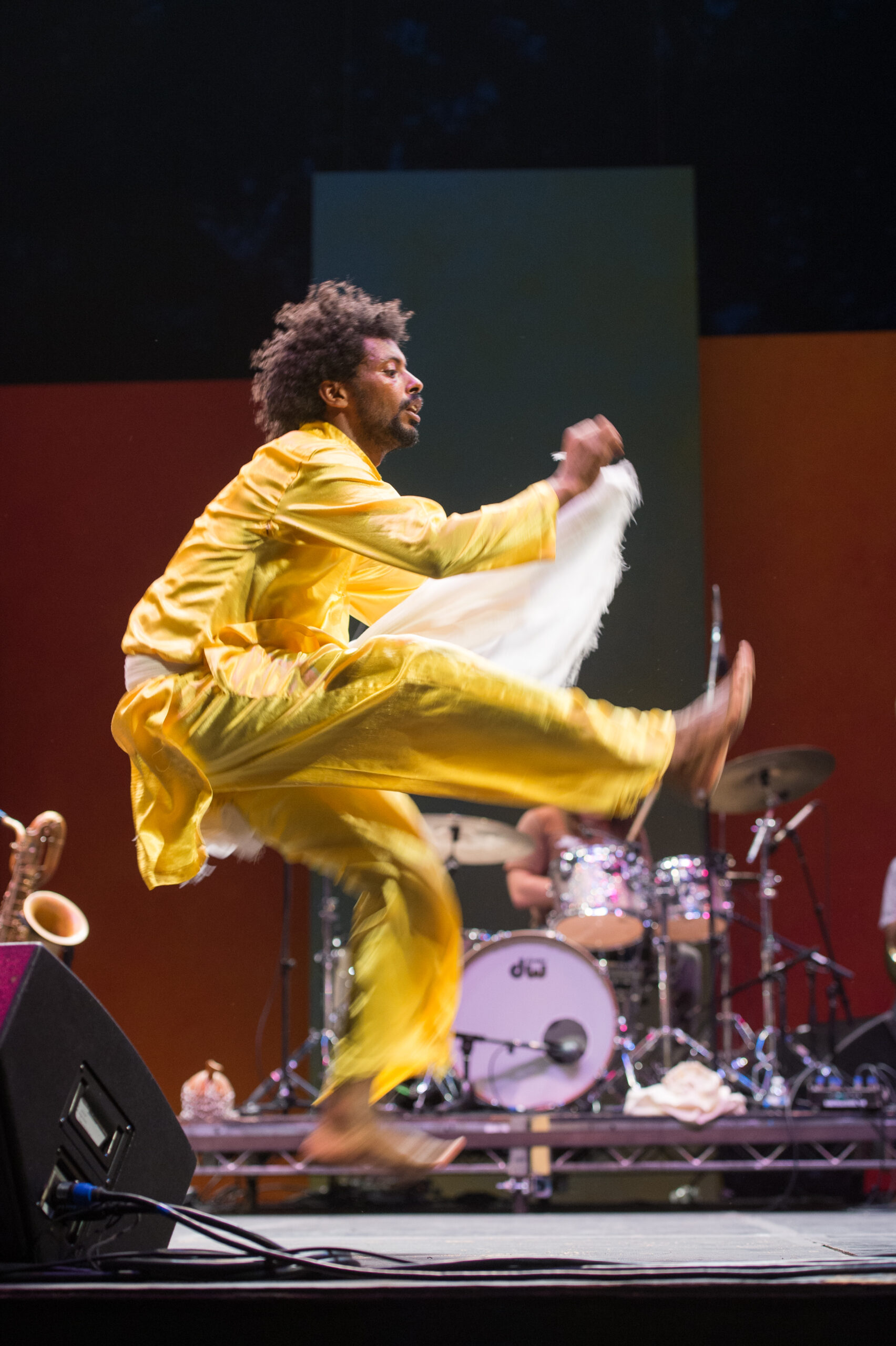
Fendika, a troupe of the most accomplished azmari musicians and dancers from Addis Ababa, draws deeply from the well of Ethiopia’s bardic tradition while adding creative movements and sounds that revitalize their ancient artistic forms. Passionately committed to the preservation and development of traditional culture, group leader and dancer Melaku Belay has established two traditional performing groups – the smaller elite group Fendika and the 12-member Ethiocolor.
Fendika features seven performers – two dancers, two singers, and instruments including kebero drums, masenko (a one-stringed bowed fiddle), and krar (a five- or six-stringed lyre). Founded in 2009 by Melaku Belay, Ethiopia’s leading dancer and a respected cultural ambassador, the ensemble is based at Melaku’s renowned music club Fendika Azmari Bet in the Kazanchis neighborhood of Addis Ababa. In Ethiopian culture, an azmari bet is a traditional house of music where people come to be entertained, informed, and sometimes playfully insulted by the azmari who serve as current events commentators while they dance, sing, and play for tips.
Melaku is a virtuoso interpreter of eskista, a traditional Ethiopian trance dance of athletic shoulder movements that presage hip hop movements of breaking and popping. Now a renowned cultural ambassador and the founding president of the Ethiopian Dance Association (est. 2018), Melaku grew up as a street kid, learning many regional dances of Ethiopia through participation in religious festivals such as Timqat, folk ceremonies, and everyday activities in Addis Ababa and the countryside where music and dance are a vital part of cultural and spiritual expression. Melaku has traveled throughout Ethiopia to learn the dance traditions of the country’s 80 tribal groups. He has also brought dancers and musicians from remote rural areas to Addis Ababa to showcase their work. The musicians and dancers of Fendika present a cultural journey starting in the highlands of Tigray, Wollo, Gonder, and Gojam, also including dances from the Somali and Afar regions and southern Ethiopian dance forms from the Gurage, Wolaita, and Konso traditions.
In 2011 Melaku won the Alliance Ethio-Francaise (Addis Ababa) award for dance excellence. In 2015 he was named as a Chevalier dans l’Ordre des Arts et des Lettres, in recognition of his exceptional artistic career, by the French Ministry of Culture and Communications - an extremely prestigious honor. In 2016, Melaku was nominated, along Mulatu Astadke and Samuel Yirga, for the nationwide DireTube Award for introducing Ethiopian music to the world. In 2017, Melaku received a globally competitive grant from UNESCO’s International Fund for the Promotion of Culture, to produce an azmari music festival in Addis Ababa. And in 2018, Melaku was one of the top three nominees for Ethiopia’s Person of the Year Award, in the category of Bringing Global Recognition for Ethiopia.
Melaku and Fendika also extend their base of tradition to new areas of musical exploration, developing strong performance partnerships with Ethiopian jazz bands Addis Acoustic Project and the US-based Debo Band, as well as international groups such as Le Baroque Nomade, Ukandanz, Akalé Wubé, Arat Kilo, and especially European punk band The Ex. The group has performed with legendary Ethiopian singer Mahmoud Ahmed and begena player Alemu Aga, while Melaku has collaborated with Éthiopiques founder Francis Falceto, Italian musicians Saba Anglana and Debora Petrina, Italian saxophonist Enzo Favata, among many others. Fendika has appeared in Scandinavia, France, Spain, Mali, Tanzania, Holland, Belgium, Germany, Italy, the Czech Republic, Austria, Qatar, India and United Arab Emirates; they rocked the Roskilde Festival in Denmark in July 2014, earning a rave review. Members of the group toured the US in 2011, 2012, and 2013 with stops at the Lowell and Richmond Folk Festivals, the International Festival of Arts and Ideas, and Kennedy Center as well as Lincoln Center where their performance received great acclaim from the New York Times. Ethiocolor performed as a showcase band at the prestigious Womex Festival in October 2014 and toured Europe twice during 2015 with The Ex, returning to Germany and Scandinavia in August 2015. Fendika/Ethiocolor performed in Israel for the Jerusalem Sacred Music festival in September 2015. The group was a highlight at globalFEST, the premier world music showcase in New York, in January 2016. Later that year in August and September, they returned to the US for a 14-city tour. In November 2016, Fendika also toured Europe with the Ex. In 2017, Fendika was invited to perform at the African Music Festival in Tel Aviv (January), Israel, Glatt and Verkehrt Festival in Austria (July), and the UNESCO-Katara Cultural Diversity Festival in Doha, Qatar (October). 2018 so far has seen Fendika at World Sacred Spirit Festival, Jodhpur, India (February) and Barzakh Festival, Abu Dhabi, UAE (February/March), and a 12-city tour of the USA. In April 2018 Melaku shared the stage with the legendary Mahmoud Ahmed and Girma Beyene at Banlieuse Bleues Festival in Paris. In 2019, Fendika went on a European tour with the Ex in celebration of the latter’s 40th anniversary.
Fendika has compiled three CDs of their music: Addis Tradition (2013), Ethiocolor (2014) produced by Selam Sounds, and Birabiro (2016) by Terp Records. The video Ethiocolor 360◦ was selected as one of the top 15 of 2015 by OkayAfrica. Roots World selected Birabiro as their Music of the Month for August 2017.
Fendika performances run from 45 minutes to 1 hour 15 minutes, depending on the venue requirements. Their show builds in sonic and dance intensity, often culminating in an exciting interaction as Fendika members invite the audience to join the dance. Fendika is deeply committed to engagement and interaction with the audience. They love to offer workshops for all ages before or after performances, to teach their dance steps, musical notes, rhythms, and the history and background of Ethiopian traditional music and dance. Fendika has experience from festivals of the US and UAE as well as in educational programs in France in participating in “World Sounds” or “World Dance” workshops on stage, featuring musicians from several cultures who demonstrate their art and then exchange and collaborate resulting in a group performance on stage. They are also very skilled at participating in panel discussions on topics such as the role of tradition in contemporary culture, also inviting questions and observations from the audience.
Fendika members:
Melaku Belay, dance; Emebet Woldetsdik , dance; Meselu Abebaye, kebero drums; Sentayehu Tadesse, krar; Habtamu Yeshambel, masenko; Robel Solomon, bass krar; Wude Tesfaw, vocals; Elias Ahmed, vocals
For more information see:
https://fendika.org/fendika-touring-index
https://www.reverbnation.com/melakubelay
https://www.youtube.com/user/melakufendika/videos
https://www.youtube.com/channel/UCJc3N9Lk-0hxZMDIw1_fqqw/featured?view_as=subscriber
[email protected]
Discography
2013 Melaku’s Fendika – Addis Tradition. Self-produced music CD
2014 Ethiocolor. Selam Productions, music CD review: http://www.mixedworldmusic.com/recensies/?id=952
2015 Lale Guma/Addis Hum. 7 inch single; Terp Records
2016 Melothesia Aethiopica –XVIII-21. Le Baroque Nomade collaboration with Fendika. CD, 8 tracks
2016 Birabiro. Terp Records, music CD.
Filmography
2007 Dancing Addis Ababa. Itsushi Kawase. UNESCO/Norway Funds-in-Trust Project
2009 Under African Skies. BBC documentary
2010 Le Baroque Nomade en Ethiopie: À La Recontre Des Azmaris. Gregoire Mercade. Kanjil/Cogitoergovideo
2011 Ahun. Zeleman Productions and Melaku Belay
2013 Random Acts BBC Channel 4. Mango Films, Chris Pencacowski
Review: http://www.afropop.org/11777/glorious-video-from-addis-ababa-ethiopia/
2013 Ethiopian TV feature about Melaku Belay
2014 Jamming Addis. Outremer Films 2014; 80 mins.
2014 Melaku. Ammanuel Communications; 70 mins., a documentary with commentary from prominent musicians and musicologists.
2015 Ethiocolor 360. Selam Productions and Stocktown Films. Africa’s first 360 degree video
2017 Addis Fortune interview with Melaku Belay, https://www.youtube.com/watch?v=Y7qjeGQX-3o
2017 Ethiopian Broadcast Corporation interview with Melaku Belay, https://www.youtube.com/watch?v=G3AdhWET_G4
2018 ENN Entertainment interview with Melaku Belay, January 27
2018 ENA.GOV.ET interview with Melaku Belay, May 1
2018 ETV interview with Melaku Belay, June https://www.youtube.com/watch?time_continue=99&v=Njr0aAjmL8A
2018 Linkup Addis, “Closeup-Interview with Melaku Belay,” by Kidus Tamiru, December 1
https://linkupaddis.com/closeup-interview-with-melaku-belay/?fbclid=IwAR0UoiFkqZB6Ze7qBdYjkrON1aCimRWeNSxyH0YHdTBvBU7jY_zKNXXoreE
2019 BBC interview with Melaku Belay: “The Comeback of Ethiopia’s Satirical Singers,” February 4
https://www.bbc.co.uk/programmes/p06zx41p?ocid=socialflow_facebook&fbclid=IwAR2nh2plLBri8ZoP53-1kt-5rYd6dxIeYz_fjPx1XWkVDQv7BvFoBVU8rx4
Photos
No photos available
Music
Videos
Social Networks and Websites


Disclaimer: Music In Africa provides a platform for musicians and contributors to embed music and videos solely for promotional purposes. If any track or video embedded on this platform violates any copyrights please inform us immediately and we will take it down. Please read our Terms of Use for more.



