













NEFCISA
NEFCISA

The Music In Africa Foundation (MIAF) is proud to announce its partnership with the Industrial Development Corporation (IDC) as a Strategic Implementing Partner (SIP) for its Social Employment Fund (SEF). Through this collaboration, MIAF is launching a new national programme designed to create jobs, address skills gaps, and strengthen South Africa’s creative industries — in line with the SEF’s overarching goal to generate work for the common good and build community value through employment, social contribution, and inclusive economic participation. Operating under the banner NEFCISA (National Employment Facility for Creative Industries in South Africa), the initiative will recruit and train participants, match them with host organisations, and place a minimum of 1 000 workers across the country. Key Objectives: Support employment and entrepreneurship in the creative industries. Offer skills development and training programmes. Foster partnerships between public and private creative sectors. Promote South African creativity at both provincial and national levels Foster community development through social contribution.

ACCES
ACCES

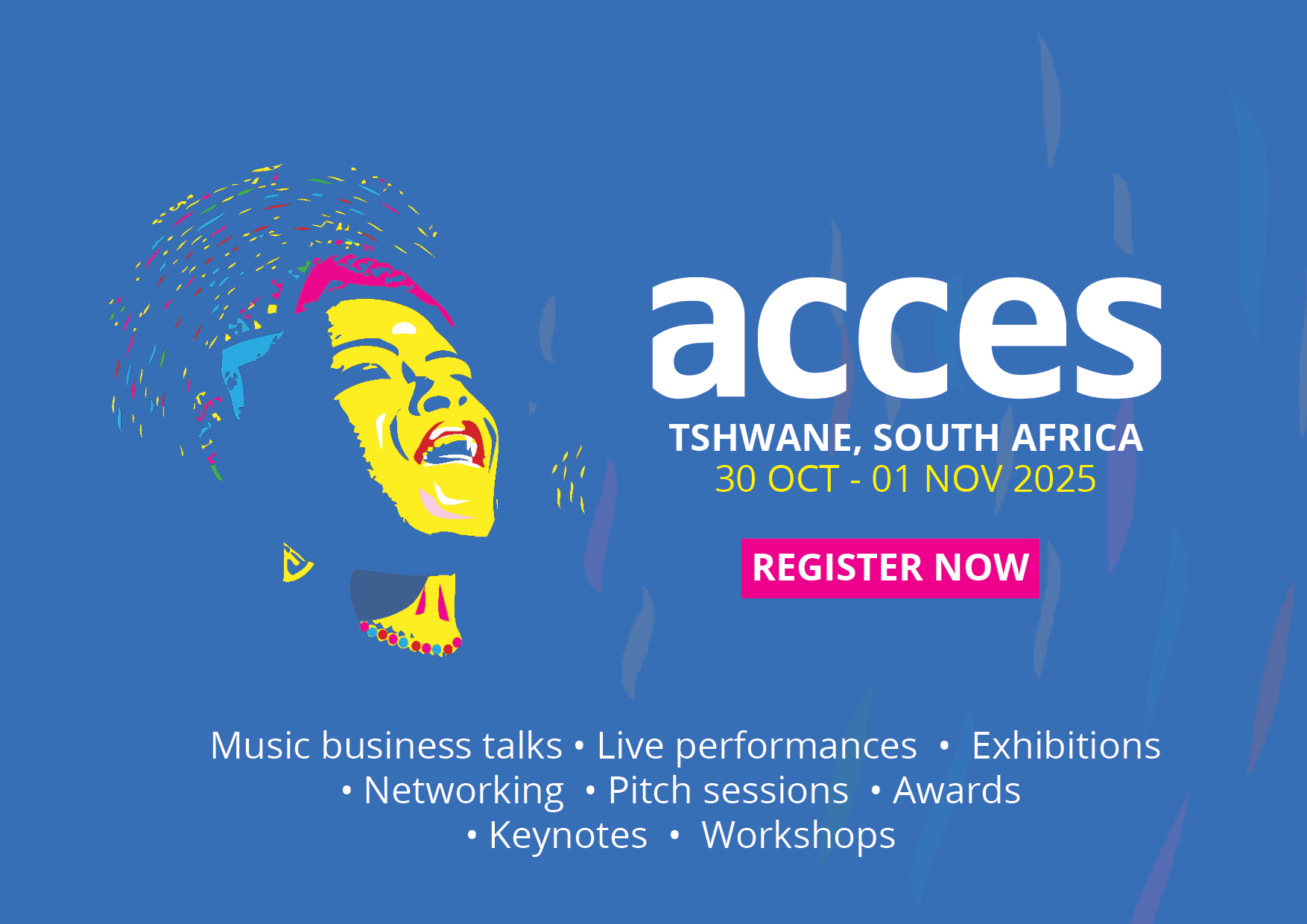
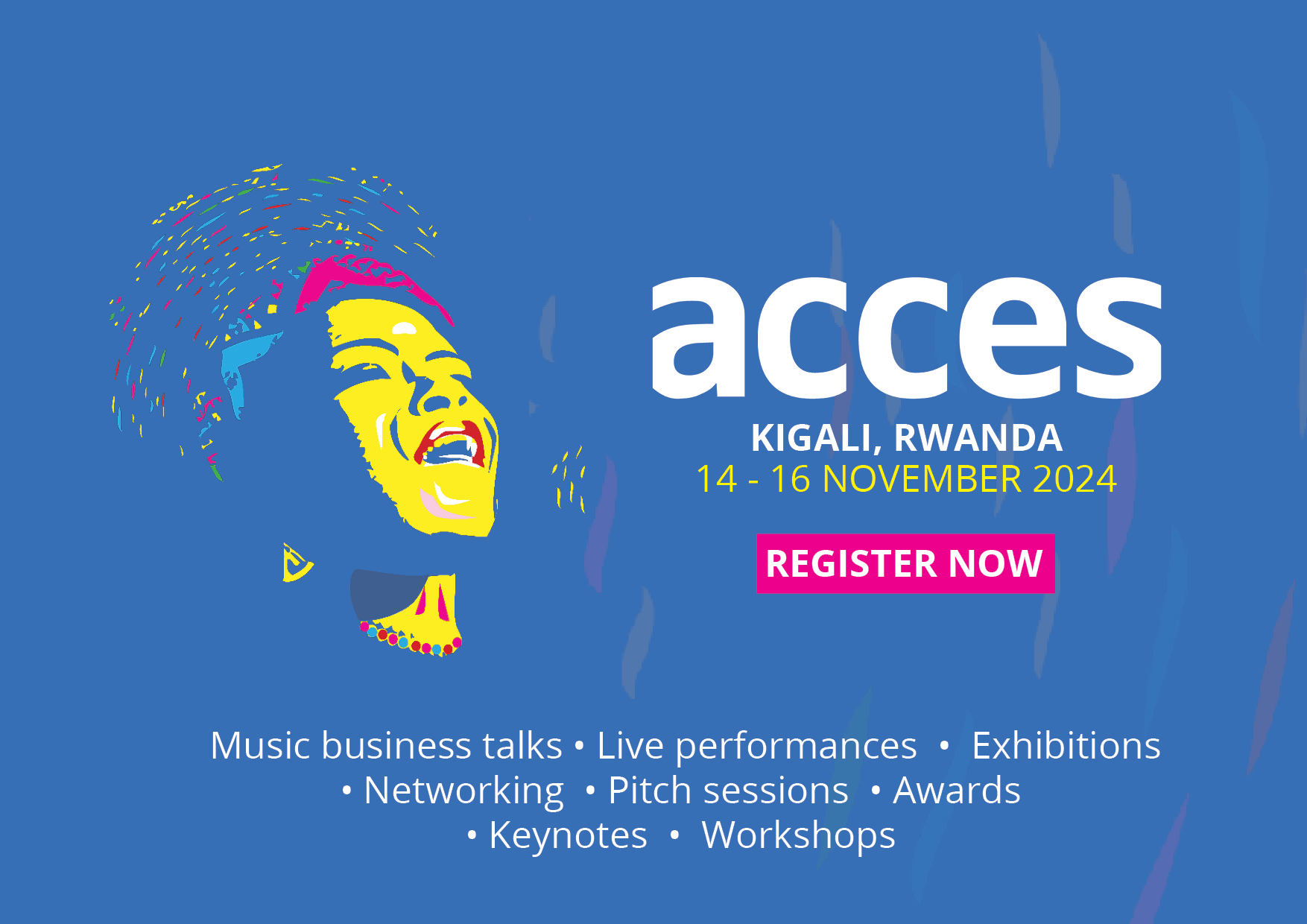
Chaque année, nous fournissons des informations générales afin de guider les participants dans la préparation de leur voyage. En plus de ce site, des mises à jour importantes seront envoyées par e-mail à tous les délégués inscrits. Assurez-vous de vous inscrire dès que possible. Pour plus d'informations, veuillez contacter [email protected] Continuez à consulter cette page pour plus d'information.  

Gender@Work
Gender@Work

Music In Africa Gender @ Work is a three-year training programme aimed at upskilling and increasing the participation of female professionals in the African music sector. Launched by the Music In Africa Foundation (MIAF) in April 2019, the programme is connected to the MIAF’s ACCES music conference – a pan-African event held in a different African country every year. This connection enables the programme to reach new participants in a different African country every year. The programme marks the beginning of a more concerted effort by the Foundation to support the participation and inclusion of women in all facets of its programmes and the music sector in Africa as a whole. Over the three years, the programme will aim to address gender imbalances in the sector through training, lobbying, facilitating knowledge exchange and dialogues that foster the interest of women. The broader objectives of the programme are to: Provide industry training for women on critical music industry skills, focusing on: Stage management Electronic music production and recording Music business management Technical knowledge Provide an opportunity for both professional and aspiring women to benefit from the Music In Africa network and its broad range of activities in 2019, 2020 and 2021. Provide a solution-based platform in the form of a round table at ACCES with a view to identify challenges, discuss opportunities and lobby for the interests of female practitioners. Offer participants the opportunity to benefit from programmes offered by MIAF’s partners. Increase access to educational materials. Integrate participants in the broader ACCES programme to maximise experience and exposure to the industry. Record and present training materials on the www.musicinafrica.net, including but not limited to tutorials, templates and other best-practice materials. Communicate women-based themes that support the initiatives and messages of the programme. MAIN TRAINING ACTIVITIES Training in first country (Ghana): In the first year, participants will be trained on all aspects of stage management by a team of experienced stage managers from 10 to 17 November 2019. The programme will offer robust classroom training as well as practical, hands-on training in which participants will also be given the opportunity to manage various aspects of the ACCES performance programme. Training in second country: The second training iteration will take place at ACCES 2020 when the programme will diversify its course to include music production lessons and training on other music business topics. A round-table platform will also be introduced to coincide with the ACCES programme. Training in third country: The third training iteration will take place at ACCES 2021 in a different country, offering an advanced course. HOW DO YOU GET INVOLVED?  As a participant, facilitator or trainer: The programme enrolls up to 12 trainees every year. All opportunities are advertised publicly on this website, and will be added to this page. Please keep checking this page for new calls (below under UPDATES & CURRENT OPPORTUNITIES). As a partner Please contact Claire Metais at [email protected]. APPLY The call for applications for 2020 will be announced soon. The Music In Africa Gender @ Work programme is made possible with the support of the Prince Claus Fund, Siemens Stiftung and Goethe-Institut.

Sound Connects Fund
Sound Connects Fund

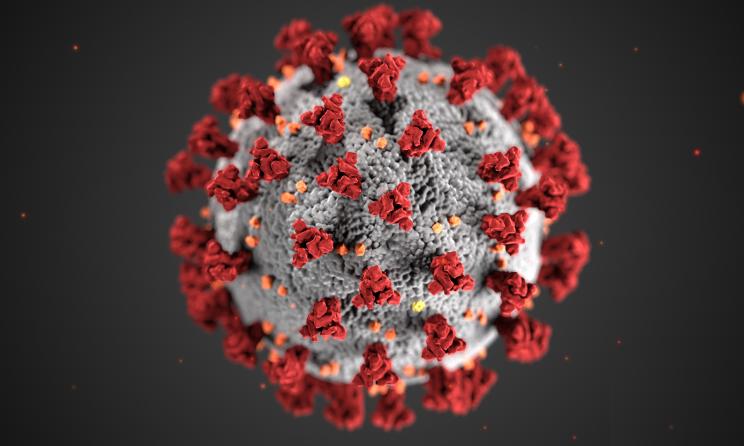
Pour les praticiens et les organisations culturels et créatifs opérant en Afrique australe, l’accès au financement reste un défi majeur. La pandémie de COVID-19 a également eu un impact massif sur les politiques gouvernementales, les dépenses et l’économie en général, et a vu les dépenses consacrées à la culture reléguées plus bas dans la liste des priorités. De plus, les industries culturelles et créatives citent régulièrement quatre domaines principaux où l’investissement est nécessaire pour la croissance : une visibilité accrue, la mobilité incluant l’accès à de nouveaux marchés, le financement et les structures de soutien.

Music In Africa Live

MUSIC IN AFRICA LIVE Lancé en 2020 pour une durée de 3 ans, Music In Africa Live est une initiative visant à soutenir l'écosystème de la musique africaine face aux contraintes imposées par la pandémie de COVID-19 ; le projet a été lancé par la Fondation Music In Africa (MIAF) en partenariat avec le ministère fédéral allemand des Affaires étrangères, Siemens Stiftung et le Goethe Institut. Plus de 30 aides sont disponibles dans le cadre de la troisième édition de Music In Africa Live, dans 3 catégories :  showcases, renforcement des compétences et plaidoyer, en conformité avec les modalités énoncées.

Instrument Building And Repair Project

The overarching objective of Music In Africa Foundation’s Instrument Building and Repair (IBR) project is to encourage the formalisation and professionalisation of instrument-making and repair in Africa, especially in relation to indigenous African instruments. Background In 2014, the Music In Africa Foundation (MIAF) identified as one of its focus areas for development the need to encourage young people from music and music-related sectors to consider instrument-making as a career. This need extended itself from the recognition that the making of traditional African instruments is not a widely practiced skill and seems to be limited to the older generation. Traditional African instrument makers are also few and far between, making communication and logistics between teachers and learners an obstacle. When instrument building workshops take place, budgetary constraints do not allow teachers or learners the time to explore the finer details of an instrument. Based on these observations, the MIAF designed and piloted the first IBR workshop at the Dhow Countries Music Academy (DCMA) in Zanzibar in February 2015. In 2016, the foundation received funding from the South African National Lotteries Commission to implement a much bigger version of the project in Johannesburg. The project drew participants from five African countries. 25 students from South Africa, Ghana, Senegal, Kenya and Ethiopia were trained on how to build and repair musical instruments. The instruments that they made were: Traditional Instruments: Umakhweyana and Marimba Conventional Instrument: Dulcimer guitar The workshop culminated in a traditional instruments concert at the Wits Theatre in Johannesburg. It is the MIAF’s aim to roll out similar workshops in as many African countries as possible over the next few years. Objectives Developing awareness of musical instrument makers in Africa with a view to promote their work to a wider global audience. Facilitating the sharing and transfer of skills in indigenous instruments between countries on the continent. Encouraging the formalisation and professionalisation of instrument-making and repair in Africa, especially in relation to indigenous instruments. Helping instrument makers develop their careers. Fostering the rapid monetisation and sustainable development of instrument-making and repair in Africa. Promoting constant exchange of ideas, expertise, experiences and know-how among instrument makers in Africa. Facilitating the identification of existing gaps in the field with a view to contribute new solutions. Facilitating the transfer of knowledge and skills of indigenous instruments between younger and older generations. 2020 edition The MIAF has also announced that multi-instrumentalist and instrument maker Joe Makhanza will facilitate one of the workshops on the building of the kamale ngoni instrument. Kamale ngoni is a kora-like, stringed instrument that originated in West Africa. The instrument contributed to the rise of Wassoulou music in the 1970s and 1990s. Makhanza was born in Giyani in South Africa's Limpopo province. He completed a bachelor of music degree and a post-graduate diploma in arts marketing from Wits University. He is currently completing his masters in ethnomusicology and is a part-time lecturer in African music studies at Rhodes University. He plays the kora, mbira, valiha, masenqo, xiwewe, ngoni ba and xizambi, among others. He also manufactures the aforementioned instruments. The MIAF will confirm more trainers who will join the workshops as well as the other instruments that will be featured in the 2020 IBR programme.  Apply to participate here. Connect with us on Twitter, Instagram and Facebook, and subscribe to our monthly newsletter. The Music In Africa Instrument Building and Repair project is funded by the National Lotteries Commission. It is implemented in partnership with Siemens Stiftung, Goethe-Institut, Wits Theatre and Kaya FM.

banner image

Ivory Coast: MASA 2020 gives women time of day

Accueil/Non classé/Ivory Coast: MASA 2020 gives women time of day

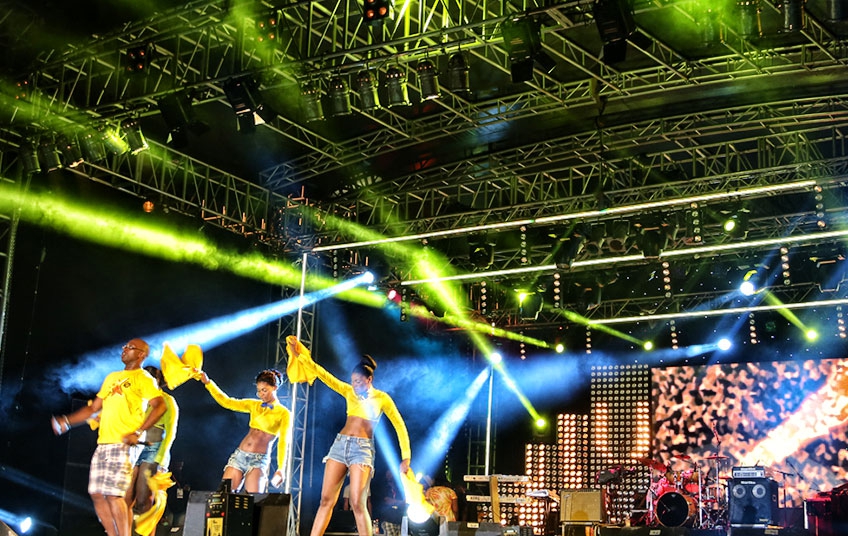
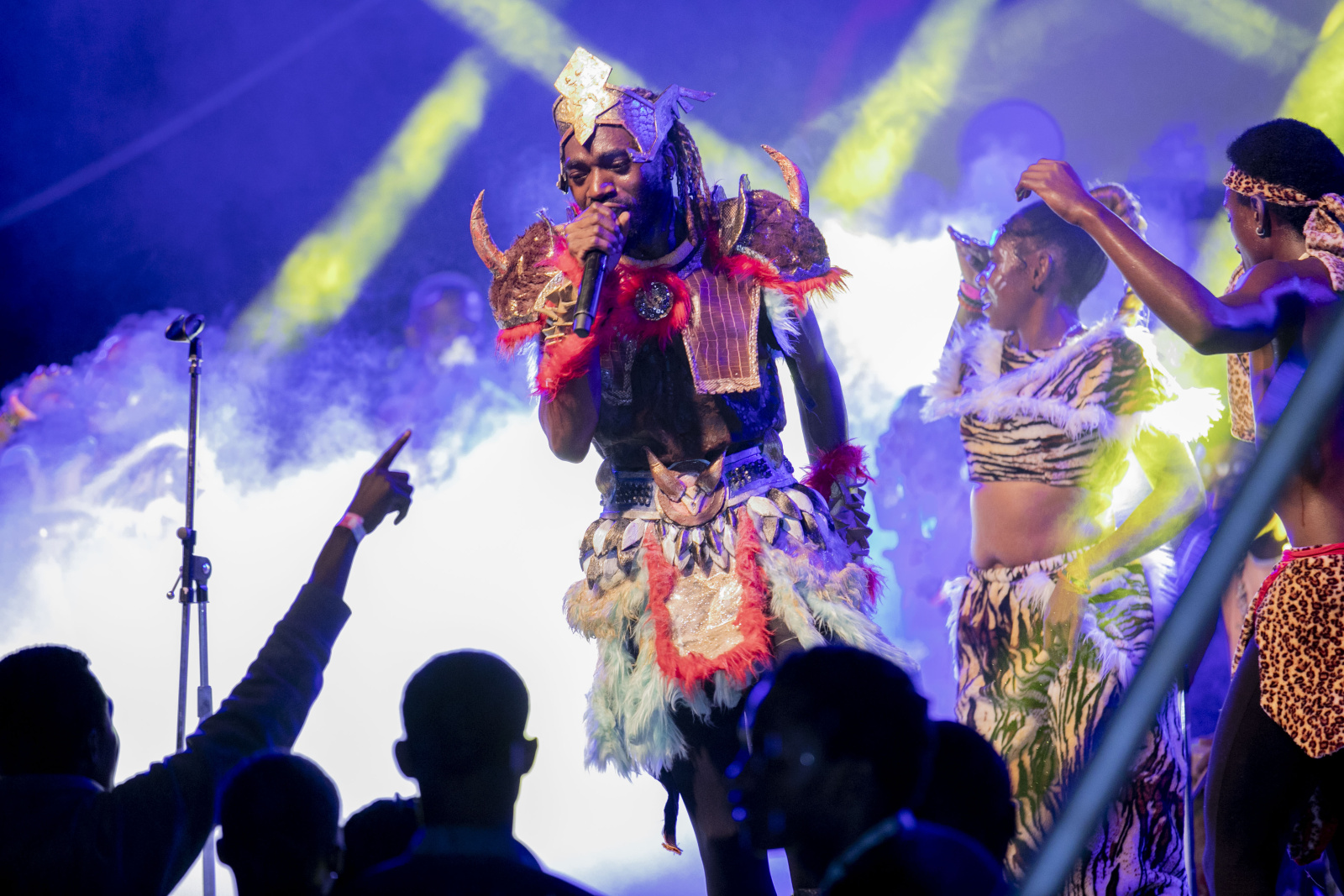
Tchanga was the official float of the street parade and a symbol of African unity and peace. He was accompanied by local and international dance troupes and acrobats in colourful costumes. The street parade was a new concept introduced by MASA director Prof Yacouba Konaté, who said the parade could offer some of the experience of the performing arts market to those who could not make it to the main venue. 

“We needed people to know about MASA and also experience part of it, » he said. « Normally, not everyone makes it to the venue and those who do leave early. The idea was well received and I think we will be doing it for every event going forward. »

The La Zone stage was another new addition to the market, showcasing contemporary artists like rappers and DJs. The artists were programmed by Didier Toko, the organiser of the Douala Music’Art Festival in Cameroon.

“During the last edition many young artists thought MASA was not ‘sexy’ enough and they suggested that we programme younger artists. This is something that we hope to carry on in the next edition,” Konaté said.

This year’s market featured 200 shows and hosted more than 1 700 artists on eight stages, including musicians, dancers, storytellers, slam poets and actors. To cover the entire event would require a busload of reporters writing 24/7, but this reviewer believes she caught some of the most memorable performances at this year’s event.

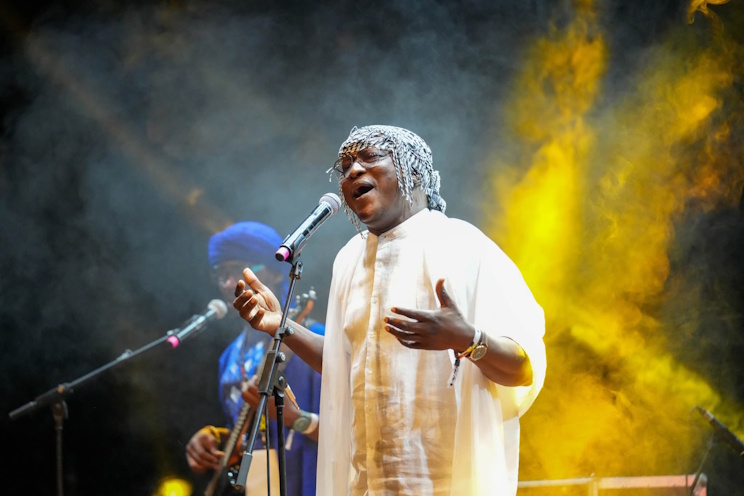
M’Bouile Koite gave an unforgettable concert with his strident and soulful vocals. The kora was a prominent element of his performance, but he also utilised guitars and percussion to present his Malian roots with a sense of expert balance. It would be foolish to expect anything less than a flawless show from a griot.

The sound of the djembe is a spirit-lifting remedy that is hard to beat, with Ivorian Baba Touré and the Bendia troupe delivering a healing performance that demonstrated the power of West African drumming. Picture this: A master playing the lead djembe and eight of his students backing him up with djembes and dunduns. The troupe featured a female vocalist who echoed Touré’s beats as he engaged the audience.

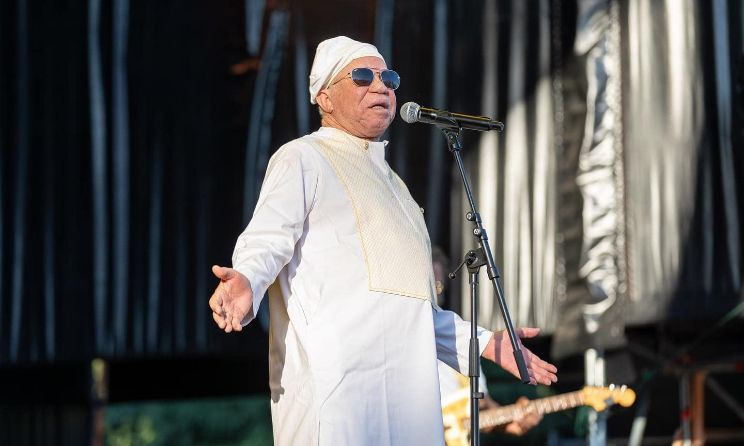
Ivorian rapper Sol’e delivered a supremely elegant performance, demolishing the barriers between jazz and hip hop by letting the two forms intermingle freely. The audience loved the free-flowing poetic conversation that the rapper presented. Sol’e is undoubtedly an artist with ambition and brilliance to back it up.

Watching Ivorian Tchefary, one could entertain the idea of a Lucky Dube doppelgänger. His movement, the flying dreads and facial expressions were quite comparable to the late South African reggae musician. Tchefary offered a good selection from his discography, which left the dreadlocked audience shaking their heads to the beat; even those with shaved heads enjoyed the show. After all, Jamaica’s Morgan Heritage said that one does not need dreadlocks to be a rasta man. Tchefary’s female on-stage companion provided the subtlety required by a backing singer and the resulting balance was perfect.

Protest music was also presented at this edition, with Martial Pa’nucci and Monza digging deep to convey the issues besieging Congo-Brazzaville and Mauritania, respectively. Their lyrics, which are critical of their governments, have made them polarising figures in their countries. Pa’nucci is presently in exile in Burkina Faso while Monza has not performed in Mauritania for almost a decade.

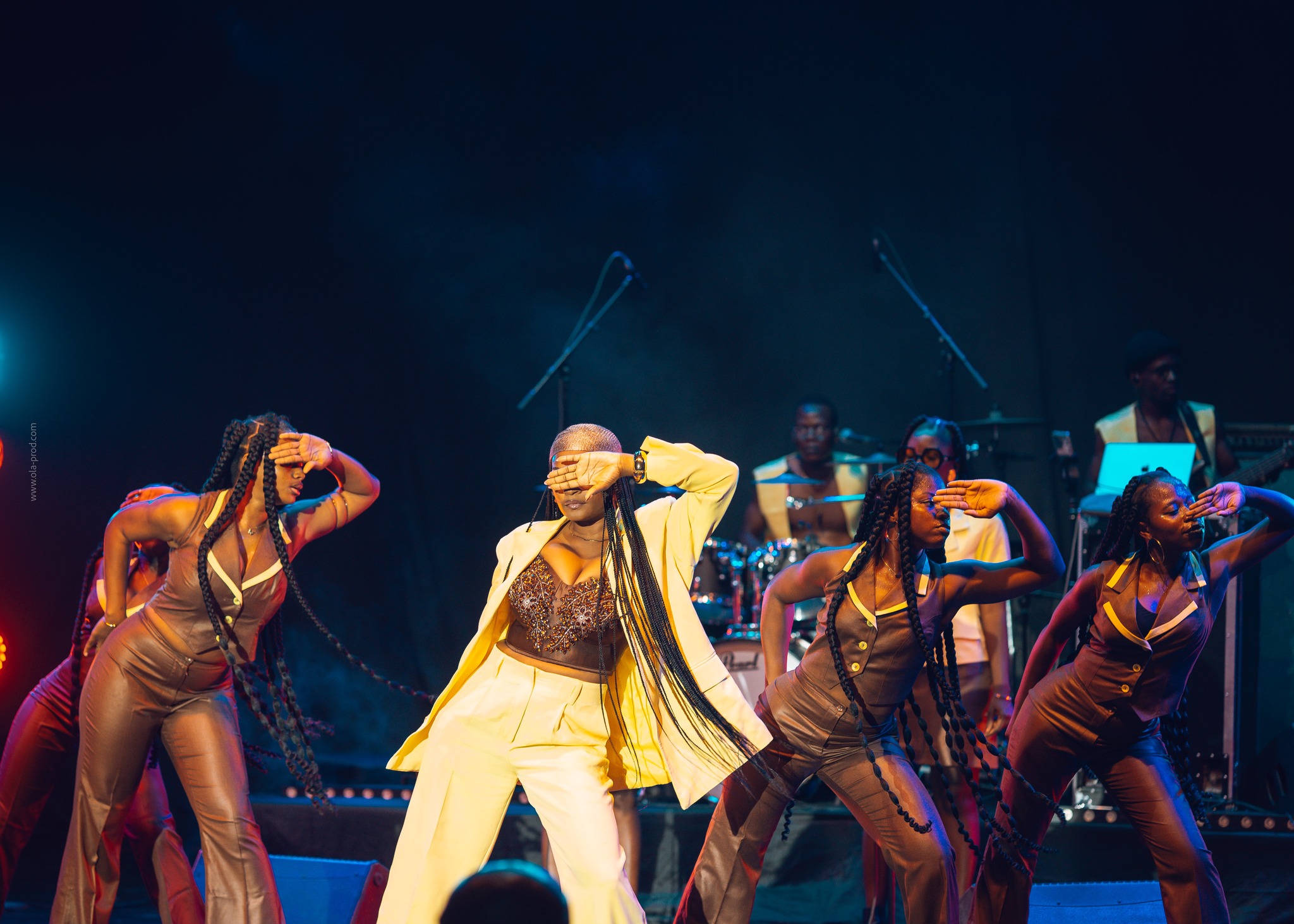
MASA challenged the homogeneous picture of male bands dominating African music festivals. The organising team is mainly made up of women, some of whom were on stage-management duties. On 8 March, they programmed only female-led bands to commemorate International Women’s Day.

Rama from Burkina Faso was one of the highlights this year. He stage charisma and singing place her shoulder to shoulder (in terms of uniqueness and not height) with Malian singer Oumou Sangaré. She effortlessly played the dozo n’goni instrument and was backed by a kora, bass, keyboards and drums. Her set started as a serene meditation and spontaneously combusted into a cacophonous eruption. 

Another highlight was Kandy Guira. She was born in Ivory Coast, raised in Burkina Faso and now lives in France. Guira incorporates all these cultures into her music and the result is a frenetic performance full of body movements. Her set revolved around heavy percussion and a DJ who occasionally delivered electronic beats. 

MASA’s 2020 line-up heavily featured artists from West and Central Africa. Mokoomba (Zimbabwe) and Eddy Kenzo (Uganda) were the only artists from purely Anglophone countries, and their performances were scheduled late into the night with smaller audiences watching their performances.

“I watched Mokoomba and they are brilliant musicians, even though they performed very late, » Konaté said. « Our mission ahead of the next edition is to promote MASA in Anglophone countries so that we can programme more artists from those regions.”

The 12th edition of MASA will take place in 2022.

newsletter banner

Abonnez-vous à notre newsletter

Retrouvez-nous sur les réseaux sociaux