













NEFCISA
NEFCISA

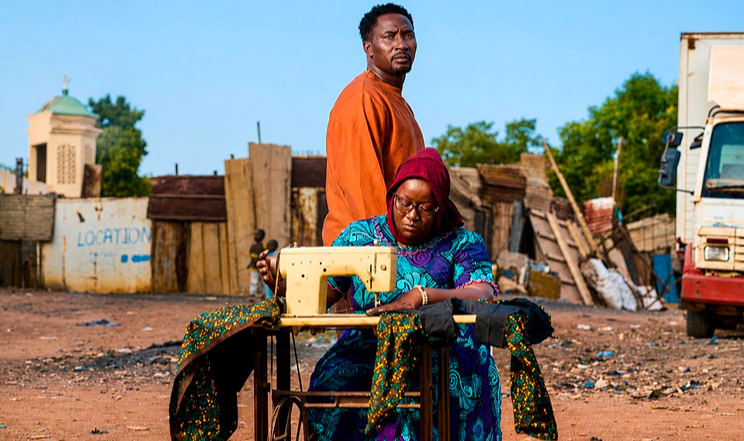
The Music In Africa Foundation (MIAF) is proud to announce its partnership with the Industrial Development Corporation (IDC) as a Strategic Implementing Partner (SIP) for its Social Employment Fund (SEF). Through this collaboration, MIAF is launching a new national programme designed to create jobs, address skills gaps, and strengthen South Africa’s creative industries — in line with the SEF’s overarching goal to generate work for the common good and build community value through employment, social contribution, and inclusive economic participation. Operating under the banner NEFCISA (National Employment Facility for Creative Industries in South Africa), the initiative will recruit and train participants, match them with host organisations, and place a minimum of 1 000 workers across the country. Key Objectives: Support employment and entrepreneurship in the creative industries. Offer skills development and training programmes. Foster partnerships between public and private creative sectors. Promote South African creativity at both provincial and national levels Foster community development through social contribution.

ACCES
ACCES

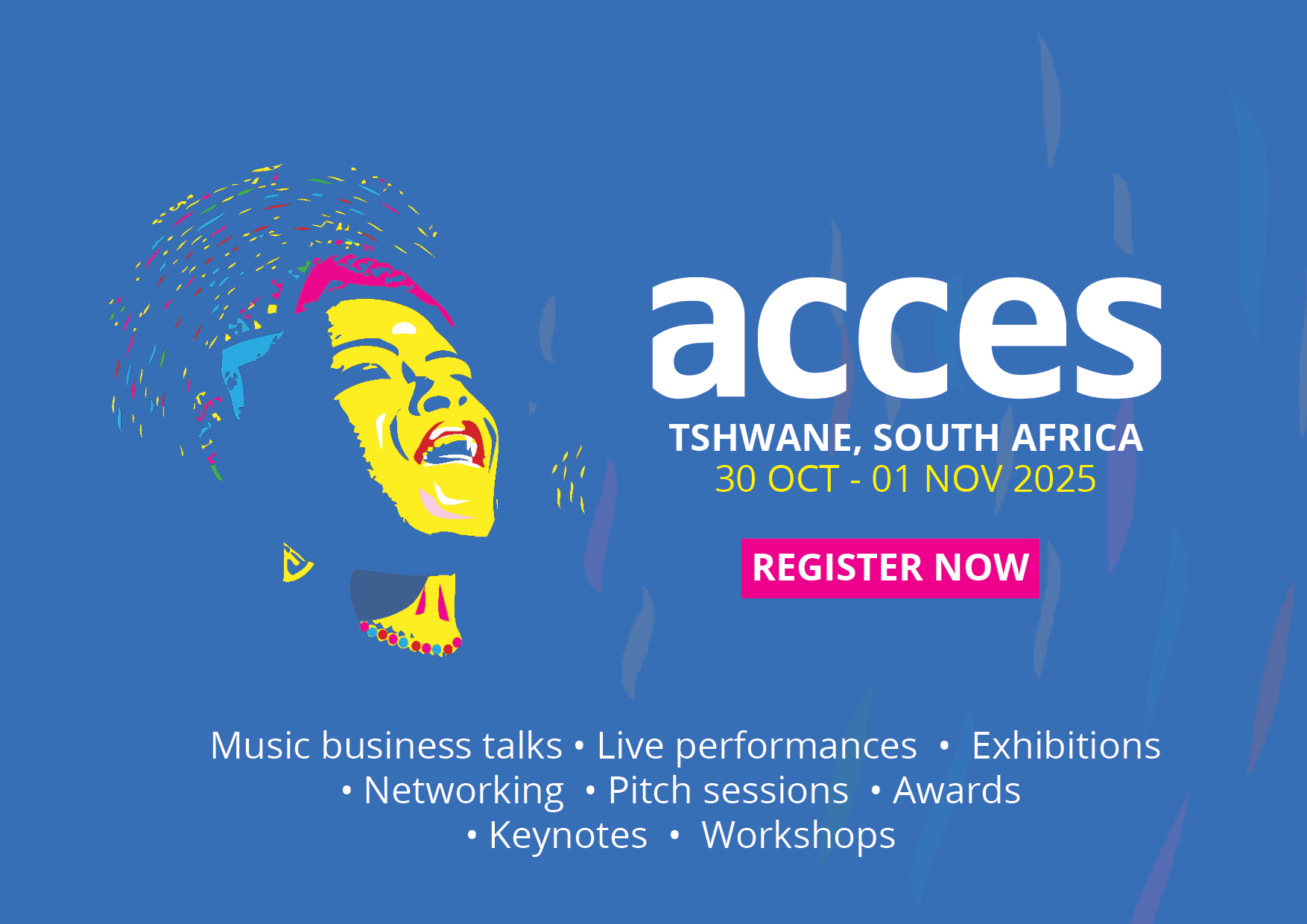
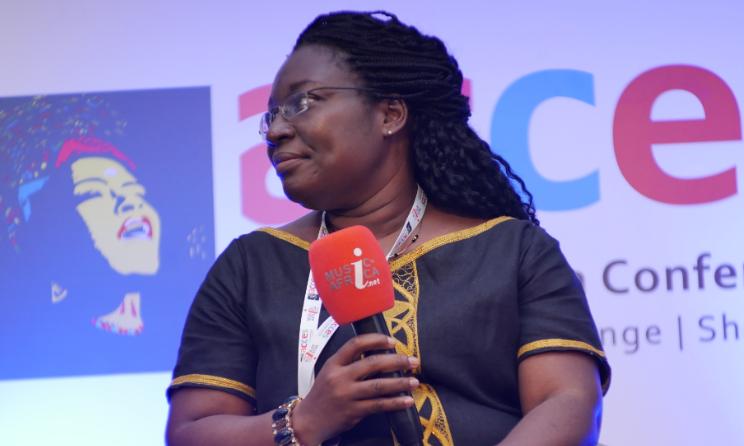
Chaque année, nous fournissons des informations générales afin de guider les participants dans la préparation de leur voyage. En plus de ce site, des mises à jour importantes seront envoyées par e-mail à tous les délégués inscrits. Assurez-vous de vous inscrire dès que possible. Pour plus d'informations, veuillez contacter [email protected] Continuez à consulter cette page pour plus d'information.  

Gender@Work
Gender@Work

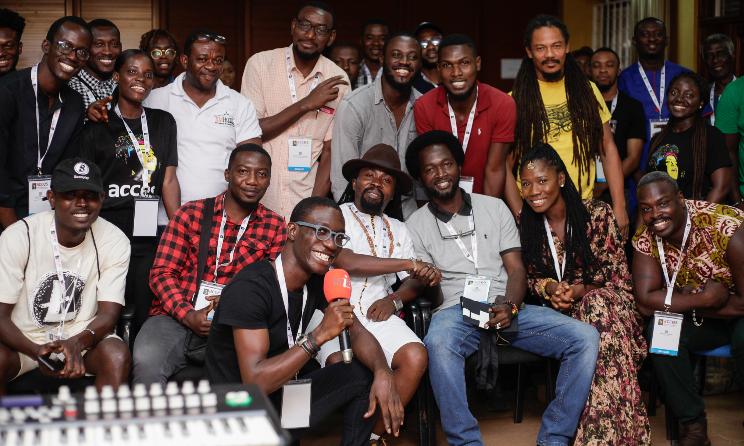
Music In Africa Gender @ Work is a three-year training programme aimed at upskilling and increasing the participation of female professionals in the African music sector. Launched by the Music In Africa Foundation (MIAF) in April 2019, the programme is connected to the MIAF’s ACCES music conference – a pan-African event held in a different African country every year. This connection enables the programme to reach new participants in a different African country every year. The programme marks the beginning of a more concerted effort by the Foundation to support the participation and inclusion of women in all facets of its programmes and the music sector in Africa as a whole. Over the three years, the programme will aim to address gender imbalances in the sector through training, lobbying, facilitating knowledge exchange and dialogues that foster the interest of women. The broader objectives of the programme are to: Provide industry training for women on critical music industry skills, focusing on: Stage management Electronic music production and recording Music business management Technical knowledge Provide an opportunity for both professional and aspiring women to benefit from the Music In Africa network and its broad range of activities in 2019, 2020 and 2021. Provide a solution-based platform in the form of a round table at ACCES with a view to identify challenges, discuss opportunities and lobby for the interests of female practitioners. Offer participants the opportunity to benefit from programmes offered by MIAF’s partners. Increase access to educational materials. Integrate participants in the broader ACCES programme to maximise experience and exposure to the industry. Record and present training materials on the www.musicinafrica.net, including but not limited to tutorials, templates and other best-practice materials. Communicate women-based themes that support the initiatives and messages of the programme. MAIN TRAINING ACTIVITIES Training in first country (Ghana): In the first year, participants will be trained on all aspects of stage management by a team of experienced stage managers from 10 to 17 November 2019. The programme will offer robust classroom training as well as practical, hands-on training in which participants will also be given the opportunity to manage various aspects of the ACCES performance programme. Training in second country: The second training iteration will take place at ACCES 2020 when the programme will diversify its course to include music production lessons and training on other music business topics. A round-table platform will also be introduced to coincide with the ACCES programme. Training in third country: The third training iteration will take place at ACCES 2021 in a different country, offering an advanced course. HOW DO YOU GET INVOLVED?  As a participant, facilitator or trainer: The programme enrolls up to 12 trainees every year. All opportunities are advertised publicly on this website, and will be added to this page. Please keep checking this page for new calls (below under UPDATES & CURRENT OPPORTUNITIES). As a partner Please contact Claire Metais at [email protected]. APPLY The call for applications for 2020 will be announced soon. The Music In Africa Gender @ Work programme is made possible with the support of the Prince Claus Fund, Siemens Stiftung and Goethe-Institut.

Sound Connects Fund
Sound Connects Fund

Pour les praticiens et les organisations culturels et créatifs opérant en Afrique australe, l’accès au financement reste un défi majeur. La pandémie de COVID-19 a également eu un impact massif sur les politiques gouvernementales, les dépenses et l’économie en général, et a vu les dépenses consacrées à la culture reléguées plus bas dans la liste des priorités. De plus, les industries culturelles et créatives citent régulièrement quatre domaines principaux où l’investissement est nécessaire pour la croissance : une visibilité accrue, la mobilité incluant l’accès à de nouveaux marchés, le financement et les structures de soutien.

Music In Africa Live

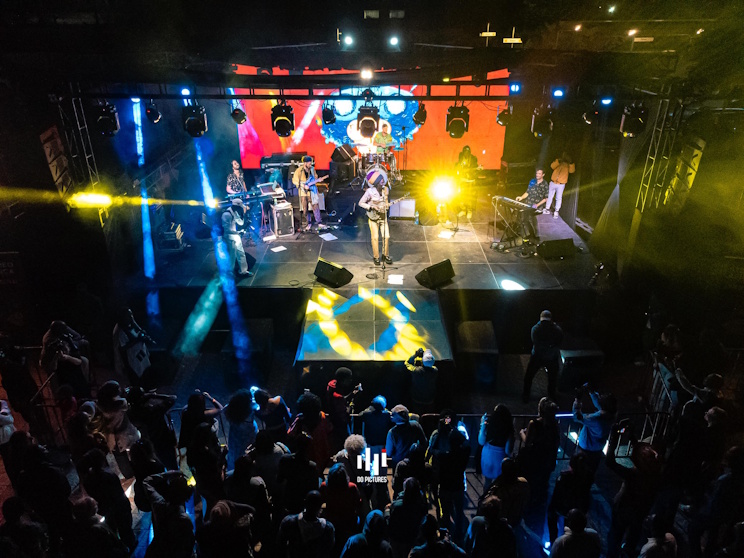
MUSIC IN AFRICA LIVE Lancé en 2020 pour une durée de 3 ans, Music In Africa Live est une initiative visant à soutenir l'écosystème de la musique africaine face aux contraintes imposées par la pandémie de COVID-19 ; le projet a été lancé par la Fondation Music In Africa (MIAF) en partenariat avec le ministère fédéral allemand des Affaires étrangères, Siemens Stiftung et le Goethe Institut. Plus de 30 aides sont disponibles dans le cadre de la troisième édition de Music In Africa Live, dans 3 catégories :  showcases, renforcement des compétences et plaidoyer, en conformité avec les modalités énoncées.

Instrument Building And Repair Project

The overarching objective of Music In Africa Foundation’s Instrument Building and Repair (IBR) project is to encourage the formalisation and professionalisation of instrument-making and repair in Africa, especially in relation to indigenous African instruments. Background In 2014, the Music In Africa Foundation (MIAF) identified as one of its focus areas for development the need to encourage young people from music and music-related sectors to consider instrument-making as a career. This need extended itself from the recognition that the making of traditional African instruments is not a widely practiced skill and seems to be limited to the older generation. Traditional African instrument makers are also few and far between, making communication and logistics between teachers and learners an obstacle. When instrument building workshops take place, budgetary constraints do not allow teachers or learners the time to explore the finer details of an instrument. Based on these observations, the MIAF designed and piloted the first IBR workshop at the Dhow Countries Music Academy (DCMA) in Zanzibar in February 2015. In 2016, the foundation received funding from the South African National Lotteries Commission to implement a much bigger version of the project in Johannesburg. The project drew participants from five African countries. 25 students from South Africa, Ghana, Senegal, Kenya and Ethiopia were trained on how to build and repair musical instruments. The instruments that they made were: Traditional Instruments: Umakhweyana and Marimba Conventional Instrument: Dulcimer guitar The workshop culminated in a traditional instruments concert at the Wits Theatre in Johannesburg. It is the MIAF’s aim to roll out similar workshops in as many African countries as possible over the next few years. Objectives Developing awareness of musical instrument makers in Africa with a view to promote their work to a wider global audience. Facilitating the sharing and transfer of skills in indigenous instruments between countries on the continent. Encouraging the formalisation and professionalisation of instrument-making and repair in Africa, especially in relation to indigenous instruments. Helping instrument makers develop their careers. Fostering the rapid monetisation and sustainable development of instrument-making and repair in Africa. Promoting constant exchange of ideas, expertise, experiences and know-how among instrument makers in Africa. Facilitating the identification of existing gaps in the field with a view to contribute new solutions. Facilitating the transfer of knowledge and skills of indigenous instruments between younger and older generations. 2020 edition The MIAF has also announced that multi-instrumentalist and instrument maker Joe Makhanza will facilitate one of the workshops on the building of the kamale ngoni instrument. Kamale ngoni is a kora-like, stringed instrument that originated in West Africa. The instrument contributed to the rise of Wassoulou music in the 1970s and 1990s. Makhanza was born in Giyani in South Africa's Limpopo province. He completed a bachelor of music degree and a post-graduate diploma in arts marketing from Wits University. He is currently completing his masters in ethnomusicology and is a part-time lecturer in African music studies at Rhodes University. He plays the kora, mbira, valiha, masenqo, xiwewe, ngoni ba and xizambi, among others. He also manufactures the aforementioned instruments. The MIAF will confirm more trainers who will join the workshops as well as the other instruments that will be featured in the 2020 IBR programme.  Apply to participate here. Connect with us on Twitter, Instagram and Facebook, and subscribe to our monthly newsletter. The Music In Africa Instrument Building and Repair project is funded by the National Lotteries Commission. It is implemented in partnership with Siemens Stiftung, Goethe-Institut, Wits Theatre and Kaya FM.

banner image

Le jazz au Ghana

Accueil/Non classé/Le jazz au Ghana

Les années 1940-1960

Avec l’arrivée des soldats américains et britanniques lors de la Seconde Guerre Mondiale, le swing-jazz arriva au Ghana et les musiciens étrangers et locaux créèrent des groupes de swing tels que les Black and White Spots et plus particulièrement les Tempos. Après la guerre, les Tempos ont survécu comme un groupe entièrement composé de Ghanéens et, sous la direction de son trompettiste E.T Mensah à partir de 1948, ils mélangèrent le swing et la musique caribéenne en un style dansant appelée musique high-life qui devint la bande son des débuts de l’ère d’indépendance à travers l’Afrique de l’Ouest.

Essentiel au succès des Tempos était leur percussionniste, Kofi Ghanaba (Guy Warren). En 1950, il a brièvement joué au Royaume-Uni avec le groupe afro-cubiste-bebop de Kenny Graham et, a ensuite introduit les percussions afro-cubaines aux Tempos. Après avoir quitté les Tempos, Ghanaba partit s’installer aux Etats-Unis en 1955 où à partir de 1957, il sortit une série d’albums afro-jazz novateurs (le premier était  ‘Africa Speaks, America Answers’)  et a travaillé avec des géants du jazz tels que Max Roach, Duke Ellington et Thelonius Monk. Lors de ses nombreux séjours au Ghana à la fin des années cinquante et au début des années soixante, Ghanaba a organisé une série de concerts dénommées ‘Jaaz concerts’ et c’est le moment où il commença aussi à ‘africaniser’ son jeu de batterie.

A la fin des années 50, de grands artistes de jazz commencèrent à visiter le Ghana – tels que le pianiste Ahmad Jamal et Louis Armstrong  qui jouèrent en 1956 et en 1960  lors d’un séjour financé par le département d’Etat américain. Les All Stars d’Armstrong avec le clarinettiste Edmond Hall retournèrent au Ghana en 1959 pour fonder un groupe éphémère de jazz à l’hôtel Ambassador à Accra.

De nombreux groupes jouaient du jazz moderne durant les années 60. Un des premiers groupes était le Dominant Seventh basé à l’hôtel Ambassador et comprenant le guitariste Art Bennin, les doubles bassistes Alex Vanderpuie et saxophoniste Teddy Owusu ainsi que George Lee- qui formèrent plus tard son groupe de highlife, les Messengers, un orchestre dansant influencé par Art Blakey. Un autre groupe de jazz était le Bogarte Sounds (qui faisait partie du collectif Uhuru) formé en 1969 et qui comprend le guitariste Stan Plange, le saxophoniste Ebo Dadson, le batteur Rim Obeng et le trompettiste Mac Tontoh (qui sera plus tard un des créateurs du groupe afro-rock Osibisa). Le groupe Uhuru comprenait lui- même le guitariste Ebo Taylor qui après avoir obtenu une bourse du Président Kwame Nkrumah pour étudier la musique au Royaume-Uni, a aidé à introduire des accords complexes dans le jazz au ghana.

Années 1970-1990

Les musiciens étrangers de jazz, tels qu’Eddie Harris et Les McCann qui jouèrent au concert Soul to Soul à Accra, continuèrent à visiter le Ghana durant les années 70. Ensuite vinrent le percussionniste suédois Bengt Berger et trois artistes africains américains. C’étaient le batteur Max Roach (qui vint visiter Ghanaba), le pianiste Patti Brown et le percussionniste Juma Santos (de son vrai nom Jim Riley, il a joué pour Miles Davis et Taj Mahal notamment) qui passa deux années à étudier les percussions africaines à l’Université de Ghana. Le trompettiste de bebop Clark Terry, le chanteur Joe Williams et leur groupe Jolly Giants ont pris part à un séjour organisé par le département d’Etat américain.

Vers les années 70, la jeunesse ghanéenne s’est éloignée des sons de groupes de jazz et de highlife vers des styles apparentés au rock et à la soul. Néanmoins quelques styles de fusion comme l’afro-rock d’Osibisa et l’afrobeat de Fela Kuti, s’inspiraient partiellement du jazz.

Lors des coups militaires et des couvres feux des années 70 et 80, il y eut un déclin de la scène nocturne ghanéenne et de toute forme de musique populaire, le jazz inclut. Mais au début des années 90 et avec la libéralisation de l’économie et le retour à la démocratie, beaucoup de joueurs étrangers de jazz revinrent jouer à nouveau au Ghana. Quelques-uns d’entre eux étaient le pianiste Randy Weston, James ‘Plunky’ Branch (avec le maître batteur Okyerema Asante), le Andrew Cyrlle Quartet (joué lors du PANAFEST 1994 au Ghana) et Montego Joe (Roger Saunders, ancien d’Art Blakey et Baba Oluntunji). Il y a eu ensuite le groupe  All Stars (Donaly Byrd, George Cables, Nathan Davis, Idris Muhammad et Milton Mustapha) qui étaient invités par le professeur Komla Amoaku, directeur du Théâtre National du Ghana, et lui-même musicien de jazz. De célèbres artistes africains de jazz ont visité le Ghana à cette époque comme le trompettiste sud-africain Hugh Masekela, le vocaliste libérien Miatta Fahnbulleh, Manu Dibango du Cameroun et les trompettistes nigérians Orlando Julius et Peter King.

Un élément encore plus important pour la scène jazz au Ghana était la libéralisation économique. Beaucoup de ghanéens qui avaient fui le pays pour des raisons économiques commencèrent à revenir. Quelques-uns d’entre eux avaient été exposés au jazz à l’étranger, et donc un nombre de clubs de jazz commença à fleurir à Accra et partout pour leurs besoins. Le premier, aux alentours de 1990, était le Jimmy’s Jazz Club dirigé par le joueur de anche Jimmy Beckley. D’autres étaient le Diane’s Café, le Village Inn, Baseline (ensuite appelée le Jazz Optimism Club), Bywells, le Jazz Tone Club (dirigé par le chanteur afro-américain Toni Manieson), le Odo Jazz Club et des boites de jazz se trouvant dans des hôtels comme Golden Tulip et Palm Beach.

En conséquence, de petits groupes de jazz se multiplièrent durant les années 90 tels que Jimmy’s Jazz Combo, Unconditional Love (Ebo Taylor et le saxophoniste Ray Allan), le D Minor Band, le Asanaba Jazz Combo, Johnny Young’s Karmah Jazz Band, Cherles Dewey’s Wala Band et le Jazz Music Makers. Un autre était Febeja qui avait Soroko aux claviers, Cliff Eck à la guitare, le bassiste togolais Gautier et l’ancien batteur de Fela Kuti, Frank Siisi-Yoyo. Les artistes jazz individuels étaient le trompettiste Osei Tutu et Long John, le chanteur Rama Brew et l’ancien fondateur d’Osibisa avec son groupe Kete Warriors.

Ghanaba était aussi très actif dans les années 90, dirigeant sa bibliothèque African Heritage et travaillant avec à la fois des artistes jazz locaux et internationaux  comme Nii Noi Nortey et son groupe d’afro-jazMusiki w’Afrika et le batteur de free-jazz allemand Robyn Schulkowky. Un autre vétéran était le maitre batteur  Kwesi Asare qui lorsqu’il était au Royaume-Uni dans les années 50-60 avait travaillé avec plusieurs vedettes du jazz (ainsi qu’enregistrant avec Count Basie) et lors de son retour au Ghana en 1995 a établi un centre de recherche culturel à Larteh dédié à la musique africaine et au jazz.

Années 2000-2010

En 2004, la société de jazz du Ghana fut créée et comprenait des artistes tels que Jimmy Beckley, Smart Pozo Arpeh (Bawasaaba band) et Blay-Ambolley. Au fil des années, l’organisation a organisé des shows qui ont accueilli des artistes américains de jazz, blues et de fusion tels que Kellie Rucker, le groupe américain ghanéen Native Vibe et Vinx  et son trio de percussionnistes.

De nouveaux clubs de jazz sont nés à Accra dans les années 2000 dans des lieux comme Taverna Tropicana, Regents Hotel, Smolensky’s, Oak Plaza, Silverbird et Shakes Club. L’Alliance Française a accueilli une série de festivals afro-jazz à partir de 2013. Les plus important sont le +233 Jazz Club, établit en 2010 et ayant son propre groupe résidant Sound Factree band qui comprend le bassiste Philip Acquah, le pianiste Victor Dey, la chanteuse Sandra Houston et le tromboniste Eli Amewode. Le club +233 a aussi beaucoup d’autre artistes jazz tels que l’américain joueur de anche Orin Etkin et le guitariste Colter Harper ; et des noms locaux tels que Kwame Yeboah (le groupe Oheaa Beyeya) le saxophoniste Bernard Ayissa, le guitariste Kyekyeku et le joueur magicien de flute atenteben Dela Botri.

Un autre coin à Accra est le Morning Star Club détenu par la chanteuse Bibi Brew qui était une grande artiste en France durant les années 80-90. A son retour au Ghana en 2000, Bibi a créé son club. Elle y tient des soirées régulières de jazz et son propre groupe  qui fait office de résident joue régulièrement. D’autres chanteuses de jazz, R&B et artistes du moment sont Yasmeen Helwani et Ofie Kodjoe née aux Etats-Unis.

Des artistes étrangers de jazz continuent de venir au Ghana et collaborent souvent avec des artistes locaux. Il y a le joueur d’anche Courtney Pine et le batteur ghanéen Robbie Fordjour qui jouèrent ensemble à plusieurs reprises. Kenny Drew Junior (fils du fameux pianiste jazz) a fait des ateliers en 2011 avec des étudiants en musique. Et le guitariste de smooth jazz Earl Klugh, qui a joué à Accra en  2015 avec Big Wellington, un groupe de jazz local. Le ‘Professeur’ de percussion de jazz, Royal Hartigan, amena son Blood Drum Spirit Ensemble au Ghana en début 2015 pour une tournée et des  échangés avec des musiciens locaux (Royal est resté et a lancé le Sunsum jazz quartet avec un groupe d’étudiants de l’Université de Kumasi). Un exemple final est le musicologue et musicien américain Steve Feld qui travailla en 2007 sur le CD « Accra Trane Station », le dernier des trois opus de Nii Noi Nartey dédiés à John Coltrane.

Comme beaucoup le savent déjà, le Jazz américain tire ses racines de l’Afrique. Un siècle plus tard, le jazz moderne revient vers la Terre Mère avec les nombreuses collaborations qui unissent les artistes étrangers et africains. Ces échangés ont inspirés, enrichis et stimulé la fraternité internationale de Jazz.

newsletter banner

Abonnez-vous à notre newsletter

Retrouvez-nous sur les réseaux sociaux