





NEFCISA
NEFCISA

The Music In Africa Foundation (MIAF) is proud to announce its partnership with the Industrial Development Corporation (IDC) as a Strategic Implementing Partner (SIP) for its Social Employment Fund (SEF). Through this collaboration, MIAF is launching a new national programme designed to create jobs, address skills gaps, and strengthen South Africa’s creative industries — in line with the SEF’s overarching goal to generate work for the common good and build community value through employment, social contribution, and inclusive economic participation. Operating under the banner NEFCISA (National Employment Facility for Creative Industries in South Africa), the initiative will recruit and train participants, match them with host organisations, and place a minimum of 1 000 workers across the country. Key Objectives: Support employment and entrepreneurship in the creative industries. Offer skills development and training programmes. Foster partnerships between public and private creative sectors. Promote South African creativity at both provincial and national levels Foster community development through social contribution.

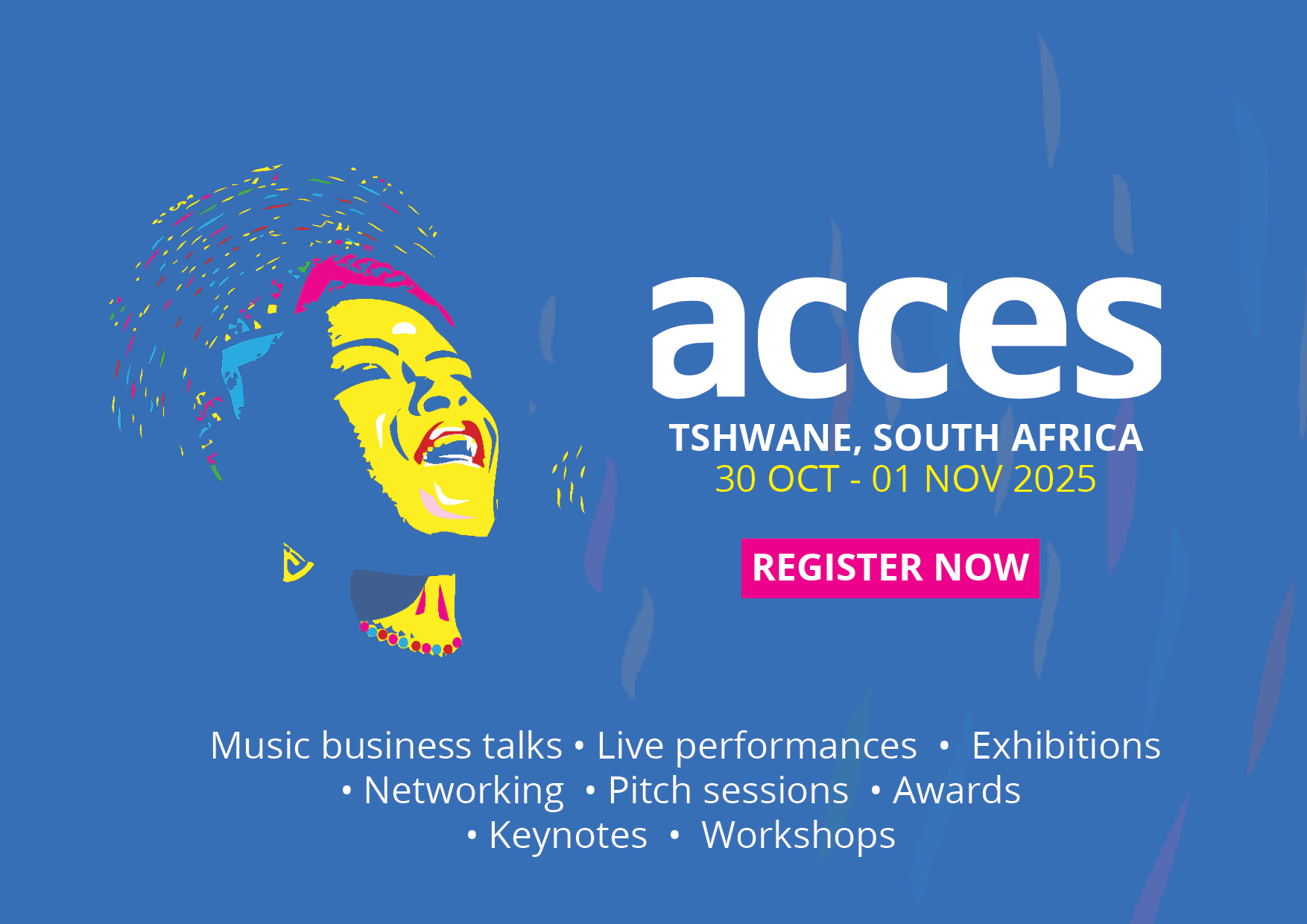
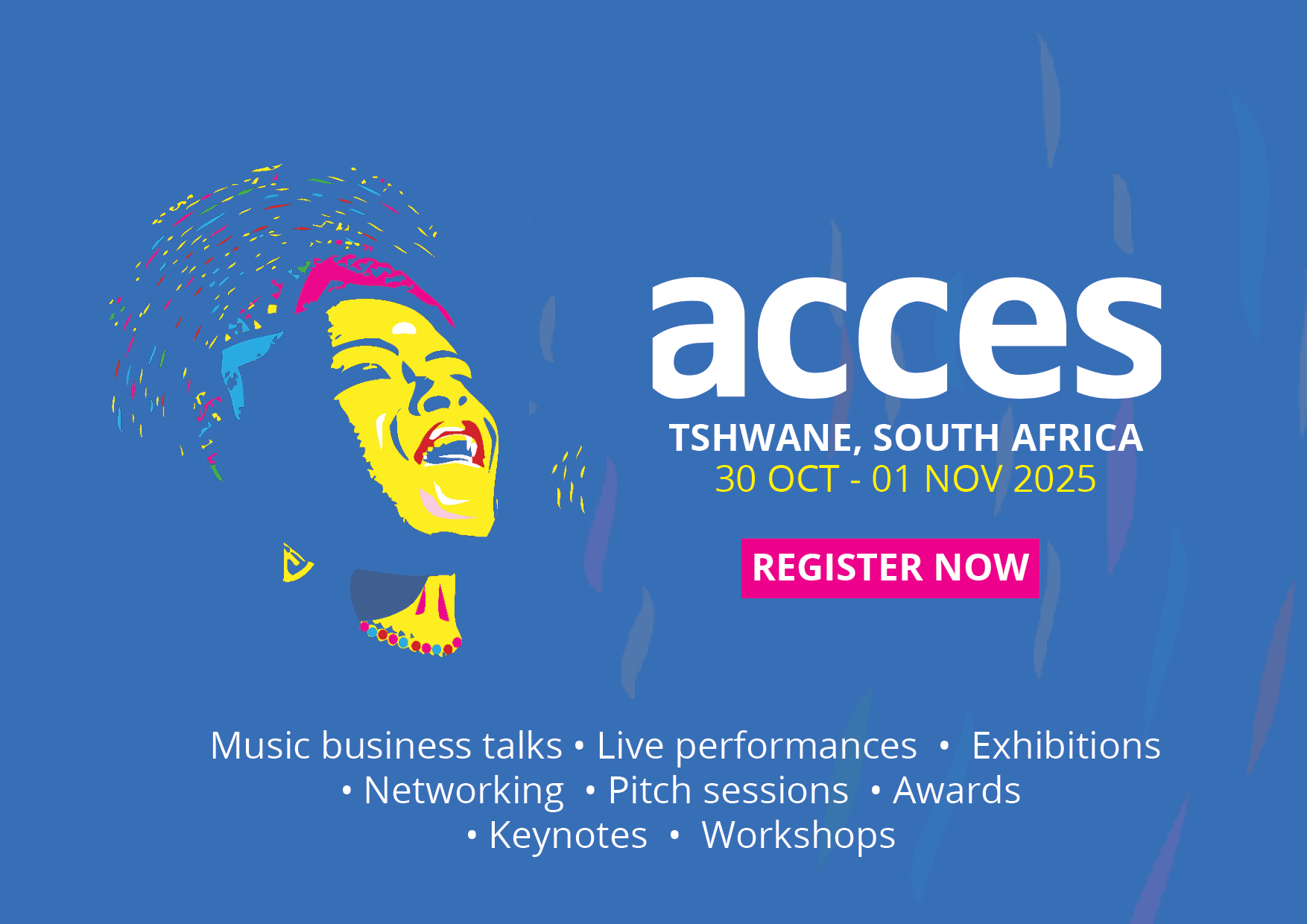
ACCES
ACCES

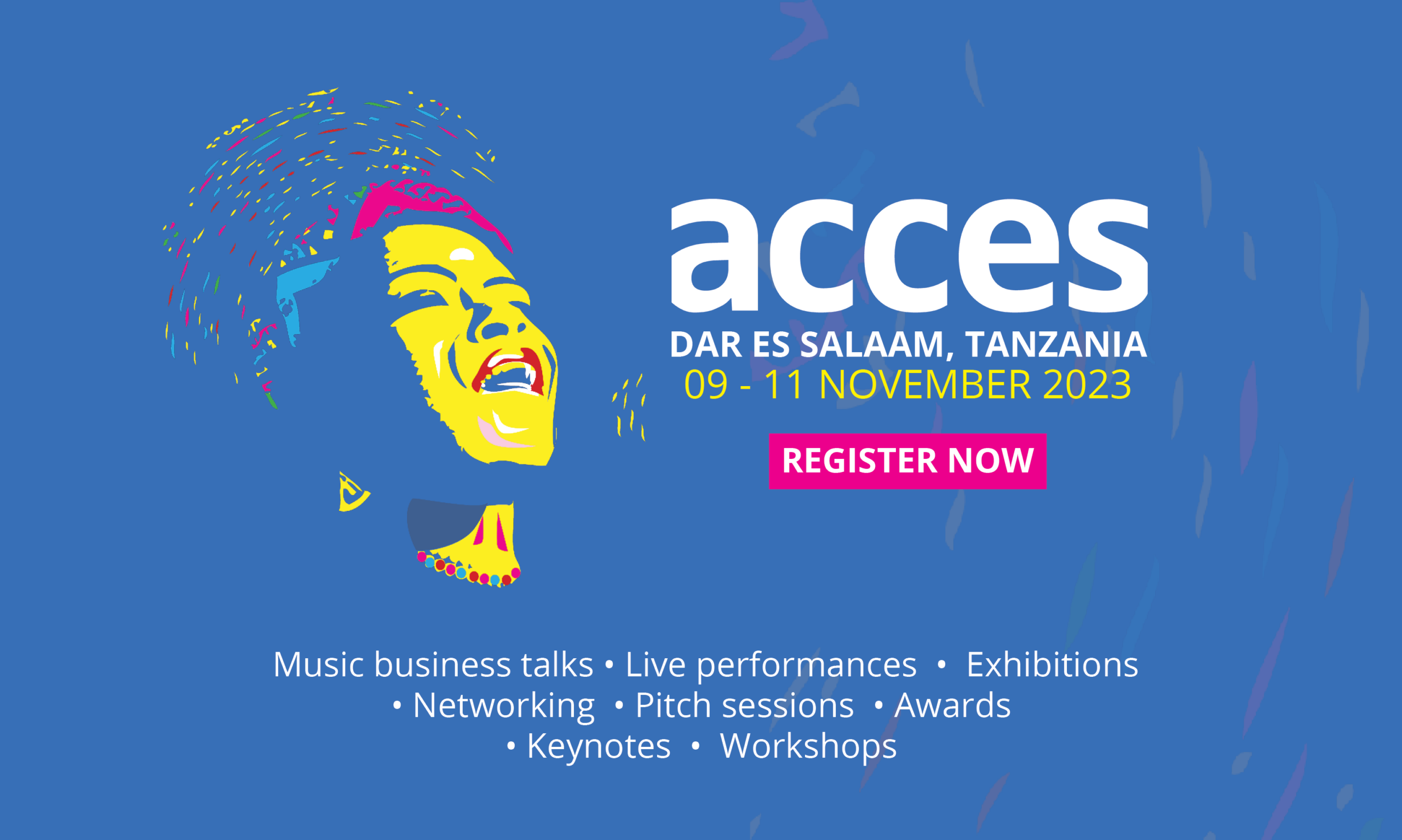
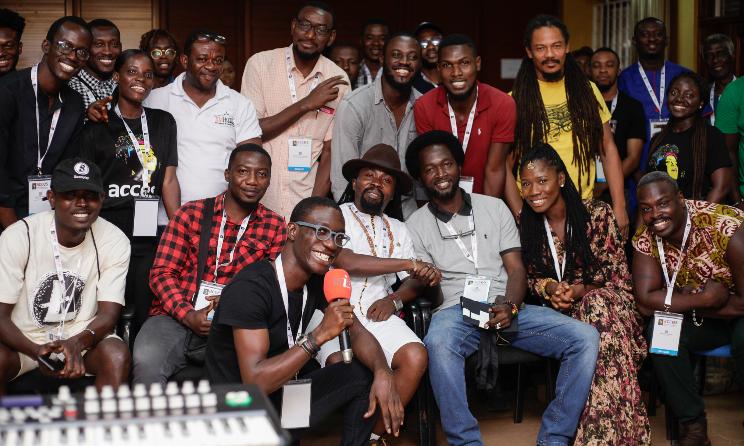
Chaque année, nous fournissons des informations générales afin de guider les participants dans la préparation de leur voyage. En plus de ce site, des mises à jour importantes seront envoyées par e-mail à tous les délégués inscrits. Assurez-vous de vous inscrire dès que possible. Pour plus d'informations, veuillez contacter [email protected] Continuez à consulter cette page pour plus d'information.  

Gender@Work
Gender@Work

Music In Africa Gender @ Work is a three-year training programme aimed at upskilling and increasing the participation of female professionals in the African music sector. Launched by the Music In Africa Foundation (MIAF) in April 2019, the programme is connected to the MIAF’s ACCES music conference – a pan-African event held in a different African country every year. This connection enables the programme to reach new participants in a different African country every year. The programme marks the beginning of a more concerted effort by the Foundation to support the participation and inclusion of women in all facets of its programmes and the music sector in Africa as a whole. Over the three years, the programme will aim to address gender imbalances in the sector through training, lobbying, facilitating knowledge exchange and dialogues that foster the interest of women. The broader objectives of the programme are to: Provide industry training for women on critical music industry skills, focusing on: Stage management Electronic music production and recording Music business management Technical knowledge Provide an opportunity for both professional and aspiring women to benefit from the Music In Africa network and its broad range of activities in 2019, 2020 and 2021. Provide a solution-based platform in the form of a round table at ACCES with a view to identify challenges, discuss opportunities and lobby for the interests of female practitioners. Offer participants the opportunity to benefit from programmes offered by MIAF’s partners. Increase access to educational materials. Integrate participants in the broader ACCES programme to maximise experience and exposure to the industry. Record and present training materials on the www.musicinafrica.net, including but not limited to tutorials, templates and other best-practice materials. Communicate women-based themes that support the initiatives and messages of the programme. MAIN TRAINING ACTIVITIES Training in first country (Ghana): In the first year, participants will be trained on all aspects of stage management by a team of experienced stage managers from 10 to 17 November 2019. The programme will offer robust classroom training as well as practical, hands-on training in which participants will also be given the opportunity to manage various aspects of the ACCES performance programme. Training in second country: The second training iteration will take place at ACCES 2020 when the programme will diversify its course to include music production lessons and training on other music business topics. A round-table platform will also be introduced to coincide with the ACCES programme. Training in third country: The third training iteration will take place at ACCES 2021 in a different country, offering an advanced course. HOW DO YOU GET INVOLVED?  As a participant, facilitator or trainer: The programme enrolls up to 12 trainees every year. All opportunities are advertised publicly on this website, and will be added to this page. Please keep checking this page for new calls (below under UPDATES & CURRENT OPPORTUNITIES). As a partner Please contact Claire Metais at [email protected]. APPLY The call for applications for 2020 will be announced soon. The Music In Africa Gender @ Work programme is made possible with the support of the Prince Claus Fund, Siemens Stiftung and Goethe-Institut.

Sound Connects Fund
Sound Connects Fund

Pour les praticiens et les organisations culturels et créatifs opérant en Afrique australe, l’accès au financement reste un défi majeur. La pandémie de COVID-19 a également eu un impact massif sur les politiques gouvernementales, les dépenses et l’économie en général, et a vu les dépenses consacrées à la culture reléguées plus bas dans la liste des priorités. De plus, les industries culturelles et créatives citent régulièrement quatre domaines principaux où l’investissement est nécessaire pour la croissance : une visibilité accrue, la mobilité incluant l’accès à de nouveaux marchés, le financement et les structures de soutien.

Music In Africa Live

MUSIC IN AFRICA LIVE Lancé en 2020 pour une durée de 3 ans, Music In Africa Live est une initiative visant à soutenir l'écosystème de la musique africaine face aux contraintes imposées par la pandémie de COVID-19 ; le projet a été lancé par la Fondation Music In Africa (MIAF) en partenariat avec le ministère fédéral allemand des Affaires étrangères, Siemens Stiftung et le Goethe Institut. Plus de 30 aides sont disponibles dans le cadre de la troisième édition de Music In Africa Live, dans 3 catégories :  showcases, renforcement des compétences et plaidoyer, en conformité avec les modalités énoncées.

Instrument Building And Repair Project

The overarching objective of Music In Africa Foundation’s Instrument Building and Repair (IBR) project is to encourage the formalisation and professionalisation of instrument-making and repair in Africa, especially in relation to indigenous African instruments. Background In 2014, the Music In Africa Foundation (MIAF) identified as one of its focus areas for development the need to encourage young people from music and music-related sectors to consider instrument-making as a career. This need extended itself from the recognition that the making of traditional African instruments is not a widely practiced skill and seems to be limited to the older generation. Traditional African instrument makers are also few and far between, making communication and logistics between teachers and learners an obstacle. When instrument building workshops take place, budgetary constraints do not allow teachers or learners the time to explore the finer details of an instrument. Based on these observations, the MIAF designed and piloted the first IBR workshop at the Dhow Countries Music Academy (DCMA) in Zanzibar in February 2015. In 2016, the foundation received funding from the South African National Lotteries Commission to implement a much bigger version of the project in Johannesburg. The project drew participants from five African countries. 25 students from South Africa, Ghana, Senegal, Kenya and Ethiopia were trained on how to build and repair musical instruments. The instruments that they made were: Traditional Instruments: Umakhweyana and Marimba Conventional Instrument: Dulcimer guitar The workshop culminated in a traditional instruments concert at the Wits Theatre in Johannesburg. It is the MIAF’s aim to roll out similar workshops in as many African countries as possible over the next few years. Objectives Developing awareness of musical instrument makers in Africa with a view to promote their work to a wider global audience. Facilitating the sharing and transfer of skills in indigenous instruments between countries on the continent. Encouraging the formalisation and professionalisation of instrument-making and repair in Africa, especially in relation to indigenous instruments. Helping instrument makers develop their careers. Fostering the rapid monetisation and sustainable development of instrument-making and repair in Africa. Promoting constant exchange of ideas, expertise, experiences and know-how among instrument makers in Africa. Facilitating the identification of existing gaps in the field with a view to contribute new solutions. Facilitating the transfer of knowledge and skills of indigenous instruments between younger and older generations. 2020 edition The MIAF has also announced that multi-instrumentalist and instrument maker Joe Makhanza will facilitate one of the workshops on the building of the kamale ngoni instrument. Kamale ngoni is a kora-like, stringed instrument that originated in West Africa. The instrument contributed to the rise of Wassoulou music in the 1970s and 1990s. Makhanza was born in Giyani in South Africa's Limpopo province. He completed a bachelor of music degree and a post-graduate diploma in arts marketing from Wits University. He is currently completing his masters in ethnomusicology and is a part-time lecturer in African music studies at Rhodes University. He plays the kora, mbira, valiha, masenqo, xiwewe, ngoni ba and xizambi, among others. He also manufactures the aforementioned instruments. The MIAF will confirm more trainers who will join the workshops as well as the other instruments that will be featured in the 2020 IBR programme.  Apply to participate here. Connect with us on Twitter, Instagram and Facebook, and subscribe to our monthly newsletter. The Music In Africa Instrument Building and Repair project is funded by the National Lotteries Commission. It is implemented in partnership with Siemens Stiftung, Goethe-Institut, Wits Theatre and Kaya FM.

banner image

Chadian women in music

Accueil/Non classé/Chadian women in music

1960-1980: Singers and griots

The first period is characterised by the valorisation of traditional music, during which renowned female singers emerged, among them Djingayam, Morsile and Maman Eldjima. The latter released an album in 2007 that was produced by Yoka Production. The album is also the subject of a documentary film directed by Zara Yacoub, director at Dja FM.

These singers have benefited from extensive promotion on Radio Tchad, which until today continues to broadcast their music. These poetesses are known for having drawn attention to problems faced by Chadian society, with their songs offering advice to the public.

Haoua Ngaba is another female singer who made a huge impact during this period. She is also considered a benefactor to the Chadian music industry. During the inauguration of a bar in 1968 one of her guests was the first president of Chad François Ngarta Tombalbaye. Ngaba has produced and managed several Chadian bands and hosted big African names such as Franco & TPOK Jazz, Tabu Ley Rochereau & Afrisa International Orchestra as well as Central African Republic and Congo Brazzaville ensembles.

Other names form this era include Achova of The Voice of the Ouaddai, Zenaba of Echo Tchad, and Faly Falola.

2000 to present: the new generation

The second broad period of Chadian women in music is marked by the advent of information and communication technologies as well as the emergence of local radio stations, recording studios and foreign television channels. The younger generation of female singers are now exposed to a wide range music genres and videos from around world. This a surge is being seen in the musical environment for young budding artists as well as radio and TV presenters who are involved in the promotion of local music and talent.

In this current era, some women have carved a path of their own styles and distinguished themselves locally and internationally. Although there isn’t a great number of female music celebrities in Chad, it is worth mentioning a few who have made a lasting impression on the music scene, both at home and abroad

Mounira Mitchala was part of the group H’Sao, which is now based in Canada. She patiently carved out her place in the music scene before reaching wide popularity. A winner of the 2007 RFI Prix Découverte (RFI Newcomer Awards), she was subsequently awarded the VISA for Creation prize by Culture France for her debut album Talou Lena. In 2012, Mitchala recorded her second album in France. The 12-track album Chili Houritki was published by Editions Africa Nostra and distributed by Sony Music Entertainment Africa in the same year. Mitchala performs and tours around the world throughout the year and is known for her distinct vocal style. In 2012, she won the Best Female Artist of Central Africa award ​​at the Kora All-Africa Music Awards in Abidjan, Ivory Coast. She was then awarded in the ‘Best Artist Francophone’ category at the African Francophone Awards South Africa (AFASA) in 2014.

[video:https://www.youtube.com/watch?v=DQvjIGDpYfE align:left autoplay:0]


Another prominent female musician in Chad is Menodji Clarisse, aka Melodji, who is the lead vocalist of Matania, a group comprising five young singers. After the group’s participation at the CEN-SAD Games in Niger in 2007, Melodji conquered the Chadian music scene. Amid this success, she released her solo album Tah Hor Ndal in 2014. The album was nominated at the Cameroon Academy Awards the following year. In the same year she was also a finalist at the RFI Prix Découverte.

With an imposing voice and a unique musical style, Matibeye Géneviève was coached by Gabonese singer Annie-Flore Batchiellilys. She became famous in Chad and in the countries of the sub-region. She won her first award at the Dari’Awards, which was followed by a World Music Award at the Njamvi Festival in 2015. In 2016, she received the award for Best Performance at the Bikutsi Festival in Cameroon. She was selected by an international jury in the song category to represent Chad at the eighth edition of the Francophonie Games (Les Jeux de la Francophonie), which will be held in July 2017 in Ivory Coast.

Audrey Linda Shey has been present on the Chadian scene for years but is now living in the US where she is pursuing an international music career

In addition to their talents as singers, these artists have the capacity to mobilise Chadians through awareness campaigns on issues such as malaria, HIV/AIDS and women’s and children’s rights. Many of them are ambassadors of organisations such as Unicef ​​and the United Nations Population Fund (UNFPA).

Other women who have opted for a career in fields related to music include promoters Sarah Noudjalbaye, Motta Blandine, Clémence Adnely and Madji Bandoum as well as sound and lighting engineer Déborah Honmal Ngakoutou.

[video:https://www.youtube.com/watch?v=4MTr5vdUkyI align:left autoplay:0]
 

newsletter banner

Abonnez-vous à notre newsletter

Retrouvez-nous sur les réseaux sociaux