

















NEFCISA
NEFCISA

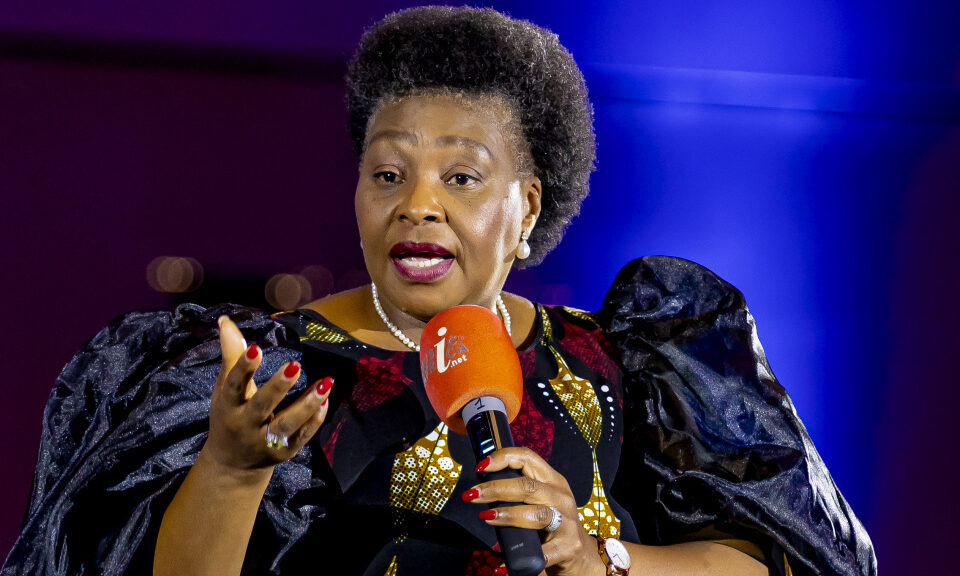
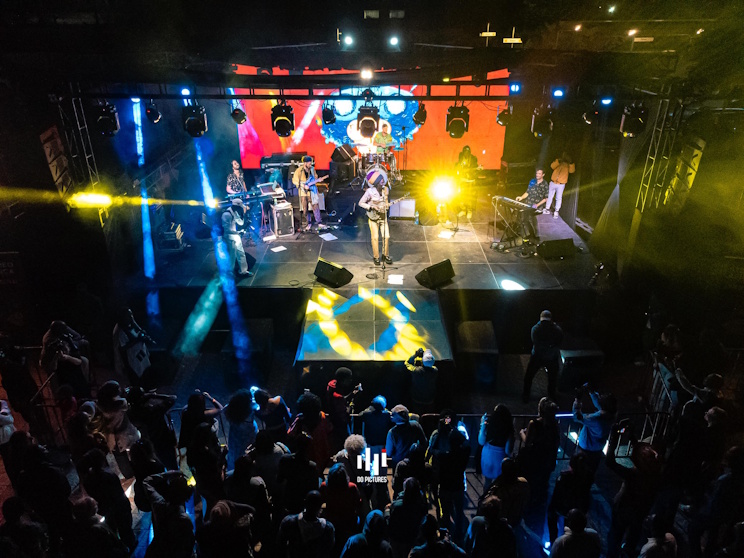
The Music In Africa Foundation (MIAF) is proud to announce its partnership with the Industrial Development Corporation (IDC) as a Strategic Implementing Partner (SIP) for its Social Employment Fund (SEF). Through this collaboration, MIAF is launching a new national programme designed to create jobs, address skills gaps, and strengthen South Africa’s creative industries — in line with the SEF’s overarching goal to generate work for the common good and build community value through employment, social contribution, and inclusive economic participation. Operating under the banner NEFCISA (National Employment Facility for Creative Industries in South Africa), the initiative will recruit and train participants, match them with host organisations, and place a minimum of 1 000 workers across the country. Key Objectives: Support employment and entrepreneurship in the creative industries. Offer skills development and training programmes. Foster partnerships between public and private creative sectors. Promote South African creativity at both provincial and national levels Foster community development through social contribution.

ACCES
ACCES

Chaque année, nous fournissons des informations générales afin de guider les participants dans la préparation de leur voyage. En plus de ce site, des mises à jour importantes seront envoyées par e-mail à tous les délégués inscrits. Assurez-vous de vous inscrire dès que possible. Pour plus d'informations, veuillez contacter [email protected] Continuez à consulter cette page pour plus d'information.  

Gender@Work
Gender@Work

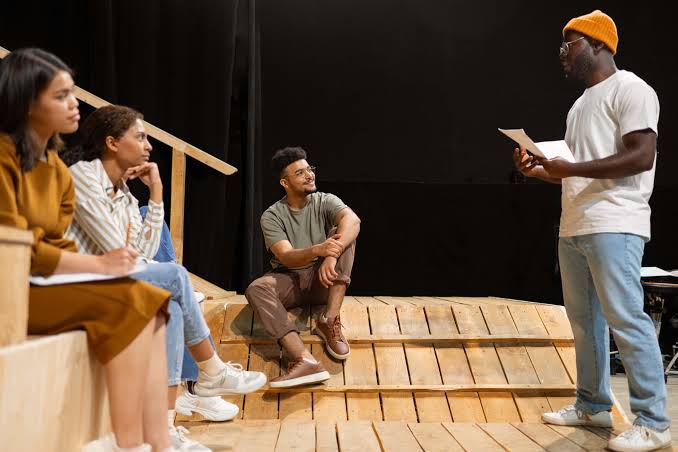
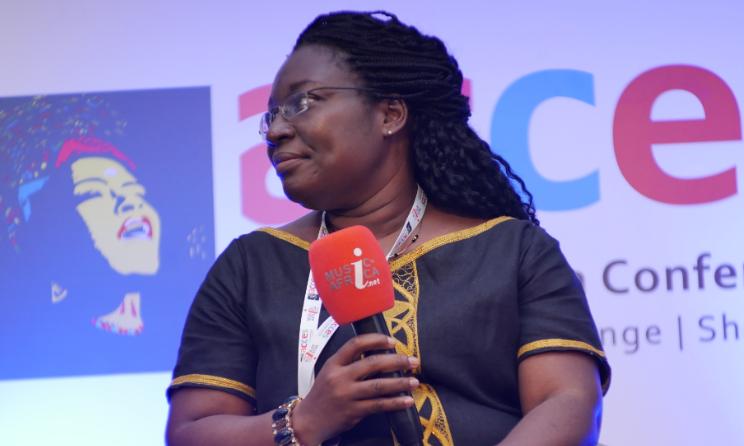
Music In Africa Gender @ Work is a three-year training programme aimed at upskilling and increasing the participation of female professionals in the African music sector. Launched by the Music In Africa Foundation (MIAF) in April 2019, the programme is connected to the MIAF’s ACCES music conference – a pan-African event held in a different African country every year. This connection enables the programme to reach new participants in a different African country every year. The programme marks the beginning of a more concerted effort by the Foundation to support the participation and inclusion of women in all facets of its programmes and the music sector in Africa as a whole. Over the three years, the programme will aim to address gender imbalances in the sector through training, lobbying, facilitating knowledge exchange and dialogues that foster the interest of women. The broader objectives of the programme are to: Provide industry training for women on critical music industry skills, focusing on: Stage management Electronic music production and recording Music business management Technical knowledge Provide an opportunity for both professional and aspiring women to benefit from the Music In Africa network and its broad range of activities in 2019, 2020 and 2021. Provide a solution-based platform in the form of a round table at ACCES with a view to identify challenges, discuss opportunities and lobby for the interests of female practitioners. Offer participants the opportunity to benefit from programmes offered by MIAF’s partners. Increase access to educational materials. Integrate participants in the broader ACCES programme to maximise experience and exposure to the industry. Record and present training materials on the www.musicinafrica.net, including but not limited to tutorials, templates and other best-practice materials. Communicate women-based themes that support the initiatives and messages of the programme. MAIN TRAINING ACTIVITIES Training in first country (Ghana): In the first year, participants will be trained on all aspects of stage management by a team of experienced stage managers from 10 to 17 November 2019. The programme will offer robust classroom training as well as practical, hands-on training in which participants will also be given the opportunity to manage various aspects of the ACCES performance programme. Training in second country: The second training iteration will take place at ACCES 2020 when the programme will diversify its course to include music production lessons and training on other music business topics. A round-table platform will also be introduced to coincide with the ACCES programme. Training in third country: The third training iteration will take place at ACCES 2021 in a different country, offering an advanced course. HOW DO YOU GET INVOLVED?  As a participant, facilitator or trainer: The programme enrolls up to 12 trainees every year. All opportunities are advertised publicly on this website, and will be added to this page. Please keep checking this page for new calls (below under UPDATES & CURRENT OPPORTUNITIES). As a partner Please contact Claire Metais at [email protected]. APPLY The call for applications for 2020 will be announced soon. The Music In Africa Gender @ Work programme is made possible with the support of the Prince Claus Fund, Siemens Stiftung and Goethe-Institut.

Sound Connects Fund
Sound Connects Fund

Pour les praticiens et les organisations culturels et créatifs opérant en Afrique australe, l’accès au financement reste un défi majeur. La pandémie de COVID-19 a également eu un impact massif sur les politiques gouvernementales, les dépenses et l’économie en général, et a vu les dépenses consacrées à la culture reléguées plus bas dans la liste des priorités. De plus, les industries culturelles et créatives citent régulièrement quatre domaines principaux où l’investissement est nécessaire pour la croissance : une visibilité accrue, la mobilité incluant l’accès à de nouveaux marchés, le financement et les structures de soutien.

Music In Africa Live

MUSIC IN AFRICA LIVE Lancé en 2020 pour une durée de 3 ans, Music In Africa Live est une initiative visant à soutenir l'écosystème de la musique africaine face aux contraintes imposées par la pandémie de COVID-19 ; le projet a été lancé par la Fondation Music In Africa (MIAF) en partenariat avec le ministère fédéral allemand des Affaires étrangères, Siemens Stiftung et le Goethe Institut. Plus de 30 aides sont disponibles dans le cadre de la troisième édition de Music In Africa Live, dans 3 catégories :  showcases, renforcement des compétences et plaidoyer, en conformité avec les modalités énoncées.

Instrument Building And Repair Project

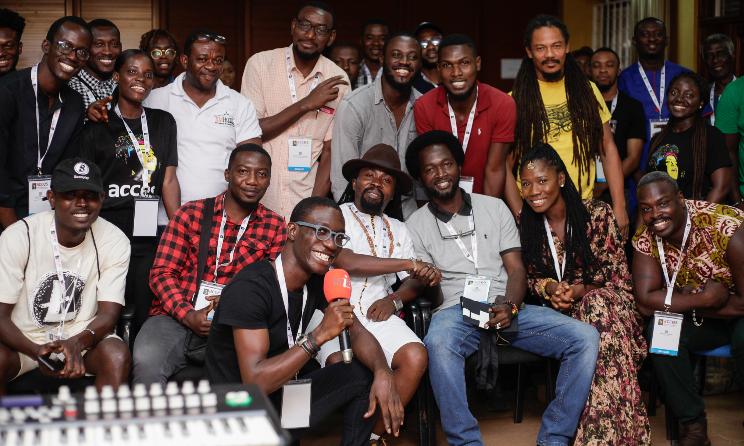
The overarching objective of Music In Africa Foundation’s Instrument Building and Repair (IBR) project is to encourage the formalisation and professionalisation of instrument-making and repair in Africa, especially in relation to indigenous African instruments. Background In 2014, the Music In Africa Foundation (MIAF) identified as one of its focus areas for development the need to encourage young people from music and music-related sectors to consider instrument-making as a career. This need extended itself from the recognition that the making of traditional African instruments is not a widely practiced skill and seems to be limited to the older generation. Traditional African instrument makers are also few and far between, making communication and logistics between teachers and learners an obstacle. When instrument building workshops take place, budgetary constraints do not allow teachers or learners the time to explore the finer details of an instrument. Based on these observations, the MIAF designed and piloted the first IBR workshop at the Dhow Countries Music Academy (DCMA) in Zanzibar in February 2015. In 2016, the foundation received funding from the South African National Lotteries Commission to implement a much bigger version of the project in Johannesburg. The project drew participants from five African countries. 25 students from South Africa, Ghana, Senegal, Kenya and Ethiopia were trained on how to build and repair musical instruments. The instruments that they made were: Traditional Instruments: Umakhweyana and Marimba Conventional Instrument: Dulcimer guitar The workshop culminated in a traditional instruments concert at the Wits Theatre in Johannesburg. It is the MIAF’s aim to roll out similar workshops in as many African countries as possible over the next few years. Objectives Developing awareness of musical instrument makers in Africa with a view to promote their work to a wider global audience. Facilitating the sharing and transfer of skills in indigenous instruments between countries on the continent. Encouraging the formalisation and professionalisation of instrument-making and repair in Africa, especially in relation to indigenous instruments. Helping instrument makers develop their careers. Fostering the rapid monetisation and sustainable development of instrument-making and repair in Africa. Promoting constant exchange of ideas, expertise, experiences and know-how among instrument makers in Africa. Facilitating the identification of existing gaps in the field with a view to contribute new solutions. Facilitating the transfer of knowledge and skills of indigenous instruments between younger and older generations. 2020 edition The MIAF has also announced that multi-instrumentalist and instrument maker Joe Makhanza will facilitate one of the workshops on the building of the kamale ngoni instrument. Kamale ngoni is a kora-like, stringed instrument that originated in West Africa. The instrument contributed to the rise of Wassoulou music in the 1970s and 1990s. Makhanza was born in Giyani in South Africa's Limpopo province. He completed a bachelor of music degree and a post-graduate diploma in arts marketing from Wits University. He is currently completing his masters in ethnomusicology and is a part-time lecturer in African music studies at Rhodes University. He plays the kora, mbira, valiha, masenqo, xiwewe, ngoni ba and xizambi, among others. He also manufactures the aforementioned instruments. The MIAF will confirm more trainers who will join the workshops as well as the other instruments that will be featured in the 2020 IBR programme.  Apply to participate here. Connect with us on Twitter, Instagram and Facebook, and subscribe to our monthly newsletter. The Music In Africa Instrument Building and Repair project is funded by the National Lotteries Commission. It is implemented in partnership with Siemens Stiftung, Goethe-Institut, Wits Theatre and Kaya FM.

banner image

Musique populaire en Centrafrique

Accueil/Non classé/Musique populaire en Centrafrique

Rappel historique

La République centrafricaine est ainsi nommée depuis le 1er décembre 1958. Deux ans plus tard le 13 août 1960 elle obtient officiellement son Indépendance. Le Père de la nation Barthélémy Boganda étant décédé un an plus tôt dans des circonstances troubles c’est David Dacko qui fait la proclamation.

En 1965 il est renversé par son cousin le tristement célèbre Jean-Bedel Bokassa. Malgré ces soubresauts politiques la musique contemporaine du pays se structure peu à peu sous la férule de figures comme Prosper Mayélé et Dominique Eboma.

Dans les années 70 le nombre de groupes prolifère. Cet âge d’or musical dura, bon gré mal gré, pendant « l’Empire Bokassa » proclamé le 4 décembre 1977. Comme Mobutu au Zaïre, Jean-Bedel Bokassa veut faire de l’art l’instrument de son pouvoir. Malgré l’arrivée du célèbre groupe Canon stars en 1982 cet âge d’or va s’éroder dans les années 80.

Les pionniers et stars de la rumba centrafricaine

Moins connues que les nuits de Léopoldville (ancien nom de Kinshasa, la capitale congolaise) et Brazzaville celles de Bangui ont aussi été chaudes. Dans les années 50 la ville sert de plaque tournante aux grands groupes de rumba Joseph Kabasele, Paulo Kamba, Seigneur Rochereau ou encore le fameux groupe de salsa cubain Orquesta Aragon.

La musique se joue live dans les dancings de la capitale comme le Rex inauguré en 1954, le Cercle Mbi Yé à Lakouanga où joue Wendo Kolosoy, le Bar Etoile, la Coupole, le Tara Tara, le bien nommé Cha Cha Cha, le Dragon Rouge, le Vis à Vis et l’ABC.
Les musiciens locaux ne sont pas en reste.

En 1949 Rigobert Bassinet, un musicien Antillais qui s’installe à Bangui forme de nombreux musiciens parmi lesquels Rodolphe Békpa et Prosper Mayélé En 1950 le centrafricain Jimmy Zakari forme le guitariste Congolais Franco Luambo Makiadi au style classique  De son côté le chanteur guitariste Dominique Eboma débarque à Bangui de sa ville natale de Ouango Bangassou.

Il sillonne tout le pays en chantant comme militant du parti MESAN (Mouvement de l’Evolution Sociale de l’Afrique Noire) fondé par le Président Barthélémy Boganda.

Le 1er décembre 1958 Radio Bangui est inaugurée et la première chanson diffusée sur les ondes de la nouvelle République est Mo Gbi de Prosper Mayélé et Rodolphe Békpa.  

En 1959 Jean Magalet chante Ga Djoni, une métaphore sur le rapport de domination colon et colonisé qui préfigure l’Indépendance. La même année le groupe Tropical jazz est rebaptisé Centrafrican band D’autres orchestres se forment: le Rocka Fiesta de Charlie Perrière en 1961, le Vibro succès  de Rodolphe Békpa en 1963 ou encore Succès flash de Diable Kombas en 1965 et les Anges noirs d’Elie Lémotomo.

En 1967 Georges Ferreira crée Los Négritos, plus tard renommé Makembé. En 1963 le Professeur Marcel Joachim Vomitiendé au pays fonde la première Fanfare Nationale Centrafricaine. 3 ans plus tard après le coup d’état de Bokassa il fonde la première Fanfare militaire.

Les années 70 et l’essor de la musique moderne

A partir de 1970 grâce un émetteur de 100 KWH, installé à Bimbo et fourni par la Chine; Radio Bangui est écoutée au-delà des frontières centrafricaines, au nord du Congo Brazzaville (Dongou, Ifondo, Bétou, Mossaka…)  au Zaïre (Zongo, Libènguè, Mbandaka, Ngbadolité, Guéména…) ainsi qu’au sud du Tchad.

En 1970, également Dominique Eboma est l’un des fondateurs de Comando Jazz avec lequel il chante en yakoma et en sango.  Ce groupe militaire est étroitement lié au régime du dictateur Jean Bedel Bokassa.

A cette période le nombre de groupes explose: Echo 70, Super Elégance, Vox Négra, Vox Amical, Négro Louamé, Super Nzénzé, Vibro Jazz, Flash Vaqueros, Super Commando Jazz, Musiki, Ngombéka, Léngué Léngué Sentimental, Super Bazombi, Africa Lokombé, Zo Kwè Zo…

Malheureusement faute de moyens, le secteur privé étant inexistant et la promotion étatique très limitée les groupes disparaissent les uns après les autres. Jusqu’à son décès en 1995 Thierry Yézo est le guitariste soliste et arrangeur du Formidable Musiki, groupe de rumba centrafricaine formé en 1974 à l’hôtel Safari de Bangui. Pour pallier l’absence de studio d’enregistrement à Bangui il monte une petite unité de production locale.

[video:https://www.youtube.com/watch?v=0qmEllrT4Ds width:853 height:498 align:center autoplay:0]

Le groupe banguissois s’est difficilement maintenu après la disparition de son fondateur. Le règne fugace de Bokassa 1er empereur autoproclamé à partir de 1976 s’achève en 1979 avec l’opération Caban pilotée par la France de Giscard d’Estaing. En octobre le Canard Enchaîné sort la fameuse affaire des diamants.

Les années 80-90

Dans les années 80 après le passage éclair au pouvoir jusqu’en 1981 de David Dacko le pays est plongé à nouveau dans une dictature de 10 ans du général André Kolingba.
C’est le temps du « comité militaire de redressement national » Un nombre imprtant d’artistes centrafricains émigrent en France pour poursuivre leur carrière.

Baba Bhy Ghao le Papa Wemba centrafricain, Sultan Zembellat, Etty Pacheco, Frédéric Yvon Kangala, BB Matou, Laskin Ngomatéké, Faustino, Saladin, et les Canons Stars sont de ceux là. 

[video:https://www.youtube.com/watch?v=P0JWZ707WYo width:853 height:498 align:center autoplay:0]

Il convient de parler de Léa Lignanzi, le neveu de Baba Bhy Ghao, et de son tube Dédé Priscilla. Après des débuts en 1976, avec le groupe Makémbé, il part au Nigéria et au Ghana où il enregistre un 33 tours à Kumasi sous le nom de trio Bhydoli pour Bhy-Gao, Domingo Salsero et Lignanzi.

[video:https://www.youtube.com/watch?v=hvXbFtMJFOc width:853 height:498 align:center autoplay:0]

Puis en 1980 il part à Abidjan, plaque tournante musicale de l’Afrique de l’Ouest.
Il y chante avec son oncle dans l’Africa All Stars, l’orchestre fondé par le célèbre chanteur congolais Sam Mangwana jusqu’à la dissolution du groupe un an plus tard.

En 1982, sort Dédé Priscilla un album qui est tout de suite un grand succès africain.

Le soukouss à la saveur centrafricaine de Lea Lignanzi a même été repris par le chanteur dominicain Juan Luis Guerra, qui en a fait une interprétation merengue en espagnol!

Canon Stars de Bangui

Le Zaiko Langa Langa centrafricain est fondé le 22 novembre 1982 par des ex-membres de Makembé. Après l’expulsion du chanteur Bovic Gazouléma de Makembé d’autres membres Naïmo, Emmanuelas, Placidie, Manacé, Aby, Mombanza et Karawa le suivent par solidarité.

Le premier concert qui fait apparaître un style nouveau a lieu au dancing ABC, dans le quartier animé de KM5 de Bangui.

Le groupe a immortalisé ce quartier dans une chanson. Les premiers succès du groupe sont Sanza et Lita.

[video:https://www.youtube.com/watch?v=axRkQkgEgC8 width:853 height:498 align:center autoplay:0]

En 1987 le groupe s’exporte au Cameroun et au Tchad où ils rejouent en 1988 et 1992.

Le groupe voyage en France en 1989 et en 1991 dans le cadre d’une tournée européenne. Dans les années 90 les guitaristes Mombaza et Karawa quittent le groupe.

Depuis 1998 la formation s’installe en France et compte a son actif deux albums produits par Jean-PierreAdoum : Sacandale en 2001 et 6ème Sens en 2003 distribué par Next Music.

Le chanteur Bovic Gazouléma décède en 2000 en France. Aby N’gomatéké, chef d’orchestre et manager de Canon Stars mène le bateau tant bien que mal.

Aujourd’hui Max Gazouléma qui a repris le flambeau essaie de prolonger l’aventure Canon Stars avec de jeunes musiciens centrafricains.

Le phénomène JMC Quartier libre

En 2000 l’arrivée du JMC Quartier Libre de Bangui apporte un souffle différent. JMC pour Jeunes musiciens centrafricains. Les jeunes centrafricains délaissent la vieille rumba pour le ndombolo à la Koffi Olomidé et Werrason.

[video:https://www.youtube.com/watch?v=GbDW1ZQS2v8 width:853 height:498 align:center autoplay:0]

Mandanda et Baba ont quitté un Formidable Muziki vieillissant pour créer ce groupe. Ce groupe qui incarne les nouvelles tendances de la jeunesse a fait plusieurs albums produits par Jean Pierre Adoum à Douala au Cameroun.

Conclusion

Malgré le dynamisme de lieux de vie comme l’Espace Linga Téré de Vincent Mambachaka au quartier Galabdja de Bangui la production culturelle centrafricaine souffre toujours de l’instabilité politique.

La Troisième guerre civile centrafricaine de 2013 à 2014 n’a pas arrangé les choses. Aujourd’hui encore les artistes centrafricains tirent leur épingle du jeu principalement à l’étranger, au Cameroun, au Congo, en France ou au Canada…

Sources:
Maziki : http://maziki.fr/
Le site du musicien Sultan Zembellat, auteur du succès « Mea culpa » en 1984 et décédé en 2010
Wikipédia : https://fr.wikipedia.org/wiki/Cat%C3%A9gorie:Musique_centrafricaine

newsletter banner

Abonnez-vous à notre newsletter

Retrouvez-nous sur les réseaux sociaux