






























































Best of 2017: On the hunt for Somalia’s forgotten music treasures
22 Dec 2017 - 10:52


This story was first published on 13 April 2017.
In 2015, Berlin-based researcher Nicolas Sheikholeslami compiled Au Revoir Mogadishu Vol 1, a mixtape of Somali music from before the 1988 civil war. Beguiled by this authentic sound, Sheikholeslami and Ostinato Records boss Vik Sohonie travelled to the Horn of Africa to unearth an archive of more than 10 000 cassettes and reels preserved through the war by resolute radio operators and dedicated gatekeepers of Somali culture.
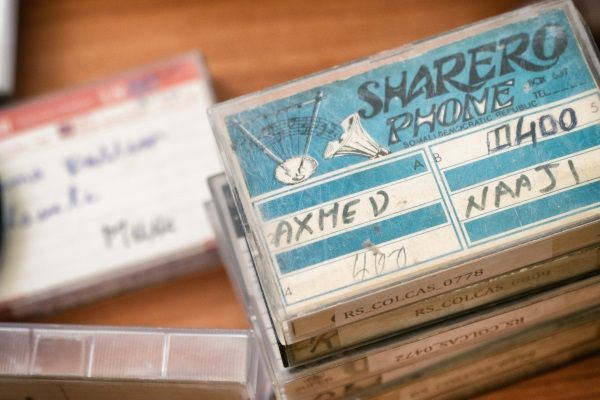
The archive captured the Mogadishu of the 1970s and 1980s, and while a full-fledged compilation album is slated for release this year, part of the archive was posted on the Ostinato Records SoundCloud page last month.
Music In Africa tracked down the dynamic duo of Sheikholeslami and Sohonie and spoke to the latter about the latest compilation of Somali music.
What was your motivation for doing this?
Most of the world was introduced to Somalia through the very effective propaganda film, Black Hawk Down, which cemented Somalia’s image as a violent society with no hope. Today we are living in a post-Western world, when the cultures of the Global South have reasserted themselves. Somali culture is so rich, deep and sophisticated, with a gentle, beautiful story to tell – and we see ourselves as the messengers who are bringing the world this story. Neither the music or culture is ours but we recognise its immense history, power and humanity.
This project is a human story, humanising a country whose image and reputation has been ruined by war and media imagery and stories that focus on the Black Hawk Down narrative. We want to change the perception of Africa. We are tired of the images of children with bullet casings wrapped around their neck. This imagery has no place in the 21st century and it is time Somalia took control of its own image and was seen through the prism of culture, music and art.
And that begins by reclaiming the past. There are many ways to do this – one is to write books, as many Somali writers have done, another is to start up an Instagram account showing daily life, as many ordinary Somalis have done. But to us, the most powerful way to change the image of a country and people in the global imagination is music. If you find yourself at a club in New York, Berlin, Singapore or Tokyo dancing wildly to Somali music, or even at home grooving to the richness of these sounds, there is a good chance you will never see this country the same again. This is the primary goal of Ostinato Records. We hope we can produce something similar for Syria someday.
How has the mixtape been received by Somalis both at home and abroad?
We are very happy to say that the mixtape posted was very well received by Somalis at home and abroad. The engagement was excellent and we strive to tell the story of Somali music from a non-Western perspective, placing emphasis on songs and styles that may not fit the Western conception of ‘good music’. This approach has garnered a lot of praise and blessings from the Somali community.
Tell us about your journey – the sounds and sights of Somalia. Any interesting people, experiences and anecdotes?
Our journey took us across the Somali speaking belt of the Horn of Africa – Somalia, Puntland or Somaliland and Djibouti. We carefully planned our trips months in advance, building a very strong network of diasporan Somalis to begin our research, as well as coordinating with people on the ground before arriving to secure visa sponsorship and security.
The food consists of a lot of fish, camel meat and spaghetti – a legacy of Italian rule. Somalia has the longest coastline in Africa and some of the best quality seafood in the world. Japan and Spain get a lot of their seafood from the Somali coast, which has often been pointed to as the cause of piracy as Somalis protect their maritime agriculture. We were perfectly well fed but there are millions now facing an unprecedented drought. Our prayers are with them.
We met a really quirky cast of characters on our journey – from former tycoons who made fortunes in the booming Mogadishu of the 1970s to people who had moved back from the US or Europe to contribute their skills to Somalia’s fishing industry and development of ports.
We also met the vice-minister of culture from Somaliland, who was Somalia’s first female journalist. We met a handful of musicians, but most live elsewhere. Our friend and guide, Zaat, who had two jobs – a taxi driver and an immigration official – had a wicked sense of humour and lightened up the tedious trips.
Probably the funniest story we have is of Nicolas’s giant afro. In a conservative culture, long hair on men is frowned upon, and people would shout at Nicolas in the streets telling him to cut his hair and jokingly asking if he was al-Shabaab. So he finally got a haircut.
Lastly, we thank Jama Musse Jama of the Red Sea Cultural Center, with whom we collaborated and who is doing magnificent work.
What was your impression of post-war Somalia?
There is a great deal of progress and nation (re)building taking place after a two-decade civil war – in the schools, universities, hospitals, businesses and telecommunications.
Having been born in India, I personally found it heartwarming to discover the historic connection between Somalia and India, and as such, I felt very welcomed. When I would tell people I am Indian, I always heard great stories from Somalis who went to university in India. Somalia is renowned for its legendary hospitality.
In terms of the infrastructure of the industry, you have previously mentioned radio stations and their public broadcasts as well as a vibrant live performance scene in Mogadishu then. How has that changed?
The civil war decimated everything and musicians fled in numbers – some resettled in Europe, North America, the Middle East and East Africa. In fact, we have a deal in place for a few songs where licensing fees are distributed among band members and some are in refugee camps in Kenya.
Indeed, music was still made after the war. The 1990s saw many recordings, mostly done in places like Dubai, Toronto, London, Nairobi and even Saudi Arabia, where some musicians took two completely opposite routes: some became Salafi imams and condemned music and some set up music studios.
Since things have gotten better, there is music being made today, but it needs guidance and investment. From what we saw while meeting with government officials and national radio senior staff, more effort is going into restoring and preserving recordings from the past that survived the war, rather than new talent.
The challenges are grave – conservative and hardline religious groups make the reviving of culture and music almost dangerous. In Hargeisa, Somaliland, the famous singer Sara Halgan runs a slick live music venue where Yemeni-inspired Somali oud (a short-necked string instrument) performances take place. This venue has been threatened numerous times.
What did you identify as the influence of this music from the Golden Age on Somalia’s music today?
The Somali music ‘industry’ was indeed thriving but in comparison to its neighbours like Ethiopia, Sudan and Kenya, where cult record labels and producers captured the countries’ sound and made the recordings available for the masses, the Somali music scene was wholly owned by the state. Siad Barre operated under an authoritarian, socialist ideology which believed in wholesale nationalisation. Music was controlled by national radios and government ministries. Iftin Band, for example – arguably the most popular band at gigs for theatre plays, hotel ballrooms and dancefloors – were owned by the Ministry of Education.
So the post-colonial environment made a revivalist effort to recapture the wealth of influences Somalia has had as a cultural crossroads of the world. The Indian Ocean trade before European colonialism, in which Mogadishu was the richest trading city, saw incredible cultural exchanges between the Somalia and the Arabian Peninsula, India, Southeast Asia and China. All of these influences melded together to create the Somali sound, which also drew greatly from Sudanese music and Bantu rhythms from the Swahili coast. The time period we’re focusing on saw Somalia shift between Soviet Union and American support in the Cold War. Somali musicians incorporated the flavours of Afro-American blues, jazz and funk into their scales, harmonies and melodies. So what you have is an innovative period of sophisticated musicianship and experimentation – unknown because of a lack of record labels and the 1988 civil war.
Did the monopoly of government narrow the space for expression and determine the themes artists could explore?
Some of the recordings we came across and loved were, funnily enough, propaganda music –praising the military takeover of power because there was genuine belief in the power of the military to transform the country into something Somalis could be proud of. Barre’s bloodless coup was welcomed because it took power from what was seen as an illegitimate government that had merely inherited power from colonial rule. So the music was good because it was genuine.
As most of the musicians were state employees, there were some songs that were tinged with subversive lyrics disguised as, say, a love song. But because this was the post-colonial period, and rebuilding the country and reclaiming Somali culture was seen as a unifying national goal, many of the songs dealt with social issues – the role of women, the need for education and literacy, the pressures of old societal structures.
Who are some of the artists whose work you’re documenting and what happens in the case of dead musicians?
Ostinato Records has worked with music from the 1950s, meaning some musicians and singers are dead or in bad health, so you meet and speak with their families, usually their kids. Luckily because most of the music we’re dealing with from Somalia is from the late 1970s and the 1980s, almost everyone is alive. We cannot reveal more details at this time as but we are working with some of the biggest names from the era as well as some lesser known talents who also deserve a spotlight 40 years later.
What’s the role of Somalis in diaspora, especially the ones you worked with, and their connection to the music scene back home?
Ostinato Records projects deal with cultures that have large diasporan communities. The diaspora is vital to restoring a country struck by hardship. They have the tools and means at their disposal to begin the hard work of reclaiming a country’s culture and image. We’d say 98% of the musicians are part of this diasporan community, spread from Minnesota to Malaysia, and they were the key to unlocking the hard part of this project – tracking down people, licensing and intensive research.
Listen to Somali Sounds from Mogadishu to Djibouti here.


Most popular

Open call: 2026 Gender@Work music industry training in Johannesburg
09 Oct 2026

Top amapiano songs of 2026
16 Feb 2026
Gambia: Suntou Susso announce UK tour for ‘The Path of a Griot’
09 Oct 2026

Top Afrobeats songs of 2026
19 Mar 2026

Top Naija songs of 2026
31 Mar 2026

Call for applications: ACCES 2026 Emerging Artist Spotlight Competition
01 Oct 2026
Disclaimer: Music In Africa provides a platform for musicians and contributors to embed music and videos solely for promotional purposes. If any track or video embedded on this platform violates any copyrights please inform us immediately and we will take it down. Please read our Terms of Use for more.

Subscribe to our monthly Newsletter
Follow us on social media


Please log in to post a comment.