


















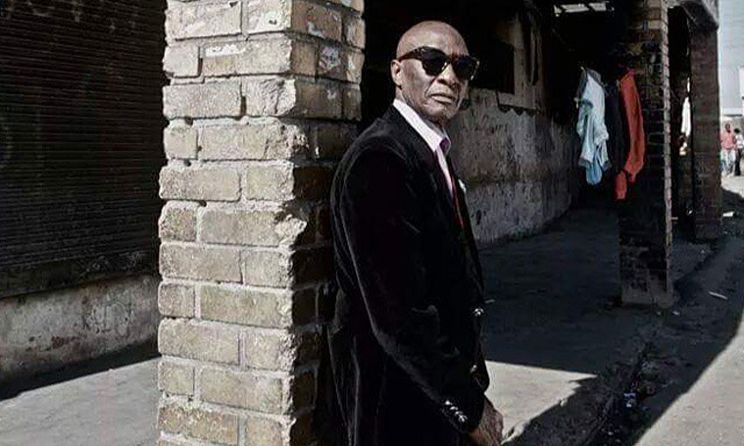









































Northern Nigeria is made up of diverse identities and cultures. It has a dominant Muslim population, but music entertainment in Northern Nigeria predates the economic contact with the Arabs, or the reforms of the Islamic promoter and founder of the Sokoto Caliphate, Usmanu Danfodiyo (1754-1817).
Introduction to music in Northern Nigeria
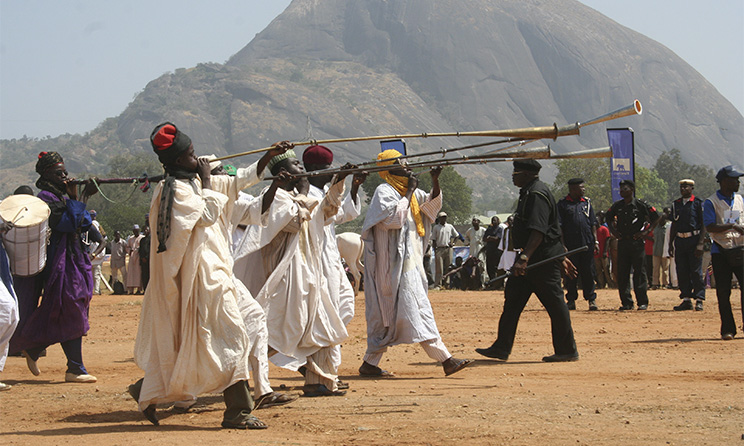
Hausa traditional music is generally acoustic—without guitar, keys or wind instruments—and composed with percussive instruments such as the talking drum, the kuntigi (a single-stringed lute) and other instruments made from local materials.
Many Hausa traditional musicians of the past such as Shata, Dankwairo and Narambada sang for well-paying clients and sometimes for notorious and infamous people. Dan Maraya Jos was one of the best-known kuntigi players.
Artists such as Muhammadu Gambu, Audu Makarfi, Ashana, Garba Super, Dan-Anache and Shehu Ajilo explored themes often considered vulgar and blashphemous. Muhammadu Gambu specifically sang about subject matter such as murder, gambling, prostitution, alcohol consumption and drug use. And in the 1960s, a troupe of male and female dancers, led by the singer Abdu Yaron Goge, also invented a sexually suggestive Northern Nigerian bar dance called bansuwai.
Today, younger musicians do not restrict themselves to acoustic music. Instead, they produce beats in studios while singing in the traditional manner of patronage, performing songs before prominent personalities who pay the musicians to do so.
One such artist is Naziru Ahmad. His songs tend to be preachy, but his most popular hits are usually patronage songs. His song for Emir Muhammadu Sanusi II of Kano earned him the appellation Sarkin Waka (The King of Music). Ahmad comes from a family of artists and singers, including two brothers –one a nanaye singer and the other a Kannywood director.
Nanaye music is a genre of Hausa music made exclusively for films. The music is recorded for lip-syncing by actors and actresses of the Hausa movie industry, known as Kannywood.
Religious music in Northern Nigeria
Islamic fundamentalists generally consider art and entertainment sinful. Muslim scholars, however, hold various views about the unlawfulness of art and entertainment.
For instance, ethnomusicologist LI Al-Faruqi orders music and singing in five increasing tiers: forbidden, unfavoured, indifferent, recommended and commendable.
Recitation of the Quran is at the peak of this hierarchy, followed by the call to prayer and religious chants. Songs connected to family celebrations, caravan chants, work songs and the music of military bands are considered legitimate. At the bottom of the hierarchy is sensuous music performed in association with condemned activities, or music thought to incite prohibited practices.
Debates about the legality of music, however, did not prevent growth of the art. The religious establishment could not condemn music as an entertainment medium, because of its necessity during the rituals of the Sufi brotherhoods (Qadiriyya and Tijjaniya). Condemning secular music, in this case, is akin to condemning religious music.
Mandiri music developed from this secular-religious confusion. Qadiriyya Sufi adherents used the bandir drum to regulate the speed of chanting litanies. Students would get together to sing songs in Hausa about how to obey their parents, or would sing praises to the Prophet Muhammad. Mandiri singers often referred to themselves as “lovers of the prophet”.
A more deviating use of modern music to perform Islamic rites began in modernised Qur’anic schools known as Islamiyya schools. They adapted Hindi music from Bollywood movies to sing praises of Muhammad in the Hausa language.
After the rise of Islamiyya schools and the music associated with them, muandiri musicians somewhat reinvented the approach. They moved towards Hindi music as religious praise, changing the words of Indian film songs to lyrics praising the Prophet Muhammad. But even this form of religious popular music invited controversy.
The reinvention of mandiri music led to nanaye singers using soundtracks in Hausa home movies. Dan Azumi Baba, Mudassir Kassim and Sani Garba SK, all mandiri artitsts, became the pioneers of nanaye music.
Islamiyya school pupils evolved again, recording their religious poems for sale. They also stopped using meters from Bollywood songs, instead adapting Hausa film soundtracks from popular movies such as Sangaya and Wasila to propagate Islam. Essentially, religiously inclined musicians ‘filtered’ and ‘purified’ the music and converted it for spreading Islamic messages.
Today, musical practice in English-speaking Northern Nigeria is mostly championed by minority Christian populations spread across the North Central and North Eastern states. Some of the most popular Nigerian musicians have Northern Nigerian backgrounds, such as 2Baba, who was born in Jos, Plateau State, and originally hails from Benue State, both of which are in the central part of Northern Nigeria. The twin duo of P-Square also began their career in Jos before moving to Abuja. Ice Prince was born in Minna, Niger State, and grew in up Jos.
In a pamphlet titled Who Are the Sinful Women, According to the Quran and Hadith, which is commonly found at religious bookstalls in the open markets of Northern Nigeria, a passage says: “Music and dancing have been found to be a great stimulant of carnal sex, a stepping stone to fornication and adultery. It is therefore essential that every Muslim man and woman take utmost care to reclaim and preserve himself or herself from this.”
Religion and music censorship
Many Muslims have an instinctive, self-regulatory impulse that seeks to protect religion and society. Being a Muslim artist can, therefore, be a constant battle of identity, creativity, morality and self-censorship.
Within the context of Islam embedded in Hausa culture, drum-beating and singing are frowned upon, especially in places where there is contact between men and women. The only permitted times for drum-beating and singing are at Eid celebrations, weddings and naming ceremonies. Even in such ceremonies, complete segregation between men and women is required. Therefore, a certain genre of music is allowed in one context while frowned upon in another. Playing a tambourine is acceptable if done by women at a wedding, but also associated with homosexuality and prostitution.
Despite the above examples and the introduction of the Sharia legal system in Northern Nigeria during a four-year period following Nigeria’s transition to democracy in 1999, it is still common to see and hear drumbeaters and singers at work with performances that invoke the name of God before commencing their secular performances.
In 2007, Adam Zango, a popular actor and musician, released a music video titled ‘Bahaushiya’ (Hausa Girl). It had a lot of Western-styled hip hop and the women in the video wore dresses with the navel exposed. This led to the arrest of Zango under Sharia. After his release, Zango left Kano and began producing music in the more liberal, neighbouring Kaduna.
In Alhaji Sirajo Mai Asharalle, Hausa popular music laced with bawdy undertones and performed at weddings, ceremonies and special occasions had a star in the new millennium. He made the music well known before the popularisation of nanaye songs and the rise of Hausa hip hop as performed by the likes of Adam Zango. Asharalle had a 20-person entourage and only sang at momentous occasions. His stature among pop stars was beyond dispute. Asharalle supported the institution of Sharia in his state of Katsina because he was, in his words, “Born in this culture and every Muslim is in favour of the application of Islamic law”.
But in 2001, the religious police, Hisbah, began a crackdown on pop musicians, and Asharalle was among those incarcerated without court proceedings. He spent a week in jail before being released.
Subsequently, with the rise of nanaye musicians, the proliferation of improved technology and the popularity of artists like Zango, Asharalle’s acclaim waned.
Music and religious violence in Northern Nigeria
Boko Haram propaganda videos often feature some form of music as an introduction. Arabic and Hausa music is used to encourage insurgents not to give up their cause. Therefore, some of the inspiration for Boko Haram members can be understood through these kinds of music, which often speak of the group’s vision in an underlying theme of a cosmic war between good and evil.
Conclusion
The Hausa saying, “Malam sai dai ya ce wa kidi ko waka haramun ne ba wai ba dadi ba” (Even the religious scholar can only say music is forbidden but he dares not say it is not enjoyable) implies that even within the Islamic and cultural sphere of Northern Nigeria, music itself is often not the problem, but the way it is structured, refined and disseminated to society.
Musical tradition in Northern Nigeria evolved over time until it became defined by religious ideals, such that music was only allowed when it did not lead to temptations towards sinful acts, therefore departing from its traditional root of music of cult and spirit worship. The evolution is, however, continuous as music in Northern Nigeria is now defined through non-religious ways and has become a part of popular entertainment.
References:
- Radda S.I. (2014) A Biography of Gambu and His Categorization of Crimes. Being a paper presented for publication in the Festscrift in honour of Prof Abdulkadir Dangambo, April, 2014.
- Mujaheed A. (2017). Hankaka Mai Da Dan Wani Naka: Wakokin Salisu Sa’in Makafin Zazzau A Bakin Mawakan Karni Na 21. A paper presented in Hausa at the International Conference on Hausa Languages and Linguistics at the Department of Nigerian Languages and Linguistics, Kaduna State University, Kaduna, Nigeria. 18-21 May 2017.
- Faruqi, L.I. (1985). Music, Musicians and Muslim Law, Asian Music 17(1): 3-37.
- Adamu A.U. (2006). Transglobal Media Flows and African Popular Culture: Revolution and Reaction In Muslim Hausa Popular Culture. An essay presented at the Mary Kingsley Zochonis lecture for the African Studies Association, UK Biennial Conference, School of African and Oriental Studies,
- Abdalla Uba Adamu, Professor of Professor of Media and Cultural Communication, explained the challenge of the Hausa Muslim artist in relation to religious practices and society in an Interview with Hip Deep, a special set of Afropop Worldwide radio programmes.
This article is part of the Music In Africa Connects project, a multi-faceted development initiative aiming to support the music sectors of African countries affected by conflict. To find out more about Music In Africa Connects, click here.


Most popular
Gambia: Suntou Susso announce UK tour for ‘The Path of a Griot’
09 Oct 2026
Open call: 2026 Gender@Work music industry training in Johannesburg
09 Oct 2026

Top amapiano songs of 2026
16 Feb 2026

Top Afrobeats songs of 2026
19 Mar 2026

Call for applications: ACCES 2026 Emerging Artist Spotlight Competition
01 Oct 2026

Top Naija songs of 2026
31 Mar 2026
Disclaimer: Music In Africa provides a platform for musicians and contributors to embed music and videos solely for promotional purposes. If any track or video embedded on this platform violates any copyrights please inform us immediately and we will take it down. Please read our Terms of Use for more.

Subscribe to our monthly Newsletter
Follow us on social media


Please log in to post a comment.