























































By Kagiso Mnisi
Zim Ngqawana was a spiritual mercenary, saxophonist, flautist, composer, teacher and metaphysician who had a transcendental outlook on music and life. Born in Port Elizabeth's New Brighton, Zim Ngqawana added a positively complex tone to South Africa's jazz scene. The impresario explored the art form since his teens until his untimely death on 10 May 2011, when he suffered a stroke while rehearsing for a show at his home in Troyeville, Johannesburg.
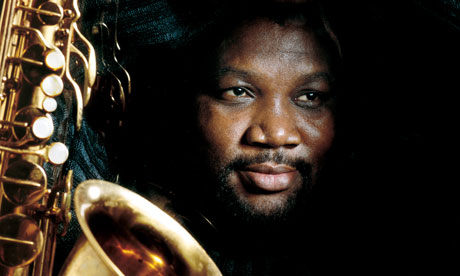
Ngqawana's mystique and love for music started humbly after being persuaded to play the flute by trumpeter Mongezi Feza, who along with the rest of Euro-trotting Blue Notes were seen as living deities in the eyes of a young Zim. Other members of the Blue Notes were Johnny Dyani, Chris McGregor, Dudu Pukwana and Louis Moholo, who Ngqawana later immortalised on Zimology. Nqawana officially started performing alongside his brother as part of an outfit known as the Afro Teens. He also served as member of a reggae group, the Black Slaves, and then with the famous Pacific Express.
He rose to popular acclaim through his involvement with Cape-born guitarist Jonathan Butler, who made a name for himself on the world stage with his progressive fusion of jazz, pop and R&B. In the late 1980s, Ngqawana studied Jazz at Rhodes University in Grahamstown. He was also involved in The University of Natal and played a role in the formidable ensemble known as the Jazzanians. One of the many ironies of this jazz impresario is his widely documented criticism of formal education. In an interview in Oslo, Norway, a journalist asked him: “Where did you study?” Sensei-like, he replied: "From my parents, surroundings, my pain, my joy and my encounters in life." The journalist narrowed the question and tried again: "What about institutions?" Nqawana replied by saying: "Institutionalised education is about money," adding: "True education about love and it is free. That is what I got from Max Roach."
It was at the University of Massachusetts that Ngqawana became enthralled by the mastery of Roach through a scholarship awarded by the drummer. He also found kinship in the late flautist Yusef Lateef and saxophonist Archie Shepp. Ngqawana's return to South Africa in the 1990s had him wanting to delve deeper into the spiritual sphere by using jazz as a vehicle. His goal was to heal through music - during a time when his country was brushing off the dust of apartheid repression. Over his prolific career, Ngqawana released acclaimed albums such as San Song (1996, with the Norwegian San Ensemble), Zimology (1998), Ingoma (1999), Zimphonic Suites (2001) and Vadzimu (2004), as well as numerous live albums and ‘best of’ compilations. His crowning achievement remains Zimology. Jazz critic Daoud A. Haroon wrote of his ensemble’s intention to pay homage to the greats, living and deceased, local and global, on the album: "This quartet, given enough support, is going to be very important in 21st Century music."
As a spiritual seeker, Ngqawana practiced Islam, a faith he claimed originated in Africa. He found the branch of Sufism to be revelatory and a basis on which music and life could be intertwined. Rooted in the language of poetic symbolism, an observation of his liner notes show Zim to have embraced Sufism through complex imagery. The weight of poetry a constant feature in his work, Ngqawana makes an appearance in Aryan Kaganof's documentary called Blue Notes For Bra Geoff, a tribute to Bra Geoff Mphakathi, a popular promoter of innovative bands like Malombo and Dashiki.
The saxophonist blows the instrument to a melancholic wail alongside the beat poetry of Lefifi Tladi. Through his quest as a keen anthropologist, he continuously challenged western narratives on Africa. He even rebuked the name 'Africa', claiming it to be a Roman construct. Childhood memories of his grandfather calling the continent ‘Quntu’ further intensified his argument. Speaking of the initiation song into manhood, ‘Qula Kwedini’, on the Zimology album, he said: "It is better to be a man than to be a male...I am a man, a Grimaldi man" . This reveals his staunch belief that Africans were the first inhabitants/colonisers of Europe. His need to pass knowledge on to emerging musicians led to him founding the Zimology Institute on a farm he bought outside of Johannesburg. The institution exposed those under its roof to the inner workings of the local music industry. However, this temple of musical philosophy succumbed to vandalism, its musical instruments and prized ornaments damaged. Ngqawana's response was to stage a concert to combat the crime that threatened the stability of South Africa.
Upright bass player Johnny Dyani was once asked by filmmaker Aryan Kaganof, during a rare interview in Amsterdam: "Tell me what you think is important." Dyani's response was a long riff of history, comedy, coast life and jazz. What would have been the response if the same question was posed to the late Ngqawana? Could he have amassed a Sun Ra-esque 'falling bodies' theory, and maybe dressed it in Xhosa incantations during a rite of passage? Sadly we will never know. Nqawana’s story was a compelling one of self-determination and spirituality - cut short tragically at the height of his powers.


Most popular
Open call: 2026 Gender@Work music industry training in Johannesburg
09 Oct 2026

Top amapiano songs of 2026
16 Feb 2026

Top Naija songs of 2026
31 Mar 2026

Call for applications: ACCES 2026 Emerging Artist Spotlight Competition
01 Oct 2026

Top Afrobeats songs of 2026
19 Mar 2026
Gambia: Suntou Susso announce UK tour for ‘The Path of a Griot’
09 Oct 2026
Disclaimer: Music In Africa provides a platform for musicians and contributors to embed music and videos solely for promotional purposes. If any track or video embedded on this platform violates any copyrights please inform us immediately and we will take it down. Please read our Terms of Use for more.

Subscribe to our monthly Newsletter
Follow us on social media


Please log in to post a comment.