











































NEFCISA
NEFCISA

The Music In Africa Foundation (MIAF) is proud of its partnership with the Industrial Development Corporation (IDC) as a Strategic Implementing Partner (SIP) for its Social Employment Fund (SEF). Through this collaboration, MIAF is running a national programme that is creating jobs, addressing skills gaps, and strengthening South Africa's creative industries — in line with the SEF's overarching goal to generate work for the common good and build community value through employment, social contribution, and inclusive economic participation. Operating under the banner NEFCISA (National Employment Facility for Creative Industries in South Africa), the initiative is recruiting and training participants, matching them with host organisations, and has already placed 1 500 workers across the country — surpassing its original target of 1 000. NEFCISA is delivered through a network of 20 host organisations spanning five provinces, who are actively hosting participants and contributing to work for the common good across South Africa's creative and cultural industries. Key Objectives: Support employment and entrepreneurship in the creative industries. Offer skills development and training programmes. Foster partnerships between public and private creative sectors. Promote South African creativity at both provincial and national levels Foster community development through social contribution.

ACCES
ACCES

ACCES Conference and Showcase Festival is Africa's leading music industry gathering, bringing together the people shaping the future of the continent's music business. Artists, entrepreneurs, executives, investors, policymakers and cultural leaders from across Africa and around the world come to ACCES to build partnerships, exchange ideas, discover talent and create new business opportunities. Since its launch in 2017, ACCES has become the continent's premier platform for professional exchange and music market development. Combining a high-level conference with a curated showcase festival, networking, exhibitions and industry programmes, ACCES offers a unique space where creativity meets business and where African music connects with the global industry.

Gender@Work
Gender@Work

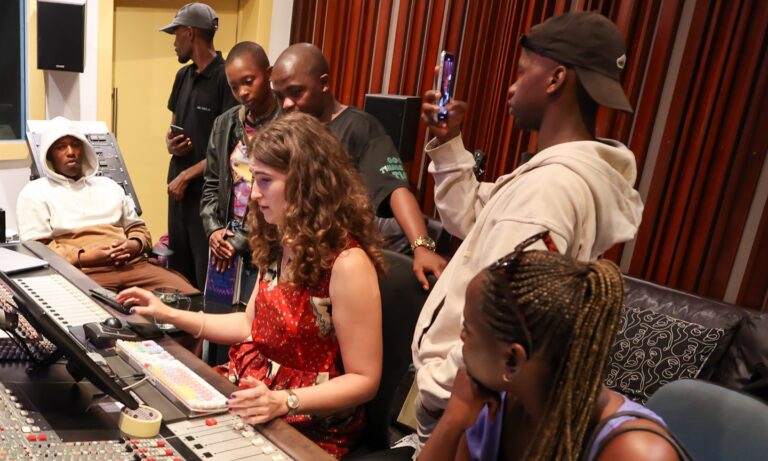
Music In Africa Gender @ Work is a three-year training programme aimed at upskilling and increasing the participation of female professionals in the African music sector. Launched by the Music In Africa Foundation (MIAF) in April 2019, the programme is connected to the MIAF’s ACCES music conference – a pan-African event held in a different African country every year. This connection enables the programme to reach new participants in a different African country every year. The programme marks the beginning of a more concerted effort by the Foundation to support the participation and inclusion of women in all facets of its programmes and the music sector in Africa as a whole. Over the three years, the programme will aim to address gender imbalances in the sector through training, lobbying, facilitating knowledge exchange and dialogues that foster the interest of women. The broader objectives of the programme are to: Provide industry training for women on critical music industry skills, focusing on: Stage management Electronic music production and recording Music business management Technical knowledge Provide an opportunity for both professional and aspiring women to benefit from the Music In Africa network and its broad range of activities in 2019, 2020 and 2021. Provide a solution-based platform in the form of a round table at ACCES with a view to identify challenges, discuss opportunities and lobby for the interests of female practitioners. Offer participants the opportunity to benefit from programmes offered by MIAF’s partners. Increase access to educational materials. Integrate participants in the broader ACCES programme to maximise experience and exposure to the industry. Record and present training materials on the www.musicinafrica.net, including but not limited to tutorials, templates and other best-practice materials. Communicate women-based themes that support the initiatives and messages of the programme. MAIN TRAINING ACTIVITIES Training in first country (Ghana): In the first year, participants will be trained on all aspects of stage management by a team of experienced stage managers from 10 to 17 November 2019. The programme will offer robust classroom training as well as practical, hands-on training in which participants will also be given the opportunity to manage various aspects of the ACCES performance programme. Training in second country: The second training iteration will take place at ACCES 2020 when the programme will diversify its course to include music production lessons and training on other music business topics. A round-table platform will also be introduced to coincide with the ACCES programme. Training in third country: The third training iteration will take place at ACCES 2021 in a different country, offering an advanced course. HOW DO YOU GET INVOLVED?  As a participant, facilitator or trainer: The programme enrolls up to 12 trainees every year. All opportunities are advertised publicly on this website, and will be added to this page. Please keep checking this page for new calls (below under UPDATES & CURRENT OPPORTUNITIES). As a partner Please contact Claire Metais at [email protected]. APPLY The call for applications for 2020 will be announced soon. The Music In Africa Gender @ Work programme is made possible with the support of the Prince Claus Fund, Siemens Stiftung and Goethe-Institut.

Sound Connects Fund
Sound Connects Fund

For cultural and creative practitioners and organisations operating in southern Africa, access to funding remains a major challenge. The COVID-19 pandemic has also had a massive impact on government policy, spending and the economy in general, and has seen spending on culture being moved further down the list of priorities. Further, the cultural and creative industries repeatedly cite four main areas where investment is needed for growth, which are increased visibility, mobility including access to new markets, finance and support structures.

Instrument Building And Repair Project

Experience the Vibrations African Instruments Exhibition online in 3D

Features

Ambrosia-drinking Incubus rock South Africa

01 Mar 2018 - 16:00

cc-img

If you have an affinity for vampires – their physical and mental strength, relentless nocturnal stamina, stubbornness to age and taste for good art – then Incubus singer Brandon Boyd may be your cup of blood. It’s been almost 21 years since the American band released their seminal album S.C.I.E.N.C.E (Incubus actually formed in 1991!) and there are no signs that the hated-by-jealous-men exemplar will be shrivelling any time soon. And if you saw the singer strip down to a sinewy Roman sculpture in South Africa’s capital Pretoria at the weekend and in Cape Town last night, you’d better believe it that he’ll effortlessly outlive many of his dry-roasted peers, except of course for older colleagues like Strolling Bone Keith Richards and proto-punk maniac Iggy Pop.

Incubus frontman Brandon Boyd.

These two biological miracles have been touted to live through the next life-ending cataclysm. But outer physiology and beauty have become precarious things. I’ve seen 14 year olds looking worse than middle-aged, heroin-addled musicians while queuing for the next big TV game release. It’s horrendous – sleep-deprived out of excitement they salivate at the thought of the next fix of simulated reality.

What’s Boyd’s secret? Nobody knows, but there’s a rumour going around that he’s spending eight hours in the gym, eight hours in a hyperbaric chamber and the other third of the day in the company of giggling groupies. That’s a sure formula for long life.

Like Boyd, Incubus seems to be on a path of musical immortality. The band’s arousing set, composed of songs from six albums loved by rock fans in their 40s, 30s, 20s and teens, is a fitting testament to an emblematic American band that cleaves through generations and genres. Consider the blend of the musicians on stage: a singer who could have joined the Backstreet Boys if he wanted to; Jose Passillas, a drummer of the ilk of groove machines like Brad Wilk of Rage Against the Machine; Mike Einziger, a guitarist influenced by the inexhaustible tradition of great American guitar players; Chris Kilmore, the keyboardist and turntablist who adds creative sampling, padding and scratching to the band’s already multi-layered sound; and bassist Ben Kenney, who played for The Roots before joining Incubus in 2003.

The combined efforts of the five musicians present to the crowd an extensive anthology of American music of the past 30 years. It’s a serenade that’s part hip hop, part indie, part dub, part funk, part soul and mostly rock – all carefully stirred together in a boiling crucible.

The Californian band opened Saturday’s show at the politically loaded Voortrekker Monument with new songs from their 2017 album 8 – Incubus’ first since 2011 – to a lukewarm reception from the crowd. Incubus were testing the waters of a country and venue they had never played before, and were rightfully showing off their latest creative clout as any musicians worth their salt should. Whereas American audiences are eager to show appreciation for fresh music by their favourite bands, South African rock fans, much like many of their European counterparts, are a little more sceptical about letting new music into their homes. New music is a stranger that you shouldn’t entertain too eagerly. It must first be observed carefully, tested strenuously and tasted in small portions before anyone gets hurt. Once it passes this pontifical checklist of scepticism, only then can it enter your idiosyncratic clique.

‘Wish You Were Here’ (including a snippet of Pink Floyd's 'Wish You Were Here'), ‘Nice to Know You’, ‘Pardon Me’, ‘Stellar’, ‘Vitamins’ and ‘Drive’ were delivered as expected, but it was ‘Loneliest’ off 8 that signals the next phase of Incubus’ path to immortality. The relatively slow song uses low frequencies and various electronic components in unison with vocals reminiscent of Maynard James Keenan’s phrasing and inflections with A Perfect Circle and Puscifer. The song not only adds yet another dynamic to the band’s stylistic offering but takes Incubus’ music out of high school and into the technological future.

This aesthetic can also be heard in ‘Make No Sound in the Digital Forest’ – another electro-inspired track off 8 that was released as an instrumental. Here, however, the roots of the sound lie with British synth bands like Depeche Mode. Perhaps Incubus are finally getting old, at least under their boyish exterior. And maybe their talent is too colossal to be bound to the intimidating musical force of the US.

Please log in to post a comment.

Most popular

Disclaimer: Music In Africa provides a platform for musicians and contributors to embed music and videos solely for promotional purposes. If any track or video embedded on this platform violates any copyrights please inform us immediately and we will take it down. Please read our Terms of Use for more.

newsletter banner

Subscribe to our monthly Newsletter

Follow us on social media