












































Rap isn’t dead! How streaming is helping SA hip hop multiply
03 Feb 2023 - 13:12


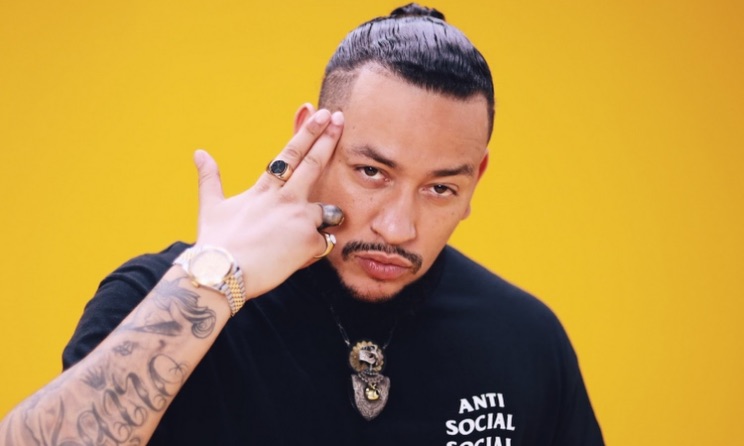
There is a line in AKA and Nasty C’s ‘Lemons (Lemonade)’ that goes “People say hip hop died, that’s nonsense”, and while South Africa’s amapiano scene is currently in the midst of a major global moment, there is still a massive appetite for South African hip hop, which is, in part, being fed by music streaming services.
One need only look at the Spotify Wrapped data for 2022, where the top 10 streamed artists in the country include hip hop artists like Blxckie, Nasty C and A-Reece – all of whom have racked up millions of streams between them.
As the world marks the 50th anniversary of hip hop this year, we should be celebrating our local hip hop talent. This weekend, Cotton Fest and Spotify will be showcasing the history of the hip hop movement in South Africa, and celebrating some of the pioneers of the genre in an installation at the event.
There is a lot to celebrate
A look at Spotify data, which shows where some of South Africa’s current crop of hip hop talent has been streamed in January, is an interesting exercise. It makes sense that A-Reece, AKA, Blxckie, Cassper Nyovest, Nadia Nakai and Nasty C are most streamed at home. It even makes sense that the US and UK feature as key markets for all six, given that they predominantly make their music in English.
But it’s when you look at AKA’s popularity in France, Cassper connecting with the German market, Nasty C’s popularity in India, Blxckie’s listenership in the Netherlands or Nadia Nakai and A-Reece’s influence in Malawi that it becomes clear that South African hip hop is not just alive and well – it’s sprouting across the globe. This is a powerful example of how South African talent, when put on the global stage that streaming provides, will undoubtedly shine.
Part of why hip hop will never die is because it is about so much more than the music. Hip hop has always been deeply intertwined with culture. Whether it’s the breakdancing and graffiti that initially helped to grow the movement, the conscious rap movement of South Africa in the ’80s, or the various iterations of fashion from hip hop brands like Amakipkip and Phat Farm, through to luxury threads and the bling lifestyle, hip hop touches so many aspects of people’s lives.
It’s why an event like this weekend’s Cotton Fest, the brainchild of the beloved late rapper Riky Rick, has such wide appeal. He understood that hip hop is about the culture, tying together his love of the music, fashion, food and sport. The festival, which has now become a tribute to his life, can best be described as a cultural festival, rather than simply a musical one.
Spotify’s installation, titled In Black and White: Wall of Legends, will form part of the Cotton Fest celebration. It is a way for us to highlight some of the legends of the genre and give them their flowers for the role they have played in developing the culture. Those not attending the festival can still get their fix of local hip hop through our Mzansi Raps playlist.
Showcases and playlists of this nature are some of the ways that Spotify is helping local artists – whether they be hip hop legends or rising stars – connect with their fans and find new ones but the platform also provides them with an array of tools and support to grow their audiences.
And while some might argue that South African hip hop is dead, overtaken first by gqom and then by amapiano, the truth is that throughout its history in South Africa, hip hop artists have been fighting for their time in the sun.
Hip hop first arrived on South Africa’s Cape Flats in the late ’80s, with founding fathers like Black Noise, Prophets of Da City and Brasse Vannie Kaap subverting the status quo, embracing their black identity and agitating for political change.
Gigs, mixtapes, the radio and record deals were the ways for hip hop artists to share their message. But in the days of government censorship and unpaid gigs, success in the music industry, as we would define it today, seemed far out of reach.
In fact, it was only in 2004, nearly 16 years after the genre first arrived on South African shores, that the first hip hop album went platinum. Pitch Black Afro’s Styling Gel was released in the midst of one of South African hip hop’s golden eras. It was a period characterised by the introduction in the ’90s of shows like Jam Alley and Yizo Yizo and the advent of youth radio station YFM, which were a celebration of hip hop music and its culture.
But those who were around in these glory days, when the push and pull relationship between hip hop and kwaito started to emerge and artists like HHP, Skwatta Kamp, Mandoza and Tumi and the Volume captured audiences across the country, will also remember the piracy adverts. So bad was piracy at the time, that adverts declaring piracy a crime on par with stealing a car were aired on radio and TV. While piracy is still a major concern for artists, streaming services like Spotify are creating a place where fans can legally access music, in a way that still benefits the artist.
That generation, who were largely multilingual, rapping in, among other languages, Zulu and Tswana, gave way to a newer generation more influenced by American hip hop – who rapped in English, dripped in gold and emulated the vocabulary and the beef they’d seen play out on the international stages. It was in 2016, nearly 30 years after hip hop found its way onto the Cape Flats, that AKA released the first English, South African hip hop album to go platinum.
Globally, the advent of streaming has accelerated the path to platinum and multi-platinum sales. In South Africa, where it has taken decades for hip hop artists to grow their following, streaming is now providing an opportunity for artists to speak to millions of people around the world. We’ve also seen each of South Africa’s distinct hip hop eras inspire a new generation of artists who embody the consciousness, flow or attitude of those who came before them.
So no, hip hop has not died, it has just found ways to multiply and Spotify is helping them do that.
Setumo Thebe-Mohlomi is Spotify South Africa editor.


Most popular

Top amapiano songs of 2026
16 Feb 2026

Top Afrobeats songs of 2026
19 Mar 2026

Top Naija songs of 2026
31 Mar 2026
Open call: Goethe-Institut grants for Southern African creatives
08 Sep 2026

AFRIMA 2026: All the winners
12 Jan 2026
Sun-El Musician confirmed for ACCES 2026 in Joburg
15 Sep 2026
Open Call: Voices For Roxette invites artists worldwide to submit cover versions
15 Sep 2026
Disclaimer: Music In Africa provides a platform for musicians and contributors to embed music and videos solely for promotional purposes. If any track or video embedded on this platform violates any copyrights please inform us immediately and we will take it down. Please read our Terms of Use for more.

Subscribe to our monthly Newsletter
Follow us on social media


Please log in to post a comment.