












































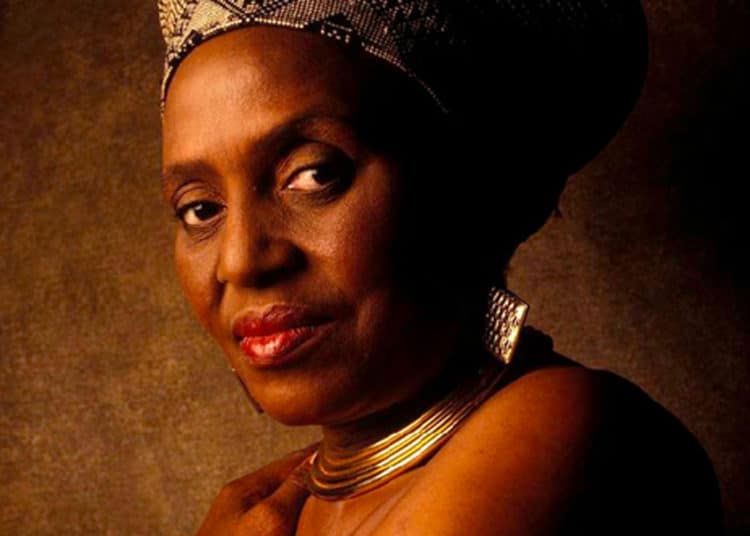
Miriam Makeba (Mama Africa)
Composers, arrangers & songwriters, Solo artists
Profile added by Sisi Nkabinde on 12 Nov 2025

Johannesburg, South Africa
1954
Miriam Makeba (Mama Africa)
BIO
Miriam Makeba (4 March 1932 — 9 November 2008), popularly known as Mama Africa was a South African artist and activist born in Prospect Township, Johannesburg.
She grew up in a South Africa that was both alive with song and heavy with segregation. Her mother was a sangoma, her father a teacher, both instilling in her the rhythms of language, healing and discipline that would later shape her sound. Music, for Makeba, was never mere performance. It was testimony.
Long before African music found a home on global playlists, Makeba was already its heartbeat, a woman whose voice became both a weapon and a balm. To the world, she was Mama Africa: the singer who turned exile into art, pain into melody, and identity into revolution.
A voice that refused silence
Makeba’s career began humbly in the 1950s when she joined the Manhattan Brothers, one of South Africa’s most popular vocal groups of the time. Her voice, smooth as silk yet filled with protest, drew attention almost instantly. Soon she formed The Skylarks, an all-female ensemble blending jazz and African harmonies, and South Africa took notice.
But it was Come Back, Africa (1959), an anti-apartheid film in which she appeared, that would change the course of her life. When the film premiered in Venice, Makeba travelled to Italy — and then to London and New York — where her performances dazzled audiences and caught the attention of American singer Harry Belafonte. Together, they recorded An Evening with Belafonte/Makeba (1965), an album that spoke fiercely against apartheid and won a
Grammy Award
By then, Makeba’s passport had been revoked by the South African government — a punishment for speaking truth to power. Yet, exile only amplified her voice. From the United States to Guinea, from Paris to Lagos, she sang the pain of her homeland and the pride of her people.
The sound of resistance
To call Makeba a singer would be to underestimate her power. She was a cultural diplomat, a freedom fighter, a woman who wore traditional African hairstyles and attire long before the world learned the term “Afrocentric”.
Her global hits — including ‘Pata Pata’, ‘The Click Song (Qongqothwane)’ and ‘Malaika’. In the 1960s, she performed at the United Nations, addressing the horrors of apartheid in a way only art could: through melody and moral clarity. Makeba’s music became the soundtrack of liberation movements across Africa and the diaspora.
Exile, love and return
Makeba’s life was as dramatic as her voice was graceful. She married fellow activist and civil rights leader Stokely Carmichael (later known as Kwame Ture) in 1968 — a union that drew heavy backlash from the US government and led her to relocate to Guinea, where she found refuge and solidarity.
Even in exile, she continued to perform across the world, often sharing stages with legends such as Nina Simone, Hugh Masekela, and Paul Simon, whose Graceland tour brought her back into global spotlight in the 1980s. When Nelson Mandela was released from prison, one of his first requests was for Mama Africa to return home. And in 1990, she did — her homecoming concert marking a moment of profound national healing.
A legacy that lives in song
Makeba’s impact on music and activism is immeasurable. She recorded more than 30 albums, performed on some of the world’s biggest stages, and inspired generations of artists — from Angélique Kidjo and Thandiswa Mazwai to Beyoncé and Sho Madjozi — to embrace their African heritage unapologetically.
She passed away in Italy, after collapsing on stage while performing in support of author Roberto Saviano — a fitting farewell for a woman who lived and died in the act of performance.
Today, Makeba’s music continues to pulse through radio waves, documentaries and sampled beats. She remains a symbol of grace under fire — the rare artist who turned her voice into an instrument of change.
Photos


Music
Videos

#miriammakeba #whenivepassedon #africanmusic #mamaafrica #makeba #southafricamusic
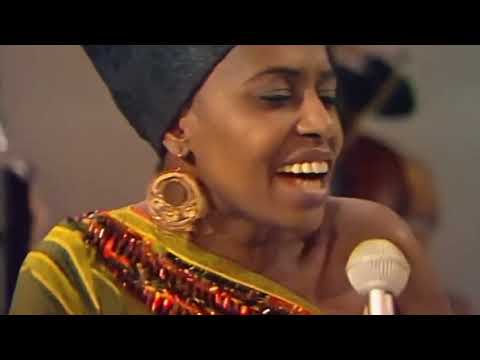
Miriam Makeba - When I've Passed On (European TV Performance, 1969)

Miriam Makeba - Ibabalazie (European TV Performance, 1969)

#miriammakeba #ibabalazie #mamaafrica #makeba #southafricamusic
![Miriam Makeba - A Promise (Live TV Performance: Midi Public) [1985]](https://i.ytimg.com/vi/mXxkOBSmmVs/hqdefault.jpg)
Miriam Makeba - A Promise (Live TV Performance: Midi Public) [1985]

Miriam Makeba - Welela (Official Video)

Miriam Makeba - The Click Song (Lyric Video)

Miriam Makeba - The Click Song - 2024 Remaster (Visualizer)

Miriam Makeba - Pata Pata - 2024 Remaster (Visualizer)
![Miriam Makeba - Kilimanjaro (Outro) [Live at Bern's Salonger, Stockholm, Sweden, 1966]](https://i.ytimg.com/vi/knpvIjbf3Tk/hqdefault.jpg)
Miriam Makeba - Kilimanjaro (Outro) [Live at Bern's Salonger, Stockholm, Sweden, 1966]

Miriam Makeba - Kilimanjaro (Live at Bern's Salonger, Stockholm, Sweden, 1966)

Miriam Makeba - Oh, So Alone (Live at Bern's Salonger, Stockholm, Sweden, 1966)

Miriam Makeba - When I've Passed On (Live at Bern's Salonger, Stockholm, Sweden, 1966)
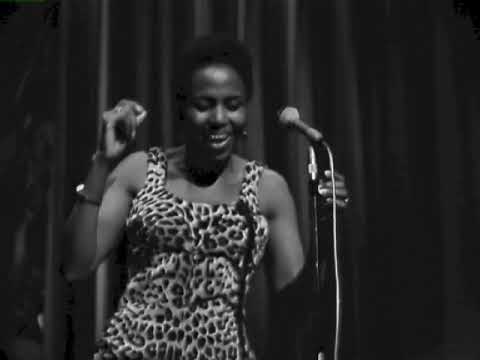
Miriam Makeba - Oxgam (Live at Bern's Salonger, Stockholm, Sweden, 1966)

Miriam Makeba - Mayibuye (Live at Bern's Salonger, Stockholm, Sweden, 1966)
Social Networks and Websites


Disclaimer: Music In Africa provides a platform for musicians and contributors to embed music and videos solely for promotional purposes. If any track or video embedded on this platform violates any copyrights please inform us immediately and we will take it down. Please read our Terms of Use for more.



