








NEFCISA
NEFCISA

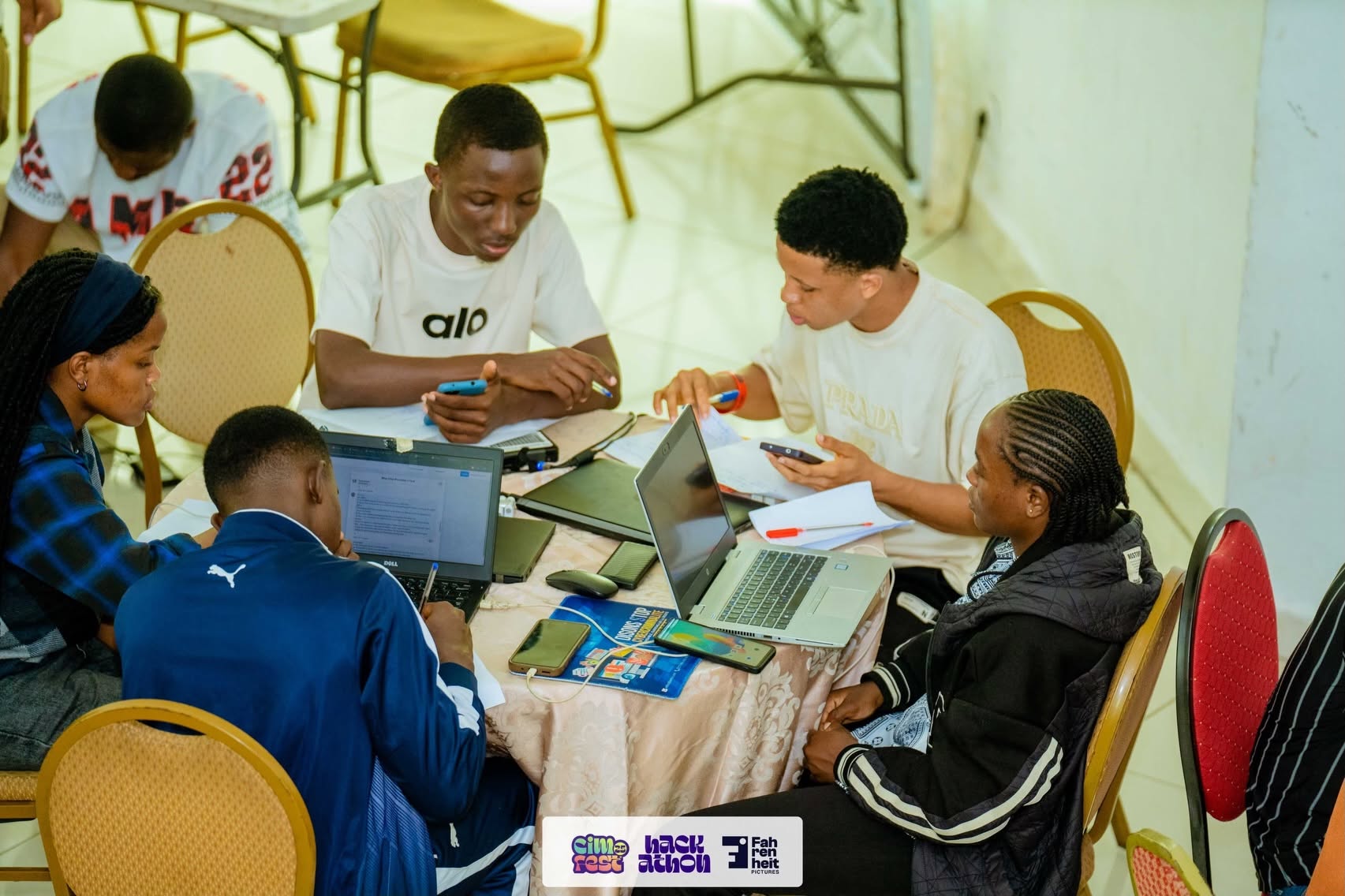
The Music In Africa Foundation (MIAF) is proud to announce its partnership with the Industrial Development Corporation (IDC) as a Strategic Implementing Partner (SIP) for its Social Employment Fund (SEF). Through this collaboration, MIAF is launching a new national programme designed to create jobs, address skills gaps, and strengthen South Africa’s creative industries — in line with the SEF’s overarching goal to generate work for the common good and build community value through employment, social contribution, and inclusive economic participation. Operating under the banner NEFCISA (National Employment Facility for Creative Industries in South Africa), the initiative will recruit and train participants, match them with host organisations, and place a minimum of 1 000 workers across the country. Key Objectives: Support employment and entrepreneurship in the creative industries. Offer skills development and training programmes. Foster partnerships between public and private creative sectors. Promote South African creativity at both provincial and national levels Foster community development through social contribution.

ACCES
ACCES

Chaque année, nous fournissons des informations générales afin de guider les participants dans la préparation de leur voyage. En plus de ce site, des mises à jour importantes seront envoyées par e-mail à tous les délégués inscrits. Assurez-vous de vous inscrire dès que possible. Pour plus d'informations, veuillez contacter [email protected] Continuez à consulter cette page pour plus d'information.  

Gender@Work
Gender@Work

Music In Africa Gender @ Work is a three-year training programme aimed at upskilling and increasing the participation of female professionals in the African music sector. Launched by the Music In Africa Foundation (MIAF) in April 2019, the programme is connected to the MIAF’s ACCES music conference – a pan-African event held in a different African country every year. This connection enables the programme to reach new participants in a different African country every year. The programme marks the beginning of a more concerted effort by the Foundation to support the participation and inclusion of women in all facets of its programmes and the music sector in Africa as a whole. Over the three years, the programme will aim to address gender imbalances in the sector through training, lobbying, facilitating knowledge exchange and dialogues that foster the interest of women. The broader objectives of the programme are to: Provide industry training for women on critical music industry skills, focusing on: Stage management Electronic music production and recording Music business management Technical knowledge Provide an opportunity for both professional and aspiring women to benefit from the Music In Africa network and its broad range of activities in 2019, 2020 and 2021. Provide a solution-based platform in the form of a round table at ACCES with a view to identify challenges, discuss opportunities and lobby for the interests of female practitioners. Offer participants the opportunity to benefit from programmes offered by MIAF’s partners. Increase access to educational materials. Integrate participants in the broader ACCES programme to maximise experience and exposure to the industry. Record and present training materials on the www.musicinafrica.net, including but not limited to tutorials, templates and other best-practice materials. Communicate women-based themes that support the initiatives and messages of the programme. MAIN TRAINING ACTIVITIES Training in first country (Ghana): In the first year, participants will be trained on all aspects of stage management by a team of experienced stage managers from 10 to 17 November 2019. The programme will offer robust classroom training as well as practical, hands-on training in which participants will also be given the opportunity to manage various aspects of the ACCES performance programme. Training in second country: The second training iteration will take place at ACCES 2020 when the programme will diversify its course to include music production lessons and training on other music business topics. A round-table platform will also be introduced to coincide with the ACCES programme. Training in third country: The third training iteration will take place at ACCES 2021 in a different country, offering an advanced course. HOW DO YOU GET INVOLVED?  As a participant, facilitator or trainer: The programme enrolls up to 12 trainees every year. All opportunities are advertised publicly on this website, and will be added to this page. Please keep checking this page for new calls (below under UPDATES & CURRENT OPPORTUNITIES). As a partner Please contact Claire Metais at [email protected]. APPLY The call for applications for 2020 will be announced soon. The Music In Africa Gender @ Work programme is made possible with the support of the Prince Claus Fund, Siemens Stiftung and Goethe-Institut.

Sound Connects Fund
Sound Connects Fund

Pour les praticiens et les organisations culturels et créatifs opérant en Afrique australe, l’accès au financement reste un défi majeur. La pandémie de COVID-19 a également eu un impact massif sur les politiques gouvernementales, les dépenses et l’économie en général, et a vu les dépenses consacrées à la culture reléguées plus bas dans la liste des priorités. De plus, les industries culturelles et créatives citent régulièrement quatre domaines principaux où l’investissement est nécessaire pour la croissance : une visibilité accrue, la mobilité incluant l’accès à de nouveaux marchés, le financement et les structures de soutien.

Music In Africa Live

MUSIC IN AFRICA LIVE Lancé en 2020 pour une durée de 3 ans, Music In Africa Live est une initiative visant à soutenir l'écosystème de la musique africaine face aux contraintes imposées par la pandémie de COVID-19 ; le projet a été lancé par la Fondation Music In Africa (MIAF) en partenariat avec le ministère fédéral allemand des Affaires étrangères, Siemens Stiftung et le Goethe Institut. Plus de 30 aides sont disponibles dans le cadre de la troisième édition de Music In Africa Live, dans 3 catégories :  showcases, renforcement des compétences et plaidoyer, en conformité avec les modalités énoncées.

Instrument Building And Repair Project

The overarching objective of Music In Africa Foundation’s Instrument Building and Repair (IBR) project is to encourage the formalisation and professionalisation of instrument-making and repair in Africa, especially in relation to indigenous African instruments. Background In 2014, the Music In Africa Foundation (MIAF) identified as one of its focus areas for development the need to encourage young people from music and music-related sectors to consider instrument-making as a career. This need extended itself from the recognition that the making of traditional African instruments is not a widely practiced skill and seems to be limited to the older generation. Traditional African instrument makers are also few and far between, making communication and logistics between teachers and learners an obstacle. When instrument building workshops take place, budgetary constraints do not allow teachers or learners the time to explore the finer details of an instrument. Based on these observations, the MIAF designed and piloted the first IBR workshop at the Dhow Countries Music Academy (DCMA) in Zanzibar in February 2015. In 2016, the foundation received funding from the South African National Lotteries Commission to implement a much bigger version of the project in Johannesburg. The project drew participants from five African countries. 25 students from South Africa, Ghana, Senegal, Kenya and Ethiopia were trained on how to build and repair musical instruments. The instruments that they made were: Traditional Instruments: Umakhweyana and Marimba Conventional Instrument: Dulcimer guitar The workshop culminated in a traditional instruments concert at the Wits Theatre in Johannesburg. It is the MIAF’s aim to roll out similar workshops in as many African countries as possible over the next few years. Objectives Developing awareness of musical instrument makers in Africa with a view to promote their work to a wider global audience. Facilitating the sharing and transfer of skills in indigenous instruments between countries on the continent. Encouraging the formalisation and professionalisation of instrument-making and repair in Africa, especially in relation to indigenous instruments. Helping instrument makers develop their careers. Fostering the rapid monetisation and sustainable development of instrument-making and repair in Africa. Promoting constant exchange of ideas, expertise, experiences and know-how among instrument makers in Africa. Facilitating the identification of existing gaps in the field with a view to contribute new solutions. Facilitating the transfer of knowledge and skills of indigenous instruments between younger and older generations. 2020 edition The MIAF has also announced that multi-instrumentalist and instrument maker Joe Makhanza will facilitate one of the workshops on the building of the kamale ngoni instrument. Kamale ngoni is a kora-like, stringed instrument that originated in West Africa. The instrument contributed to the rise of Wassoulou music in the 1970s and 1990s. Makhanza was born in Giyani in South Africa's Limpopo province. He completed a bachelor of music degree and a post-graduate diploma in arts marketing from Wits University. He is currently completing his masters in ethnomusicology and is a part-time lecturer in African music studies at Rhodes University. He plays the kora, mbira, valiha, masenqo, xiwewe, ngoni ba and xizambi, among others. He also manufactures the aforementioned instruments. The MIAF will confirm more trainers who will join the workshops as well as the other instruments that will be featured in the 2020 IBR programme.  Apply to participate here. Connect with us on Twitter, Instagram and Facebook, and subscribe to our monthly newsletter. The Music In Africa Instrument Building and Repair project is funded by the National Lotteries Commission. It is implemented in partnership with Siemens Stiftung, Goethe-Institut, Wits Theatre and Kaya FM.

banner image

Does Nigerian pop reflect the spirit of the times?

Accueil/Non classé/Does Nigerian pop reflect the spirit of the times?

It’s the sort of thing socially minded techniques of cultural critique have taught us to suspect, however. As the argument goes, it’s the sort of blanket sensibility that validates the inexplicable absence of blacks from F Scott Fitzgerald’s Jazz Age in The Great Gatsby. It’s why we’ve come to see the notion of a ‘great something’ narrative as problematic. How can something be a Great Lagos narrative when there’s so much it doesn’t—and cannot—say? Still, the Zeitgeist has its uses, even if limited.

A recent much reproduced critique of Nigerian pop by Feyi Fawehinmi asserts that Nigerian pop songs carry no history in the way that Bruce Springsteen’s ‘Born in America’, for instance, does. More, music separates itself into the woke and the unwoke. The following tests those claims for validity.

If to be woke is to be socially conscious, socially aware, then all music is woke. All music, however outlandish, is a product of its social circumstances, however many different spirits make up these times. If music does not offer a straightforward critique of its times, it at least reflects it. If aspiration is the ruling passion of the epoch, you’ll find it in the fixations of the songs. If it’s rebellion—whatever kind of rebellion, even rebellion against a ruling passion—you’ll find it there. The work of an interpreter of culture is to read cultural productions closely to find the strands that make up these thematic wholes.

Some songs lend themselves to easy social critique. ‘Born in America’ does. Fela’s music, his Afrobeat particularly, does not require much of the seeker. Fela has done much of the work of meaning-making by explicitly transmuting society into his songs. Situating highlife in its socio-historical epoch might present a little more difficulty than Fela, especially if your idea of interpretation is to pursue explicit code words like “alert.”

But when you prod the songs with questions such as “to whom are they addressed?”, “by whom are they made?”, and “what do they signal?”, a chromatograph begins to emerge. When we ask these same questions of our popular songs, the histories we seek to document, the deeper truths we wish to uncover, will reveal themselves. What relationships, for instance, are there between Nigerian songs (and music videos) and champagne consumption data in Nigeria? How do these relationships comment on Nigeria’s social and economic history?

When Olamide sings about wanting to drive Ferraris and Bentleys, what does it say about the sort of cultural images we consume? The aspiration is straightforward, but what latencies can be teased loose? How does Falz’s ‘Ello Bae’ fit into the history of African-American cultural influence on mainland Africa? Do Reminisce’s ‘Tesojue’ and Olamide’s ‘Story for the Gods’ comment on attitudes towards sex and consent in their times? What is wrong with Skales?

[video:https://www.youtube.com/watch?v=7SGVIHgg6bI autoplay:0]

Tekno’s Rara wears a Fela mask, but what insights does it supply into the Nigerian’s attitude towards sociopolitical deconstruction and reconstruction (Hint: Oluwa go bless me.) How is it a signal on the new economic nationalism inaugurated by the recession? Is Qdot’s ‘Apala New Skool’ not an explicit commentary on the epoch of chache (pronounced cha-che; a corruption of the colloquial Yoruba expression “sase”), an epoch where money is the matter and the means don’t matter? Does 9ice’s ‘Living Thing’ not corroborate ‘Apala New Skool’? What history is wrapped—or not—into Davido’s journey from ‘Aye’ to ‘If’?

There’s far more to history than the economics of inequality or grand events like the Vietnam War. Sometimes, seemingly apparent associations can be misleading, as Levitt and Dubner show us in Freakonomics. FiveThirtyEight ran this experiment to get a sense of the history of language use on Reddit.

History is certainly not the problem of Nigerian popular songs. The absurdest Nigerian song carries a surfeit of history. Those who are equipped to distil method from the madness will do so. Should we be worried about the absurd narratives and chronic lack of coherence in too many of these songs? To say yes is tempting—yes, except that this absurdity too is a manifestation of some sort of history, the history of Nigerian education, the sort of history that produces absurd artefacts like the PhD president. Knowing this, perhaps it is fair to say Fawehinmi’s worries are misplaced.

[video:https://www.youtube.com/watch?v=Aw-7KRIzPGc width:850 height:410 autoplay:0]

That Fawehinmi imagines that a parenthesised, throwaway “he’s wrong by the way” is a sufficient rebuttal to Thomas Piketty’s conclusions about historical inequality from arduous statistical and cultural analysis tells its own story about Nigeria and its music. It participates in the same species of shallowness – the same of kind of glib intercourse – Fawehinmi accuses Nigeria’s popular artists of. Don’t get me wrong, a critique of ‘Iskaba’ is certainly not the best occasion for tangling with Piketty (and a tangle with Piketty would have to proceed on the grounds of the continents of evidence he amassed to his cause), but that’s the more reason why such glibbery should never have been ventured into. On what intellectual grounds might we be persuaded to put stock in the glib rebuttal of an Ayatollah of free market mythicisms that have failed everywhere?

I am sorely tempted to view Fawehinmi’s critique of Nigerian pop through this prism of glibness, because it is a very Nigerian (public intellectual) attitude to eschew the fundamental for the sensational. The cup will pass over, unspilt, because the critique serves to at least throw down the gauntlet to mainstream critics of popular culture. As the example that Fawehinmi cites shows, much of what passes for cultural critique quite frankly tends towards the unwittingly comic. 

Interestingly, besides its use of nonsensicals (another history waiting to be compiled), ‘Iskaba’ is pretty much on narrative. It’s lazy and it’s light years away from the times when Wande Coal wrote ‘Bananas’ and ‘Ololufe’, but compared to “Rara” (I really can’t forgive that “Oluwa go bless me”), ThreeWiseMen’s ‘Bastard’ (which is one of my favourite ‘woke’ Nigerian songs of the past decade), it manages not to stray from its central conceit.

[video:https://www.youtube.com/watch?v=kbvlfT3SRHs width:850 height:410 autoplay:0]

That said, the most compelling history of Nigerian music is in the evolution of sound. And perhaps this evolution comments substantially about the evolution of the underlying culture of the listenership. After all, if you don’t put work into it, what can wordless Wagner, Bach, Liszt, Chopin, Rachmaninov and so ontell you about European history? What can Akin Euba tell you about Nigerian history? Why did Fela have long stretches of sound? Why did he begin to call his music African classical music?

Producers of Nigerian pop music are beginning to engage with Nigerian musical history in really exciting ways. Qdot’s ‘Apala New Skool’ is an explicit example. Another somewhat oblique example of this dialogue is Seyi Shay’s ‘Yolo Yolo’. The song has been described as housing “different flavors of music genre [sic] from Latin to Salsa to highlife and Afrobeat”, which is all well and good, and evident. But when you consider that Fela folded funk, salsa and highlife, along with other influences, into his Afrobeat, ‘Yolo Yolo’ makes for an interesting conundrum.

What DJ Coublon, the song’s producer, has achieved with ‘Yolo Yolo’ is to make the associations between Fela and Latin explicit, associations easy to miss to the untrained ear. How? He isolated, exacerbated and centralised the Latin strain in Afrobeat. The question then is this: Is ‘Yolo Yolo’ Afrobeat, Latin, neither or both? The answer lies in the latter two of those four options.

newsletter banner

Abonnez-vous à notre newsletter

Retrouvez-nous sur les réseaux sociaux