











































NEFCISA
NEFCISA

The Music In Africa Foundation (MIAF) is proud of its partnership with the Industrial Development Corporation (IDC) as a Strategic Implementing Partner (SIP) for its Social Employment Fund (SEF). Through this collaboration, MIAF is running a national programme that is creating jobs, addressing skills gaps, and strengthening South Africa's creative industries — in line with the SEF's overarching goal to generate work for the common good and build community value through employment, social contribution, and inclusive economic participation. Operating under the banner NEFCISA (National Employment Facility for Creative Industries in South Africa), the initiative is recruiting and training participants, matching them with host organisations, and has already placed 1 500 workers across the country — surpassing its original target of 1 000. NEFCISA is delivered through a network of 20 host organisations spanning five provinces, who are actively hosting participants and contributing to work for the common good across South Africa's creative and cultural industries. Key Objectives: Support employment and entrepreneurship in the creative industries. Offer skills development and training programmes. Foster partnerships between public and private creative sectors. Promote South African creativity at both provincial and national levels Foster community development through social contribution.

ACCES
ACCES

ACCES Conference and Showcase Festival is Africa's leading music industry gathering, bringing together the people shaping the future of the continent's music business. Artists, entrepreneurs, executives, investors, policymakers and cultural leaders from across Africa and around the world come to ACCES to build partnerships, exchange ideas, discover talent and create new business opportunities. Since its launch in 2017, ACCES has become the continent's premier platform for professional exchange and music market development. Combining a high-level conference with a curated showcase festival, networking, exhibitions and industry programmes, ACCES offers a unique space where creativity meets business and where African music connects with the global industry.

Gender@Work
Gender@Work

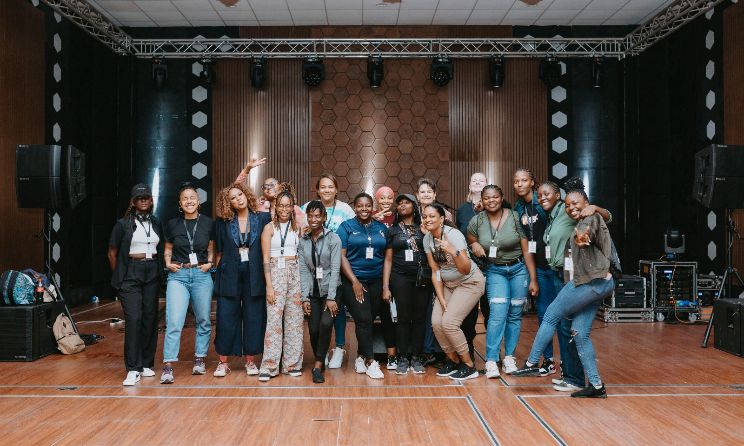
Music In Africa Gender @ Work is a three-year training programme aimed at upskilling and increasing the participation of female professionals in the African music sector. Launched by the Music In Africa Foundation (MIAF) in April 2019, the programme is connected to the MIAF’s ACCES music conference – a pan-African event held in a different African country every year. This connection enables the programme to reach new participants in a different African country every year. The programme marks the beginning of a more concerted effort by the Foundation to support the participation and inclusion of women in all facets of its programmes and the music sector in Africa as a whole. Over the three years, the programme will aim to address gender imbalances in the sector through training, lobbying, facilitating knowledge exchange and dialogues that foster the interest of women. The broader objectives of the programme are to: Provide industry training for women on critical music industry skills, focusing on: Stage management Electronic music production and recording Music business management Technical knowledge Provide an opportunity for both professional and aspiring women to benefit from the Music In Africa network and its broad range of activities in 2019, 2020 and 2021. Provide a solution-based platform in the form of a round table at ACCES with a view to identify challenges, discuss opportunities and lobby for the interests of female practitioners. Offer participants the opportunity to benefit from programmes offered by MIAF’s partners. Increase access to educational materials. Integrate participants in the broader ACCES programme to maximise experience and exposure to the industry. Record and present training materials on the www.musicinafrica.net, including but not limited to tutorials, templates and other best-practice materials. Communicate women-based themes that support the initiatives and messages of the programme. MAIN TRAINING ACTIVITIES Training in first country (Ghana): In the first year, participants will be trained on all aspects of stage management by a team of experienced stage managers from 10 to 17 November 2019. The programme will offer robust classroom training as well as practical, hands-on training in which participants will also be given the opportunity to manage various aspects of the ACCES performance programme. Training in second country: The second training iteration will take place at ACCES 2020 when the programme will diversify its course to include music production lessons and training on other music business topics. A round-table platform will also be introduced to coincide with the ACCES programme. Training in third country: The third training iteration will take place at ACCES 2021 in a different country, offering an advanced course. HOW DO YOU GET INVOLVED?  As a participant, facilitator or trainer: The programme enrolls up to 12 trainees every year. All opportunities are advertised publicly on this website, and will be added to this page. Please keep checking this page for new calls (below under UPDATES & CURRENT OPPORTUNITIES). As a partner Please contact Claire Metais at [email protected]. APPLY The call for applications for 2020 will be announced soon. The Music In Africa Gender @ Work programme is made possible with the support of the Prince Claus Fund, Siemens Stiftung and Goethe-Institut.

Sound Connects Fund
Sound Connects Fund

For cultural and creative practitioners and organisations operating in southern Africa, access to funding remains a major challenge. The COVID-19 pandemic has also had a massive impact on government policy, spending and the economy in general, and has seen spending on culture being moved further down the list of priorities. Further, the cultural and creative industries repeatedly cite four main areas where investment is needed for growth, which are increased visibility, mobility including access to new markets, finance and support structures.

Instrument Building And Repair Project

Experience the Vibrations African Instruments Exhibition online in 3D

Features

Afropolitan Vibes: Has Musiliu Ishola reinvented apala music?

26 Oct 2016 - 08:52

cc-img flag-img

Back in 2001, Musiliu Ishola, unheralded, released Soyoyo, an album in the apala genre, a genre deemed dead to the Nigerian populace.

Musiliu Ishola performing at Afropolitan Vibes

The album was a huge success. Why? Perhaps because the people had missed the deep and slow rhythms of the apala drum. Or maybe they craved the relaxed proverbial lyrics of the genre.

Or maybe it was because of Haruna Ishola himself—the patriarch they missed so bad that they found succour in his son.

To provide some background for the uninitiated, let me tell you a story about three genres of music found in many south-western 'hoods in Nigeria.

In the 1960s to the late 1980s, the brotherly genres sankara, apala and were had the ears of their people. Initially used to rouse the Muslim faithful during Ramadan, the music became a source of entertainment in various south-western societies in Nigeria. Although now difficult to tell apart, these genres were distinct then, identified closely with the personalities who sang them.

But because the sounds are not exactly grounded formally—as can be said of certain western genres—and perhaps because the singers were physically close enough to influence each other’s tunes, these singing personalities, in time, turned fierce competitors rather than just contemporaries. The singers took what was successful from the competition for use in their own songs as they competed for the same audience. Alhaji Dauda Epo-Akara was known for were, Haruna Ishola and Ayinla Omowura were apala kings; and Salami Alabi was the sakara man. All of these led to Sikiru Ayinde Barrister’s fuji.

But that was a long time ago, and as the originators of these sounds died, the genre seemed to die with them. This was probably because of the very close affinity of these genres with their pioneers.

Then in the late 1990s and 2000s, a trend of offspring taking off from their diseased parents became quite conspicuous in the Nigerian music industry. Paul IK Dairo, Kunle Orlando Owo, Omari Barrister, Seun Kuti, to mention a few sons of famous singing fathers, became professional musicians with varying commercial successes.

It is to this school Musiliu Ishola, son of Haruna, belongs.

This past Friday at Freedom Park during the monthly Afropolitan Vibes concert in Lagos, Musiliu, on behalf of young folks, implored older folks in melody.

"If ever the young do you wrong,” he sang from the title track of his Soyoyo albumk, "do not tell us...we may never be pardoned. We are still kids in need of wisdom.”

Musiliu was channelling a Yoruba belief that an angered elder can forestall a young person’s success.

The audience, a swarm of young people, sang along in exhilaration—proof that it might not be over yet with apala. As he performed, Musiliu, who stands to deliver his songs as against the traditional sitting position associated with his father, intermittently passed looks to make undecipherable communication with his drummers, four men wrapping their left hands around various sizes of the talking drum. The smallest of these drums was the size of a jug. The bearers' right hand wielded a curved stick.

Apala drums speak deep Yoruba proverbs; they are the powerhouse of the genre. The singer, like a messenger, relates or interprets the drum in song. The excited audience on Friday responded, a roaring chorus, spurring those who did not understand the language to run helter-skelter for interpretation only to be greeted with: “I’m sorry, but you’ll have to pay me to translate this glorious stream of words.”

While Musiliu maintains core components of the apala sound—the talking drum, and lyrically, slangs and proverbs—he flirts with other elements. Makossa, Nigerian pop, soyayya, and an abundance of vulgar lyrics all come into his music. Could these be his tools of reinvention? Perhaps!

The Afropolitan Vibes night was humid and the clouds leaked a drizzle. One could confuse sweat with rain looking at the faces of the fun-lovers gathered. Yet one thing was clear: the wild grins on their faces meant apala just might be back for good.

Please log in to post a comment.

Most popular

Disclaimer: Music In Africa provides a platform for musicians and contributors to embed music and videos solely for promotional purposes. If any track or video embedded on this platform violates any copyrights please inform us immediately and we will take it down. Please read our Terms of Use for more.

newsletter banner

Subscribe to our monthly Newsletter

Follow us on social media