























































Black Sherif talks about the road less travelled

17 May 2022 - 14:27


Away from the stage, Ghanaian musician Black Sherif is nothing like the charged presence that drives his growing repute as a human dynamo. His demeanour is polite, self-effacing and, since blasting off internationally with offerings like ‘Second Sermon’ and ‘Kwaku the Traveller’, often wakes up exhausted from the previous night’s gigs.
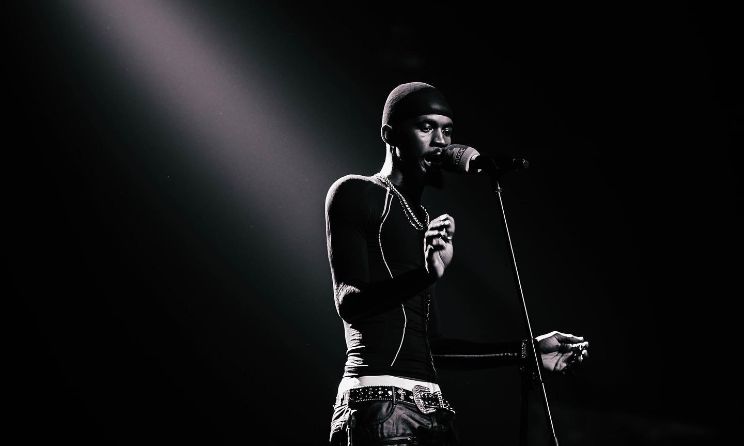
The country’s biggest discovery of 2021, the 20-year-old’s ‘overnight’ viral success story isn't so overnight at all. While banging on his desk in Kumasi Academy three years ago to melodies he heard in his head, the rapper, privately known as Mohammed Ismail Sherif Kwaku Frimpong, was already seriously nursing a career in music.
Signed to American distribution company and record label EMPIRE, Black Sherif set out doing morose music – records that unfurled as soundtracks for sad boys. In his recent undertakings, however, the artist has taken another route: channelling vivid tales of his struggles into piercingly passionate and triumphant anthems, while calling attention to his numerous autofictions, which seem to underpin his offerings (he has called himself Kwaku Killer, Kwaku Frimpong, Killer Blacko, and now Kwaku the Traveller).
“I am real,” Black Sherif tells me ahead of the release of the attending video for ‘Kwaku The Traveller’. “I preach real-life stories and my personal struggles. It’s about encapsulating my experiences and reality, which obviously resonates with everyone. This means that my lyrics have a positive influence on my fans and drive them to achieve their goals.”
On the local hip hop front, his bold experimentation, which typically finds him melding highlife with western urban pulses, has also set him apart as a pop innovator and emissary of Ghana’s growing drill scene. Therefore, especially in the time of Afrobeats, Black Sherif’s music represents a unique addition to pop from these parts.
But Black Sherif shrugs off this perception as merely a by-product of a young African on a journey to self-discovery. “I am sharing my transgressions and successes to uplift fellow young people on the validity of their dreams if they put in the work and strive hard.”
“I am super elated about how people share in music and my journey as a whole,” Black Sherif says about his status as a poster boy for the new crop of Ghana’s rising voices, which last week earned him a place on Spotify’s global RADAR programme. “I want to inspire kids to be free and create art without any limitations.”
The musician’s insight into street life and brilliant sonic takes have shot him to chart success and habitual viral impact on social media. Within days of the release of ‘Kwaku the Traveller’ – a sobering piece that finds Black Sherif holding himself accountable for mismanaging his early fame and riches, and yet staying optimistic to keep moving forward – amassed over 750 000 multi-platform and user-generated creations and generated more than 55 million views via the #kwakuthetraveller hashtag. This makes the track one of the most popular African songs on Spotify, along with the likes of CKay’s ‘Love Nwantiti (Ah Ah Ah)’ and Fireboy DML’s ‘Peru’. ‘Kwaku the Traveller’ also earned a top five debut on Billboard’s US Afrobeats Songs chart and was the most Shazamed song globally.
Among ‘Kwaku the Traveller’s standout lines are the phrases, “Of course I fucked up / Who never fuck up, hands in the air” – a modern equivalent of the Biblical quote,“Let he who is without sin cast the first stone.” Black Sherif says the tune is “an exposition of my transgressions and lessons, as well as the pain and experiences of those around me.” Like his previous releases, ‘Kwaku the Traveller’ was made to “motivate everyone, including me, never to stop chasing your dreams, regardless of the stumbling blocks and daily hurdles we are burdened with.”
That the song instantly pulls at the heartstrings of its listeners has hardly startled Black Sherif, who claims he is “not surprised a whole lot of people connected with it and it took off right from the jump on TikTok.” However, he is “super appreciative of the fans for making the track number one on several platforms for weeks.”
If there’s a unique marker about Black Sherif’s breakneck rise to fame in the past year or so, it is the fact that social media gets results. Aside from TikTok, platforms like Twitter, Facebook and Instagram have been integral to the musician’s discovery. Black Sherif says the internet continues to serve as a major lifeline in reaching his fans and new audiences across the globe, stressing that young artists today must take full advantage of social media to promote their work and advance their careers.
From chart-topping records to securing a collaboration with the Grammy-winning Burna Boy, to bagging awards at both the 2022 3Music Awards and the Vodafone Ghana Music Awards, as well as numerous other accolades, Black Sherif’s meteoric ascent is hardly comparable to that of any other Ghanaian act in many years. Still, it is no pressure at all for the artist; he dreamt of all these moments. Rather, it is a call for more hard work.
“The journey just began,” Black Sherif notes. He likes to travel light – equipped solely with powerful melodies and wearing his heart on his sleeve. As he preps for his next big career steps, which will begin with the release of a new EP, the singer keeps walking and remains resolute, absorbed by the single-mindedness of a man on a sacred mission.


Most popular

Call for applications: ACCES 2026 Emerging Artist Spotlight Competition
01 Oct 2026

Top amapiano songs of 2026
16 Feb 2026

Top Naija songs of 2026
31 Mar 2026

Top Afrobeats songs of 2026
19 Mar 2026
Open call: 2026 Gender@Work music industry training in Johannesburg
03 Oct 2026
AFRIMA 2026: All the winners
12 Jan 2026
Disclaimer: Music In Africa provides a platform for musicians and contributors to embed music and videos solely for promotional purposes. If any track or video embedded on this platform violates any copyrights please inform us immediately and we will take it down. Please read our Terms of Use for more.

Subscribe to our monthly Newsletter
Follow us on social media


Please log in to post a comment.