






















































Brenda Fassie’s 1997 hit song Vulindlela still raises questions about South Africa as a nation
31 Jul 2024 - 14:13


By Mbali Mazibuko
In 1997, South Africa’s most famous music star had a huge hit. Brenda Fassie’s ‘Vulindlela’ became a national pop anthem, played especially at weddings and celebrations.
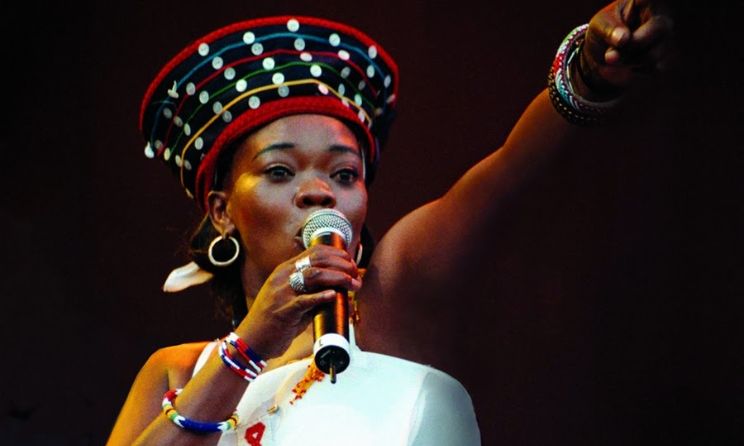
Vulindlela can be loosely translated from the Zulu language as an instruction to “make way” or, if you like, “clear the path”. The song is about making way for the groom (and bride) at their wedding. In 1997 South Africa was emerging from the racist apartheid system, and was celebrating its own “wedding” across the colour bar after democratic elections in 1994.
Apartheid and its policy of separate development for different ethnic groups made Black women like Fassie vulnerable and subject to rural existence or life in townships. These were residential areas on the outskirts of cities designated for Black people by the white minority rulers. Yet Fassie defied all norms.
Born in 1964, she began her rise to fame in the townships in the 1980s but soon took over the nation’s airwaves. She died at the age of 40 in 2004. Her hit songs – like ‘Weekend Special’, ‘Too Late for Mama’ and ‘Black President’ – encompassed disco and pop energies, political statements, ballads and the use of local languages.
Fassie is also remembered as a “bad girl” because she didn’t colour neatly within the lines of what is expected of women in society. She was a sex-positive, drug-taking media sensation who danced and dressed provocatively during the height of apartheid and became known as the first openly bisexual celebrity in South Africa.
Brenda Fassie was nothing short of rebellious. She rebelled through fashion, language, sexuality and even through an often childlike nature that can be seen in her performances.
I believe it’s important that Fassie be remembered as a figure of rebellion. In my doctoral thesis I look at how some women in South African popular culture like Fassie, singer Lebo Mathosa and actress Khanyi Mbau have made an impact on the socio-political fabric of the country by presenting themselves in rebellious ways.
As a scholar of gender, feminist theory and popular culture, I argue that this rebellion happens when Black women challenge, complicate and create possibilities for themselves and other women beyond the confines of what is deemed “respectable”.
Rebelling in the ways that Fassie did can even reveal the possibilities for nation-building processes. A deeper reading of ‘Vulindlela’ is a good way to explain what I mean.
‘Vulindlela’s deeper messages
‘Vulindlela’ was a national sensation for many reasons. It’s contagious rhythms invite the body to dance. It plays on the cultural significance and joys of a wedding. It symbolically ties this to the political moment, capturing the optimism of the new South Africa – where paths are being cleared of obstacles so that there can be a successful union.
The first Black president of South Africa, Nelson Mandela, could well be imagined as the groom in this wedding. Rebelliously, Fassie released ‘Black President’ in 1990. It was about Mandela, who’d been imprisoned for his struggle against apartheid. Although Mandela had just been released and apartheid was beginning to end, this kind of political statement was still prohibited by the apartheid state. ‘Black President’ was duly banned.
With ‘Vulindlela’, Fassie cleverly captured the sentiments of freedom and optimism that followed Mandela becoming the country’s first Black president. His party, the African National Congress, even used ‘Vulindlela’ in its 1999 election campaign.
The timing of ‘Vulindlela’ was also redemptive for her. She was struggling with drug addiction, and making headlines for her outspoken views on sex and countless on-stage dramas.
Peddling in the euphoria of the time while navigating her “wild-child” and “national darling” personas, Fassie’s comeback helped South Africans imagine a new country that embraced all people – even the most rebellious.
Slay queens and respectability
In my study I think about Fassie – and Mathosa and Mbau – as part of a broader lineage of women who are today (contentiously) termed slay queens.
I don’t subscribe to the narrow, patriarchal view of slay queens as unambitious women with Barbie-doll make-up and long nails who seek companionship from wealthy men. I argue that slay queens rebel against the shame attached to women who either do not satisfy traditional gender and sexuality norms or who dare to be whatever and whoever they desire to be in order to satisfy their full humanity. Many of us are actually slay queens – some in disguise.
South Africa, like much of the world, is still plagued by the politics of respectability: the codes of conduct considered normal and acceptable in society. Usually, it’s girls and women who must stick to respectability politics when it comes to their behaviour, what they say and how they dress – to satisfy men’s expectations.
When slay queens like Brenda Fassie emerge in a male-dominant, sexist society, they present a complication for respectability politics. And with it, how South Africans imagine gender roles, sexuality and the nation.
The rebel girl child
‘Vulindlela’s wedding plays into the foundations of a new nation. The nation can be seen as an imagined family or community and that family is commonly a nuclear family with a dad, mom and children. Think of male presidents and their first ladies across the globe. The children are the nation’s citizens – and Brenda is the rebel child. The child-like persona that Brenda embodied is part of her impact.
In 2001 she performed ‘Vulindlela’ at the Kora All Africa Music Awards, wearing a school uniform and holding a lunchbox. Mandela – fondly called “uTata” (father) – was in the audience and Fassie handed him a banana. This reminds us of children sharing lunch boxes with one another. The banana, of course, can also work as a mischievous sexual symbol or as a metaphor of handing over a baton of power and responsibility.
Citizens as children may open up critical conversations about how people expect to be taken care of politically, economically and socially.
Nation building
‘Vulindlela’ invites South Africans to ask difficult and necessary questions about their future as citizens. Do their leaders fully represent the nation – including the rebel girl child? Or is it still a case of “children are to be seen, not heard”? Who is included in and excluded from the family?
As a queer woman and bad girl, Brenda Fassie symbolises those who are most often excluded. As a symbol of sexual freedom she asks: can we afford weddings that won’t end in at least one out of three of the guests getting raped by the end of the night? (The rape crisis in South Africa was, after all, addressed by her in her music).
I argue that Brenda Fassie helps expose the “new” South Africa and reveal the true South Africa and its sexist, homophobic society.
But, as the sister of the nation, she also offers a solution. Brenda Fassie’s songs often emphasise her love for community and the township, showing her relationship with ubuntu (the practice of humanity) in a previously inhumane country.
South Africa is celebrating 30 years of democracy. For me, ‘Vulindlela’ invites us to consider what way we are opening and for whom.
Mbali Mazibuko is a senior lecturer in Anthropology and Development Studies, University of Johannesburg. This article first appeared in The Conversation.


Most popular

Top Naija songs of 2026
31 Mar 2026
Ghana: Mr Eazi and MOLIY’s ‘Comfort’ earns Urban Music Awards nomination
21 Oct 2026

Top Afrobeats songs of 2026
19 Mar 2026

Top amapiano songs of 2026
16 Feb 2026
Open call: CANEX Music Business Lab and Songwriting Camp
15 Oct 2026
Nigeria: CANEX WKND unveils 2026 programme
21 Oct 2026
Disclaimer: Music In Africa provides a platform for musicians and contributors to embed music and videos solely for promotional purposes. If any track or video embedded on this platform violates any copyrights please inform us immediately and we will take it down. Please read our Terms of Use for more.

Subscribe to our monthly Newsletter
Follow us on social media


Please log in to post a comment.