






















































Copyrights and music royalty collection in The Gambia
09 Sep 2015 - 11:25


By Hassoum Ceesay
This text provides an overview of copyrights and music royalty collection in the West African nation of The Gambia.

Background
The first copyright law in The Gambia, called the Copyright Ordinance, was enacted by the colonial government in 1911. Noticeably, it only addressed texts and written documents, as at the time these were the main creative products coming out of the colony. The bulk of it was indeed material published by the colonial government such as sessional papers, gazette entries, reports and speeches by government officials like the British Governor. Extremely low levels of literacy at the time, a direct result of the meagre opportunities for education, meant that there was very little creative writing or publications by local Gambians for much of the colonial period.
Following independence in 1965, the situation began to change, with Gambian writers producing a small amount of publications, although these were published abroad. Music, drama and theatre also began to develop after independence, with groups such as the Super Eagles, Ifangbondi and Guelewar - but again the copyright law remained stagnant and unresponsive.
The growth in the media from the early 1990s, when many FM private radio stations and newspapers were established, made it even more urgent to have a new law to respond to the changing times in the creative and artistic landscape. In 1993, the Gambia signed the Berne Convention on the protection of creative and artistic rights. This set the stage for a new law which will also reflect the provisions of the Convention.
Legislation and regulations
In 2001, consultations were eventually started with stakeholders on formulating a new copyright law for the country and their views were distilled into a working paper which formed the basis of the new Copyright Act of 2004, which replaced the 1911 ordinance. The 2004 Act widens the protection of copyright to include creative, artistic, choreographic, signals and adapted works by citizens or residents of The Gambia in countries that are signatories of the international Berne Convention. The Act also provides for the creation of an autonomous body corporate institution, called the Gambia Collecting Society, which will collect royalties for artists whose works are used by radio stations, night clubs, taxis, hotels etc. According to the Act, this body should be setup and run by the artists themselves.
However, the Act came before any infrastructure had been put in place to effect its provisions. For example, there were no functioning artists’ associations to comprise the Collecting Society. The National Centre for Arts and Culture (NCAC), which was mandated to administer the Act, did not yet have any official specifically earmarked to run the office of copyright due mainly to staffing constraints. Moreover, for almost the whole of the artistic community the idea of copyright was completely foreign, a far-fetched idea that did not ring any bells. Added to this was the painful fact that there was (and there still is, some would argue) no music industry, film industry or book industry – at least in the sense of having established music labels, studios, publishers and distributors, etc.
One regulation, titled Works Registration Regulation 2010, has so far been signed by the Minister of Tourism and Culture. It provides for a registration form, prescribed fee and also a registration/certificate of copyright ownership. At the time of writing, a set of copyright regulations on the operations of the Collecting Society and licensing of producers, book publishers and printers is being drafted.
Copyright Office
The 2004 Copyright Act provides for a copyright office under the NCAC. It is charged with:
- (a) the registration of intellectual property works such as film, books, music products,
- (b) fighting piracy, and
- (c) sensitizing the public on copyright issues.
Regarding sensitization, the Copyright Office has over the past five years held six international training seminars, workshops and meetings targeting stakeholders in the copyright sector, mainly funded and organised by WIPO, ECOWAS, ARIPO and other partners. These events have helped to spread the message of copyright to the creative community, in addition to the regular media sorties on copyright matters by Copyright Director.
Collecting Society of the Gambia (CSG)
The Copyright Act also provides for the creation of an autonomous institution called the Collecting Society of the Gambia (CSG) to collect royalties for artists whose works are used by radio stations, nightclubs, taxis, hotels, etc. The body should be set up and run by the artists themselves. The NCAC sits on the nine-member board and has only regulatory roles. The NCAC has actively supported artists (musicians as well as writers, actors and film and theatre practitioners) to come together into associations so that the collecting society can start its operations.
In May 2013, the Copyright Office finally succeeded in calling up the constituent congress of the Collecting Society. All six national arts associations (namely the Gambia Writers Association; Gambia Music Union; Gambia Film Producers Association; Gambia Music Producers Association; Gambia Book Publishers Association; and Gambia Theatre and Dance Association) provided for in the Act to constitute the Board were represented by delegates. The nine-member board was fully constituted and has since started work. It meets regularly and has benefitted from a training seminar organised by WIPO in October 2013. The constitution of the board is indeed one of the success stories of the Gambian government in the copyright sector. The office has already started to operate with volunteers from the board members registering works and membership.
Another major achievement of the society is that it has evolved a short-term, three-year work plan to guide its actions and programmes prepared with the help of a WIPO consultant, Rob Hoiijer from South Africa. When finances are available, the work plan will be implemented.
Enforcement
The 2004 Act has clear and decisive enforcement provisions. For example, the act provides for copyright inspectors under the Copyright Office, who are mandated with police powers to enter and search premises where copyright infringement is suspected. Moreover, the NCAC has established excellent working relations with the fraud section of the Gambia Police Force (GPF), who are also mandated to cover cases of suspected copyright infringement such as piracy and counterfeit. It is of course the primary duty of the right holder to ensure that he or she takes appropriate legal action when their rights are infringed.
Registration
Although the Berne Convention does not make the formality of registering works as pre-requisite for copyright protection, the Gambia Copyright Act 2004 enables the government to build a database of works and also to provide proof of ownership. So far there has been a steady stream of works deposited by creators seeking registration.
Challenges
Despite the progress made in terms of copyright protection and royalty collection in the Gambia, major challenges still exist. First is a relatively lethargic artists association. Gambian artists still refuse to recognised their incontestable role as the owners of copyright. The Act puts artists, through their recognized associations, in the centre of the implementation of the collecting society mandate. The Act clearly sets the society as a body corporate. This is in tandem with the Gambian government’s wish to have private sector-led economic growth. In many other countries, it is the artists who come together and take the lead to effect a collecting society and then only ask government for the necessary laws. A good example is Senegal, where the artists have succeeded in getting an artist’s run collecting society. Gambian artists must therefore strengthen their associations in order to make the collecting society work.
A second major challenge is the clear lack of capacity in the copyright sector. Gambia’s creative industries are still largely in their formative stages. In the book publishing industry, for example, there are no book publishers - instead there are editors and printers who print on demand from authors. Authors distribute the books themselves. In the music industry, artists have a limited knowledge of copyright matters and require education on the subject. However, the Copyright Office has limited resources, including staff and budget, to undertake its full responsibilities.
Prospects
Despite the challenges, the prospects for the future are good. Firstly, the Gambian creative sector continues to grow by leaps and bounds. The role and relevance of copyrights will therefore continue to be strong. The fact that young people dominate the creative sector means that copyright will continue to be a strong empowerment tool for this critical sector of our population. Secondly, the Ministry Of Tourism and Culture’s new strategy paper has categorically put copyright development among its priorities, especially the drafting of regulations to support copyright implementation. This shows political will at the highest level of the ministry. Third, the Collecting society should be operational sooner than later, so that artists could be empowered economically. Finally, over the years the NCAC has managed to build solid trust with partners interested in the copyright sector, both local and international, which is a cause for hope in terms of projects and programmes funding.
Further reading
- Ceesay, H. 2015. '2004-2014: Ten years of Copyright law in The Gambia: Progress, Pitfalls, Prospects'. NCAC, unpublished report.
- Gambia Copyright Act, 2004. Banjul: Gambia Government Printer. Accessible online from http://www.wipo.int/wipolex/en/details.jsp?id=9346


Most popular
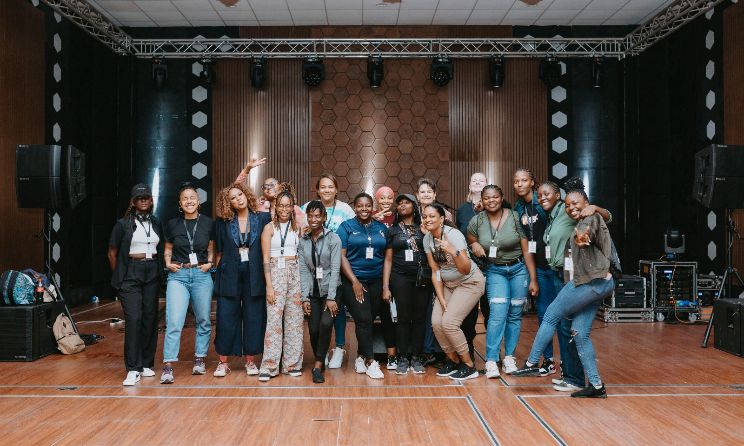
Open call: 2026 Gender@Work music industry training in Johannesburg
09 Oct 2026

Top amapiano songs of 2026
16 Feb 2026

Gambia: Suntou Susso announce UK tour for ‘The Path of a Griot’
09 Oct 2026

Top Afrobeats songs of 2026
19 Mar 2026

Top Naija songs of 2026
31 Mar 2026

Call for applications: ACCES 2026 Emerging Artist Spotlight Competition
01 Oct 2026
Disclaimer: Music In Africa provides a platform for musicians and contributors to embed music and videos solely for promotional purposes. If any track or video embedded on this platform violates any copyrights please inform us immediately and we will take it down. Please read our Terms of Use for more.

Subscribe to our monthly Newsletter
Follow us on social media


Please log in to post a comment.