
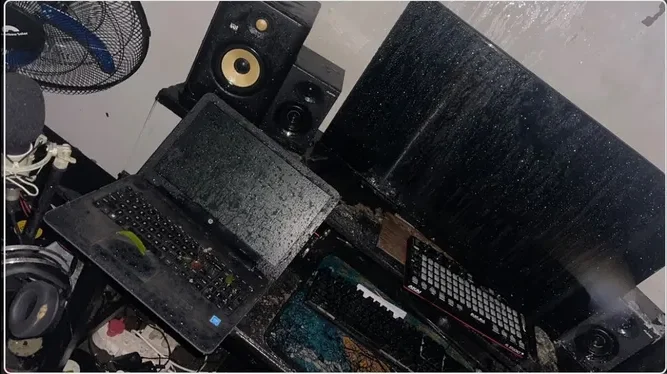





























































This text provides an overview of the important and related issues of copyrights, royalties and piracy in Zambia’s music industry.
Background
In the late 1990s, the music industry in Zambia experienced what seemed like a renaissance that saw a complete paradigm shift. New musical genres emerged, apart from the famous kalindula (the flagship genre of Zambian bands before the 90s ‘renaissance’). More production houses (music studios and labels) emerged and local music received a lot of airplay on local television and radio. There was a variety of local music available for the consumer, more than ever before. This was mainly due to the political and economic changes that resulted in the liberalization of the Zambian economy.
As a result, recognition grew for the creative arts as contributors to the Zambian economy. This meant there was need for music and other creative arts to be treated more as business ventures, rather than just casual recreational undertakings. It therefore became imperative for authorities and stakeholders to implement or review important factors if the local music business was to succeed, particularly copyright issues, royalty collection and piracy.
Copyrights
In developed music industries, effective copyright laws are pieces of legislation that protect musicians and other artists from copyright infringements, which in turn help them to maximize returns from their intellectual property and ultimately make a living from their art. In the case of Zambia, with its relatively small, developing music industry, copyright laws were not effective until 1994, when the Copyright and Performance Rights Act was passed into law. Before that, the only legislation available was inherited from the British colonial system, which was outdated and generally irrelevant to the needs of modern Zambia.
On paper, Zambia has a long tradition of intellectual property rights. Some of the documents signed include the 1883 Paris Convention (on protecting industrial property) and the 1886 Berne Convention (protecting literary and artistic works). The Patent Act, the Trademark Act, the Registered Design Act and the Copyright and Performance Rights Act of 1994 are the instruments that currently provide the legal framework for the protection of intellectual property rights in Zambia, with the latter being more specific to music.
Music copyright issues in Zambia are handled by the Ministry of Information and Broadcasting Services (MIBS)[i]. After passing the Copyright Act in 1994, it became imperative to set up a Copyright Office at the ministry, which established the Zambia Music Copyright Protection Society (ZAMCOPS). The main mandate of ZAMCOPS is to oversee and administer rights issues in the Zambian music industry, including copyrights and performance rights. ZAMCOPS also attempts to regulate the copyright law with respect to public performance and broadcasting of music for its members.
Royalties
ZAMCOPS has been collecting copyright royalties annually since 1996, which it apparently distributes to members once a year. The society collects from broadcasting stations, such as the Zambia National Broadcasting Corporation (ZNBC), MUVI Television (a private TV station) and from various radio stations.
As royalty collection is a relatively recent phenomenon in the Zambian music industry, a significant percentage of musicians still have not enjoyed the benefits of royalties. Many musicians still need to register with the society. ZAMCOPS seeks to make the royalty collection and disbursement more effective and beneficial to the composers that own the works. At present, ZAMCOPS has over 1000 members on paper, but to what extent they actually benefit from royalties is not clear.
Piracy
Piracy in Zambia is a big problem facing the local music industry, as it is in many other African nations. Piracy in this context can be defined as the deliberate infringement of a copyright on musical works on a commercial scale. There are several forms of piracy in Zambia, including large-scale commercial duplication. After the liberalization of the economy in the early 1990s, Zambia experienced an influx of pirated cassettes and CDs from neighbouring countries, especially Tanzania. These flooded the market and were obviously much cheaper and accessible than the original products. The packaging and other features on the product had characteristics of being counterfeit.
The other common form of piracy is the small-scale copying and duplication of CDs and tapes in homes, business centres, schools or indeed any place with computers. People can easily access the music they want on MP3 compilations at a negligible fee. So instead of buying albums, people select their favourites from several albums and pay very little for it.
Illegal downloading and distribution of music on the internet is a newer form of piracy. Zambians typically avoid paying for legal music downloads from sites like iTunes, opting instead to find free or cheaper illegal downloads.
In 2004, after outcries from various stakeholders in the music industry, the Zambian government through the Ministry of Information and Broadcasting Services set up a National Taskforce on Copyrights. The Task Force’s main mandate was to establish the best ways to combat piracy and copyright infringements in general.
Years later, for the music industry, legislation was passed that all original music CDs and DVDs should have a hologram sticker to ascertain authenticity. These hologram stickers are available from the Ministry of Information and Broadcasting Services’ Copyright Unit to production houses who meet the requirements set for quality control. The introduction of the hologram sticker in the Zambian music industry has made it easier for consumers and law enforcement agencies to identify counterfeits. It has also helped to ensure that products available on the commercial market have gone through certain quality control processes.
Although music as a business is still in its infancy in Zambia, there seems to be some headway being made as far as protecting local musicians’ works from copyright infringement. More needs to be done, however, to ensure that artists benefit financially from their creations.
Further reading
Mkandawire, Yadika. 2003. Towards eradiacting piracy in music: A Zambian perspective. Lusaka: University of Zambia.


Most popular
Open call: 2026 Gender@Work music industry training in Johannesburg
03 Oct 2026

Call for applications: ACCES 2026 Emerging Artist Spotlight Competition
01 Oct 2026

Top amapiano songs of 2026
16 Feb 2026

Top Naija songs of 2026
31 Mar 2026

Top Afrobeats songs of 2026
19 Mar 2026

AFRIMA 2026: All the winners
12 Jan 2026
Disclaimer: Music In Africa provides a platform for musicians and contributors to embed music and videos solely for promotional purposes. If any track or video embedded on this platform violates any copyrights please inform us immediately and we will take it down. Please read our Terms of Use for more.

Subscribe to our monthly Newsletter
Follow us on social media


Please log in to post a comment.