
























































It has long been recognised that music has political power in Northern Nigeria. The political landscape of the region has often been characterised by activists who pass messages to their audiences through music and song[1]. Hausa songs (songs in the dominant language of the region) are therefore powerful tools for activism, political education and propaganda, and this is especially the case during elections, when music proves to be one of the most reliable instruments of voter mobilisation[2].
This article provides an overview of cultural activism in Northern Nigerian music from the 1980s to the present day.
Early music activism in Northern Nigeria: The Bakolori Dam protests
Bakolori is the name of a rural community in present-day Zamfara State in northwest Nigeria. The construction of the Bakolori Dam on the Sokoto Rima Basin in 1978 displaced some 18 000 inhabitants, including farmers who lost their land without compensation[3]. This resulted in an uprising, which lasted seven months until the police and soldiers were drafted into the area. Many farmers were attacked, beaten, captured and imprisoned. The crisis escalated and by the end of June 1980, 386 people had been killed[4].
Prominent local musician Alhaji Musa Dankwairo was one of those affected by the Bakolori Dam crisis, and the incident inspired him to create what is regarded by contemporary academics as a Hausa music masterpiece, the well-known 'Bashar Mai Daura' (Emir of Daura Bashar). In this emotive panegyric, Dankwairo praises the then Emir of Daura Alhaji Muhammad Bashar, and also uses the song to chastise government officials for the injustice that befell the locals of Bakolori, referring to these officials as thieves, cheaters and monkeys[5].
Music activism in Northern Nigeria: Alhaji Muhammadu Gambu
The late Huasa singer Alhaji Muhammadu Gambu (1936-2016) contributed a unique voice to political activism in Northern Nigeria. His strange songs in praise of outsider figures such as gamblers and thieves – and his persistent theme of representing business as a form of stealing – made people reflect on the values their leaders were instilling in society[6].
In 2000, when the Sharia legal system was introduced in Kebbi State, Gambu was among the singers invited to the endorsement ceremony. During his performance, he indicted the governmental and traditional authorities for corruption and immorality. He also called into question Islamic scholars for their hypocrisy, hiding – as he put it – behind the veil of Sharia law. Gambu was a poet, mobiliser, sermoniser, social critic and a committed cultural activist. He articulated his disdain for extrajudicial punishment such as the beating or lynching to death of thieves, saying that the Nigerian legal system allowed theft and corruption to continue in the uppermost echelons of society:
Mai tare hanya baya wannan (Highway robbers don’t steal as much)
Mai rike bindiga baya wannan (Armed robbers don’t steal as much)
Mai fasa banki baya wannan (Bank robbers don’t steal as much)
Dan boko dai ka wannan (Such stealing is perpetrated only by the elites)
Kyar kyar ya rubuta (With the brush of a pen)
Ya sa hannu ya kasha su (They have stolen everything in the vaults[7]).
Music as a tool for political activism: 1999-2015
In 1999, civilian administration returned to Kano State after years of military rule. The area quickly became a centre of partisan politics and developed a vibrant creative industry. This, however, led to constant clashes between the government and the entertainment industry, with many popular artists jailed under the pretext of flouting censorship laws[8].
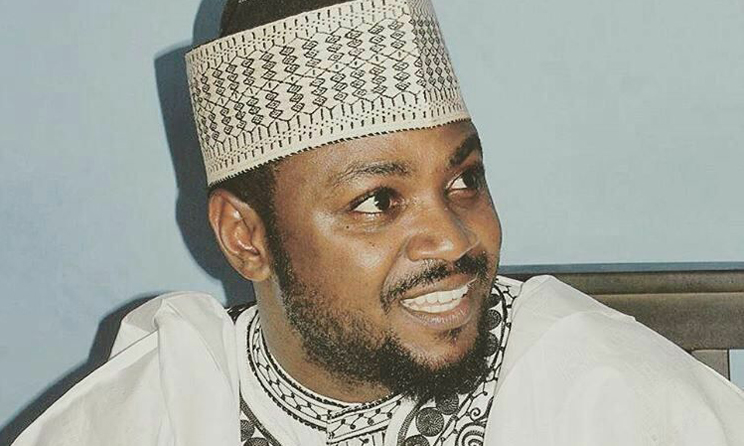
For instance, in April 2007 Hausa actor and musician Adam A Zango released a collection of music videos entitled Bahaushiya (Hausa Woman). The material was labelled obscene and Zango was arrested by the censorship board and jailed for three months[9]. After his release, Zango moved to Kaduna and released a farewell song, 'Kan Mai Uwa Da Wabi' (On No Particular Target), to draw the attention of the public to the plight of artists battling heavy-handed censorship[10].
Another example comes from 2009, when a supergroup of five popular singers in Kano – Aminuddeen L Abubakar, Misbahu M Ahmed, Bashir Dandago, Rabi’u Taka-Lafiya and Adam M Kirfi – began performing the song 'Hasbunallahu' (Allah Is Sufficient), featuring lyrics that speak of divine punishment for those who seek to silence free artistic expression. The song became a key instrument of activism against the Kano State government and its censorship board, and in June 2009 the offices of Hikima Multimedia Studios in Kano, where the song was composed, were raided by security personnel and the facility was shut down[11].
In spite of the continuous censorship and harassment they faced, Northern Nigerian artists continued to use music as a tool of political activism, effectively mobilising the youth to vote in the 2011 general elections. Songs by young artists directly confronting the actions and policies of the Kano State government were shared widely using Bluetooth technology, and ultimately the state's ruling party was defeated at the polls, ushering in a new government[12].
The same phenomenon occurred in 2015, when singer Dauda Kahutu Rarara contributed to the victory of President Muhammadu Buhari of the All Progressive Congress (APC) over the incumbent, Goodluck Jonathan, of the People’s Democratic Party (PDP). Rarara used his songs to expose the atrocities and corruption of the PDP-led government and won sympathy for the APC among Northern Nigerian voters[13]. His song 'Mai Malfa Ya Karaya' (The Man With the Hat Has Lost Hope) is an allegory describing the downfall of former President Jonathan, a resonant message that also advocated for patience on the part of voters in the face of extreme provocation. It became a hit in Northern Nigeria and served as effective propaganda for the Buhari campaign[14].
Music activism in the time of Boko Haram
The deadly terror acts perpetrated by militant group Boko Haram in 2009, which ravaged Nigeria's northeast, had devastating effects on the local music industry. However, the central role of music in the revitalisation of the affected communities has already become clear[15]. In the period following the attacks, a network of musicians called Arewa Connect toured Northern Nigeria, promoting opportunities in the creative industry in spite of the Boko Haram occupation. The group visited the city of Maiduguri and used music as a tool to advocate against violence[16], among other initiatives.
Resources and citations:
- [1] Sakolsky, R. and Ho F.W. (1995). Sounding off! Music as subversion/resistance/revolution. New York: Autonomedia.
- [2] Adamu, A.U. (2014). PDP Reloaded: Political Mobilization Through Urban Musics in Kano. Bayero University Journal of Political Science, pp. 65-89
- [3] Yahaya M.K. (2002). Development and Challenges of Bakolori Irrigation Project in Sokoto State. Nordic Journal of African Studies 11(3):411-430: http://www.njas.helsinki.fi/pdf-files/vol11num3/yahaya_02.pdf
- [4] Beckman, B. (1985). Bakolori: Peasants versus State and Capital. Nigerian Journal of Political Science, 4(2).
- [5] Malumfashi, I.A.M (2010). The Creation of Some Poetic Masterpieces in Hausa. In Abdu, S. & Bhadmus M.O. (Ed) Poetry & Poetics: Proceedings of the 5th Conference on Literature in Northern Nigeria 2008. Maigishiri Gabasawa Press, Kano, Nigeria.
- [6] Radda, S.I. (2013). The Criminology of Gambo the Singer. In Makadi a Mahangar Manazarta: Jerin Takardun da Aka Gabatar a Taron Kara wa Juna Sani Kan Tubar Muhammadu Gambo Mai Kalangu, Sashen Nazarin Harsunan Nijeriya, Jami’ar Usmanu Danfodiyo, Sokoto. Gidan Dabino Publishers, Kano, Nigeria: http://www.academia.edu/7646212/A_BIOGRAPHY_OF_GAMBU_AND_HIS_CATEGORIZATION_OF_CRIMES
- [7] ibid.
- [8] iAdamu, A.U. (2014). PDP Reloaded: Political Mobilization Through Urban Musics in Kano. Bayero University Journal of Political Science, pp. 65-89
- [9] https://freemuse.org/news/nigeria-actor-jailed-for-releasing-an-uncensored-music-video/
- [10] Adamu, A.U. (2014). PDP Reloaded: Political Mobilization Through Urban Musics in Kano. Bayero University Journal of Political Science, pp. 65-89
- [11] ibid.
- [12] ibid.
- [13] Zukogi M.A. (2015). Oral Songs and the Politics of Elections: Metaphors and Innuendoes in Dauda Kahutu Rarara’s “Mai Malafa Ya Karaya” and “Masu Gudu su Gudu”. Paper presented at the Nigerian Folklore Society National Conference on Oral Poetry in Nigeria: Prospects and Challenges in the 21st Century held at Bayero University, Kano, Nigeria, 26-27 October.
- [14] Ibid.
- [15] On frontline of Nigeria's jihadist war, nightlife fights the blues. Published in the Daily Mail, 17 December 2016: http://www.dailymail.co.uk/wires/afp/article-4043418/On-frontline-Nigerias-jihadist-war-nightlife-fights-blues.html
- [16] ibid.
This article is part of the Music In Africa Connects project, a multifaceted development initiative aiming to support the music sectors of African countries affected by conflict. To find out more about Music In Africa Connects, click here.
Disclaimer: Music In Africa's Overviews provide broad information about the music scenes in African countries. Music In Africa understands that the information in some of these texts could become outdated with time. If you would like to provide updated information or corrections to any of our Overview texts, please contact us at [email protected].
Editing by David Cornwell


Most popular

Top Naija songs of 2026
31 Mar 2026

Top amapiano songs of 2026
16 Feb 2026

Top Afrobeats songs of 2026
19 Mar 2026

Call for applications: ACCES 2026 Emerging Artist Spotlight Competition
01 Oct 2026
AFRIMA 2026: All the winners
12 Jan 2026

CAPASSO backs global principles for fair generative AI music licensing
06 Oct 2026
Disclaimer: Music In Africa provides a platform for musicians and contributors to embed music and videos solely for promotional purposes. If any track or video embedded on this platform violates any copyrights please inform us immediately and we will take it down. Please read our Terms of Use for more.

Subscribe to our monthly Newsletter
Follow us on social media


Please log in to post a comment.