










































Decolonising music education across diverse institutions
15 Jul 2025 - 11:18

By Dr Eugene Seow
As a Singaporean music educator and multi-instrumentalist who has taught from primary schools to universities, I’ve seen how Eurocentric traditions continue to dominate music education in many post-colonial societies. The emphasis on Western canon exam syllabi, classical repertoire, and imported models often leaves little space for local voices. Decolonising music education has become both a mission and a reflection of my identity: to make music learning inclusive of cultural knowledge from the Global South and to validate the full spectrum of our musical heritage. This article reflects on my teaching across institutional tiers. It explores how we might reimagine our pedagogies, whether in Singapore, South Africa, or anywhere in between.
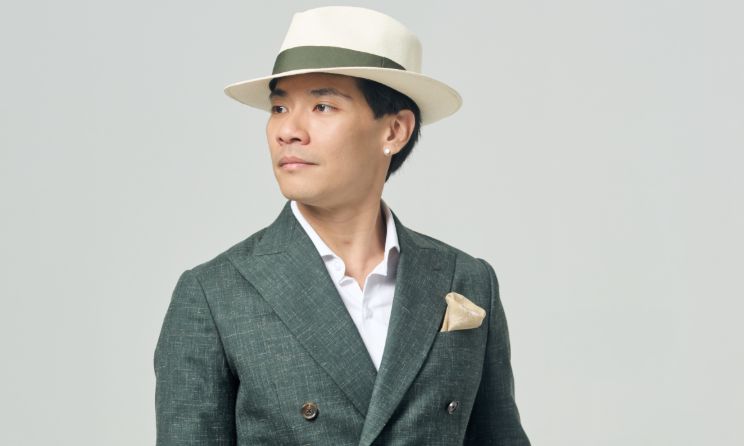
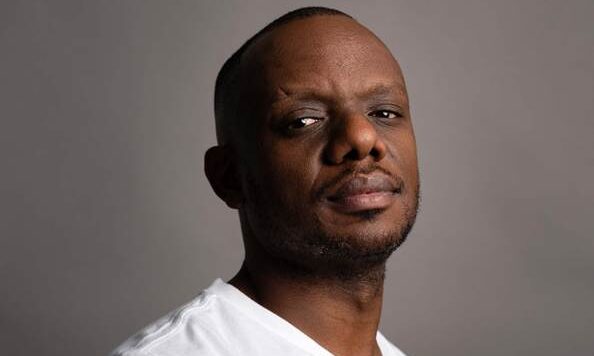
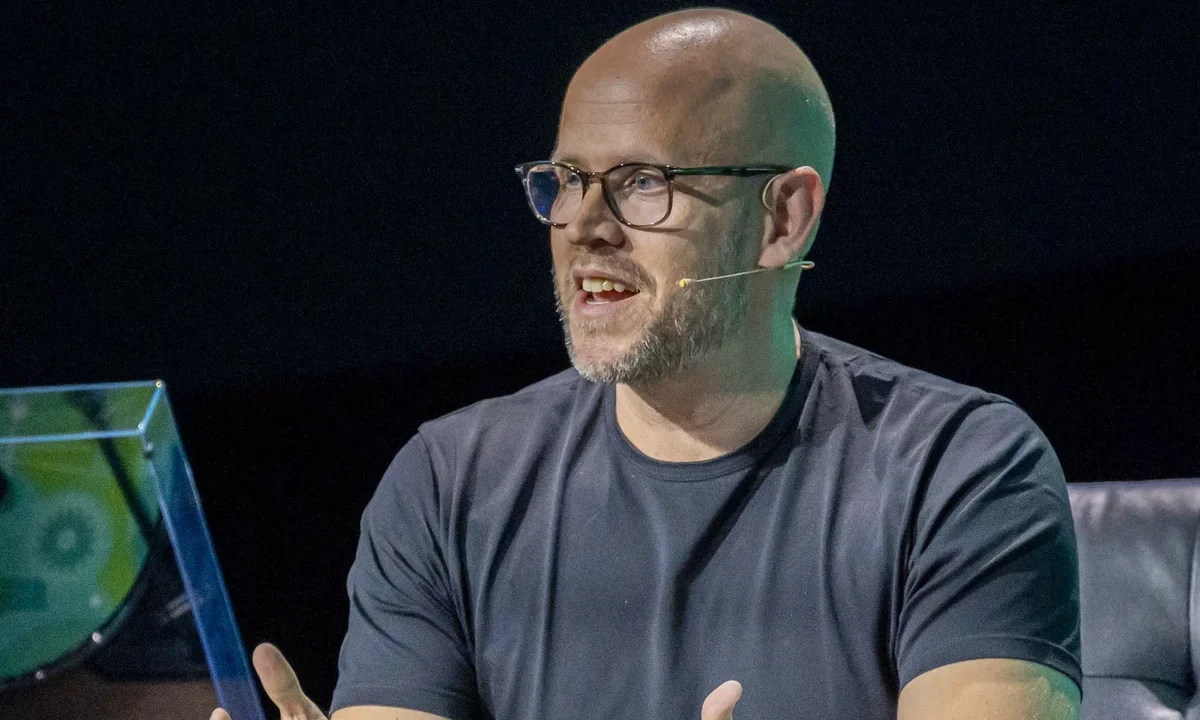
Dr Eugene Seow.
Breaking out of the canon
My musical upbringing followed a familiar path: I began playing classical piano at the age of six, took ABRSM exams, studied Italian terms, and explored an extensive repertoire of European music. That framework could just as easily describe a student’s experience in Lagos, Nairobi, or Kuala Lumpur. But a pivotal moment came when I performed a Grade 5 Jazz Piano solo at a recital. Amidst Mozart and Chopin, it was the swing of jazz, an African-American tradition, that truly resonated. That experience cracked open a larger question: why had music education never reflected the rhythmic languages and expressive tools of the world I lived in?
Later, as I pursued jazz performance and world music academically, I began to understand that rigour and complexity existed well outside the Western canon. A West African drum circle, Indian tala, or Javanese gamelan structure offers not only cultural depth but also technical insight. Embracing these systems wasn’t just about adding content; it was about reclaiming identity and challenging narrow standards of “serious” music.
Why decolonisation matters
To decolonise is not to discard European music, it’s to rebalance the equation. In many Global South contexts, “proper” music training is still equated with European classical music. The result: students may master Für Elise, yet know little of their own folk or popular traditions. I saw this disconnect in my early teaching years. Students played flawlessly but without joy, detached from the music’s cultural roots.
Decolonising means embedding diverse musical practices into mainstream learning. In African classrooms, it might mean teaching Fela Kuti or Brenda Fassie alongside Bach; in mine, it means incorporating lion dance drumming, Chinese pentatonic scales, or Malay folk melodies. The shift is not just curricular, it’s psychological. Students light up when their cultural knowledge is validated. Music stops being a foreign exercise and becomes a shared conversation.
It also disrupts longstanding hierarchies. When only Western composers are framed as “geniuses,” learners absorb the message that their heritage is secondary. But music is a universal language, and its gatekeepers should reflect that diversity.
Teaching across contexts
I’ve worked in nearly every institutional tier, including primary and secondary schools, conservatories, universities, private academies, and community programs. Across these contexts, the methods for decolonisation vary. Still, the intent stays constant: to expand relevance, reflect identity, and centre cultural inclusivity.
Primary and secondary schools
Here, small steps go a long way. I integrated folk songs in local languages, regional rhythms, and Asian instruments into school ensemble rehearsals. In one year-end concert, we presented not only Western carols but also Chinese New Year tunes and Mandopop songs. These early interventions help normalise the idea that all music counts.
Private academies and high schools
In exam-oriented settings where ABRSM and Trinity syllabi dominate, I worked within the system. One student preparing for a piano diploma was struggling with expression. I introduced her to a Malay folk tune. Learning that piece improved her phrasing and emotional range across the board, even in her Beethoven. These connections show students that their culture isn’t a distraction; it’s a resource.
Tertiary institutions
With greater freedom at the higher education level, I designed hybrid curricula that combine world music theory with Western analysis, West African polyrhythms for rhythm training, and Indian solfège (sargam) to sharpen aural skills. In seminars, we compared how music education is approached in Ghana versus China, which helped students develop a more global and adaptable pedagogy. This kind of curriculum doesn’t dilute standards; it multiplies fluency.
Community workshops
Outside formal institutions, decolonisation often happens most naturally. I’ve led jam sessions where participants brought their own songs and rhythms to share. One memorable moment: a djembe groove blended with Malay kompang and Chinese lion drums. No theory, no exams, just collaborative sound-making. It’s proof that when hierarchy is removed, inclusion thrives.
Each of these environments has its own constraints. In some, I nudge subtly; in others, I go all in. But the approach always centres the learner, invites cultural input, and respects musical plurality.
Building cultural bridges
In Singapore’s multicultural context, I’ve found immense value in drawing parallels across traditions. For example, the expressive bends of the blues scale echo the ornamentations found in Chinese and Indian melodies. Gamelan tuning systems and African mbira both resist Western pitch norms. Yet, they feel entirely intuitive to the cultures from which they originate.
In one ensemble project, I challenged students to rework a nursery rhyme using Afrobeat rhythms and Chinese percussion. The outcome was musically strong, but more importantly, the process helped students confront and reframe their thinking about style, structure, and ownership.
I also speak openly about my own musical evolution from classical rigidity to jazz freedom to ethnomusicological inquiry. Students respond to this vulnerability. It creates a reflective classroom culture where exploration is expected, not feared. And it subtly shifts the teacher-student dynamic away from “expert vs. novice” toward a co-learning partnership, a decolonising move in itself.
Looking ahead
Across Africa, Asia, and Latin America, decolonising practices are already in motion. The task now is to bring these efforts into the mainstream, making inclusion a norm rather than a niche.
Teachers can start with minor adjustments, such as adding a local song, featuring a non-Western composer, or inviting guest artists to perform. Institutions can revise syllabi, support local research, and fund programs that reflect regional musical realities. It’s not about checking boxes; it’s about building a more honest, relevant, and inspiring education.
In my doctoral research, I used global rhythmic systems to teach standard aural skills. The outcome? Equal or better learning, higher engagement, and more personal ownership of the material. Pedagogical diversity isn’t soft, it’s strategic.
Decolonising music education is not a single act, but a continuous process of unlearning and re-learning. It’s about making space at every level for creativity that feels rooted, not imported. The next generation of musicians should be as comfortable leading a Ghanaian drum ensemble as they are producing a hip-hop track or interpreting Chopin.
We don’t have to choose between Beethoven and Baba Maal, gamelan and guitar. We can have them all and create new things from their meeting points.
Dr Eugene Seow, FHEA, FLCM, is a Singapore-based higher music education lecturer, practice-led researcher, research supervisor, and drummer-percussionist. He teaches at LASALLE College of the Arts, Nanyang Academy of Fine Arts, and Singapore Raffles Music College, and serves as Ensemble Tutor at the NUS Centre for the Arts. His research examines musical judgement, aural fluency, ensemble pedagogy and cognition, structural listening, assessment validity, and practice-led curriculum design.


Most popular

Top amapiano songs of 2026
16 Feb 2026

Top Afrobeats songs of 2026
19 Mar 2026
AFRIMA 2026: All the winners
12 Jan 2026
Open call: Goethe-Institut grants for Southern African creatives
08 Sep 2026

Top Naija songs of 2026
31 Mar 2026
Sun-El Musician confirmed for ACCES 2026 in Joburg
15 Sep 2026
Call For Applications : ACCES seeks a UK-based performer
10 Sep 2026
Disclaimer: Music In Africa provides a platform for musicians and contributors to embed music and videos solely for promotional purposes. If any track or video embedded on this platform violates any copyrights please inform us immediately and we will take it down. Please read our Terms of Use for more.

Subscribe to our monthly Newsletter
Follow us on social media


Please log in to post a comment.