




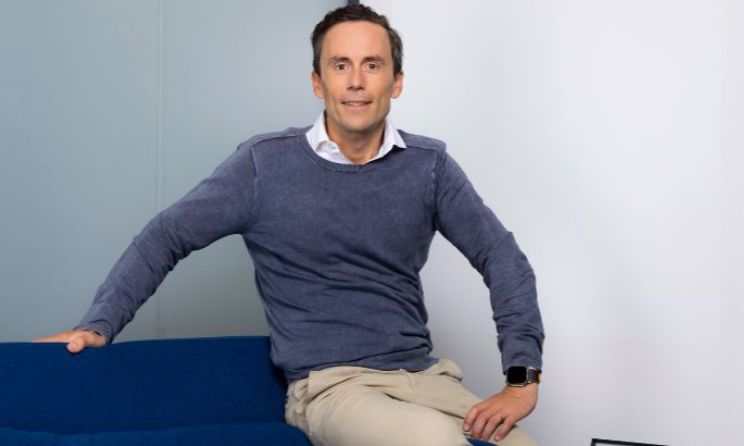











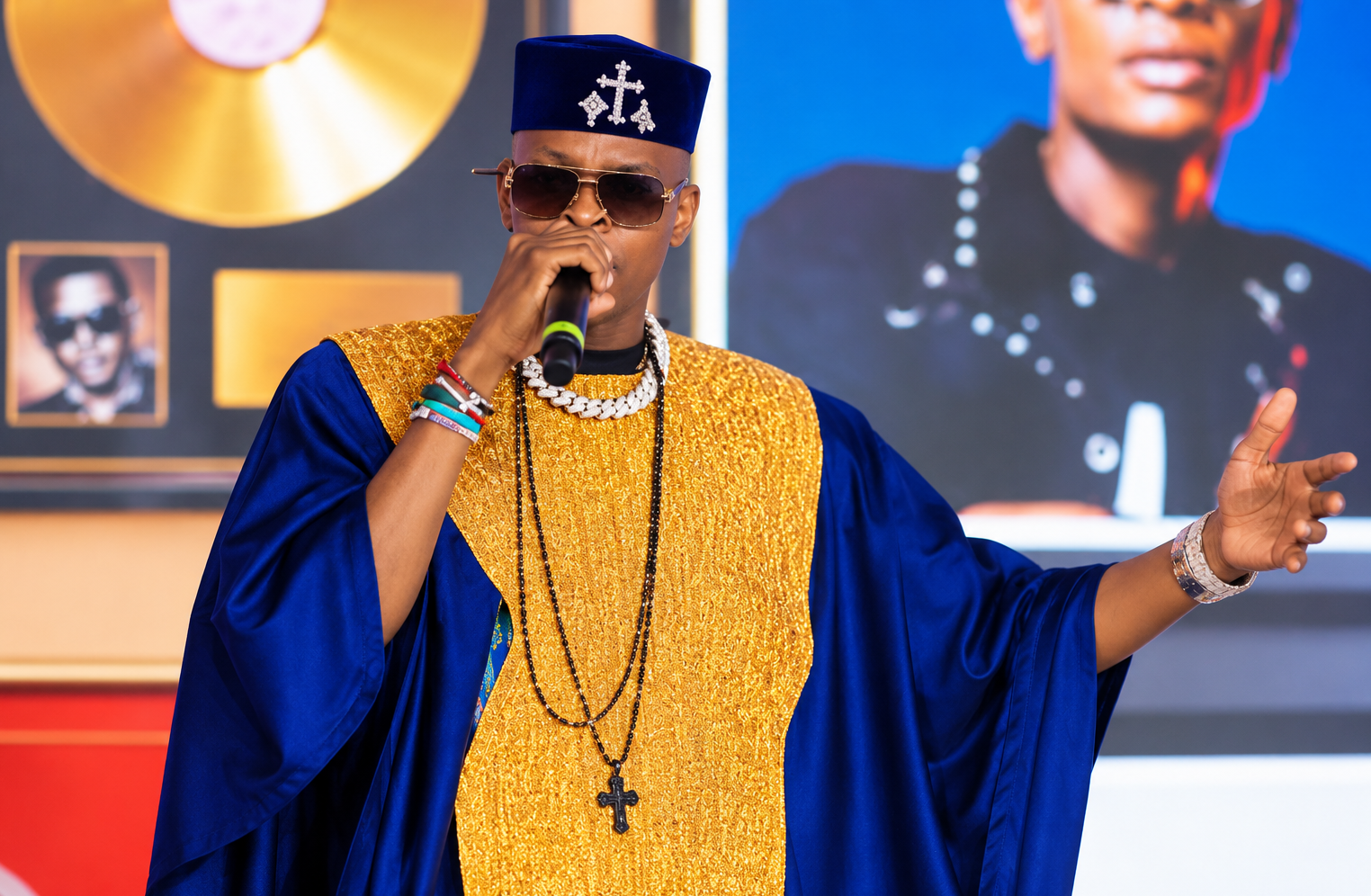
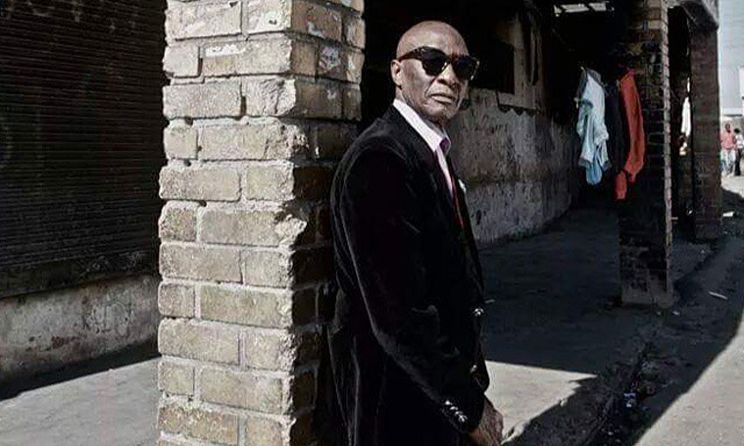































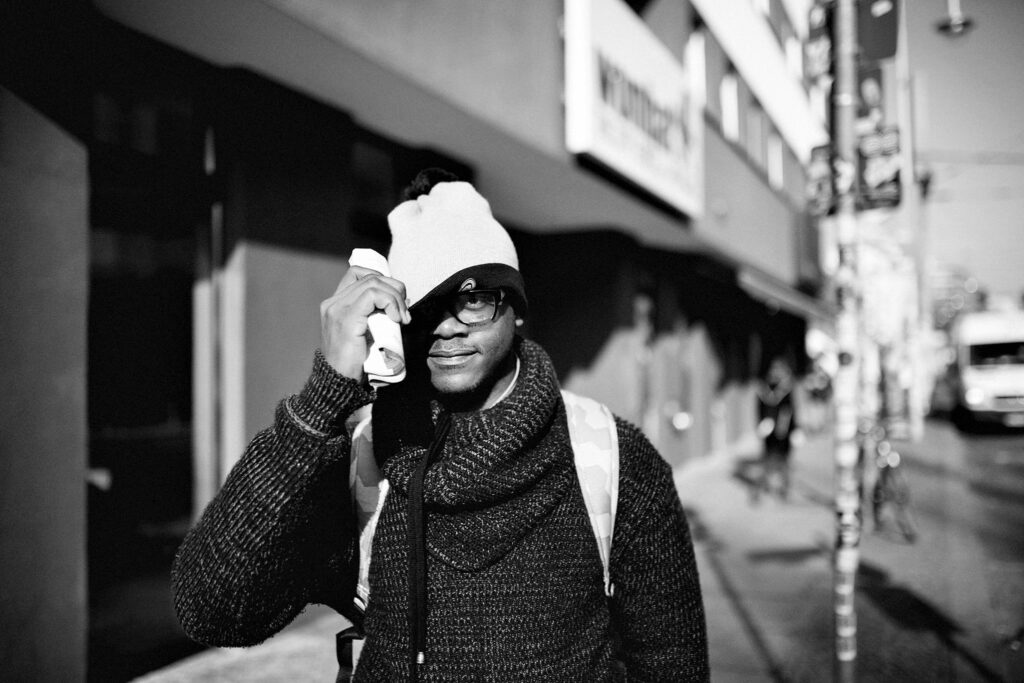


Back when they were students at the University of Port Harcourt (UNIPORT), Valo and Marshall were among a bunch of guys who argued about music regularly. Today, they are the CEO and COO of the KeyQaad music label. If you’re a fan of the music of Omah Lay, Valo and Marshall are the ones you should thank, even though they don’t really feel that way.

“He would have made it no matter what,” Valo tells me one evening at the KeyQaad office in upmarket Lagos. Still, I’m curious about how it happened: it felt to me like one day I had no idea who Omah Lay was, and the next he was all I could talk and think about.
How did this happen? Well, the story begins from an email sent by a young man to a guy he had heard about who could get his music on radio. The young man introduced himself as an artist and producer. The other guy heard something unusual in the attached song and forwarded the email to his friends. That was in May 2019. The young man was Stanley Omah Didia, popularly known as Omah Lay, and the guy receiving the mail was Valentine Ngaji, otherwise known as Valo. One of the friends Valo sent the song to was his childhood friend Marshall Onaemo. The pair met at the Federal Government College in Anambra and attended university together in Port Harcourt (PH), where they got accepted to study biochemistry around 2006-7.
Marshall got back to Valo, saying that there was indeed something interesting going on with the artist in that email. Days later, Valo flew to PH to see the new guy. The rest is now Nigerian music history.
Recently, Valo and Marshall spoke to me about their journey as music executives, signing Omah Lay, the use of Shazam, and how hard it is to rest after a spanking good year. The following two-part interview, which has been edited and condensed, is a masterclass in understanding Nigeria’s music business.
ORIS AIGBOKHAEVBOLO: When did you guys discuss what became KeyQaad?
VALO (V): The fact is that while I was doing radio, I was trying to figure out how to help artists, but not quite mentor them. I wanted to know where I could fit in, even while I was in PH. I’ve had artists that I approached in PH, like, ‘Yo, let’s work together.’ And we even had paperwork. KeyQaad wasn’t the name at the time. It was named Baller Music. We didn’t register the company. The aspiration has always been to make music and sign artists. Also, think KeyQaad , think access.
From there to Omah Lay. What had to happen to get you to that stage?
V: LA Reid in his book Sing to Me said, “Keep the lights on, keep the doors open and a star will walk in.” It might not be a star walking in, it could be in my email. I sit here every day. I wake up in the morning early, [thinking] that today will be the day I will find someone. After that, I go about my business, curating music. Then, one day I saw an email from a guy.
Did you ever find out how he got your email?
V: I asked him. He said some guy gave it him. He was trying to put his song on radio.
And he was in PH at the time.
V: Yes. I was in Lagos, but Sound City was in PH and I came from PH, so people in PH knew me. There was something about the song. He was sincere. His voice was sincere. I believe depth was there. And for me, I’ve always believed that everybody can make a hit.
Interesting philosophy.
V: Yeah. Take Jermaine Dupri. He found Kriss Kross at a mall. The work is finding someone who can make music, who’s gifted, talented with the voice that they can sing to you and you’ll feel every bit of what they’re feeling. I feel like with them, you can make a hit. And then you can still make the music that will make them be around forever.
So there are two things. The hitmaking ability and then longevity?
MARSHALL (M): Yes, longevity and not just that. It’s basically the soul communicating to you with their music.
V: You can listen to every song. You can dance to any song, but how many of those songs can you take home and listen to on a good Sunday morning and just relax? So, when I heard ‘Hello Brother’, that was what I heard. This guy sang this and sent it to play on radio. He wasn’t about trying to make a hit song.
Was that part of the ‘philosophy’ of KeyQaad already there, even before Omah Lay showed up? Or was KeyQaad trying to sign hitmakers, and Omah Lay showed up?
M: That’s the philosophy.
V: There was no way I could sell what I didn’t believe in because I’m a music guy myself. It was my salary, bro [laughs]. When I first heard Omah Lay’s music, I immediately forwarded it to Marshall.
M: I called him and was like, ‘Bro, this is our guy’. I couldn’t sit down listening to the music. ‘Hello Brother’ still feels like my best Omah Lay song. He’s made a lot of songs that speak to people. But there’s always that feeling I get when I listen to ‘Hello Brother’. I’ll always remember that first day.
V: I think I went to search. Then, I saw ‘Do not Disturb’. We played it and we were like, this guy has something. We weren’t even thinking about money because they were all slow songs. What made up our minds was this song he made on Audiomack called ‘Talking to God’. I got back to him, like, ‘Yo, give me your number’. So he sent me his number. I texted him. I was like, ‘Yo, any chance we can talk?”. He called me and I asked, “What are you doing? Could you just come to Lagos? Let’s just chill.” He said he hadn’t been to Lagos before. I said, ‘Don’t worry.’ This was on a Thursday. First thing Saturday morning, I was in PH. I called one of my friends who was also a music guy. I called him into my hotel room. I played the song, he was like, ‘Nothing dey here.’ I was like, ‘Okay, just sit with me through the meeting later.’ So, Omah Lay came around that evening. He had the looks, but you could see that he wasn’t like the usual. If you tell a Lagos boy to show up, na you go dey beg am say you for no wear.
M: He was just casual.
V: He was in an oversized shirt. We had a conversation. Five minutes into this conversation, I don’t know where it came from – I don’t know how, I don’t know if I could do it, but I just told him I’ll make him a star. I didn’t know what was speaking to me. I was asking him about his musical influence. This guy was mentioning Russ. This brother knew Russ. This was when in PH I would meet people that knew Migos of course, but Russ is like… he wasn’t mainstream.
M: Even in the US, people don’t know who Russ is.
V: Yeah. He was making music from a pure place. I think we spoke about Nigerian music. He wasn’t really into everything that was hot at the time.
He was not really into mainstream music.
V: Yes. So, he liked what he liked. Everybody was eager to hear back from me. I called Marshall and was like, ‘Bro, I don’t know how, but we found our guy.’ I was back in Lagos the next morning on Sunday. So, at that point, I knew it was on. Nobody knew him. He wasn’t doing the most on the internet. He had 400 followers. I wasn’t in competition that maybe somebody else is going to snap him up. It was us in competition with ourselves. Like, yo, we have to hit the ground. By June, he had signed the contract.
That’s in about a month.
V: There was something about him that became personal to me. You know when you’re dealing with lawyers, lawyers will be like, ‘This might be doing too much.’ He felt like…
M: He felt like a younger brother.
V: I was looking out for him in the contract that was given to him. Do you know what that means?
Yeah. You wanted to treat the guy nicely.
V: Yes. But then the stumbling block became that he was making the songs. We knew we needed to crack him a little bit to be able to grab attention. When we brought him to Lagos, we had to start pitching. But people that heard ‘Hello Brother’, the same song we heard, said, ‘Erm. This guy good, but, omo, this guy no go fit blow.‘
That must have been common.
M/V: Yeah.
M: People loved it, people enjoyed it but they didn’t see the singer because they didn’t know him.
Read part 2 here.


Most popular

Top Naija songs of 2026
31 Mar 2026

Top Afrobeats songs of 2026
19 Mar 2026
Ghana: Mr Eazi and MOLIY’s ‘Comfort’ earns Urban Music Awards nomination
21 Oct 2026

Top amapiano songs of 2026
16 Feb 2026
Open call: CANEX Music Business Lab and Songwriting Camp
15 Oct 2026
Nigeria: CANEX WKND unveils 2026 programme
21 Oct 2026
Disclaimer: Music In Africa provides a platform for musicians and contributors to embed music and videos solely for promotional purposes. If any track or video embedded on this platform violates any copyrights please inform us immediately and we will take it down. Please read our Terms of Use for more.

Subscribe to our monthly Newsletter
Follow us on social media


Please log in to post a comment.