






























































By Oko Drammeh
This text provides an overview of The Gambia’s recording industry, covering its history and providing examples of its current recording studios and labels.
Music recording started in the Gambia in the early 1960s. Performances were recorded live by Radio Gambia, the institution responsible for documenting and recording music for public amusement. Because there were no recording studios at the time, Radio Gambia engineers occasionally converted the newsroom into a studio, where they recorded many bands and music groups for broadcast. Most of these early musical recording were traditional music griots, specifically Kora and Balafong players, drummers and singers, such as Jali Nyama Suso, Lalo Kebba Drammeh, Alhaji Bai Conte, Bana Kanute and Amadou Banang Jobarteh.
The first Gambian musician to be released on vinyl record was the female singer Vicky Blain, whose music was recorded and distributed throughout Europe in the early 1960s by Philips records. The second Gambian to appear on LP was Laba Sosseh, a member Superstar de Dakar, based in Abidjan, Côte d'Ivoire. The band went through several incarnations, including the Super International Band de Dakar featuring singer Pape Fall and Liwanza. After recording with Liwanza for local producer Aboudou Lassissi in 1977, Lassissi helped to send Sosseh to New York, where he became involved in the fledging salsa scene and recorded a series of LPs titled Salsa Africana, with direction from Cuban sonero Monguito ‘El Unico’.
In the early 1960s, there were two music groups competing for the role of national band, assigned to perform at all national events and the annual presidential ball. They were the Super Eagles band and the Fabulous Eagles. The Super Eagles emerged as the pioneers of popular Gambian music in the Senegambian region at the end of the 1960s and the early 70s, delivering a progressive blend of Afro-Cuban, pop, soul, bluebeat, Congolese rumba, highlife and ndagga music. Their early singles included ‘Sock it to me’, ‘Paradise on Earth’, ‘Mandal ly’ and ‘Bada Touray’. By the end of the 1960s, the Super Eagles had released a 15-track album on the UK-based Decca label, titled Viva Super Eagles.
Other notable Gambian musicians to have released several international albums include Oussu Njie Senor, Paps Touray,The Soto Koto Band, Foday Musa Suso, Ifang Bondi, Abdel Kabirr Jaliba Kuyatehh and Musa Ngum
Recording studios
Today, Yellowgate Studios is Gambia's leading professional recording studio. It is owned and operated by Elie Nachif, an artist and producer. The studio was established in 1993 and has since grown into the leading commercial recording studio in The Gambia, working with a range of different artists, including the veteran Ousou NjieSenor, on songwriting, instrumentation, arrangement, recording, engineering, mixing and mastering.[i]
Xalam Studio is operated by Omar Traore, commonly known as Tra, a musician and keyboardist for the Baatin jazz band. Xalam Studio presently does most of the government recording projects and soundtracks for television programmes. Special recording projects that musicians use to sensitize the Gambian population are also produced by Tra, such as ‘Ebola Free Gambia’ and ‘No Back Way to Europe’. Recently the studio have released singles by popular Gambia musicians such as Jalex, Diha, Killa Ace, Badibunka, Singateh and Egalitarian, among others.
Sunland Music Studio was owned and operated by an African-American named Hakim Samahdi, better known as Hak, a former member of American group The Boys. The studio is known for recording popular Gambian artists such as Gee, E- Nyassi and Jali Madi. Sunland Studios have also recorded popular Senegalese artists such as female singer Vivian. Sunland closed down in 2013 after a robbery and Hakim left the country[ii]. After Hakim left, another Sunland studio, known as Sunland B, was set up and run by Hakim’s brother Bilal[iii].
Hakim returned to the Gambia and the original Sunland music is still operating. Hakim is now the vice-president of the recently formed Gambia Association of Producers and Promoters (GAMPP). On 18 May 2014 Sunland Music sponsored and hosted a workshop for Gambian artists and producers. Between 2014 and 2015 Hakim and his Sunland Music label have released a series of radio hits and videos. Recently he has been recording with Nigerian artists like the famous Wizkid and had a hit with ‘Olelele Mama’ by Spotless.
Ghetto Boys Studios is a small recording studio with relatively simple recording equipment who have managed to lashed out a series of Gambia's most popular radio hits. The studio is operated by Nova Sambou, one of the most played Gambian artists on radio in recent years and the creator of ‘Afro wave’, a new type of Gambia electronic music that is popular with the youth. On his 2013 album Ladies Rhythm he featured top Gambian musicians (such as Cess Ngum, Magnificent Joe, GFaal, Martin Lyrix King, Humzy, Ruggie, Nancy Nanz and Papa Jams), ensuring that the album became one of the most popular on Gambian radio and TV (as well as cellphone ringtones) with hits like ‘You Are My Hero’, ‘Big Belly Man’ and ‘Shadow Ghettoboys’.[iv]
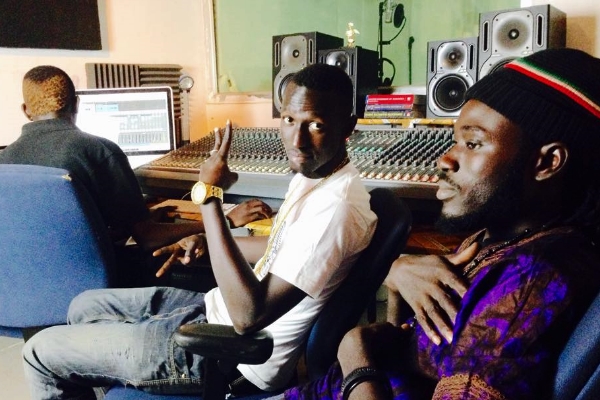
Private or home recording studios are common in the Gambia. These are studios built by artists who want to record demos in a more affordable environment. The equipment typically used in this process of making home recordings includes a computer with Cubase software, a drum machine, an 8-channel mixer board, speakers and a microphone. These studios do not typically have the capacity for mixing, editing or mastering. Only a select few of them have released full albums that can be heard on Gambian radio and television. Many popular Gambian were recorded in these home studios, although the quality of the recordings cannot always guarantee radio airplay.
Record labels
Besides Sunland Music and Ghetto Boys, other independent labels in the Gambia include The Block Entertainment Music Group, which was pioneered by Mohammed Kah, aka rapper Mo-Hawk from Da Fugitivz’s Crew. The label’s recording studio is located in the Bakau/Pipeline area on the outskirts of Banjul. Mo-Hawk assembled talented musicians such as keyboardist Alhaji Leigh, Kora player Jali Madi, Jabel, Big Faa, Alpha Yaya, MC Mbaye and others to build a special brand of local hip-hop beats in the Wolof langauge. The Block Entertainment’s studio is a place where artists can spend time writing and recording with the label’s prominent label. The studio is managed by Kutubo, who is also the label’s event and artist manager.[v]
Shy Boy Entertainment is predominantly a reggae/dancehall label. At their studio they have produced a catalogue of upcoming musicians such as T Smallz, Silky Criss, Papa Lengthy, Lady Lena, Artenola and recently releasing young Afro-Manding artists like Manding Mory, Badibunka, Bro K and Dro Kylah. This studio was founded in 2009 by Hanson (aka Alhassan Jallow), who studied music production in London before returning to the Gambia. In March 2015 it was named Best Studio at the Gambian Music Awards.[vi]
Other small independent labels or recording studios in the Gambia include Must Stop Records, Dave Mobile Disco, Ndaanbi Studios, Smiling Coast Recordings of the Pepper House crew[vii]; Joluv Arts[viii] and Music-O Records[ix].
Challenges
Despite the growing number of recording studios in the Gambia, the local recording industry still faces massive challenges. The industry - which some argue does not even exist - needs proper structures that can enable its growth and development. Although an increasing number of young people are taking up music as a career, most lack any professional music training to produce quality music for public consumption, particularly for international markets. This has triggered the need to establish a music academy in The Gambia for aspiring talents, providing them with professional training, mentoring and towards their development as self-employed youths.
To meet these challenges, the National Council of Arts and Culture (NCAC) is a government-run project under the Ministry of Culture and Tourism. It is responsible for registering artists, hosting national music events and forming the necessary industry bodies such as the copyright office, the music union, the collecting society, in trying to oversee the local music industry and ensure its development and the wellbeing of its artists.[x]


Most popular

Top Naija songs of 2026
31 Mar 2026

Top Afrobeats songs of 2026
19 Mar 2026

Ghana: Mr Eazi and MOLIY’s ‘Comfort’ earns Urban Music Awards nomination
21 Oct 2026

Top amapiano songs of 2026
16 Feb 2026

Open call: CANEX Music Business Lab and Songwriting Camp
15 Oct 2026

Nigeria: CANEX WKND unveils 2026 programme
21 Oct 2026
Disclaimer: Music In Africa provides a platform for musicians and contributors to embed music and videos solely for promotional purposes. If any track or video embedded on this platform violates any copyrights please inform us immediately and we will take it down. Please read our Terms of Use for more.

Subscribe to our monthly Newsletter
Follow us on social media


Please log in to post a comment.