



















































South Africa is in a deep ideological crisis fostered by mind-blowing ignorance on both the left and right, and across the cultural spectrum. Political conversations in the public sphere have become impossible and debates are won according to the race, status and political affiliation of the participants. Members of political parties and labour unions clad in red exalt Cuban despots into cult status, while those in blue have trouble coming up with paradigms other than those steeped in free market economics. Violence statistics resemble those of war-torn countries. African immigrants are periodically attacked, maimed and chased out of communities during xenophobic attacks. White farmers are murdered out of spite. The Rainbow Nation has failed, yet politicians still make a meal of a concept lost to those who matter the most – ordinary people.
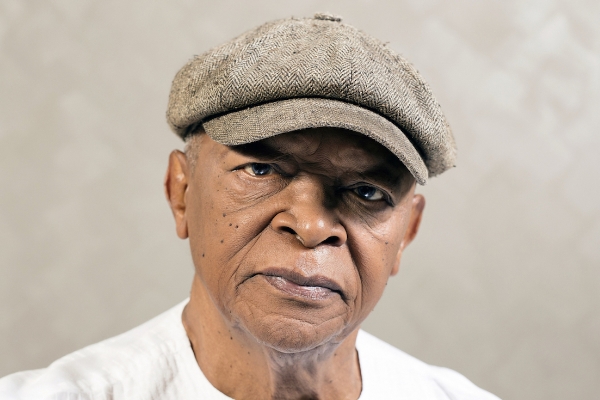
In the middle of it all is South African jazz great Hugh Masekela, who has been a critical voice of South Africa’s socio-political reality for the past six decades. The trumpeter is 78 years old today and preparing for a 14 April launch of his latest album, No Borders, at the Lyric Theatre in Johannesburg. The renowned musician was capped on Monday with a honourary degree from the University of KwaZulu-Natal where he urged students to “consider a number of issues in restoring the excellence of African heritage back into our lives without abandoning the best elements of what we inherited from the Western world”.
Masekela, who is employing his new album as a weapon against rampant ignorance and loss of identity, spoke to Music In Africa ahead of the Lyric Theatre performance and had much to say about the present-day African psyche. Although No Borders may seem like a painfully idealistic expedition into what could have been had colonialism not transpired in Africa, Masekela is realistic about the limits of his art.
“I can’t turn back the hands of time or the destruction colonialism rained upon us, but I can promote the restoration of ethnic language, especially among young adults and children where mother tongue is disappearing if not gone,” he said. “I think it is key for all to learn the true history of Africa, not the colonial or Christian versions. We need to learn what our praise poetry says to us instead of noisily ululating when it is recited. From praise poetry, we can trace each family’s genealogy and create centres like in Europe where you press a button and your history unfolds before your eyes.
“Ancient song, dance, music, artisanship, architecture, cuisine and couture are crucial studies. Why should we only learn about ancient Western glories that buried us? This is about knowledge, not regression. What is there is indelible but as the only society in the world that imitates other cultures and has almost been totally convinced that their heritage is barbaric, savage, backward, heathen or primitive, African-origin communities have the right to know how they got where they find themselves today and how their kingdoms were pillaged, raped and permanently destroyed and their history distorted.”
Masekela used musicians from across Africa during the recording of No Borders, most notably Zimbabwean legend Oliver Mtukudzi who he met in Harare to record ‘Tapera’, a downtempo guitar-trumpet conversation between the two veteran musicians.
“Oliver and I first met in Bulawayo in 1982. We have collaborated on stage several times since 1990 when I returned from exile. We did the song in Harare over a couple of hours,” Masekela said.
Asked to compare the latest collaboration with Mtukudzi to previous experiences, Masekela said: “I don’t analyse each interaction with close friends on a psychological or psychiatric level. We’re always the same when we meet and share many occasions of breaking bread together in our respective homes.”
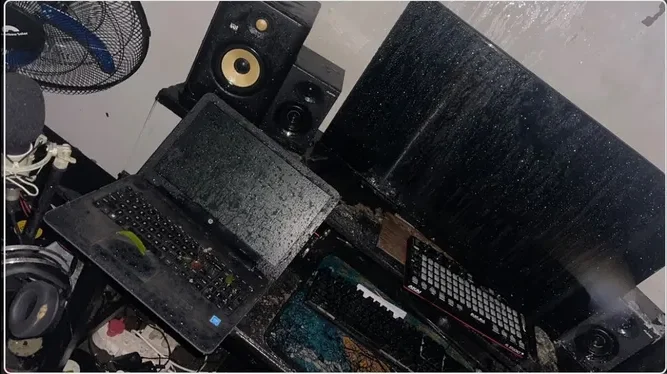
“We recorded the album through most of 2016 at Kunle Ayo’s studio (K Cool) in Ormonde next to Gold Reef City," he said. "I was inspired by the music of Africans in former Portuguese colonies through a 24-hour television music channel I could not turn off in my Lisbon hotel room. Kunle and I had produced an album for Gugu Shezi and another for Ayanda Tshabalala to hone our skills in that discipline. We gave the files to the young ladies as a gift.”
The cover art of No Borders is another powerful aid that Masekela uses to drive home his pan-African message. “I bought the 1590 map of Africa, which is illustrated on tree-bark material, in an ethnic Nairobi market. The team of administrative innovators in our company’s offices thought it would be great for the cover. I concurred.”
A few weeks ago, Masekela shot a video for his new album. He chose Johannesburg’s Rockey Street, a bohemian entertainment strip that in the 1980s saw blacks and whites mixing in defiance of the then apartheid laws. The area was known for housing artists, journalists and activists, many of whom were opposed to the National Party government that wanted to segregate communities with an iron fist. Having slipped into urban decay in the last couple of decades, Rockey Street is today a melting pot comprising immigrants from all corners of Africa.
“The video we shot was for ‘Heaven in You’ with Mi Casa’s J’Something,” Masekela said. “Rockey Street was electric, loud and exciting – a joyful mix of Nigeria, Ghana, Kenya, Senegal, Cameroon, Congo, South Africa and Somalia among others. There is a great feeling of solidarity between all these people, which like in many other Mzansi cities demonstrates that it's ‘too late for xenophobia’.
“I’m working on a song of the same title. These folks are here to stay and thinking of ridding ourselves of them is comical. Yeoville felt like a ‘no borders’ community. Sanza, who was our host and guide for the day, runs a one-table restaurant for which he cooks unbelievably delicious ‘no borders’ delicacies at 24 Rockey Street. Go check it out if you love good food. J’Something, who is a super chef, was blown away by the dishes. Him and Sanza go back some time.”
Much like Rockey Street, No Borders is heavily decorated with the hues of West African music and Afrobeat. But Masekela says this shouldn’t come as a surprise.
“I lived in the Congo, Liberia, Ghana, Guinea and Nigeria from 1972 till 1981,” he said. “Fela became like family. He introduced me to Hedzoleh Soundz in Ghana. I recorded with them and toured the USA through 1974-1978 during which time we recorded several popular albums which contained songs like ‘The Boy’s Doin’ It’, ‘Stimela’, ‘Mama’, ’Marketplace’, ‘Lady’, ‘Rekpete’ and others long before the USA and Europe ‘rediscovered’ Africa again. You have to remember that I was among those who pioneered African music in those regions when most on those continents thought we were a joke. ‘I am not a Johnny come lately’.”
Masekela has been a part of the lives of South Africans and their modern musical heritage since the 1950s, but fans will have to get accustomed to seeing less of the icon, who told Music In Africa that he would concentrate only on collaborative efforts in the future.
“I am cutting down my concert appearances drastically and through our foundation (the Hugh Masekela Heritage Foundation) entering the film and television production world to depict true historical accounts and promote heritage initiatives. The projects are intensely music-driven. I will do meaningful collaborations from time to time but No Borders is my last solo voyage,” he said.
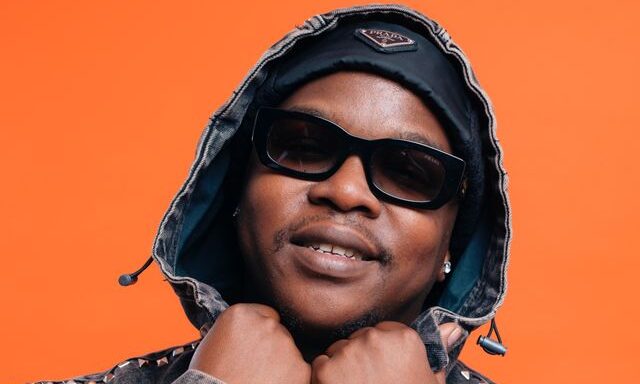
Asked about what the audience could expect on 14 April, Masekela said: “Our Gold Reef City (Lyric Theatre) show will feature many of the songs from the new album plus old favourites. J’Something, Oliver Mtukudzi, Dice Makgothi, Themba Mokoena (guitar), Kunle Ayo, Tomas Tukumba Dyani (percussion) may be featured depending on their availability.”
Apart from next week's performance, Masekela will also be playing at Swaziland’s MTN Bushfire festival in May – perhaps one of the last opportunities for fans to catch South Africa’s biggest jazz name before he calls it a day.
Tickets for the Gold Reef City performance can be bought through Computicket.
Update from the organisers:
"It is with great disappointment that Kaya FM & Bassline Live announce the immediate postponement of the Hugh Masekela performance scheduled for Friday 14 April at The Lyric, Gold Reef City. Bra Hugh, whilst attending the Mo Ibrahim Awards ceremony in Morocco this weekend, took a hard fall and dislocated his right shoulder, resulting in urgent medical attention and subsequent immobilisation of the injury.
He returned to South Arica this morning (April 10) under doctors’ orders. Current ticket holders can opt for either a refund via the Computicket box office or hold onto tickets for the rescheduled date, which looks to be within the next four-week period.
Bassline Live & Kaya FM both wish Hugh a speedy recovery and look forward to putting on a great show with him soon."


Most popular

Call for applications: ACCES 2026 Emerging Artist Spotlight Competition
01 Oct 2026
Open call: 2026 Gender@Work music industry training in Johannesburg
03 Oct 2026

Top amapiano songs of 2026
16 Feb 2026

Top Naija songs of 2026
31 Mar 2026

Top Afrobeats songs of 2026
19 Mar 2026
AFRIMA 2026: All the winners
12 Jan 2026
Disclaimer: Music In Africa provides a platform for musicians and contributors to embed music and videos solely for promotional purposes. If any track or video embedded on this platform violates any copyrights please inform us immediately and we will take it down. Please read our Terms of Use for more.

Subscribe to our monthly Newsletter
Follow us on social media


Please log in to post a comment.