


















































Interview: Ananda Geissberger on bringing Afro-Pfingsten Fest to Ghana
18 May 2021 - 10:22


Afro-Pfingsten Festival is arguably the most important Swiss showcase for African and Afro-American cultures. For its 30th edition this year, the festival – which is traditionally held in Winterthur, Switzerland, with more than 70 000 fans in attendance – is heading to Africa for the first time.

Ten Ghanaian musicians, including Wiyaala, Yaa Yaa and Atongo Zimba as well as Ghana-based Swiss producer Beda Ehrensperger, have been confirmed for the event, which will unfold in a hybrid format from Accra on 22 May. The six-hour stream will consist of live concerts, dance workshops, a documentary screening and a poetry slam, among others. While this will be Yaa Yaa’s first time on the Afro-Pfingsten stage, Atongo Zimba and Wiyaala are hardly strangers to the platform, having played at the 2007 and 2019 editions respectively.
Specifically for this year’s edition, the organisers have assembled the Afro-Swiss Orchestra and 10 musicians with African backgrounds living in Switzerland. Musicians from Tunisia, Senegal, Mali, Nigeria, Gabon, the DRC, South Africa, Mozambique, Columbia and Guadeloupe have also been programmed for Afro-Pfingsten 2021. And last month, the festival’s film crew shot a documentary in Mali, Ghana and Switzerland. Bassekou Kouyaté and Tiken Jah Fakoly are among the musicians who make an appearance in the film. In Ghana, the crew captured the rehearsals of the upcoming festival’s headline acts.
Music In Africa spoke to the festival’s director, Ananda David Geissberger, about Afro-Pfingsten’s Africa debut, its 30-year legacy and its desire to preserve the magic of live performances.
MUSIC IN AFRICA: What does it mean for Afro-Pfingsten to come to Africa for the first time, and why did you choose Ghana?
ANANDA DAVID GEISSBERGER: As much as we can, we always try to keep a direct connection with Africa. I’m used to travelling on the African continent, visiting other festival organisers and cultural actors. But, indeed, it is really the first time that the festival itself is coming to Ghana. It was never a question if we should do it ... What happened to us on this journey to Ghana and to the other countries where we went to shoot the film documentaries, it was such a unique and wonderful experience, and to have this direct connection in these digital times, we have so many possibilities to be at very different places at the same time.
Ghana was chosen because the idea was that we create a bridge between Africa and Europe or one country in Africa and Switzerland. So, we decided to fund two new projects, each with 10 musicians – one in Switzerland and one in Africa somewhere. I was checking with some organiser friends about different places and settled on Bader’s Cultural Centre in Accra. Bader has a sound studio, hotel and big stage, which are perfect for residencies because the two projects depend on residencies. We have a place in Switzerland where we brought the 10 musicians together. In Ghana, we also needed a place where artists could feel at home and focus on the music and do this joint venture.
What is the vision for Afro-Pfingsten 2021?
I think it’s definitely to keep this connection. We cannot have a big event physically, so we tried to do something more in-depth – not change a lot but create an immersive experience.
The COVID-19 pandemic has significantly affected the festival’s 30th-edition format, which will be a hybrid of live and virtual. What would you say are the unique challenges and high points of organising Afro-Pfingsten this year in particular?
What happened – and it was quite annoying – was that we had to plan and check all the possibilities. We made new concepts and we had to discard them. We made more new concepts and had to discard them again and keep on like this for a while. It was very tricky but also interesting to take new sheets and see them from a totally neutral perspective and create new concepts. We knew there were things we could do, but we had to figure out what they were in reality.
The big challenge at the moment is that we made a decision to make this a hybrid version three months ago, so we knew that we had a very short time. Since then, we’ve not had a break and the whole team is working very hard on getting everything ready, and it looks like it’s going to work very nicely, but the spontaneity of it was a big challenge. On the other hand, it was intense and beautiful to see how people loved the ideas. Musicians, especially, are really happy to have this kind of adventure and meet new artists from both Ghana and Switzerland. There have been very emotional moments that were really nice to see. So the kind of depth we achieved was perfect.
What has informed your desire to preserve the culture of live performances in such a highly digitised era?
Live music brings a whole different aspect with regard to emotions. Live music allows for much more spontaneity and creating dialogue with the audience. It makes it possible to treat performances with the maximum level of emotion. That’s the whole thing about live music – it’s the emotion – even generally for culture and the arts. So we are working with emotions and we want to touch people. This can be done with live music better than with any other medium.
Ghanaian acts Wiyaala and Atongo Zimba are no strangers to the Afro-Pfingsten stage. What has influenced their selection this year, and how did you settle on the eight other Ghanaian performers?
Actually, we sought musicians who have a connection to Africa. Wiyaala played the last edition of our festival. Atongo Zimba’s last Afro-Pfingsten performance was in 2007. Yaa Yaa was supposed to perform at the festival four years ago but her tour was cancelled and she couldn’t make it. Since then, we have always been in contact, building up a friendship and trying to bring her back. So it was quite obvious that she would be part of this year’s festvial. She is a perfect singer and very professional. We also have Emmanuel Ofori and Dominic Quarchie from Santrofi. We couldn’t bring all of Santrofi but we have these amazing bass and guitar players who did a great job. And then there are two percussionists who work with Bader.
Artists from about 10 other countries around the world will also contribute performances for Afro-Pfingsten 2021. For many of them, performing in front of a live audience is what they have known throughout their career. How have they adjusted to the new virtual format?
It’s something we will see on performance day. During the residency here, they have been very excited just to play together. Of course, they love and miss the audience but for this project and in the moment, they will be happy just to perform.
For this festival, you have assembled the Afro-Swiss Orchestra. How easy or difficult was it getting the collective together and how have they prepared for Afro-Pfingsten, which will be their first-ever performance?
Getting the artists to come on board wasn’t such a big deal because each one of them was like, “Oh, you want to do this? Okay, I’m in.” But once they got together, it was quite tricky. We have musicians who have come from a digital background, others from totally traditional and classical backgrounds, but they have the connection to Africa. I think everybody was confused in there because there were so many languages. It was challenging but also really amazing.
Over the last three decades, Afro-Pfingsten’s vision has dwelt on fusing African and Afro-American music and culture with that of Switzerland. What would you say has accounted for the festival’s longevity and how have you managed to preserve harmony among such a diverse cast of creatives?
It’s a very good but very difficult question. I have been the director of the festival for about five years, so there have been other teams before me. Afro-Pfingsten Festival has a very turbulent history and it can definitely be compared to a ride on a rollercoaster because it’s big and very complex. The event is unique and significant for culturally interested people in Switzerland as well as for the Africans who found a new home there. It is probably these patrons who have shaped this festival over the years. It’s a great motivation and all the individuals who are involved just want to preserve the festival. They put a lot of effort and heart and soul into it, and I think that’s the reason. It’s not just a festival, it's very deep and very unique, so I think its longevity is due to the people.
What are your expectations for the Ghana edition of Afro-Pfingsten and what are some of the highlights to look out for during this year’s event?
I think just the experience of being connected the digital way. The Ghana event will be our biggest physical part of the festival and we are looking forward to great performances and a great event overall.
What do you foresee for the next thirty years of Afro-Pfingsten?
We are going to work on the things we did before, and we really want to promote the firm friendship between the two countries as well as the people. Additionally, with this festival, we want to do away with the clichés that characterise us. There are so many clichés, whether in Africa or in Switzerland, and we just want to bring people closer and create a future based on respect. Through culture, this can be done in the most human way. You ask about diversity and this is perhaps the greatest value of humanity and it’s really this diversity we want to offer.
Afro-Pfingsten Festival and its documentary will be broadcast from Bader’s Cultural Center in Accra on 22 May. Ghanaian fans can call +233 20 667 0615 for limited in-person tickets.


Most popular
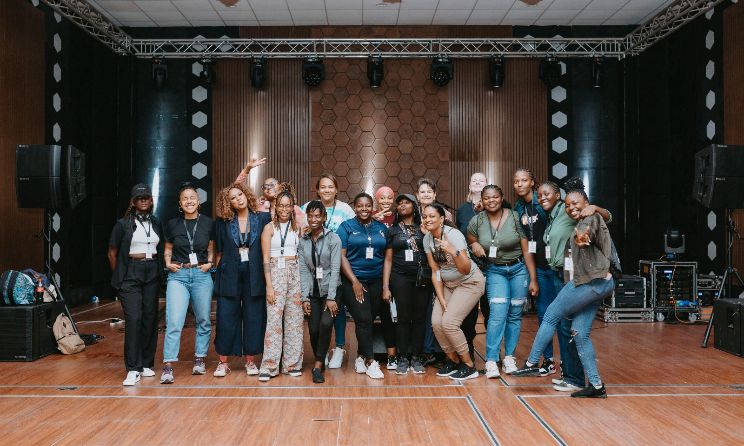
Open call: 2026 Gender@Work music industry training in Johannesburg
09 Oct 2026

Top amapiano songs of 2026
16 Feb 2026

Top Naija songs of 2026
31 Mar 2026
Call for applications: ACCES 2026 Emerging Artist Spotlight Competition
01 Oct 2026

Top Afrobeats songs of 2026
19 Mar 2026

AFRIMA 2026: All the winners
12 Jan 2026
Disclaimer: Music In Africa provides a platform for musicians and contributors to embed music and videos solely for promotional purposes. If any track or video embedded on this platform violates any copyrights please inform us immediately and we will take it down. Please read our Terms of Use for more.

Subscribe to our monthly Newsletter
Follow us on social media


Please log in to post a comment.