
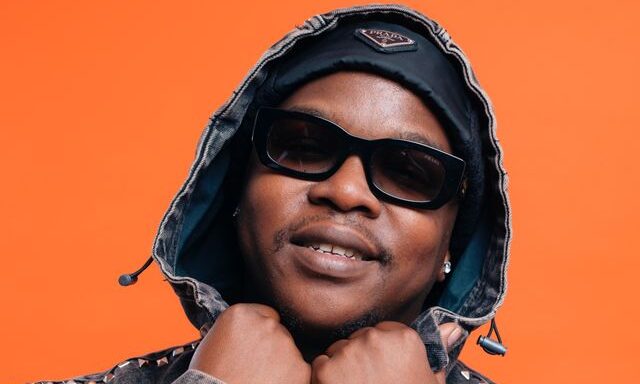



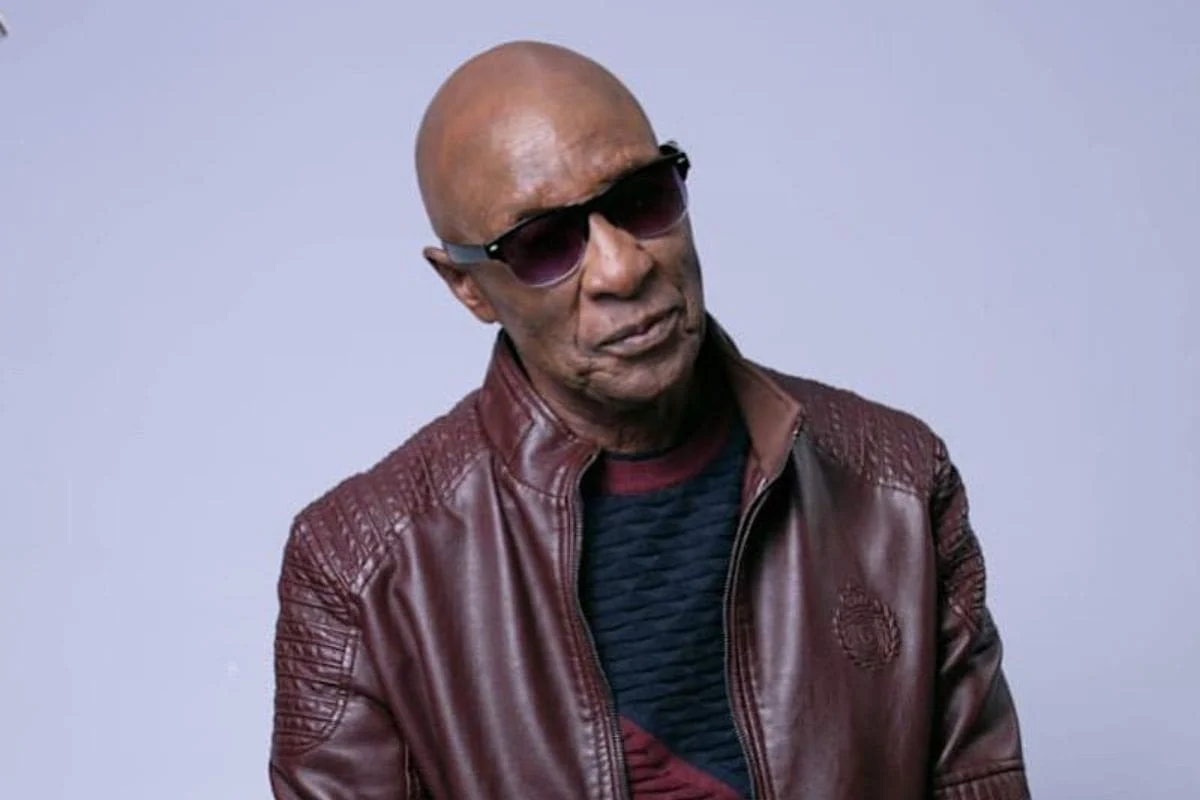















































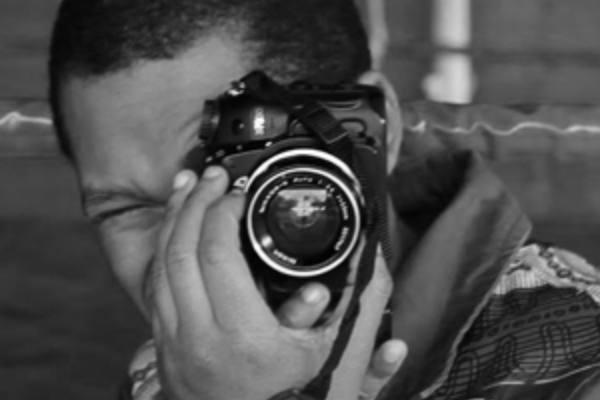


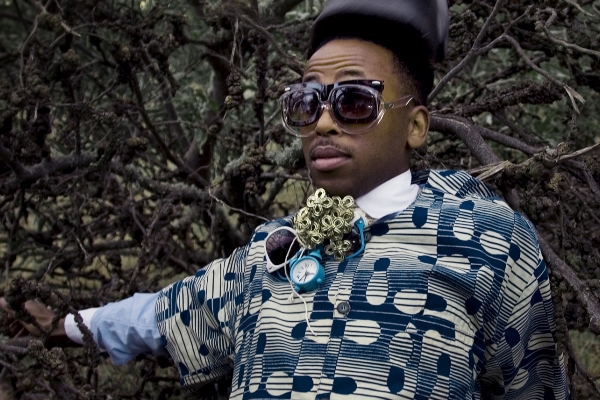
Spoek Mathambo is a challenging subject to interview. One imagines that it would not be out of character for him to make his feelings known when below-par questions are directed his way – a strange dichotomy considering that, as founder of the now-defunct underground hip-hop zine Levitation, talking to other artists was his occupation. We spoke about production, building bridges, and the death of musical genres.
How important is that building of bridges throughout the continent to you?
I’ve always worked with people all over the world (Europe, America), so it would suck, it would very much suck if that didn’t include Africa. So I try to work with a shitload of South African artists, some people that I find really exciting, the likes of BFG (Big Fkn Gun), Dirty Paraffin, The Frown, and The Brother Moves On. And I plug a bunch of artists from all over Africa that I find really inspiring and exciting as well. I made a mix called “OAU”, and it’s all about what I see as the next wave of sound throughout the diaspora.
What do you think of the new wave of South African acts that are coming out?
I think South African music is always awesome! I think we’ve got a good, I’d say, seventy years of music. So I’m glad to look around and see my contemporaries be as awesome as our lineage. We’ve got a lot to live up to. It’s exciting for me, and I want us all to come up. Like, when I’m coming up all over the world, I definitely want us all to come up. When I say ‘all’, I don’t mean ‘everyone’, but people that are dope, working hard, and are innovative.
What aspects of production do you enjoy?
Collaboration. Directing different vocalists. Sitting with an absolutely blank canvas and, after two hours it’ll be the beginning of a musical composition. I enjoy that. Even when it starts sounding like it’s going left, we get back in. And I’m working very closely with a good friend of mine, Theo. I grew up with him, went to primary school and high school with him. He’s always been a keyboard player, and we were in the choir together. We’ve always had a musical relationship, and now we make tracks together. And then he brought on a homie of his, Ayanda, who is the engineer of the crew.
So what role does the Mshini Wam band play?
We’ve toured a lot. We went to Brazil, we’ve been to Argentina, we’ve played in America, and we’ve played all over Europe. Right now I’m gonna go on tour with Nic, the guitarist. We haven’t been together for a long time; I don’t live in Cape Town, everyone else lives in Cape Town. But when we link up, we make music. But we’re friends, and on this album, it’s hugely their contribution. Back to Theo. On Father Creeper, he came on as my musical director from the very beginning, track after track. And we made some of the beats together. Even beats that he didn’t make, he helped me navigate some music theory stuff that I wasn’t fully comfortable with… what key to sing stuff in, where things need to be transposed, arrangement ideas… stuff like that.
Was that part of the idea behind the Nombolo One mixtape?
It was about tribute to the lineage, and expressing a new generation of sound; engaging with it from different angles. It’s not like South African music has always been protest music. There were always pop songs about girls and sex and clothes, so that aspect is handled. But then like, The Brother Moves On brings a bigger, more spiritual side to things, which I dig. As does The Frown.
The idea of living with a song, from creation, to listening, to mixing, to listening again, releasing and touring it, listening again and hearing holes in it… how does that contribute to your growth as a person?
I’ve got some songs which are from 2006/2007 that are on this album, things that I wrote a long time ago and never had an outlet for. So now as a producer, I’ve been able to create outlets for all my old ideas that I couldn’t really get to do with anyone else. For me it’s beautiful man, it’s like a big release and a big relief to be getting this stuff out, and to not have to rely on other people as well. But the process is heavy because you go through points when you absolutely hate, hate stuff. And then you get over that, when being overly self-critical is gone. And then it’s just extreme excitement and pride. I’m really proud of myself, I’m proud of my team and what we’ve done with this. I think it’s genuinely a new direction, it’s a big direction. I think it’s unique as far as South African music goes, and as far as music all over the world goes.
You started out pretty early on, but when we got introduced to you, it was through Waddy and Sibot’s Fantastic kill project. And then you went to do collaborative projects such as Sweat.X and Playdoe after that. Were you ever afraid of burning out during that phase…
Burning out?! What are you talking about, I was really young and energetic. There was no risk or fear of burning out. There was absolutely none.
And what did you gain from those experiences?
Hanging out and working with… Waddy’s ten years older than me. He had a lot of experience and knowledge to impart. Simon was also like a big brother to me, and he taught me a lot. There was a point when I was working with Simon where I had radical rap ideas, and by radical I don’t mean, cool. I mean weird and strange and progressive rap ideas. But my skills didn’t match up to my ideas. And his beatmaking had already gotten really advanced. His rhythmic stuff was super-intricate. It was like a training ground; if I was a boxer, it was like getting punched out by my sparring partner day after day until I learnt to duck properly. The same with Markus; he’s a great producer and great musical director as well. Mostly, those collaborations were a rad kind of internship. The first time I did an international tour was with Waddy in 2006, going to Belgium. That experience is cool not just for doing it, and for the show, but just for what it means. It showed me that the world is open to what I can do, in a real way. You get money for doing it, and there’s an audience out there. From there, it was just really on for me.
Are you a fan of jazz?
Mmmm… jazz is such a dirty word. But yeah man, I like all kinds of music; I love absolutely all kinds of music. I like the good parts of everything.
Interesting observation regarding the word ‘jazz’. We were listening to Gil-Scott Heron talking about jazz and breaking down the origins of the word. If we bring that to the now, ‘genres’ and the classification of music into genres is an issue with some people. On the back of Mshini Wam, the label ‘township tech’ was mentioned a lot when people wrote about your music. Is it a label that you are comfortable with?
I guess people always need a label to attach to music, which is kind of beyond me. I would think that in 2012 there wouldn’t be a need for that. But I guess commercially there’s obviously a need for it, in the same way that in a grocery store you’ve gotta have the cereal section and you’ve gotta have the dog food section so that people aren’t eating dog food. It’s the same with music. The township tech thing, yeah, it’s gotten a bit clumsy. I had started putting that label out when I was doing mixes (the HIVIP Hot Garbage mix) and describing music of other people that I’d heard… when I was playing a lot of South African house, that’s the label that I put on it. I didn’t want to call it ‘kwaito-house’, and I thought ‘house’ wouldn’t really do it. So to describe the particular angle on the different sides of the music that I liked, I coined it as township tech. When I did my first album, I had some music that was influenced by that sound, so it kinda stuck. And now, even if I make a rock song, people will want to say it.
Would you say you are more deliberate now with the music you are doing, or are you still experimenting? What stage of your career are you at right now?
I just started producing like this last year, so I’m very much finding my voice and my feet.
Originally published on 9/3/2012 at Mahala.


Most popular
Open call: 2026 Gender@Work music industry training in Johannesburg
09 Oct 2026

Top amapiano songs of 2026
16 Feb 2026
Gambia: Suntou Susso announce UK tour for ‘The Path of a Griot’
09 Oct 2026

Top Afrobeats songs of 2026
19 Mar 2026

Top Naija songs of 2026
31 Mar 2026
Call for applications: ACCES 2026 Emerging Artist Spotlight Competition
01 Oct 2026
Disclaimer: Music In Africa provides a platform for musicians and contributors to embed music and videos solely for promotional purposes. If any track or video embedded on this platform violates any copyrights please inform us immediately and we will take it down. Please read our Terms of Use for more.

Subscribe to our monthly Newsletter
Follow us on social media


Please log in to post a comment.