


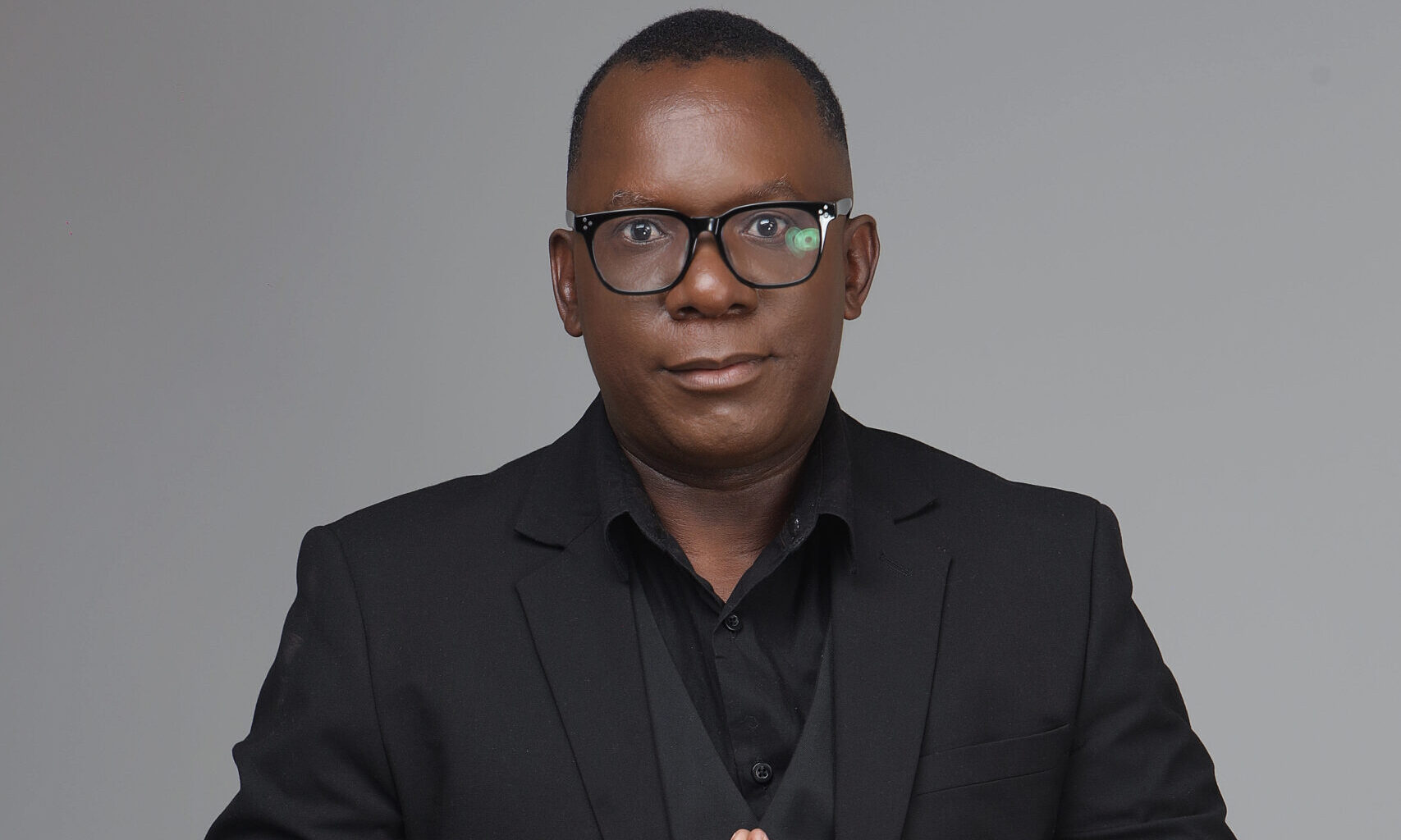
























































Jude Mugerwa, one of Uganda’s leading music producers, is focused on exploring new directions in the world of Ugandan music.
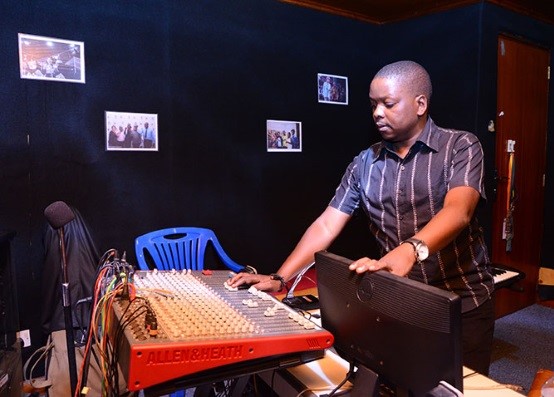
From his tenure as a keyboardist to being a music producer, now coupled with sound engineering, Jude has been an integral part of many Ugandan musicians' careers. Not only is his work groundbreaking, many of his compositions are classics.
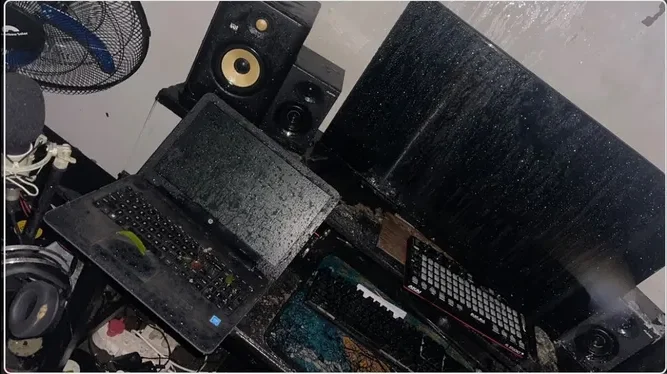
The first time you enter Jude’s Little Penny Studios, located at the basement of the Uganda National Theatre building, ear-pleasing tunes merged with harmonious instrumentation engulfs you. The studio is never empty; you will either find an artist recording with multiple cultural instruments onset, or a listening session. When we get into the studio where much of this interview happens, we come across a number of ethno musicians, commonly referred to (by the media) as world music artists.
In the recording room, we can still hear music; the song playing is by Ceaser Kajura and Giovanni Kremer Kiyingi. It was done about two years back, but it seems the artists are listening to it for inspiration for some new projects. This is how Mugerwa’s day is almost on a daily basis. He says that one of the qualities of a good producer is being able to identify talent, and a direction for that talent.
In a very short period, Mugerwa has made a mark on the industry with artists such as Myko Ouma, Herbert Kinobe, Giovanni Kremer Kiyingi, Jackie Akello and Suzan Kerunen. Though some are his friends for many younger artists, Mugerwa has mostly been tracking them down from the different art activities that happen throughout the year and a personal project —the Stage Coach— an artist development program which is part of the annual Pearl Rhythm Festival an initiative which he co-founded. Through the Stage Coach, Mugerwa and his colleagues have managed to mentor various artists including Kiyingi, Ann Nassanga alias Afrie, Undercover Brothers, Appegio band and Haka Mukiga.
“It is fantastic seeing many young talents develop into brilliant artists,” Mugerwa says. This year some of the artists have showcased at festivals like LaBa! Art festival, Milege World Music festival some are set to perform at the Nyege Nyege International Music festival.
Before he became ‘Jude the producer’, Mugerwa was just a simple chap that loved music. While at Bukalasa Minor Seminary, he was one of the few in his class that studied music throughout his high school. “The seminary had way too many instruments. Thus, it was easy to learn how to play them,” Mugerwa reminisces.
Following up on this passion, Mugerwa majored in music and psychology when he joined Makerere University in 1996 for a bachelor’s degree in Arts. It was at the university where he met Tony Sengo who convinced him to join Badindas, a band he was part of at the time as a keyboard player. Around the same time he met music legends Jimmy Katumba and Elly Wamala.
Mugerwa’s music career could have taken a backseat when he chose to get a white-collar job as a programs manager for the Lutheran Media Ministries. Luckily, Lutheran was into awareness campaigns using different media and they had a studio where Mugerwa frequented and learnt a few things about production.With the little acquired skills in production he began helping produce artists’ music. His most notable work at the time was Pastor Wilson Bugembe’s famous album Yellow as well as folklore artist Sarah Ndagire.
In 2005 Mugerwa left formal employment, using a few of his savings to start the Little Penny Studios. “The name came from a fact that we started with little funds,” Mugerwa explains the studio’s name. At the same time he met guitarist Myko Ouma and Herbert Kinobe, a percussionist and folklore artist with whom they formed the famous Soul Beat Africa band. The real reason for coming together was that there was an opportunity to tour 21 countries and a band was needed hence the formation of Soul Beat Africa Band.
Since they had been friends, it was easy putting the music together and by the time the tour started, the band had a track list to last them at least for a show. Mugerwa was playing keys alongside others like drummer Ambrose Mugume and Samuel Bakkabulindi a guitarist who in recent years has become one of Uganda’s renowned percussionist.
Many argue that this was the beginning of fusing traditional instruments with Western ones, however Mugerwa seems to differ with this fact. He notes that artists like Percussion Discussion Africa, Kerunen and Kinobe were already doing it, though on a smaller scale. “We only blew it up because of our travels but artists were already doing it,” he says.
It was on one of these travels that Mugerwa was asked to step in as the engineer, since the organizers couldn’t sponsor the person that was to do it. When Soul Beat Africa travelled again in 2010, through 2011, Mugerwa wasn’t on the keys he wore the sound engineers hat on this tour. As a sound engineer, Mugerwa has managed sound at Bayimba International Festival, various concerts including Joel Sebunjo’s concert at Sheraton, World Music day and the Pearl Rhythm festival.
Today, Mugerwa is not only a sought after producer he is also one of the most sought-after sound engineers, especially if there are African instruments on set. He says the trick in programming African sound all comes with appreciating it. “Those instruments are not like the Western ones. They react to weather changes hence one must understand them to program them,” he says.
While Soul Beat Africa was a great band, it wasn’t formed on objectives to outlast the tours; after the tours it’s members went on to pursue their individual passions. Kinobe continued working on music in the US, Mugerwa went on to produce more artists while Ouma launched his solo career.
Due to the exposure of performing in developed economies, Mugerwa realized that world music was respected and was the only sound that could represent where a person was from. “I made my choice with principles. I played mainstream music before, but when I started doing fusion, I found it rich,” he says.
Currently, Mugerwa is dedicated to pushing the folklore sound, which he believes is the only way Ugandan music will get the deserved respect on the world stage. While he is focused on exploring the folklore sound Mugerwa is open to working with other artists who perform pop music if the opportunity to fuse the folklore sound arises. “I am all about promoting a Ugandan sound,” he says.
For Ann Nassanga an alumni of the Stagecoach program, Jude is a patient and selfless producer. “His passion for developing a unique East African sound is so evident, and I guess that is why he keeps track of artistes that he mentors to see that they never lose focus,” the artist notes.
Giovanni Kremer Kiyingi, who recently worked with Jude on his latest album Amakondere, says Jude has taught him vital lessons. "Always mind the quality of work you give out; otherwise, when it’s good, everyone you work with is successful. Once you lose, we all lose. If you accept to do something, give it your entire body, heart, soul and mind, you don’t know who is watching! Yes, and however small a slot is for a good artiste, it’s seen in 15 seconds of his or her playing. That is the Jude I have worked with.”
Ras B Ssali, a proprietor of Turbo Rays Events Company, says Jude is a very detailed person and that has helped him perfect his art.
Originally published on 25 July in The Observer


Most popular
Open call: 2026 Gender@Work music industry training in Johannesburg
09 Oct 2026

Top amapiano songs of 2026
16 Feb 2026

Top Naija songs of 2026
31 Mar 2026

Call for applications: ACCES 2026 Emerging Artist Spotlight Competition
01 Oct 2026

Top Afrobeats songs of 2026
19 Mar 2026

AFRIMA 2026: All the winners
12 Jan 2026
Disclaimer: Music In Africa provides a platform for musicians and contributors to embed music and videos solely for promotional purposes. If any track or video embedded on this platform violates any copyrights please inform us immediately and we will take it down. Please read our Terms of Use for more.

Subscribe to our monthly Newsletter
Follow us on social media


Please log in to post a comment.