
























































Every Fuji artist is a king in his domain: Alabi Pasuma dictates the narrative when it's time to capture the zeitgeist; Saheed Osupa owns the space in the creative exploitation of Yoruba folklore and idiomatic expressions; K1 De Ultimate (Kwam 1 or Wasiu Ayinde Marshal) calls the shots in sound experimentation.
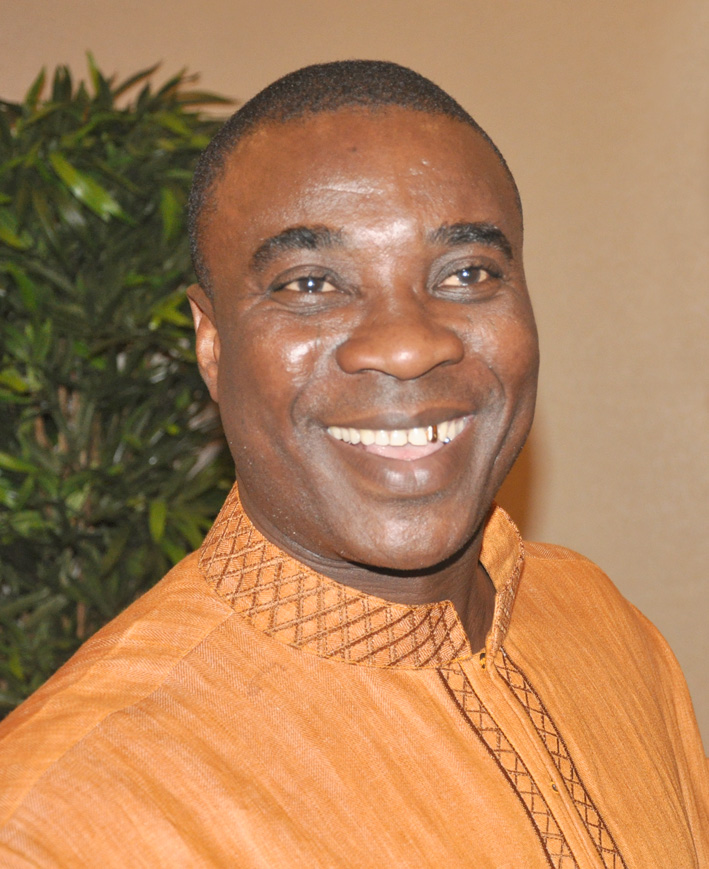
If we examine Fuji artists' special facility for proclamation of kingdoms, coupled with the resentment they often show toward rivalry, very few would agree with the above claim and concede spaces to others. But their disagreement takes nothing away from the validity of the claim.
In terms of form, structure and harmony in album recording and engineering, very few artists pay attention like K1. So while a critic can listen quickly to a regular Fuji album and scribble a few words, quite effortlessly, it would take conscious efforts to listen and perhaps re-listen to a Wasiu Ayinde album before one would have a better grasp of the sound.
The conventional Fuji album is a freewheeling project, a less chaotic extension of the topsy-turvy outdoor (live) performances. Unlike pop albums that are recorded in tracks, each spanning about 3 to 6 minutes, Fuji albums are recorded in an average of an hour, separated into two distinct sessions often dubbed ‘Side 1’ and ‘Side 2’.
Although the careful ones scribble a few items on the CD jacket to name and separate different parts of the album, the actual sound flows endlessly from the beginning to the end, with no real distinguishing elements.
But beginning from the 1990s and most notably with the release of Fuji Fusion (Okofaji Carnival) in 1999, K1 has made conscious efforts to reinvent the norm and make the Fuji album less chaotic, in form and style, with appealing outlook. So he did with segmentation what he had earlier done with sound: Fuji Fusion had eight distinctively separated tracks, all with an average duration of eight minutes.
The tradition was sustained with the release of Big Deal (2003); the acclaimed, if controversial, ‘Flavour’ (2005), and the immensely popular ‘Instinct’ (2011) which had the hit track ‘Boju boju’, later re-christened ‘Eyin Mama e Senpe’ by enthusiastic DJs and joyful fans.
In the period between Fuji Fusion (1999) and Instinct (2011), there were a few albums that slightly deviated from this style–––New era, Faze 3, Message, Statement, New Lagos and, maybe, Gourd–––raising some suspicion among fans. With the release of Let the Music Flow last December–––which came after a long hiatus and the delayed release of his well-publicized EP, Fuji: The Sound––– K1 has erased all doubts.
The album begins with ‘Igbayi ti Dara’, an extension of what the regular fan would get at a typical K1 live show in Lagos. The track ends with a somewhat patriotic footnote: a generous supply of hope and expectation of a better tomorrow to the recession-ravaged Nigerian.
The eponymous track, ‘Let the Music Flow’, sees K1 experiment with a brilliant fusion of jazz and a tinge of pop, for the most part unrestrained, while preaching love. A part of the allure of K1’s enduring presence in the culture space in the last four decades lies in his desire to experiment, to take Fuji out of its traditional jurisdiction. Sometimes it works, sometimes it doesn’t. When it does work, the result is a marvel. The track may not earn significant airplay in Mushin and Ajangbadi in Lagos but it would not attract scorn in the posh areas of Ikoyi and Victoria Island either.
The point has been made that one can hardly divorce Fuji from ribaldry and K1 proves this in ‘Mode Mode’. The track begins with what appears a gospel-inspired tone and quickly swerves toward sleaze, with the artist pleading with girls in skimpy dresses to ‘cover up’ because the old man’s phallus seems erect. “Alaso penpe e padi yin mo; kini agbalagba n le l’abe aso,” K1 sings.
With that risqué line, the track remains condemned to the skip-button fate in the hands of the religious Nigerian. The next track, ‘Adura L’ebo’, comes as a relief: it speaks to the import of prayers and, expectedly, will connect with the prayer-loving religious Nigerian.
In the traditional hierarchy of Obas in Yorubaland, the Oba of Lagos appears not in the top five. Even though the oft-changing dynamics of politics and power and their influences on culture have made the list go through ceaseless manipulation in the last few decades, it’s quite inconceivable that the Eleko would be placed above, say, the Alaafin of Oyo in any traditional hierachical list, however we choose to contextualise the Eleko stool and its "Bini connection".
Yet in ‘Oba’to’, by far the track with the deepest cultural influence in the album, K1 embarks on a tour of Yorubaland, setting out from Iga Iduganran in the heart of Lagos Island. He moves, first, to Ijebu-ode, then to Ibadan and later to Oyo, before finally making a detour at Ile-Ife.
That decision, harmless as it seems, provides some legitimacy to the pedant’s enquiry: on a track with such significant cultural optics, why would the artiste place Idumota above, first, Ibadan, then Ijebu-Ode and Oyo and, curiously, Ile-Ife?
Quick answer: there is the convenience and safety that geography offers which is non-existent in history, especially when the discourse revolves round the traditional hierarchy of the Yoruba kings. And from Lagos to Ijebu to Abeokuta to Ibadan to Oyo and, finally, Ile-Ife, one might notice a fidelity to geography over history. For years, the subject of hierarchy (based on history) among Yoruba Obas has been a source of controversies and given K1’s relationship with kings in Yorubaland, it may be suicidal to attempt to ply the route of history.
Tracks like ‘Onirisa Ogunwusi’ and ‘Olubadan Adetunji’ follow K1’s tradition of eulogizing royal fathers, reminiscent of what he did for Alaafin, Osolo and Elegushi, in past albums. Away from the royals, Rotimi Ajanaku, Ayo Abina, B.K.K and 1960 Bet are also mentioned.
‘Toko Tiyawo’ has words for the couple while tracks like ‘Ariya ma n son’, ‘Ma logba arami’, and ‘Alujo mi’ prove how age has done little to K1’s famed energy during multiple-hour live performances and his ability to make fans and foes subconsciously hit the dancefloor.
Until last December, K1 had no album in about five years. And though Let the Music Flow isn't necessarily great, it is a good output. With its release, it could be argued that for the artist who turned 61 on Saturday, the music might have just begun to flow again.
Artist: King Wasiu Ayinde Marshal
Album: Let the Music Flow
Label, Year: K1 De Ultimate, 2017
Buy Let the Music Flow on iTunes here and here
A version of this article first appeared in Premium Times.


Most popular
Open call: 2026 Gender@Work music industry training in Johannesburg
09 Oct 2026

Top amapiano songs of 2026
16 Feb 2026

Gambia: Suntou Susso announce UK tour for ‘The Path of a Griot’
09 Oct 2026

Top Afrobeats songs of 2026
19 Mar 2026

Top Naija songs of 2026
31 Mar 2026

Call for applications: ACCES 2026 Emerging Artist Spotlight Competition
01 Oct 2026
Disclaimer: Music In Africa provides a platform for musicians and contributors to embed music and videos solely for promotional purposes. If any track or video embedded on this platform violates any copyrights please inform us immediately and we will take it down. Please read our Terms of Use for more.

Subscribe to our monthly Newsletter
Follow us on social media


Please log in to post a comment.