



























































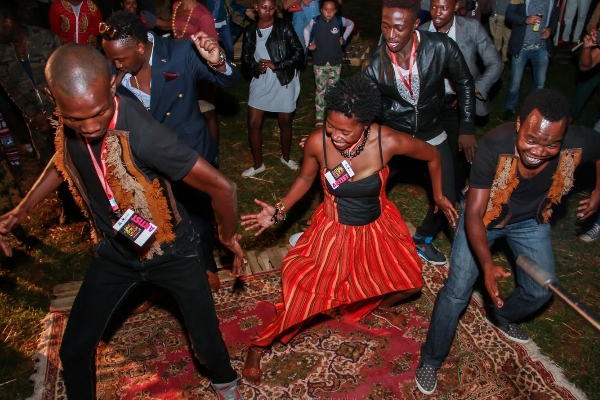
The second edition of Utam, Nairobi’s latest addition to the festival stock, took place at Event Haven in the wealthy suburb, Karen, over the 3 and 4 September weekend. The festival sounded a shrill note of defiance against the chilly September weather as music lovers came in droves to party, socialize and dance till late.
The event is the brainchild of Fadhilee Itulya, a Kenyan artist who believes four things about festivals: They should cultivate a cultural identity, they should be bigger than one-day events, they should be free and they should not have VIP sections.
The first two are the reasons Fadhilee keeps going back to Zanzibar’s Sauti za Busara Festival and the other two are what he wishes were true of every festival in the East African region. It is also why, he says, festival organizers need to be sufficiently funded so that gate charges don’t turn festivals into exclusive events.
Utam doesn’t appear to be heavily funded. It is modest against the standards set by events like Safaricom Jazz Festival, Koroga Festival, and Blankets and Wine. In a way, it is still an aspiring festival. Fadhilee dreams of it being an “authentically African not-for-profit cultural festival that includes all the 42 Kenyan tribes to shape the identity of Kenya”. He also hopes to integrate performances and visual art as well as other crafts.
He cites the Lamu Cultural Festival at the Kenyan Coast as a perfect example of a festival by the people, for the people.
“When people attend a festival, whether they are locals or foreigners, they are not coming to see a particular band or individual," he noted. They are coming to see the culture of that region. Festivals are tools for social inclusion. We are doing events and concerts and calling them festivals."
The name Utam means sweet in Swahili, but is also the root of the word Utamaduni, which means culture.
Being a cultural festival, there was more than music going on – there were crafts, food and advocacy booths for campaigns on wildlife conservation. But the performance stage was the heart of the festival, as is expected.
The line-up included popular boy bands Sarabi and H_Art The Band, the all-girl percussionist group, MoTra, Afro Simba as well as Kenya’s reggae sensations, Gravitti and TuneDem Band 254. Gravitti’s 'Take Your Hands off our Elephants', was particularly relevant to the theme of the festival which trended under the hashtags #IAMIVORYFREE and #JOINTHEHERD.
Solo artists that literally moved the fleet-footed crowd included Lulu Said Abdalla, Maia Von Lekow, Serro, Michel Ongaro, Miss Kalahi, Raymond Ochieng and poetry performers Maimouna Jallow and Mufasa Poet. Rapasa, a Benga artiste, displayed dexterous fingerwork plucking at his nyatiti from the Luo community in Kenya and adungu from Uganda – simultaneously!
Coming in from the region were Lumumba Theatre (Tanzania), Fariji Napa (DRC), Dbass Ganun (Tanzania), Ivan Irakoze (Burundi), Mcee Slim (Uganda) and Andrew Ashimba (Tanzania).
Patrick Mukabi, a Kenyan artist who has mastered painting in public, entertained Nairobi art lovers who enjoyed watching him turn a blank canvas into a finished painting in a few hours.
Getting a hold of Fadhilee was not easy. The dreadlocked musician slung a string of huge wooden beads across his chest, flashed a smile and sported his characteristic khaki shorts, the better to run up and down making sure guests felt welcomed and fixing stuff like lights and unreliable suppliers.
“It’s hectic. Delays, last minute cancellations, late arrivals by performers,” he said when I finally got him to squat for a minute.
We sat on a bundle of hay, the improvised seating at the rustic Event Haven grounds. I had to contend with him stopping the interview every so often to ‘sort something out’. The festival is still at a nascent DIY stage for him, even though he had a horde of volunteers to help him manage it.
Fadhilee is a wildly gifted artist whose contemporary twist to rhythms inspired by Benga, a genre of music from the Western part of Kenya, gives him the staying power lacking in most modern Kenyan musicians. So why did he start a cultural festival?
“We East Africans have neglected our culture for too long. I respect people who are standing up for culture in the region. We have Doadoa and the Bayimba festival in Uganda. We have, Karibu Music Festival and Jahazi Jazz Festival in Tanzania and, of course, Sauti za Busara in Zanzibar. If it’s a cultural event, it has to integrate people from different cultures and break barriers. It should be a platform for sharing cultural experiences. That’s how to achieve peace and reconciliation. That is the very essence of development, if you ask me. That’s why I started Utam.”
This proactive artist considers himself a cultural activist. He immediately delved into the local content debate, which is currently a touchy issue in Kenya. The widely ignored programming code requires local broadcasters to broadcast 40 percent local music in their programmes as well as in advertising and productions. The code stipulates a fine of either $5,000 (Sh500,000) or 0.2 percent of the infringer’s gross annual turnover, whichever is higher. The deadline was July 2016. But July came and went and nothing happened.
Fadhilee’s take on the need for a cultural revolution: “Kenyans. We want to talk, dress and look like Westerners. We listen to Western music and watch Hollywood movies. For artists like me who play cultural music, there are few outlets for our music because the general public doesn’t appreciate our style. They don’t know how to relate to music that isn’t pop, R&B or rock. I want Kenyans and the world to discover this music and the power of its authenticity. Let’s appreciate our own art.”
He also believes that artists have a platform, which they should use to talk about issues like wildlife conservation, which was the theme of the festival. He throws his artistic weight behind the popular anti-poaching 'Hands Off Our Elephants' campaign.
And about the elephant in the room, which is the funding situation, Fadhilee says the event was majorly funded by ticket sales. However, they got in-kind sponsorships from Tune Hotels in the form of accommodation for all the artists coming from other countries in the region.
“Finding sponsors has been a major struggle," he said. "Funding is critical to a festival, so currently, we can only afford to give the artists a modest pay. We are hoping that future editions will be well supported."


Most popular
Open call: 2026 Gender@Work music industry training in Johannesburg
09 Oct 2026

Top amapiano songs of 2026
16 Feb 2026
Gambia: Suntou Susso announce UK tour for ‘The Path of a Griot’
09 Oct 2026

Top Afrobeats songs of 2026
19 Mar 2026

Top Naija songs of 2026
31 Mar 2026
Call for applications: ACCES 2026 Emerging Artist Spotlight Competition
01 Oct 2026
Disclaimer: Music In Africa provides a platform for musicians and contributors to embed music and videos solely for promotional purposes. If any track or video embedded on this platform violates any copyrights please inform us immediately and we will take it down. Please read our Terms of Use for more.

Subscribe to our monthly Newsletter
Follow us on social media


Please log in to post a comment.