



























































By Dare Dan
In the household of Fuji, a kingdom of kings, there is no queen.

Unless, of course, one is looking from the outside to assume Salawa Abeni, the acclaimed waka queen, as queen of fuji. This is forgivable. But waka is no fuji and fuji is no waka—or so we have ultimately come to accept because Adewale Ayuba came plying his trade in a style quite unconventional to the genre and yet has had it counted as Fuji.
Abeni, on the other hand, must have known better to put her effort at risk by meddling with fuji, a fiercely contended all-male playfield. She pitched her tent in an all-female genre instead: waka. Waka, as it is with fuji, evolved from popular Islamic-oriented Yoruba musical genre, but waka is mainly known with the female folks of Yoruba descent. So, waka could be the feminine response to fuji. Take away the gender difference, and it becomes difficult to tell the two genres apart.
It's not uncommon to talk of fuji and it’s players using controversial hierarchical terms: Wasiu Ayinde is King while Abass Akande Obesere is in contention of his kingship; Wasiu Alabi Pasuma is currently the Oga nla (Big Boss), putting himself in fierce contention with Saheed Akorede Okunola, who has jumped the gun to crown himself King above Pasuma and in subtle contention with Wasiu Ayinde; Muri Thunder, Alao Malaika, Suleman Adio, Sefiu Alao, Remi Aluko and many more brawl over one title or the other between themselves. To an onlooker, this can be confusing and sometimes tiring, but to fuji fans and the musicians themselves these contentions are the energies in the genre, they are what fuel and drive the fun.
But when an attempt at queenship came up in the early 2000s, there was some disturbance in the household. Fans and musicians were in scepticism on how to relate to Iyabo Alake aka Osanle, a woman with an all-male fuji band, including the chief back-up singer (The chief backup spot is a prominent one with fuji). She calls herself one-woman battalion.
Osanle is a Yoruba nickname for one who ran away from home. She was neither beautiful nor endowed—perhaps this could have been a route to securing a niche—but she was bold and loud. She relished praising her thuggery and rebelliousness towards parents and society, but she wasn’t clear-headed at it. She called herself Iya won (literary meaning their mother—mother of all the other fuji musicians apparently.)
Now, the problem is: there is almost no breeding of such females in the society that own fuji, with the Yoruba people. The woman has little or no moral or religious right to be that sort of rebel, much more, publicly proclaiming being one. So she was ignored for a long while at the beginning of her career.
However, in what turned out her most lauded offer: Aluyo, Osanle didn’t regard her being a woman in fuji. Unlike what the public felt, she deemed her feminity insignificant. Instead, she tried to blend into the scene as it were; self-praising, commending her supporters, improvising her own slangs and finding a niche in the hierarchy. She played with the existing aesthetics; with piano percussions and chorusing in females’ voices in some parts of the traditionally long tracks; nothing ambiguous. She would even sing of women the way her male counterparts sing of them. She is no feminist.
A line prominent with Osanle tells of a man who brings a beautiful lady to her show. This said man doesn’t know what it means to make a woman feel good. Another man sees the lady at the show and vows to give all it takes to get her. The second man goes up and sprays Osanle lots of money on stage, gets the attention of the lady through that, and then buys the lady a drink. The next morning he gets the lady in his car, takes her home, gives her more money, and then has sex with her. At each stage of the second man’s adventure in landing our lady, Osanle asks, like it’s done in a popular local game, if the first man has been checked-out or not. Strange, how Osanle never sees herself as the woman who should be chased or one whose art should attract men to sexually admire her.
Like many genres of music, the modern fuji partly originated from rebelliousness—although not necessarily a conscious one. All fuji musicians (excluding Adewale Ayuba, who, raised in a middle-class Christian home, saw no usefulness in engaging his contemporaries. He never got involved in hierarchical controversies and is sort of distinct in his style) come from humble backgrounds.
There was always the instinct to escape poverty with the idea of becoming a fuji musician. This extreme rawness of character in the entire creation of fuji side-lines the female folks. So when Osanle came up publicly, claiming all the vices originally known with the male folks—including rendering her song in crooked voice—she was a special misfit, the society won’t have any of her. A handful of her fans were only fulfilling the tired rhetoric of having a woman do better what a man can do. People would even prefer listening to Shanko Rashidi, the then 13-year-old fuji musician, a promising male thug, and take the idea of a grown female fuji musician with a pinch of salt.
Since the emergence of Shanko Rashidi, there has continuously been space for a male underage fuji acts, the recent ones being the seven-year-old Bintilaye and the 13-year old Destiny Boy. But female acts in fuji, after the untimely demise of Osanle in 2009, had systematically gone into extinction. Osanle died broke of tuberculosis (or was it AIDs, as the rumours went?) Her premature death, to the very superstitious Yorubas, was caused by all sorts.
Although none of the male folks stopped or dissed her in their records at the time, nature did make an unintended statement to the society and this may have the household of fuji queenless for a long time.


Most popular
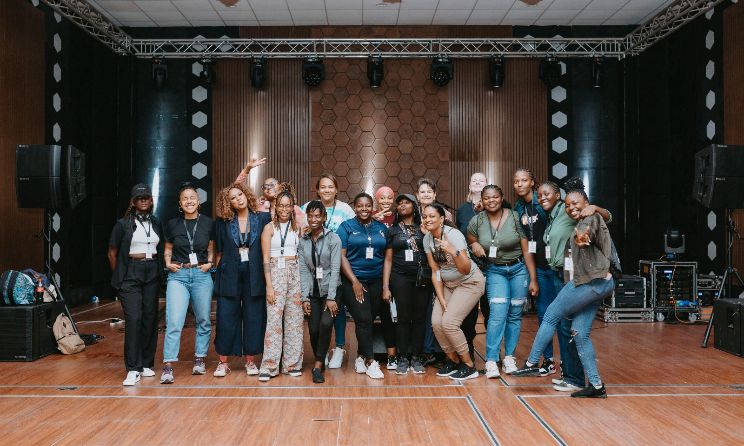
Open call: 2026 Gender@Work music industry training in Johannesburg
09 Oct 2026

Top amapiano songs of 2026
16 Feb 2026

Gambia: Suntou Susso announce UK tour for ‘The Path of a Griot’
09 Oct 2026

Top Afrobeats songs of 2026
19 Mar 2026

Top Naija songs of 2026
31 Mar 2026

Call for applications: ACCES 2026 Emerging Artist Spotlight Competition
01 Oct 2026
Disclaimer: Music In Africa provides a platform for musicians and contributors to embed music and videos solely for promotional purposes. If any track or video embedded on this platform violates any copyrights please inform us immediately and we will take it down. Please read our Terms of Use for more.

Subscribe to our monthly Newsletter
Follow us on social media


Please log in to post a comment.