






















































Listening to art music in contemporary South Africa
23 Feb 2018 - 11:35


By Stephanus Muller
How does one think about classical Western music in South Africa in 2018? And what place do the creators of such works occupy on the country’s cultural landscape? For me, these questions were prompted during the recent world premiere performances of three new piano works by Graham Newcater.
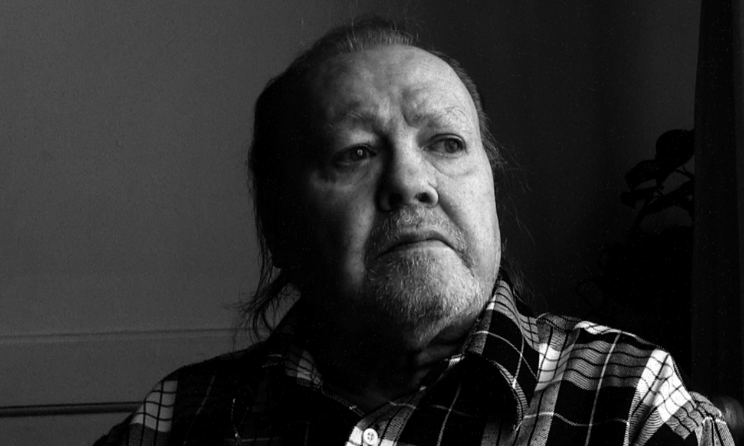
Newcater who was born on 3 September 1941 is South Africa’s most celebrated 12-tone composer. He studied composition in London with Humphrey Searle, who was a student of Anton Webern. Webern formed what is today known as the Second Viennese School, together with Arnold Schoenberg (the father of 12-tone music) and Alban Berg.
Newcater was the creator of powerful apartheid-era high modernist musical works. He disappeared from public consciousness during the 1990s and first decade of the new century – a confluence of the end of an era during which the South African government supported Western art music and Newcater’s personal withdrawal from society. Newcater has been composing new piano music (10 works in all) in a burst of creative energy since 2011.
The Africa Open Institute of Stellenbosch University presented an event entitled Sapphires and Serpents in the Stellenbosch University Museum featuring some of Newcater’s new works on 25 January. A short film by Aryan Kaganof about the composer was also shown. Despite his fragile health, the 76-year-old Newcater travelled from Johannesburg to attend.
I wondered what the performance of staging his music in 2018 tells us about the practices and state of such music in South Africa today. Twenty-four years after the formal end of apartheid, this was a remarkable event to stage. That’s because it seemed so indifferent to contemporary calls for decoloniality at South African universities.
Relentless consistency
The prolific Newcater’s apartheid-era works include his First Symphony (1962-64) and the ballet Raka. The latter was based on NP van Wyk Louw’s iconic play (1941) that enduringly occupied the centre of the Afrikaner literary enterprise and imagination. Raka, the ballet, was performed for the first time in 1967.
In a recent conversation, Newcater revealed that he regarded himself as a member of the anti-establishment, progressive Sestigers cultural movement. It was associated with the subversive literary work of Afrikaans writers like Breyten Breytenbach, Jan Rabie and Adam Small.
He recalled how his Raka and literary rebel Etienne le Roux’s Sewe Dae by die Silbersteins (Seven Days at the Silbersteins) excited similar critical attention in the press and academia when they burst into the public domain in the 1960s.
In an unpublished 2008 interview I did with him, Newcater described his compositional approach as one informed by engineering. "It’s all a matter of balance, proportion, stresses and strains, energy and its harnessing to create power. These are all engineering principles," he said.
Newcater’s uncompromising adherence to the musical techniques and idioms he adopted as his own has passed through various phases of unfashionability and neglect. He has not taken musical developments seriously beyond the first half of the twentieth century.
Newcater has ignored (and has perhaps been ignorant of) much of popular music, jazz, world music and developments in contemporary composition. Those include total serialism, minimalism, the New Simplicity, chance, post-tonality and many other creative avenues explored by composers since Schoenberg’s 12-tone music.
The 12-tone system is mostly associated with work produced during the first half of the twentieth century. It entailed an equal treatment of all 12 pitches of the tempered musical scale. This implied a radical democratisation of pitch relations.
Newcater discovered it as a teenager while listening to the Berg Violin Concerto.
Newcater has persisted in 12-tone music, the only approach to musical composition that makes sense to him. He is now making work that is interesting precisely because the music is not demonstrably important in current political, economic and academic contexts.
The avant-gardist ideology of 12-tone music has been overtaken by the dazzling array of alternative possibilities enabled by the technological advances of our time. In this context, the music’s refusal to coerce creation into justification is a sovereign position from which Newcater is creating strong art. As such it challenges South Africans to think about aesthetic continuities of colonialism and apartheid in art forms beyond apartheid.
Compellingly, it is the relentless consistency of Newcater’s approach that lends it the integrity that demands a hearing in contemporary South Africa.
Intersection of two different eras
It is noteworthy that the staging of this performance happened under the auspices of an initiative dedicated to transformation in music studies at Stellenbosch University – the Africa Open Institute. The institute has distanced itself from the overwhelming focus of Stellenbosch University’s music department on Western art music.
How to read such an event and its meaning is far from clear. While it was performed under the auspices of the institute, the performance had echoes of the past with a mostly white audience in museum surroundings. So on the one side an event was enacted redolent with apartheid-era allegiances. On the other was the institute’s support for music and performers who challenge Western concert traditions in South Africa that led to its engagement in a non-traditional concert space with Newcater, the pianist Mareli Stolp and the filmmaker Aryan Kaganof.
Performing such music in South Africa today, it suggests, is ideologically ambiguous. And in this ambiguity, there is much artistic and intellectual interest.
[video:https://vimeo.com/255525899 width:744 height:446 autoplay:0]
Stephanus Muller is the director of Africa Open Institute at Stellenbosch University. This article was first published on The Conversation.


Most popular

Top Naija songs of 2026
31 Mar 2026

Top Afrobeats songs of 2026
19 Mar 2026

Top amapiano songs of 2026
16 Feb 2026

Open call: CANEX Music Business Lab and Songwriting Camp
15 Oct 2026

Ghana: Mr Eazi and MOLIY’s ‘Comfort’ earns Urban Music Awards nomination
21 Oct 2026

Nigeria: CANEX WKND unveils 2026 programme
21 Oct 2026
Disclaimer: Music In Africa provides a platform for musicians and contributors to embed music and videos solely for promotional purposes. If any track or video embedded on this platform violates any copyrights please inform us immediately and we will take it down. Please read our Terms of Use for more.

Subscribe to our monthly Newsletter
Follow us on social media


Please log in to post a comment.